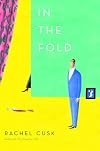
In the Fold
by Rachel Cusk
On This Page
Description
When eighteen-year-old Michael visits the Hanbury's remote family home he is captivated by their bohemian lifestyle. Years later, when he marries the strong-willed, beautiful Rebecca, he is secretly hoping to create his own version of that free-thinking family, but after the birth of their own child, their marriage begins to flounder. The chance to escape once more to his friend's country house comes as a welcome relief, until he discovers a family changed and his own romantic notions of show more family life disintegrating. show lessTags
Recommendations








Member Reviews
4.5. Brilliant as always. Our rather meek but exceptionally observant narrator tells of two parallel families he is associated with; one via a university friend the other via his wife. Both are headed by quite horrible patriarchs who bully their way through privileged lives. An experience in university with the first of these families seems to have set his path in life, and he found a similar milieu to marry into. Cusk’s ability to distill a fleeting feeling into words that capture the moment so perfectly just takes my breath away; waiting for a train, empathy for an odd little child, being served a nasty breakfast as a guest… The tactlessness of the families in thrall to their patriarch is also quite stunning– complete oblivion, show more except for our narrator's wife for whom I both felt pity and a strong aversion. Cleverly and brilliantly told, Cusk lays bare her soulless middle class adversaries. show less
This was a bit like a temperamental old car - started off a bit jerky and I wasn't at all sure I was going to be able to make the journey, but once it got up to speed, it was as smooth as anything and I fairly sped along through some great scenery.
It's a good idea to keep a dictionary close at hand - any author who makes free with the word 'contemporaneous' on the very first page is serving fair warning on the reader. And there are some unbelievably long and complicated sentences lurking in the early chapters, like brambles snaking through the undergrowth ready to trip the unwary speed-reader. To read this story out loud I swear you would need an extra lung.
Once I got beyond the first thirty or so pages, it became clear that this is an show more author with an impressive grip on characterisation, and a lot of very astute points to make (albeit not very succinctly). It was a shame that books are expected to have a central 'message', because in trying to make its point, this book occasionally strayed away from the startlingly brilliant dialogue and character portrayal into forced psychobabble. I'm thinking particularly of Michael's encounter late on with his wife and her bitchy friend which started off excellent but degenerated.
I thought Michael came across a bit asexual, which often happens when an author chooses a first person narrator of the opposite sex to tell a story. On the other hand I thought this gave her an excellent opportunity to point out the bizarre things some women do and say. This occurs again and again in this book and I thought the author handled it beautifully. The way the character Lisa deals with children interrupting her conversations with other adults was deserving of four and a half stars all on its own! show less
It's a good idea to keep a dictionary close at hand - any author who makes free with the word 'contemporaneous' on the very first page is serving fair warning on the reader. And there are some unbelievably long and complicated sentences lurking in the early chapters, like brambles snaking through the undergrowth ready to trip the unwary speed-reader. To read this story out loud I swear you would need an extra lung.
Once I got beyond the first thirty or so pages, it became clear that this is an show more author with an impressive grip on characterisation, and a lot of very astute points to make (albeit not very succinctly). It was a shame that books are expected to have a central 'message', because in trying to make its point, this book occasionally strayed away from the startlingly brilliant dialogue and character portrayal into forced psychobabble. I'm thinking particularly of Michael's encounter late on with his wife and her bitchy friend which started off excellent but degenerated.
I thought Michael came across a bit asexual, which often happens when an author chooses a first person narrator of the opposite sex to tell a story. On the other hand I thought this gave her an excellent opportunity to point out the bizarre things some women do and say. This occurs again and again in this book and I thought the author handled it beautifully. The way the character Lisa deals with children interrupting her conversations with other adults was deserving of four and a half stars all on its own! show less
A few years ago I went to the pub with a friend of mine, Jamie, and a friend of his, Gerard. After listening to Gerard speak without pause for half an hour I excused myself and went to the loo. A few seconds later, Jamie followed me in.
“I had to have a break.” I said. “He's just so boring.”
“I know.” said Jamie. “I'm so sorry.”
We hugged and went back to the table. Gerard repeated the last word he had said before I left and then carried on with the sentence.
Reading this novel reminded me of that day. It's such a shame, because the writing is pretty good. She's got the skills but not the soul.
She's fond of her similes and some are hit but most are miss. I'm not sure if she's going for an elevated tone or showing off or show more what, she's definitely putting the effort in, but she gives these outlandish similes to describe such boring things they just seem out of place.
Her dialogue is really good. She may use it to have her characters say incredibly uninteresting things, but it sounds real and she made me laugh three or four times. show less
“I had to have a break.” I said. “He's just so boring.”
“I know.” said Jamie. “I'm so sorry.”
We hugged and went back to the table. Gerard repeated the last word he had said before I left and then carried on with the sentence.
Reading this novel reminded me of that day. It's such a shame, because the writing is pretty good. She's got the skills but not the soul.
She's fond of her similes and some are hit but most are miss. I'm not sure if she's going for an elevated tone or showing off or show more what, she's definitely putting the effort in, but she gives these outlandish similes to describe such boring things they just seem out of place.
Her dialogue is really good. She may use it to have her characters say incredibly uninteresting things, but it sounds real and she made me laugh three or four times. show less
An interesting mid-period Cusk novel that was longlisted for the Booker prize - this one is something of a hybrid between the rural comedy of The Country Life and the introspection of Arlington Park, and unusually for Cusk her narrator and central character is male.
In the first chapter Michael and Adam are undergraduates in neighbouring rooms. Michael receives an invitation from Caris, Adam's younger sister who he has never met, to a party at Egypt, which turns out to be the family sheep farm above a small town on the Somerset coast. He is introduced to the farm's somewhat dysfunctional menage but comes away feeling it had an idyllic quality.
The remainder of the book takes place several years later. Michael is now living in Bath and is show more married with a small son, living in an old house belonging to his in-laws. When a balcony of the house collapses, he rings Adam for advice but instead receives a request to help them with lambing while Adam's father is in hospital.
On his return, Egypt is in crisis, and as the events there play out he discovers that his own marriage was not what he thought. show less
In the first chapter Michael and Adam are undergraduates in neighbouring rooms. Michael receives an invitation from Caris, Adam's younger sister who he has never met, to a party at Egypt, which turns out to be the family sheep farm above a small town on the Somerset coast. He is introduced to the farm's somewhat dysfunctional menage but comes away feeling it had an idyllic quality.
The remainder of the book takes place several years later. Michael is now living in Bath and is show more married with a small son, living in an old house belonging to his in-laws. When a balcony of the house collapses, he rings Adam for advice but instead receives a request to help them with lambing while Adam's father is in hospital.
On his return, Egypt is in crisis, and as the events there play out he discovers that his own marriage was not what he thought. show less
A very well written novel that never quite got going and became interesting enough for me to care what happened. The premise was excellent; of a young man interested in the family of his friend. Visiting again years later he finds things are different than they had been on the summer evening he visited before. Along with this story is the story of his own marriage which is very fragile. This is enough to make a good tale and I'm not sure why the novel doesn't manage it, somehow, although it is skilful, it doesn't have the warmth needed to make this work. The description of the farm on the top of the hill with a view of the sea is beautifully done and the sense of place here is very good.
Carolkub's review is spot on. I'm reading the Cusks in chronological order after starting with Outline and not really liking it. The first 4 books were great, this one was not. It seemed to have a lot in common with Outline, actually. The protagonist finds himself in a series of situations with horrible people who he seems to stand in judgement of, the result of which makes protagonist also a sort of horrible person in his own way. The author never fully reveals him to us and I can't really understand his motivations. Still very much worth the time and effort and a great premise. Gotta love the chapter ending where he is asked to stop playing the violin- very funny. Will be interesting to see if this is how her story telling evolves in show more subsequent novels. show less
I found the people in this story to be weird. So much so (and all of them, not just one or two) that I couldn't really relate to the story very well at all. I did find some interest in the relationship issues between the main character, Michael, and his partner, Rebecca, however, and that kept me going to the bitter end. It hasn't put me off Rachel Cusk though. I think she's a good writer.
Members
- Recently Added By
Lists

Booker Prize
491 works; 62 members

Man Booker Prize Longlist 2005
17 works; 3 members
Author Information

31+ Works 9,132 Members
Rachel Cusk was born on Feb 8, 1967 in Canada. She spent much of her childhood in Los Angeles and finished her education at St Mary's Convent, Cambridge. her education at St Mary's Convent, Cambridge. In 2003, Rachel Cusk was nominated by Granta magazine as one of 20 'Best of Young British Novelists'. That year she published The Lucky Ones (2003), show more her fourth novel, which was shortlisted for the Whitbread Novel Award. Since then she has published four more novels; her latest is Outline (2014). She has also written several non-fiction books. A Life's Work: On Becoming a Mother (2001) is a personal exploration of motherhood. The Last Supper: A Summer in Italy (2009) is a memoir about time in southern Italy. In 2015 she made the Baileys Women's Prize for Fiction shortlist with her title Outline. (Bowker Author Biography) show less
Awards and Honors
Awards
Common Knowledge
- Canonical title
- In the Fold
Classifications
Statistics
- Members
- 241
- Popularity
- 135,481
- Reviews
- 8
- Rating
- (3.13)
- Languages
- Dutch, English, French
- Media
- Paper, Ebook
- ISBNs
- 11
- ASINs
- 1