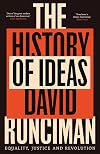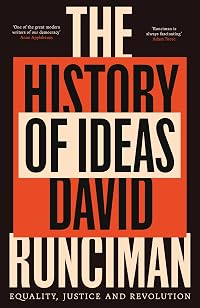
The History of Ideas: Equality, Justice and Revolution
by David Runciman
On This Page
Description
In this bold new follow-up to Confronting Leviathan, David Runciman unmasks modern politics and reveals the great men and women of ideas behind it. What can Samuel Butler's ideas teach us about the oddity of how we choose to organise our societies? How did Frederick Douglass not only expose the horrors of slavery, but champion a new approach to abolishing it? Why should we tolerate snobbery, betrayal and hypocrisy, as Judith Shklar suggested? And what does Friedrich Nietzsche predict for our show more future? From Rousseau to Rawls, fascism to feminism and pleasure to anarchy, this is a mind-bending tour through the history of ideas which will forever change your view of politics today. show lessTags
Recommendations








Member Reviews
David Runciman recently stepped down as professor of politics in Cambridge: he started doing podcasts during the Covid lockdown, and this is the second book of essays for general readers to come out of that process. He looks at specific works by twelve Great Thinkers who were concerned in one way or another to make the world a better place, giving each an approachable but highly-concentrated summary of what they were about: essentially where they were starting from, what they say and how that might look from a present-day perspective. You don’t need to be familiar with the trade vocabulary of political philosophy to make sense of this, but you do need to be fairly agile mentally to keep up with the pace.
Several of the people here are show more well-known giants I’ve read and even written essays about in the past — Rousseau, Bentham, Nietzsche — and I was pleased to see Runciman taking seriously a Victorian writer who was briefly a hero of mine in my teens, Samuel Butler. But there are others in the mix whom I know about but have never got around to looking at in detail, like Frederic Douglass, Rosa Luxemburg and Simone de Beauvoir, as well as others that I’ve only barely heard of.
A good mental workout in any case, and a book that will encourage you to think a bit more seriously about how politics works and what it’s for, and what we mean by words like “democracy“ and “liberalism”. Runciman doesn’t seem to plump for any specific version of politics that will solve all the problems of the world, but he does show us where some of the main hazards with existing models might lie. show less
Several of the people here are show more well-known giants I’ve read and even written essays about in the past — Rousseau, Bentham, Nietzsche — and I was pleased to see Runciman taking seriously a Victorian writer who was briefly a hero of mine in my teens, Samuel Butler. But there are others in the mix whom I know about but have never got around to looking at in detail, like Frederic Douglass, Rosa Luxemburg and Simone de Beauvoir, as well as others that I’ve only barely heard of.
A good mental workout in any case, and a book that will encourage you to think a bit more seriously about how politics works and what it’s for, and what we mean by words like “democracy“ and “liberalism”. Runciman doesn’t seem to plump for any specific version of politics that will solve all the problems of the world, but he does show us where some of the main hazards with existing models might lie. show less
Ratings
Members
- Recently Added By
Author Information
17 Works 663 Members
David Runciman is professor of politics at the University of Cambridge and a fellow of Trinity Hall. He writes regularly about politics for the London Review of Books.
Awards and Honors
Distinctions
The Guardian Book of the Day (2024-07-15)
Common Knowledge
- Disambiguation notice
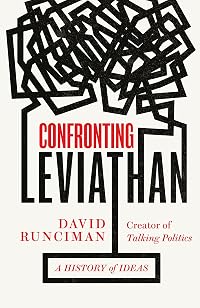
- The History of Ideas: Equality, Justice and Revolution is a follow-up to Confronting Leviathan: A History of Ideas.
Classifications
- Genres
- Philosophy, Politics and Government, Nonfiction, History, General Nonfiction
- DDC/MDS
- 320.01 — Society, government, & culture Political science Types of Government Political Science Philosophy and Theory
- LCC
- JC423 .R798 — Political Science Political theory Political theory. The state. Theories of the state Forms of the state
- BISAC
Statistics
- Members
- 41
- Popularity
- 714,224
- Reviews
- 2
- Rating
- (4.00)
- Languages
- English
- Media
- Paper, Ebook
- ISBNs
- 4
- ASINs
- 1