
David Runciman
Author of How Democracy Ends
About the Author
David Runciman is professor of politics at the University of Cambridge and a fellow of Trinity Hall. He writes regularly about politics for the London Review of Books.
Works by David Runciman
The Confidence Trap: A History of Democracy in Crisis from World War I to the Present (2013) 100 copies
The Handover: How We Gave Control of Our Lives to Corporations, States and AIs (2023) 65 copies, 1 review
The Politics of Good Intentions: History, Fear and Hypocrisy in the New World Order (2006) 26 copies
Where Power Stops: The Making and Unmaking of Presidents and Prime Ministers (2019) 20 copies, 2 reviews
Affidarsi: Come abbiamo ceduto il controllo della nostra vita a imprese, Stati e intelligenze artificiali (Italian Edition) (2024) 2 copies
Tagged
Common Knowledge
- Canonical name
- Runciman, David
- Legal name
- Runciman, David Walter
- Other names
- 4th Viscount Runciman of Doxford
Baronet of Doxford - Birthdate
- 1967-03-01
- Gender
- male
- Education
- Trinity College, University of Cambridge (BA|Ph.D)
- Occupations
- political scientist
university professor - Organizations
- Cambridge University
- Awards and honors
- British Academy (Fellow, 2018)
Royal Society of Literature (Fellow, 2021) - Relationships
- Runciman, W. G. (father)
Runciman, Steven (great uncle) - Nationality
- UK
- Birthplace
- St John's Wood, North London, England, UK
- Associated Place (for map)
- England, UK
Members
Reviews
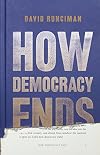
Not with a bang but with a whimper. Somewhat impressive to predict that the American coup wouldn’t be military, but rather would be from the civilian side. Runciman argues that democracy can rot even when there are regular elections, independent courts, and a free press, though I think he understates just how nondemocratic the US is in electoral terms—not just the Electoral College, but felony disenfranchisement combined with racist distribution of who gets convicted of felonies, show more gerrymandering, voter ID, closing polling places and purging voters who move often (and are thus more likely to be poor), the fact that North Dakota gets the same number of senators as California, etc. “The battles to expand the franchise have been largely fought and won” seems to me vastly too optimistic. I have to believe that elections conducted under different circumstances would be a lot freer and fairer.
Also, at this point, I can’t agree that violence merely “stalks the fringes of our politics and the recesses of our imaginations, without ever arriving centre stage” when the POTUS praises a representative for assaulting a journalist. Even if most of the violence that Trump talks about is imaginary, it’s not in the recesses but in the contolling obsessions of our minds, and it has real effects. I think his position on this is not unrelated to his presentation of the Trump vote as being about education—“Whether or not someone went to college is a more significant determination of how they are likely to vote than age, class or gender.” Notice any salient characteristic missing? Runciman doesn’t seem to want to get too caught up in race, because American racism is so distinctive and he also wants to talk about Brexit and Macron, but I think that’s a mistake. He’s more persuasive with a slightly different take late in the book: there’s still plenty of violence, but it’s tailored to particular groups and not noticed by most not directly subjected to it, a situation that suits those inflicting the violence just fine. “At the same time, the shadow of some unspeakably violent cataclysm hangs ove the entire country…. One false move and we could all be dead. Trump embodies this phenomenon. He deals in two kinds of political violence: the low-level, attritional variety that manifests in personal abuse; and the threat of nuclear Armageddon.”
Runciman also argues that the catastrophes we now face, like climate change, have paralyzed rather than mobilized us (contrast WWII), partially because of the dangerous affordances of new information technology. Runciman is trying to diagnose multiple societies, though, and he points out that Greece might be a more standard example—still much richer than it was when it was under military rule, and also much more elderly, both of which make violence/government collapse less likely. “One reason its high youth unemployment has not proved more destabilising is that there simply aren’t that many young people in Greece any more.” A military coup is unlikely, but what has arguably occurred is a different, secretive coup—control by the international financiers who benefit from keeping Greece immiserated. Those kinds of coups don’t want or depend on troops in the streets; they benefit from being hidden—things just don’t work the way they used to, and it’s not clear why or who if anyone could change the situation, and people who say democracy isn’t working are accused of hysteria and of being just another special interest group, or told to calm down by anonymous plotters in the NYT editorial pages.
When Runciman discusses the alternatives to democracy, he doesn’t find any that are more appealing. I liked his analysis about the way in which authoritarian regimes try to offer personal (economic) benefits plus collective (ethnonationalist or nationalist) dignity, as opposed to democracy’s personal dignity through equal citizenship and collective benefits in overall economic growth. I did not follow him when he argued that mature democracies with stagnant wages hadn’t really turned against democracy because voters haven’t endorsed “anyone threatening to take away their democratic rights,” they’re only excited by the prospect of taking away the rights of “people who don’t belong.” Pretty sure that’s what many democratic destructions look like. Ultimately, though, I agree that while democracy may not be the least worst form of politics, it’s the best of the possibilities when the government is at its worst. “More fires get started in a democracy, Tocqueville said, but more fires get put out, too.” show less
Also, at this point, I can’t agree that violence merely “stalks the fringes of our politics and the recesses of our imaginations, without ever arriving centre stage” when the POTUS praises a representative for assaulting a journalist. Even if most of the violence that Trump talks about is imaginary, it’s not in the recesses but in the contolling obsessions of our minds, and it has real effects. I think his position on this is not unrelated to his presentation of the Trump vote as being about education—“Whether or not someone went to college is a more significant determination of how they are likely to vote than age, class or gender.” Notice any salient characteristic missing? Runciman doesn’t seem to want to get too caught up in race, because American racism is so distinctive and he also wants to talk about Brexit and Macron, but I think that’s a mistake. He’s more persuasive with a slightly different take late in the book: there’s still plenty of violence, but it’s tailored to particular groups and not noticed by most not directly subjected to it, a situation that suits those inflicting the violence just fine. “At the same time, the shadow of some unspeakably violent cataclysm hangs ove the entire country…. One false move and we could all be dead. Trump embodies this phenomenon. He deals in two kinds of political violence: the low-level, attritional variety that manifests in personal abuse; and the threat of nuclear Armageddon.”
Runciman also argues that the catastrophes we now face, like climate change, have paralyzed rather than mobilized us (contrast WWII), partially because of the dangerous affordances of new information technology. Runciman is trying to diagnose multiple societies, though, and he points out that Greece might be a more standard example—still much richer than it was when it was under military rule, and also much more elderly, both of which make violence/government collapse less likely. “One reason its high youth unemployment has not proved more destabilising is that there simply aren’t that many young people in Greece any more.” A military coup is unlikely, but what has arguably occurred is a different, secretive coup—control by the international financiers who benefit from keeping Greece immiserated. Those kinds of coups don’t want or depend on troops in the streets; they benefit from being hidden—things just don’t work the way they used to, and it’s not clear why or who if anyone could change the situation, and people who say democracy isn’t working are accused of hysteria and of being just another special interest group, or told to calm down by anonymous plotters in the NYT editorial pages.
When Runciman discusses the alternatives to democracy, he doesn’t find any that are more appealing. I liked his analysis about the way in which authoritarian regimes try to offer personal (economic) benefits plus collective (ethnonationalist or nationalist) dignity, as opposed to democracy’s personal dignity through equal citizenship and collective benefits in overall economic growth. I did not follow him when he argued that mature democracies with stagnant wages hadn’t really turned against democracy because voters haven’t endorsed “anyone threatening to take away their democratic rights,” they’re only excited by the prospect of taking away the rights of “people who don’t belong.” Pretty sure that’s what many democratic destructions look like. Ultimately, though, I agree that while democracy may not be the least worst form of politics, it’s the best of the possibilities when the government is at its worst. “More fires get started in a democracy, Tocqueville said, but more fires get put out, too.” show less
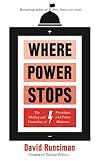
Recommended if you know what to expect* and like the sound of it. This is a revised collection of David Runciman's essays on US and UK political leaders, each originally published in the LRB. The theme supposed to tie them together is Runciman's contention that, rather than political office revealing the 'true' character of a leader, in fact the leader offers us an opportunity to probe the nature and limits of the office. Honestly, I'm not convinced that this amounts to much more than a show more convenient way to package and present these essays as a book. But the style is smooth and gently entertaining, and there are enough nuggets of what feels like insight, to make this an enjoyable and possibly worthwhile read.
(I say 'read', but in fact I listened to the audiobook, which is narrated unsurprisingly well (though slowly; I would probably have been annoyed if I had to listen to it at 1x speed) by Runciman himself. This episode of the Talking Politics podcast gives a good idea of what listening to the audiobook is like: https://www.talkingpoliticspodcast.com/blog/2019/183-where-power-stops)
Not recommended if you're looking for something meaty, or if you're allergic to anything resembling 'horse-race' and/or personality-based political coverage. Policy questions are sidenotes here, used only to illustrate points about the character of a leader, their political triumphs and missteps, or the constraints and potentials of their office. And Runciman isn't entirely above the occasional authoritative but ill-supported and arguably facile pronouncement. I may have found this annoying if I weren't more or less in his target audience, i.e. milquetoast left-liberal with intellectual pretensions but a taste for comforting certainties. (I think I'm giving the wrong impression at this point; it's not an especially ideological or partisan book, and Runciman is both wryly sceptical and capable of generosity when talking about politicians of any persuasion.)
*I actually didn't know that this was an essay collection until it came up in the afterword, but I did have my suspicions along the way. Some of the chapters feel very much like LRB-style book reviews. show less
(I say 'read', but in fact I listened to the audiobook, which is narrated unsurprisingly well (though slowly; I would probably have been annoyed if I had to listen to it at 1x speed) by Runciman himself. This episode of the Talking Politics podcast gives a good idea of what listening to the audiobook is like: https://www.talkingpoliticspodcast.com/blog/2019/183-where-power-stops)
Not recommended if you're looking for something meaty, or if you're allergic to anything resembling 'horse-race' and/or personality-based political coverage. Policy questions are sidenotes here, used only to illustrate points about the character of a leader, their political triumphs and missteps, or the constraints and potentials of their office. And Runciman isn't entirely above the occasional authoritative but ill-supported and arguably facile pronouncement. I may have found this annoying if I weren't more or less in his target audience, i.e. milquetoast left-liberal with intellectual pretensions but a taste for comforting certainties. (I think I'm giving the wrong impression at this point; it's not an especially ideological or partisan book, and Runciman is both wryly sceptical and capable of generosity when talking about politicians of any persuasion.)
*I actually didn't know that this was an essay collection until it came up in the afterword, but I did have my suspicions along the way. Some of the chapters feel very much like LRB-style book reviews. show less

David Runciman recently stepped down as professor of politics in Cambridge: he started doing podcasts during the Covid lockdown, and this is the second book of essays for general readers to come out of that process. He looks at specific works by twelve Great Thinkers who were concerned in one way or another to make the world a better place, giving each an approachable but highly-concentrated summary of what they were about: essentially where they were starting from, what they say and how show more that might look from a present-day perspective. You don’t need to be familiar with the trade vocabulary of political philosophy to make sense of this, but you do need to be fairly agile mentally to keep up with the pace.
Several of the people here are well-known giants I’ve read and even written essays about in the past — Rousseau, Bentham, Nietzsche — and I was pleased to see Runciman taking seriously a Victorian writer who was briefly a hero of mine in my teens, Samuel Butler. But there are others in the mix whom I know about but have never got around to looking at in detail, like Frederic Douglass, Rosa Luxemburg and Simone de Beauvoir, as well as others that I’ve only barely heard of.
A good mental workout in any case, and a book that will encourage you to think a bit more seriously about how politics works and what it’s for, and what we mean by words like “democracy“ and “liberalism”. Runciman doesn’t seem to plump for any specific version of politics that will solve all the problems of the world, but he does show us where some of the main hazards with existing models might lie. show less
Several of the people here are well-known giants I’ve read and even written essays about in the past — Rousseau, Bentham, Nietzsche — and I was pleased to see Runciman taking seriously a Victorian writer who was briefly a hero of mine in my teens, Samuel Butler. But there are others in the mix whom I know about but have never got around to looking at in detail, like Frederic Douglass, Rosa Luxemburg and Simone de Beauvoir, as well as others that I’ve only barely heard of.
A good mental workout in any case, and a book that will encourage you to think a bit more seriously about how politics works and what it’s for, and what we mean by words like “democracy“ and “liberalism”. Runciman doesn’t seem to plump for any specific version of politics that will solve all the problems of the world, but he does show us where some of the main hazards with existing models might lie. show less
Readers will gain an insight and understanding of modern western political leadership from this collection of profiles. They include former US presidents Lyndon Johnson, Barack Obama and UK prime ministers Margaret Thatcher and Tony Blair.
Runciman argues these profiles tell us more about the office the subjects held rather than the subjects themselves.
Lyndon Johnson was the consummate – though conviction-free – politician. Robert Caro has written a seminal – and many would say show more consummate – biographical series of Johnson, still to be completed. Caro argues the higher Johnson rose in political office, the more we “get to see the person behind the political mask”. Caro agrees power corrupts but it also “reveals”. Runciman has the opposite view: the presidency didn’t reveal truths about Johnson but he revealed truths about the presidency.
“The person who arrives at the summit of politics is recognisably the same as the person who comes down from it,” Runciman writes. “Who they really are is set well in advance. What changes are the circumstances in which they find themselves and their expectation of what can be done while they are there.”
These profiles are eye-openers. To be human is to be flawed and political leaders’ flaws are more profound. Runciman includes a chapter on those who didn’t make it which includes US Democratic Party presidential hopeful John Edwards
These profiles were originally published in the London Review of Books and have been updated and changed for the book. show less
Runciman argues these profiles tell us more about the office the subjects held rather than the subjects themselves.
Lyndon Johnson was the consummate – though conviction-free – politician. Robert Caro has written a seminal – and many would say show more consummate – biographical series of Johnson, still to be completed. Caro argues the higher Johnson rose in political office, the more we “get to see the person behind the political mask”. Caro agrees power corrupts but it also “reveals”. Runciman has the opposite view: the presidency didn’t reveal truths about Johnson but he revealed truths about the presidency.
“The person who arrives at the summit of politics is recognisably the same as the person who comes down from it,” Runciman writes. “Who they really are is set well in advance. What changes are the circumstances in which they find themselves and their expectation of what can be done while they are there.”
These profiles are eye-openers. To be human is to be flawed and political leaders’ flaws are more profound. Runciman includes a chapter on those who didn’t make it which includes US Democratic Party presidential hopeful John Edwards
These profiles were originally published in the London Review of Books and have been updated and changed for the book. show less
Awards


You May Also Like


Associated Authors
Statistics
- Works
- 16
- Members
- 661
- Popularity
- #38,153
- Rating
- 3.7
- Reviews
- 10
- ISBNs
- 73
- Languages
- 9