
Francis Fukuyama
Author of The End of History and the Last Man
About the Author
Yoshihiro Francis Fukuyama was born October 27, 1952 in the Hyde Park neighborhood of Chicago. Fukuyama received his Bachelor of Arts degree in classics from Cornell University, where he studied political philosophy under Allan Bloom. He initially pursued graduate studies in comparative literature show more at Yale University, going to Paris for six months to study under Roland Barthes and Jacques Derrida, but became disillusioned and switched to political science at Harvard University. There, he studied with Samuel P. Huntington and Harvey Mansfield, among others. He earned his Ph.D. in Political Science from Harvard for his thesis on Soviet threats to intervene in the Middle East. In 1979, he joined the global policy think tank RAND Corporation. Fukuyama was the Omer L. and Nancy Hirst Professor of Public Policy in the School of Public Policy at George Mason University from 1996 to 2000. Until July 10, 2010, he was the Bernard L. Schwartz Professor of International Political Economy and Director of the International Development Program at the Paul H. Nitze School of Advanced International Studies of Johns Hopkins University, located in Washington, D.C. He is now Olivier Nomellini Senior Fellow and resident in the Center on Democracy, Development, and the Rule of Law at the Freeman Spogli Institute for International Studies at Stanford University. Fukuyama is best known as the author of The End of History and the Last Man, in which he argued that the progression of human history as a struggle between ideologies is largely at an end, with the world settling on liberal democracy after the end of the Cold War and the fall of the Berlin Wall in 1989. Fukuyama predicted the eventual global triumph of political and economic liberalism. He has written a number of other books, among them Trust: The Social Virtues and the Creation of Prosperity and Our Posthuman Future: Consequences of the Biotechnology Revolution. His latest work The Origins of Political Order: From Prehistoric Times to the French Revolution made Publisher's Weekly Best Seller's List for 2011. (Bowker Author Biography) show less
Series
Works by Francis Fukuyama
The Origins of Political Order: From Prehuman Times to the French Revolution (2011) 1,565 copies, 30 reviews
Political Order and Political Decay: From the Industrial Revolution to the Globalization of Democracy (2014) 897 copies, 10 reviews
America at the Crossroads: Democracy, Power, and the Neoconservative Legacy (2006) 385 copies, 4 reviews
The Great Disruption: Human Nature and the Reconstitution of Social Order (1999) 377 copies, 2 reviews
Falling Behind: Explaining the Development Gap Between Latin America and the United States (2006) 38 copies
The End of History? 6 copies
What is Governance? 2 copies
Francis Fukuyama Collection 2 Books Set (Political Order and Political Decay, The Origins of Political Order) (2019) 2 copies
Identitate 2 copies
Marea ruptură 1 copy
Sfarsitul Istoriei? 1 copy
Atti del convegno su: Natura umana e biotecnologie: Roma, Palazzo Colonna,10 ottobre 2005 — Author — 1 copy
The Unselfish Gene 1 copy
The Tao of Physics 1 copy
How to Save Democracy From Technology: Ending Big Tech's Information Monopoly [journal article] 1 copy
A liberalizmus vesszőfutása 1 copy
NDËRTIMI I SHTETIT 1 copy
Information and Biological Revolutions: Global Governance Challenges--Summary of a Study Group 1 copy
Distruzione 1 copy
The End of History and the Last Man = Rekishi no owari [Japanese Edition] (Volume # 2) (1992) 1 copy
The End of History and the Last Man = Rekishi no owari. 1 [Japanese Edition] (Volume # 1) (1992) 1 copy
İnsan Ötesi Geleceğimiz 1 copy
Associated Works
Booknotes: America's Finest Authors on Reading, Writing, and the Power of Ideas (1997) — Contributor — 457 copies, 5 reviews
The Posthuman Condition: Ethics, Aesthetics and Politics of Biotechnological Challenges (2012) — Contributor — 9 copies
Tagged
Common Knowledge
- Legal name
- Fukuyama, Yoshihiro Francis
- Birthdate
- 1952-10-27
- Gender
- male
- Education
- Cornell University (BA | Classics)
Harvard University (PhD | Political Science) - Occupations
- professor
- Organizations
- Telluride Association
Project for the New American Century
President's Council on Bioethics ( [2001])
World Academy of Art and Science
RAND Corporation
United States Department of State (show all 9)
George Mason University
Johns Hopkins University
The American Interest - Relationships
- Ide, Joe (cousin)
- Nationality
- USA (birth)
- Birthplace
- Chicago, Illinois, USA
- Places of residence
- Chicago, Illinois, USA
New York, New York, USA
State College, Pennsylvania, USA - Map Location
- USA
Members
Reviews
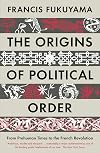
Well who'd have thought working 80 hour weeks would have made reading a dense political tome so much goddamn hard work?
Despite the fact that this took me three months, this book is incredible.
Extremely detailed and exhaustively well-researched, it somehow never feels tedious or overly academic. It's almost unbelievably easy reading.
If you've ever wondered, perhaps exasperatedly, perhaps out loud, "how the fuck did we wind up here?" like I have - this is your book. Without western/whig show more history bias, Fukuyama illuminates the dense and tangled history of what we now call politics that any idiot, including this one, can understand and appreciate how incredible a story it is.
From the millenia-old Chinese bureaucracy through Ottoman military slavery and the inherited bizarreness of the early Latin American system of government, this book is a compelling story of what we were and how we got to where we are now.
If you've got even a passing interest in politics (and you should, because politics governs every aspect of your own and everyone else's life), please read this. A little political literacy in these troubled times could do a lot of good. show less
Despite the fact that this took me three months, this book is incredible.
Extremely detailed and exhaustively well-researched, it somehow never feels tedious or overly academic. It's almost unbelievably easy reading.
If you've ever wondered, perhaps exasperatedly, perhaps out loud, "how the fuck did we wind up here?" like I have - this is your book. Without western/whig show more history bias, Fukuyama illuminates the dense and tangled history of what we now call politics that any idiot, including this one, can understand and appreciate how incredible a story it is.
From the millenia-old Chinese bureaucracy through Ottoman military slavery and the inherited bizarreness of the early Latin American system of government, this book is a compelling story of what we were and how we got to where we are now.
If you've got even a passing interest in politics (and you should, because politics governs every aspect of your own and everyone else's life), please read this. A little political literacy in these troubled times could do a lot of good. show less
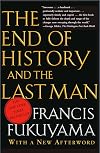
The main thesis of this book is that the combination of free market capitalism and liberal democracy (based on human rights) represents 'the end of history'. To wit, all countries and peoples in the world will eventually attain this supposedly homogeneous state of government, and it will be stable and self-sustaining. The justification for this thesis is based predominantly in philosophy, although also in history. It is interesting to note that far longer is spent on justifying the long-term show more sustainability of liberal democracy than free market economies. The book was published in 1992 and the tone strongly reflects American triumphalism in the wake of the iron curtain’s fall.
Fukuyama's arguments build on the Platonic idea of human nature as a balance between desire, rationality, and thymos. The latter is explained as a desire for recognition, related to pride and personal honour, which can manifest in the extreme as megathymia, or the strong desire to be recognised as better than everyone else.
Although this book was very thought-provoking and definitely worth reading, what it singularly failed to convince me of was this: what makes the 1992 state of liberal democracy so very wonderful that humanity will never seek a better system? Even if at that moment, and indeed twenty years later, no other major ideological contenders have emerged, why assume that they never will? Fukuyama mentions in chapter 4 a thought I've often had, that current generations, unlike those of their grandparents, cannot imagine a future that is substantially better and, more importantly, substantially different than today’s world. Whereas I would frame this as a rather sad lack of imagination and utopian thinking, Fukuyama frames it as a demonstration of liberal democracy and capitalism's triumph.
Surely the only certainty in history is change? It seems incredibly arrogant to say that we as a species have gone as a far as we can in terms of organising ourselves. It also ignores the vast injustices, instabilities, and dissatisfactions with free market democracy in its various manifestations across the globe. Fukuyama is writing from the perspective of a privileged, highly educated male in the richest country in the world. To him, the political and economic systems of the world may have seemed as good as they could be. That definitely does not mean that everyone agrees, in 2012 even less than in 1992.
That said, this book has been widely read, discussed, and cited for good reasons. It is dense with ideas that you might agree or disagree with, but that are undoubtedly worth debating. I now intend to read Fukuyama's 2011 book, The Origins of Political Order, in order to see how his views have evolved. show less
Fukuyama's arguments build on the Platonic idea of human nature as a balance between desire, rationality, and thymos. The latter is explained as a desire for recognition, related to pride and personal honour, which can manifest in the extreme as megathymia, or the strong desire to be recognised as better than everyone else.
Although this book was very thought-provoking and definitely worth reading, what it singularly failed to convince me of was this: what makes the 1992 state of liberal democracy so very wonderful that humanity will never seek a better system? Even if at that moment, and indeed twenty years later, no other major ideological contenders have emerged, why assume that they never will? Fukuyama mentions in chapter 4 a thought I've often had, that current generations, unlike those of their grandparents, cannot imagine a future that is substantially better and, more importantly, substantially different than today’s world. Whereas I would frame this as a rather sad lack of imagination and utopian thinking, Fukuyama frames it as a demonstration of liberal democracy and capitalism's triumph.
Surely the only certainty in history is change? It seems incredibly arrogant to say that we as a species have gone as a far as we can in terms of organising ourselves. It also ignores the vast injustices, instabilities, and dissatisfactions with free market democracy in its various manifestations across the globe. Fukuyama is writing from the perspective of a privileged, highly educated male in the richest country in the world. To him, the political and economic systems of the world may have seemed as good as they could be. That definitely does not mean that everyone agrees, in 2012 even less than in 1992.
That said, this book has been widely read, discussed, and cited for good reasons. It is dense with ideas that you might agree or disagree with, but that are undoubtedly worth debating. I now intend to read Fukuyama's 2011 book, The Origins of Political Order, in order to see how his views have evolved. show less
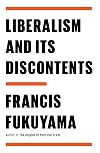
Written in 2021, this is a very wise and timely review of what liberalism is and preview of the troubles it's facing and in some cases provoking. The core idea of liberalism, that all people are created equal and should have the same rights and perhaps the same opportunities as well, is one that is bound to rub roughly against many real-world conditions, as Fukuyama explains. It's history has been and probably always be fairly messy. Is liberalism now under acute attack? It appears to be. show more Democracy is always an experiment in progress. But Fukuyama believes the American people will not accept unrestrained authoritarianism in government. I hope he's right. show less
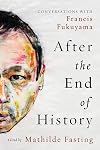
Almost thirty years ago, the political scientist Francis Fukuyama wrote The End of History and the Last Man, a highly influential and often misunderstood work of political philosophy that declared an end to history in the sense that humanity had discovered the final and optimal form of human government: liberal democracy.
Thirty years later, not only do we have competing political models in China and Russia, but we are also experiencing the weakening and decay of liberal democracies show more throughout the world (most notably in the US and Brittain) due to a resurgence in authoritarian populism, nationalism, and religious fundamentalism. As Robert Kagan put it, these recent developments seem to spell the end of the end of history.
Or are we simply misunderstanding Fukuyama’s original point?
In After the End of History, the reader gets to hear Fukuyama address this question himself. Through a series of interviews, Fukuyama defends and elaborates on his original thesis, in addition to reflecting on his classical education and early intellectual development, his research interests and published works, the current state of the world, and the future of history, granting the reader access to the mind of one of the greatest political theorists of our time.
As Fukuyama explains, confusion regarding “the end of history” thesis stems from misreading it as an empirical statement rather than as the normative statement it was intended to be.
Considered as an empirical statement, the end of history is interpreted to mean that, after the dissolution of the Soviet Union in 1991, history itself was supposed to end and the world would inevitably become ever more liberal and democratic. Since this clearly didn’t happen, many consider the “end of history” thesis to be the prototypical modern example of a failed historical prediction.
But this is not what Fukuyama intended; as a normative statement, one can think of the term “history” in “the end of history” as a synonym for “development” or “modernization,” as in “the end of political development.” In this reading, humanity has simply discovered the most effective, stable, and universalizable political system that satisfies the majority of the citizenry’s needs. The various forms of authoritarianism and communism ultimately failed to produce successful societies in the way that liberal democracies can, and, therefore, humanity has found the ideal political system to strive for (even if, in practice, it isn’t universally achieved).
This normative interpretation is far more difficult to argue against. As Fukuyama said:
“The most significant criticism isn’t on the Left because most people on the Left had at that point given up on communism. Nobody was willing to argue that there’s a higher stage where we’re going to nationalize all private property and have a centralized Leninist state. There’s a species of criticism that says you still have these big contradictions in capitalism, and that you need to somehow move to a different economic system, but I’ve never really understood what the alternative is other than greater regulation of the capitalist system and stronger social protections. You can have a little more, you can have a little less, but you’re still basically within a market economy. The only alternative is getting to the point where you start seriously trying to abolish private property, and not very many people are willing to go that far except in certain limited sectors.”
Fukuyama makes a valid point here. If “the end of history” is simply suggesting that liberal democracy is the ideal system of government—but, for a host of reasons, one that the world will not necessarily adopt—then as a normative statement, the thesis is well-founded. There is simply no viable alternative that would be appealing to the majority of people, or that, historically, has been shown to work.
But ideal does not mean inevitable, and even once a country adopts a liberal democratic system, there is no guarantee that it can keep it or that it will function without issue. As Fukuyama said:
“The ‘last man’ sections of The End of History are all about what could go wrong in a successful liberal democracy. The problem is the fact that peace and prosperity will not ultimately be satisfying to many people who will continue to seek recognition and community. For this reason I said very clearly back then that neither nationalism nor religion would disappear from world politics, but few people remember that now.”
Unfortunately, few people today grant Fukuyama this more charitable interpretation, and “the end of history” is considered nothing more than another failed historical prophecy. But this is unfortunate, because Fukuyama’s larger point is that liberal democracy is the form of government that we should be striving to establish or trying to protect, not that it will inevitably appear throughout the world due to uncontested historical forces. That’s why Fukuyama dedicated a large portion of his subsequent career to studying how effective states are built and how to prevent their ultimate decay—a possibility the US now faces in dealing with right-wing extremism and Trump’s attacks on the institutions of democracy.
Fukuyama is hopeful that the strength of US institutions is enough to withstand the assaults from the right, that liberal democracy will win out in the end against authoritarian populism, and that a richer conception of freedom will develop that includes a sense of duty and obligation to others and to the common good. But, of course, no one can predict the future, and, as Fukuyama has always maintained, to preserve liberal democracy, we must fight for it against the forces that seek to destroy it from within.
What’s also interesting to note is how far left Fukuyama has turned in terms of his politics and economic positions. Once associated with the neoconservative movement, Fukuyama has, in his own words, “definitely moved further to the left.” Reflecting on the war in Iraq and the 2008 financial crisis—both products of certain conservative ideas—Fukuyama began questioning his more conservative positions, and now believes inequality to be a much more significant problem, recognizes the limits of the free market, and embraces more robust social welfare and redistribution policies. Fukuyama also believes that the idea of freedom without a corresponding sense of duty to others is an impoverished view that is fundamentally inconsistent with the country’s founding principles.
Hopefully, this book goes a long way in clarifying Fukuyama’s political positions and drives home the point that liberal democracy, while ideal, is not inevitable, and must be fought for and protected from those who wish to destroy it (which today come almost exclusively from the right). show less
Thirty years later, not only do we have competing political models in China and Russia, but we are also experiencing the weakening and decay of liberal democracies show more throughout the world (most notably in the US and Brittain) due to a resurgence in authoritarian populism, nationalism, and religious fundamentalism. As Robert Kagan put it, these recent developments seem to spell the end of the end of history.
Or are we simply misunderstanding Fukuyama’s original point?
In After the End of History, the reader gets to hear Fukuyama address this question himself. Through a series of interviews, Fukuyama defends and elaborates on his original thesis, in addition to reflecting on his classical education and early intellectual development, his research interests and published works, the current state of the world, and the future of history, granting the reader access to the mind of one of the greatest political theorists of our time.
As Fukuyama explains, confusion regarding “the end of history” thesis stems from misreading it as an empirical statement rather than as the normative statement it was intended to be.
Considered as an empirical statement, the end of history is interpreted to mean that, after the dissolution of the Soviet Union in 1991, history itself was supposed to end and the world would inevitably become ever more liberal and democratic. Since this clearly didn’t happen, many consider the “end of history” thesis to be the prototypical modern example of a failed historical prediction.
But this is not what Fukuyama intended; as a normative statement, one can think of the term “history” in “the end of history” as a synonym for “development” or “modernization,” as in “the end of political development.” In this reading, humanity has simply discovered the most effective, stable, and universalizable political system that satisfies the majority of the citizenry’s needs. The various forms of authoritarianism and communism ultimately failed to produce successful societies in the way that liberal democracies can, and, therefore, humanity has found the ideal political system to strive for (even if, in practice, it isn’t universally achieved).
This normative interpretation is far more difficult to argue against. As Fukuyama said:
“The most significant criticism isn’t on the Left because most people on the Left had at that point given up on communism. Nobody was willing to argue that there’s a higher stage where we’re going to nationalize all private property and have a centralized Leninist state. There’s a species of criticism that says you still have these big contradictions in capitalism, and that you need to somehow move to a different economic system, but I’ve never really understood what the alternative is other than greater regulation of the capitalist system and stronger social protections. You can have a little more, you can have a little less, but you’re still basically within a market economy. The only alternative is getting to the point where you start seriously trying to abolish private property, and not very many people are willing to go that far except in certain limited sectors.”
Fukuyama makes a valid point here. If “the end of history” is simply suggesting that liberal democracy is the ideal system of government—but, for a host of reasons, one that the world will not necessarily adopt—then as a normative statement, the thesis is well-founded. There is simply no viable alternative that would be appealing to the majority of people, or that, historically, has been shown to work.
But ideal does not mean inevitable, and even once a country adopts a liberal democratic system, there is no guarantee that it can keep it or that it will function without issue. As Fukuyama said:
“The ‘last man’ sections of The End of History are all about what could go wrong in a successful liberal democracy. The problem is the fact that peace and prosperity will not ultimately be satisfying to many people who will continue to seek recognition and community. For this reason I said very clearly back then that neither nationalism nor religion would disappear from world politics, but few people remember that now.”
Unfortunately, few people today grant Fukuyama this more charitable interpretation, and “the end of history” is considered nothing more than another failed historical prophecy. But this is unfortunate, because Fukuyama’s larger point is that liberal democracy is the form of government that we should be striving to establish or trying to protect, not that it will inevitably appear throughout the world due to uncontested historical forces. That’s why Fukuyama dedicated a large portion of his subsequent career to studying how effective states are built and how to prevent their ultimate decay—a possibility the US now faces in dealing with right-wing extremism and Trump’s attacks on the institutions of democracy.
Fukuyama is hopeful that the strength of US institutions is enough to withstand the assaults from the right, that liberal democracy will win out in the end against authoritarian populism, and that a richer conception of freedom will develop that includes a sense of duty and obligation to others and to the common good. But, of course, no one can predict the future, and, as Fukuyama has always maintained, to preserve liberal democracy, we must fight for it against the forces that seek to destroy it from within.
What’s also interesting to note is how far left Fukuyama has turned in terms of his politics and economic positions. Once associated with the neoconservative movement, Fukuyama has, in his own words, “definitely moved further to the left.” Reflecting on the war in Iraq and the 2008 financial crisis—both products of certain conservative ideas—Fukuyama began questioning his more conservative positions, and now believes inequality to be a much more significant problem, recognizes the limits of the free market, and embraces more robust social welfare and redistribution policies. Fukuyama also believes that the idea of freedom without a corresponding sense of duty to others is an impoverished view that is fundamentally inconsistent with the country’s founding principles.
Hopefully, this book goes a long way in clarifying Fukuyama’s political positions and drives home the point that liberal democracy, while ideal, is not inevitable, and must be fought for and protected from those who wish to destroy it (which today come almost exclusively from the right). show less
Lists
Evan's Wish List (2)
Reading list (1)
Awards


You May Also Like


Associated Authors
Statistics
- Works
- 66
- Also by
- 8
- Members
- 8,190
- Popularity
- #2,955
- Rating
- 3.7
- Reviews
- 102
- ISBNs
- 274
- Languages
- 23
- Favorited
- 12

