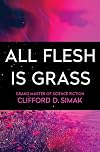
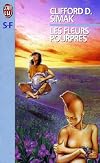
All Flesh Is Grass
by Clifford D. Simak
On This Page
Description
Long before Under the Dome, this novel of a town trapped within an invisible force field earned a Nebula Award nomination for the author of Way Station. Nothing much ever happens in Millville, a small, secluded Middle-American community--until the day Brad Carter discovers he is unable to leave. And the nearly bankrupt real estate agent is not the only one being held prisoner; every resident is confined within the town's boundaries by an invisible force field that cannot be breached. As show more local tensions rapidly reach breaking point, a set of bizarre circumstances leads Brad to the source of their captivity, making him humanity's reluctant ambassador to an alien race of sentient flora, and privy to these jailers' ultimate intentions. But some of Millville's most powerful citizens do not take kindly to Carter's "collaboration with the enemy," even under the sudden threat of global apocalypse. Decades before Stephen King trapped an entire town in Under the Dome, science fiction Grand Master Clifford D. Simak explored the shocking effects of communal captivity on an unsuspecting population. Nominated for the Nebula Award, All Flesh Is Grass is a riveting masterwork that brilliantly reinvents the alien invasion story. show lessTags
Recommendations

















Member Reviews
This SF novel from 1965 centers on one Bradshaw Carter, a down-on-his-luck small-town guy who finds himself in the middle of a series of strange events, including an impassable barrier around the town, calls for him on telephones that should not actually function as telephones, and a wealthy businessman giving him fifteen hundred dollars because mysterious voices told him to. All of which turns out to be courtesy of intelligent extra-dimensional alien flowers who either want to invade the Earth or to be humanity's friends. It's not at all clear which.
It's all pleasantly ridiculous, and although it's not played as humor, there's a sort of charmingly droll feeling to it all. And I was genuinely interested by the question of whether the show more alien flowers were friend or foe. It's a question that gets resolved at the end in an odd and rather abrupt fashion, admittedly, but I found enjoyable, anyway.
Simak was a very prolific writer, and his stuff ranged from the really good to the entirely forgettable. I feel like this is one that ought to be remembered more than it maybe is, because it's still fun. show less
It's all pleasantly ridiculous, and although it's not played as humor, there's a sort of charmingly droll feeling to it all. And I was genuinely interested by the question of whether the show more alien flowers were friend or foe. It's a question that gets resolved at the end in an odd and rather abrupt fashion, admittedly, but I found enjoyable, anyway.
Simak was a very prolific writer, and his stuff ranged from the really good to the entirely forgettable. I feel like this is one that ought to be remembered more than it maybe is, because it's still fun. show less
It's 1965, so there's a general sense of small town glorification and everymen are everywhere. This novel happens to be one of Simak's most firmly grounded in modern ('60's modern) society, and that's the expectations I had when I began reading.
And then we've got our WTH moment. How many impenetrable domes encapsulate small towns in SF, anyway? Stephen King did it twice, first in Tommyknockers and then in The Dome, but is there a direct line connection to this tale or how far back does the concept go? I was worried that I've already read this book before, albeit from later incarnations by later authors, but... I shouldn't have worried. Simak won't lead me astray and won't disappoint.
Suffice to say, it's full of lots of surprises and a show more wild alien invasion and discovery, time travel, alternate earths, action, betrayal, and a satisfactory end. The title may be referring to a bible passage, but I wouldn't take too much *stalk* in that. There are plenty of grassy knolls to stroll down, idea-wise, and enough new horticultural discoveries to confound any social scientist. Sense a theme? Yar, the aliens quite grow on you.
I give this novel full props for taking the SF in odd and cool ways, for staying grounded in '60's character tropes, and being immensely readable like all the rest of his novels. Its not the individual ideas, though, that make this great. It's the way he mixes the pot and grows the flowers. :) show less
And then we've got our WTH moment. How many impenetrable domes encapsulate small towns in SF, anyway? Stephen King did it twice, first in Tommyknockers and then in The Dome, but is there a direct line connection to this tale or how far back does the concept go? I was worried that I've already read this book before, albeit from later incarnations by later authors, but... I shouldn't have worried. Simak won't lead me astray and won't disappoint.
Suffice to say, it's full of lots of surprises and a show more wild alien invasion and discovery, time travel, alternate earths, action, betrayal, and a satisfactory end. The title may be referring to a bible passage, but I wouldn't take too much *stalk* in that. There are plenty of grassy knolls to stroll down, idea-wise, and enough new horticultural discoveries to confound any social scientist. Sense a theme? Yar, the aliens quite grow on you.
I give this novel full props for taking the SF in odd and cool ways, for staying grounded in '60's character tropes, and being immensely readable like all the rest of his novels. Its not the individual ideas, though, that make this great. It's the way he mixes the pot and grows the flowers. :) show less
It was much more descriptive than Project Pope, and I loved its description -- both pleasures, annoyances, pains, and terrors -- of the small-town of Millville. Simak did a wonderful job of evoking emotion: bittersweet memories and nostalgia, annoyance, anger, hoplessness, despair, contentment and bewilderment. The narrator was well done and not a glossy, saintly character. He makes mistakes, shows annoyance (this is particularly true in his relations with Tupper -- a lesser novelist would have had our character/hero always treat Tupper with patience, gentleness, and love). Once again aliens come down and threaten, amongst other things, to inadvertenly screw up our economy. The aliens are cleverly presented as flowers who pose as show more sinister possibility of ecological subversion. As is usual in Simak, the aliens bring ideas and images of alieness (leading to possible disgust and revulsion) which will require change but are ripe with possibility. Though a happy ending was totally expected, the idea of aliens loving to be held as beautiful was intriguing as well as sentimental. Simak’s vision of a community of communing sentient beings is a characteristic one. I like humanity having something unique to offer. (The novel also had Simak’s typical themes of alien contact and alternate world/time travel.) Simak well characterizes the ambivalence of alien contact (promise of destruction or salvation) and the imperfect comprehensions of alien as well as human. show less
2.5/5
My second Simak after reading City. Gotta say that I'm a bit disappointment by this one.
The best thing I can say about it is that Simak has moments of really elegant and and eloquent prose. I would be reading along and suddenly be taken aback by a really strong few paragraphs that pulled me in and left me thinking. It was really enjoyable to see some of that level of writing that I saw in City again. All Flesh Is Grass has a melancholic and austere tone that pairs well with its condemnation of humanity. Simak makes it clear that he thinks that humanity is not ready for first contact with another intelligence species. The ideas/technology and aliens themselves are also interesting.
My main point of criticism is that it's just so show more damn boring. There are very few moments of actual excitement or intrigue. Most of the time the reader has to endure the characters hand wringing over the events of the plot, or giving massive text block exposition on background information, other characters, or the way that the world works. This is all exacerbated by the mostly dead simple writing style, and the painfully slow plotline. I don't think it's nessasarily bad, but I just can't get all that excited about anything this book does or has to say because of the drudgery it entails.
Oh, yeah, I should mention the ending too I suppose. F-tier ending. Not only did it resolve so quickly that I nearly had whiplash, but the ending itself was schmaltzy to the point that I laughed. Ah yes, love and ability to perceive beauty, that's what sets us humans apart. If we could only all learn that, and harness its power, we could do anything. Ugh.
This hasn't put me off from reading more of Simak, mostly because of how strong City was, but dang. What a bummer. show less
My second Simak after reading City. Gotta say that I'm a bit disappointment by this one.
The best thing I can say about it is that Simak has moments of really elegant and and eloquent prose. I would be reading along and suddenly be taken aback by a really strong few paragraphs that pulled me in and left me thinking. It was really enjoyable to see some of that level of writing that I saw in City again. All Flesh Is Grass has a melancholic and austere tone that pairs well with its condemnation of humanity. Simak makes it clear that he thinks that humanity is not ready for first contact with another intelligence species. The ideas/technology and aliens themselves are also interesting.
My main point of criticism is that it's just so show more damn boring. There are very few moments of actual excitement or intrigue. Most of the time the reader has to endure the characters hand wringing over the events of the plot, or giving massive text block exposition on background information, other characters, or the way that the world works. This is all exacerbated by the mostly dead simple writing style, and the painfully slow plotline. I don't think it's nessasarily bad, but I just can't get all that excited about anything this book does or has to say because of the drudgery it entails.
Oh, yeah, I should mention the ending too I suppose. F-tier ending. Not only did it resolve so quickly that I nearly had whiplash, but the ending itself was schmaltzy to the point that I laughed. Ah yes, love and ability to perceive beauty, that's what sets us humans apart. If we could only all learn that, and harness its power, we could do anything. Ugh.
This hasn't put me off from reading more of Simak, mostly because of how strong City was, but dang. What a bummer. show less
Really 3.5 stars. Like others by Simak, a good message about living in harmony with other intelligences, mixed with characters we can identify with because they're so much like us, and mysterious mild adventures. And a fair sprinkling of humor and social commentary. Still, a fairly light read, can't give it more stars because it's not important or worth your time to hunt down if it's not handy for you.
I recently re-read this, and discovered what I'd forgotten - what a consummate literary writer Simak could be. This story, while it's about an invisible barrier and the aliens that create it, is a classic exploration of small-town America. Extremely readable, with likeable characters that consider problems the way you and I might. The language and story aren't zippy action sequences, but flowing prose about real people. Definitely worth reading if you like intelligent writing.
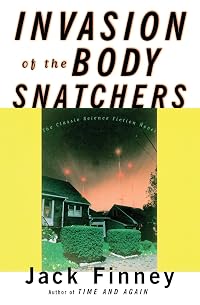
This story reminds me of Jack Finney, a rough contemporary of Simak's.
This story reminds me of Jack Finney, a rough contemporary of Simak's.
USA, ca 1965
Bradshaw Carter bor i Millville, en lille flække som alle andre små flækker, men en dag bliver byen omsluttet af en usynlig form for mur, som ikke tillader levende væsner at passere igennem. Brad kører ind i muren med sin bil med lav hastighed og er heldig at der ikke sker noget, men bagved kommer en lastbil, som bliver kastet tilbage af muren og Brads bil bliver kvast. Lastbilchaufføren slipper med lidt småskrammer, men lastbilen bliver ødelagt. Brad går op til Bill Donovan for at ringe efter hjælp, men Bill og hans kone Liz opdager at muren forhindrer dem i at gå ind til deres to børn på seks og otte år, for den går midt igennem deres hus. Bill ringer til sin svoger og svigerinde, Jake og Myrt, for at få show more dem til at komme. Bill opgiver at ringe og går videre. Han møder mrs Tyler, der har været lidt bims, siden Tupper forsvandt for mindst 10 år siden. Men lidt efter møder Brad faktisk Tupper, der sidder nøgen og gynger. Han er kun iført en gammel stråhat og er lige så enfoldig som da Brad sidst så ham.
Brads far var gartner og havde grønne fingre, men dem har Brad ikke arvet. Faderen fandt engang nogle purpurfarvede blomster og tog dem med hjem og opformerede. Siden blev de spredt over hele byen. Så døde først faderen og for et par år siden moderen og Brads lille ejendomsmæglerfirma har aldrig givet penge og kassen er nu mere end tom. Han har for nylig mødt nogle, han engang gik i skole med, men ikke har set i lang tid. Alf Peterson og Nancy Sherwood. Nancys far, Gerald Sherwood, kan fortælle en historie om at få gode ideer, der er helt færdigbagte fra starten og om hvordan han efterhånden har en fornemmelse af at blive styret på en god måde af noget, han ikke forstår. Fx har han lavet en ny slags telefoner på sin fabrik og sendt dem til et firma i New Jersey. Men han ved ikke hvad de gør eller hvorfor han skulle fabrikere dem og sende dem til New Jersey. En anden ting er at han gerne vil give Brad 1500 dollars. Og Alf har et job til Brad, hvis han vil have det, men det er lidt underligt.
På vej hen til Alf kører Brad ind i muren, men det var jo det som fortællingen startede med.
Byens myndigheder kalder folk sammen til møde ved hjælp af katastrofesirenen og beroliger med at banken nok skal låne folk penge til det her er ovre igen.
Brad følger efter Tupper Tyler og ser ham forsvinde i et område, hvor de purpurfarvede står helt tæt. Da han følger efter er Brad pludselig et helt andet sted. Han finder Tupper og får via ham en kontakt med blomsterne, der er en intelligens, som nogle andre intelligente væsner har udviklet for at gemme data. Blomsterne gætter på at der er uendeligt mange forskellige verdener hver adskilt af en lille bitte tidsforskel. Det er samme fænomen, de har brugt til at lave den usynlige mur med. Brad kommer tilbage og får kontaktet en senator. Han får også blomsterne til at komme med en læge, for byens egen læge er blevet syg. Blomsternes læge har sin egen tolk med, for han kommunikerer kun via telepati. Til gengæld er han dygtig og kurerer folk, også nogle, der ikke vidste at de var syge.
Nancy og Brad opdager at de ikke har brug for at gå på en fancy restaurant eller ud at danse, men også bare kan være forelskede. Blomsterne har fået Brad til at tage en lille maskine med fra den verden, Tupper også er hjemmevant i. Det er en slags tidsmaskine og blomsterne har tænkt sig at forhindre krig med den.
Det synes generalerne ikke om og der er muligvis en plan om at droppe en brintbombe over Millville.
Brad får dog en ide af en af de andre, Stiffy Grant. Måske er menneskene de eneste, som faktisk bare synes at blomster er pæne i sig selv. Og måske vil blomsterne bevare menneskene alene af den grund? Så det er en fordel, hvis man vil forhandle med blomsterne.
En underlig historie, hvor Simak får blandet en hel del umuligheder sammen i en historie. Men gartnere er nu gode folk. Og enfoldige folk kan have andre talenter. Oversættelsen er til gengæld monstrøst ringe, fx er blomsterfrø oversat til frøer. Palle Juul Holm afstod i sin tid fra at anmelde bogen (altså den af Vollov oversatte tekst), fordi han ville vente til bogen var blevet oversat til dansk! show less
Bradshaw Carter bor i Millville, en lille flække som alle andre små flækker, men en dag bliver byen omsluttet af en usynlig form for mur, som ikke tillader levende væsner at passere igennem. Brad kører ind i muren med sin bil med lav hastighed og er heldig at der ikke sker noget, men bagved kommer en lastbil, som bliver kastet tilbage af muren og Brads bil bliver kvast. Lastbilchaufføren slipper med lidt småskrammer, men lastbilen bliver ødelagt. Brad går op til Bill Donovan for at ringe efter hjælp, men Bill og hans kone Liz opdager at muren forhindrer dem i at gå ind til deres to børn på seks og otte år, for den går midt igennem deres hus. Bill ringer til sin svoger og svigerinde, Jake og Myrt, for at få show more dem til at komme. Bill opgiver at ringe og går videre. Han møder mrs Tyler, der har været lidt bims, siden Tupper forsvandt for mindst 10 år siden. Men lidt efter møder Brad faktisk Tupper, der sidder nøgen og gynger. Han er kun iført en gammel stråhat og er lige så enfoldig som da Brad sidst så ham.
Brads far var gartner og havde grønne fingre, men dem har Brad ikke arvet. Faderen fandt engang nogle purpurfarvede blomster og tog dem med hjem og opformerede. Siden blev de spredt over hele byen. Så døde først faderen og for et par år siden moderen og Brads lille ejendomsmæglerfirma har aldrig givet penge og kassen er nu mere end tom. Han har for nylig mødt nogle, han engang gik i skole med, men ikke har set i lang tid. Alf Peterson og Nancy Sherwood. Nancys far, Gerald Sherwood, kan fortælle en historie om at få gode ideer, der er helt færdigbagte fra starten og om hvordan han efterhånden har en fornemmelse af at blive styret på en god måde af noget, han ikke forstår. Fx har han lavet en ny slags telefoner på sin fabrik og sendt dem til et firma i New Jersey. Men han ved ikke hvad de gør eller hvorfor han skulle fabrikere dem og sende dem til New Jersey. En anden ting er at han gerne vil give Brad 1500 dollars. Og Alf har et job til Brad, hvis han vil have det, men det er lidt underligt.
På vej hen til Alf kører Brad ind i muren, men det var jo det som fortællingen startede med.
Byens myndigheder kalder folk sammen til møde ved hjælp af katastrofesirenen og beroliger med at banken nok skal låne folk penge til det her er ovre igen.
Brad følger efter Tupper Tyler og ser ham forsvinde i et område, hvor de purpurfarvede står helt tæt. Da han følger efter er Brad pludselig et helt andet sted. Han finder Tupper og får via ham en kontakt med blomsterne, der er en intelligens, som nogle andre intelligente væsner har udviklet for at gemme data. Blomsterne gætter på at der er uendeligt mange forskellige verdener hver adskilt af en lille bitte tidsforskel. Det er samme fænomen, de har brugt til at lave den usynlige mur med. Brad kommer tilbage og får kontaktet en senator. Han får også blomsterne til at komme med en læge, for byens egen læge er blevet syg. Blomsternes læge har sin egen tolk med, for han kommunikerer kun via telepati. Til gengæld er han dygtig og kurerer folk, også nogle, der ikke vidste at de var syge.
Nancy og Brad opdager at de ikke har brug for at gå på en fancy restaurant eller ud at danse, men også bare kan være forelskede. Blomsterne har fået Brad til at tage en lille maskine med fra den verden, Tupper også er hjemmevant i. Det er en slags tidsmaskine og blomsterne har tænkt sig at forhindre krig med den.
Det synes generalerne ikke om og der er muligvis en plan om at droppe en brintbombe over Millville.
Brad får dog en ide af en af de andre, Stiffy Grant. Måske er menneskene de eneste, som faktisk bare synes at blomster er pæne i sig selv. Og måske vil blomsterne bevare menneskene alene af den grund? Så det er en fordel, hvis man vil forhandle med blomsterne.
En underlig historie, hvor Simak får blandet en hel del umuligheder sammen i en historie. Men gartnere er nu gode folk. Og enfoldige folk kan have andre talenter. Oversættelsen er til gengæld monstrøst ringe, fx er blomsterfrø oversat til frøer. Palle Juul Holm afstod i sin tid fra at anmelde bogen (altså den af Vollov oversatte tekst), fordi han ville vente til bogen var blevet oversat til dansk! show less
Members
- Recently Added By
Lists

Books Set in Wisconsin
25 works; 7 members
Author Information

390+ Works 25,420 Members
Some Editions
Awards and Honors
Awards
Series
Belongs to Publisher Series
Common Knowledge
- Canonical title*
- Nagu õieke väljal
- Original publication date
- 1965
- People/Characters
- Bradshaw Carter; Tupper Tyler; Nancy Sherwood; Higman Thomas, Mayor; Gerald Sherwood; Hiram Martin, constable (show all 20); Alf Peterson; Stiffy Grant; Mr. Smith, steward; Doc Fabian; Senator Gibbs; Bill Donovan; Joe Evans; Mrs. Tyler; Ed Adler; Mae Hutton; Gabriel Thomas; Len Streeter; Father Flanagan; Arthur Newcombe, state department
- Important places
- Millville,Wisconsin, USA
- First words
- When I swung out of the village street onto the main highway, there was a truck behind me.
- Last words
- (Click to show. Warning: May contain spoilers.)But for a little moment I'd have it as I wanted to remember it, here with Nancy at my side and that old reprobate friend of mine across the barrier, savoring the greatness of this tiny slice of time in which the strength of true humanity (not of position or of power) rose to the vision of a future in which many different races marched side by side toward a glory we could not guess as yet.
- Blurbers
- Heinlein, Robert A.
*Some information comes from Common Knowledge in other languages. Click "Edit" for more information.
Classifications
Statistics
- Members
- 799
- Popularity
- 34,985
- Reviews
- 22
- Rating
- (3.63)
- Languages
- 9 — Bulgarian, Danish, English, Estonian, French, German, Portuguese, Spanish, Swedish
- Media
- Paper, Audiobook, Ebook
- ISBNs
- 14
- ASINs
- 18