On This Page
Description
Searching for truffles in a wood, a man and his dog unearth something less savoury-a human hand. The body, as Chief Inspector Wexford is informed later, has lain buried for ten years or so, wrapped in a purple cotton shroud. The post mortem cannot reveal the precise cause of death. The only clue is a crack in one of the dead man's ribs. Although the police database covers a relatively short period of time, it stores a long list of Missing Persons. So Wexford knows he is going to have a job show more on his hands to identify the corpse. And then, only about twenty yards away from the woodland burial site, in the cellar of a disused cottage, another body is discovered. The detection skills of Wexford, Burden, and the other investigating officers of the Kingsmarkham Police Force, are tested to the utmost to see if the murders are connected and to track down whoever is responsible. show lessTags
Recommendations













Member Reviews
I have been a fan of Ruth Rendell novels for more than three decades but her Wexford novels have never been my favorite Rendell books. Nevertheless, I have read each and every one of them and have found them to be consistently high-quality police procedurals always worth my reading time. Not in the Flesh, the twenty-first Wexford novel, does remind me that I generally enjoy Rendell’s standalone novels and her Barbara Vine novels more but, as always, this latest one is a welcome addition to the Wexford saga.
It all started when Jim Belbury and his truffle-sniffing dog found more than they were looking for on one of their regular attempts to put a few extra pounds into Belbury’s pockets. Jim knew that the dog had a real talent for show more unearthing the valuable truffles so he encouraged his dog to keep at it after it began digging in a likely spot. Unfortunately for Jim, rather than a large truffle, the dog came away with what was left of a human hand that had been buried in that particular spot.
When Inspector Wexford learns that the recovered body has been in the ground for some eleven years, Wexford and his team settle in for some old-fashioned police work and begin to interview everyone living in the vicinity of the crime scene. Matters get complicated when a second body is found within a stone’s throw of where the first was recovered. The second victim seems to have only been dead for eight years but Wexford does not believe in coincidence and is convinced that the two deaths have to be related in some way.
Rendell provides an array of characters from various levels of British society for Wexford and the Kingsmarkham police force to interview and it is through a long series of interviews that provide a series of interconnecting clues that the case is eventually solved. Some readers will solve the case before Wexford does but, after all, that can be part of the fun, and no mystery writer should be faulted for letting that happen.
Not in the Flesh has a subplot of sorts that offers Rendell the opportunity to explore the horrors of the genital mutilation suffered by countless young African girls, including those whose families have immigrated to Britain. Wexford, partially at the request of one of his daughters, spends some of his precious time trying to prevent just that horror from happening to a young girl whom everyone expects will soon be taken out of the country to suffer the process. It is a somewhat interesting subplot, particularly in the way that it explores the limitations faced by the British legal system in protecting potential victims but, ultimately, it is somewhat of a distraction.
Ruth Rendell fans will not be disappointed in Not in the Flesh, but first-timers might wonder a bit what all the fuss about the Wexford series is if they stop with this one. That said, I will definitely be reading the next offering from Rendell, whether it be another Wexford novel, one of her standalones, or something written under the Barbara Vine pen name.
Rated at: 3.5 show less
It all started when Jim Belbury and his truffle-sniffing dog found more than they were looking for on one of their regular attempts to put a few extra pounds into Belbury’s pockets. Jim knew that the dog had a real talent for show more unearthing the valuable truffles so he encouraged his dog to keep at it after it began digging in a likely spot. Unfortunately for Jim, rather than a large truffle, the dog came away with what was left of a human hand that had been buried in that particular spot.
When Inspector Wexford learns that the recovered body has been in the ground for some eleven years, Wexford and his team settle in for some old-fashioned police work and begin to interview everyone living in the vicinity of the crime scene. Matters get complicated when a second body is found within a stone’s throw of where the first was recovered. The second victim seems to have only been dead for eight years but Wexford does not believe in coincidence and is convinced that the two deaths have to be related in some way.
Rendell provides an array of characters from various levels of British society for Wexford and the Kingsmarkham police force to interview and it is through a long series of interviews that provide a series of interconnecting clues that the case is eventually solved. Some readers will solve the case before Wexford does but, after all, that can be part of the fun, and no mystery writer should be faulted for letting that happen.
Not in the Flesh has a subplot of sorts that offers Rendell the opportunity to explore the horrors of the genital mutilation suffered by countless young African girls, including those whose families have immigrated to Britain. Wexford, partially at the request of one of his daughters, spends some of his precious time trying to prevent just that horror from happening to a young girl whom everyone expects will soon be taken out of the country to suffer the process. It is a somewhat interesting subplot, particularly in the way that it explores the limitations faced by the British legal system in protecting potential victims but, ultimately, it is somewhat of a distraction.
Ruth Rendell fans will not be disappointed in Not in the Flesh, but first-timers might wonder a bit what all the fuss about the Wexford series is if they stop with this one. That said, I will definitely be reading the next offering from Rendell, whether it be another Wexford novel, one of her standalones, or something written under the Barbara Vine pen name.
Rated at: 3.5 show less
It’s difficult to review a mystery without giving too much away. In this case, all I need to say is that Ruth Rendell has written her typically good Chief Inspector Wexford mystery. The characters are familiar, they’re older, but they act as they always have. A relatively new character, Detective Sergeant Hannah Goldsmith, makes an interesting foil for Wexford’s reflections on age and a changing society.A familiar character, Inspector Mike Burden, “...had at last, regretfully, discarded his designer jeans for charcoal trousers with knife-edge crease and a stone-colored polo neck under a linen jacket.”Rendell continues to fit current social issues into her stories. She can be edgy at times but never crosses the line into the show more lurid or overly violent. I find her approach relevant and appropriate.Not in the Flesh has several plot threads that may or may not intertwine or ever be resolved. Discovered bodies, missing persons, migrant workers, immigrants, odd marriages, mysterious writings. It’s great storytelling. I understand that The Monster in the Box, which is the next Wexford mystery, is also the last Wexford mystery. It’s been a good run and a great reading pleasure. show less
Cold Cases + Wexford’s Seventh Law
Review of the Seal Kindle eBook edition (2010) of the original Hutchinson (UK) hardcover (2007).
I seem to be entering the area of diminishing returns with the late Wexfords. I don't know if it will be the same case with the late non-Wexford-Rendells or the Barbara Vines, as I haven't read any of them yet. The level of enjoyment is diminishing as the cast on the police side increases and the amount of quotable banter between Wexford and Burden decreases. The cases are becoming ever more complex and unrealistic and it seems that every book has to have a subplot involving one of the tiresome Wexford daughters and their current social cause.
The case begins with a truffle dog unearthing a long buried show more skeleton in a filled in ditch. Various suspects come to light in the vicinity and soon yet another skeleton is discovered in an abandoned shed. There is a lot of tracing of previous inhabitants but the actual identity of the victims remains a mystery for the longest time. Confusion abounds as unrelated 'relatives' give DNA samples to add to the problems. A reclusive author and a bizarre household with a present and a past wife living under the same roof become the centre of the investigation and of course Wexford solves it all in the end.
Not in the Flesh continues my 2023 binge read / re-read of Ruth Rendell and this is the 21st of the Inspector Wexford series. I have had to skip over Wexford #15 to #18 as I haven’t been able to source them yet. I think I'm going to give the Wexfords a rest for a while and try out some non-Wexfords for a bit.
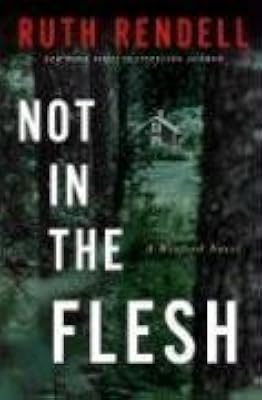
See cover at https://upload.wikimedia.org/wikipedia/en/8/89/RandomHouse_Hutchinson_RuthRendel...
Cover image for the original Hutchinson (UK) hardcover edition from 2007. Image sourced from Wikipedia..
Wexford's Laws
Wexford’s Law No. 7 appears in this book. Wexford’s Laws are occasional thoughts about quirky observations made by the Chief Inspector for which he assigns a number.
Favourite Quotes
Other Reviews
Review at Rich, Tangled and as Sharply Observed as Ever by Kirkus Reviews, June 10, 2008.
Trivia and no Link
Not in the Flesh was not adapted for television as part of the Ruth Rendell / Inspector Wexford Mysteries TV series (1987-2000) as the novel was published after the series had ended. show less
Review of the Seal Kindle eBook edition (2010) of the original Hutchinson (UK) hardcover (2007).
I seem to be entering the area of diminishing returns with the late Wexfords. I don't know if it will be the same case with the late non-Wexford-Rendells or the Barbara Vines, as I haven't read any of them yet. The level of enjoyment is diminishing as the cast on the police side increases and the amount of quotable banter between Wexford and Burden decreases. The cases are becoming ever more complex and unrealistic and it seems that every book has to have a subplot involving one of the tiresome Wexford daughters and their current social cause.
The case begins with a truffle dog unearthing a long buried show more skeleton in a filled in ditch. Various suspects come to light in the vicinity and soon yet another skeleton is discovered in an abandoned shed. There is a lot of tracing of previous inhabitants but the actual identity of the victims remains a mystery for the longest time. Confusion abounds as unrelated 'relatives' give DNA samples to add to the problems. A reclusive author and a bizarre household with a present and a past wife living under the same roof become the centre of the investigation and of course Wexford solves it all in the end.
Not in the Flesh continues my 2023 binge read / re-read of Ruth Rendell and this is the 21st of the Inspector Wexford series. I have had to skip over Wexford #15 to #18 as I haven’t been able to source them yet. I think I'm going to give the Wexfords a rest for a while and try out some non-Wexfords for a bit.
See cover at https://upload.wikimedia.org/wikipedia/en/8/89/RandomHouse_Hutchinson_RuthRendel...
Cover image for the original Hutchinson (UK) hardcover edition from 2007. Image sourced from Wikipedia..
Wexford's Laws
Wexford’s Law No. 7 appears in this book. Wexford’s Laws are occasional thoughts about quirky observations made by the Chief Inspector for which he assigns a number.
In the list he kept in his head, Wexford’s Seventh Law was that while women like cold food and loved raw food, men do not.
Favourite Quotes
When the man had gone he said, ‘“Life is but a process for turning frisky young puppies into mangy old dogs and man but an instrument for converting the red wine of Shiraz into urine.”’ Wexford didn’t recognise the quotation. ‘Who said that?’
‘Isak Dinesen. I may not have got it quite right but that’s the gist.
Other Reviews
Review at Rich, Tangled and as Sharply Observed as Ever by Kirkus Reviews, June 10, 2008.
Trivia and no Link
Not in the Flesh was not adapted for television as part of the Ruth Rendell / Inspector Wexford Mysteries TV series (1987-2000) as the novel was published after the series had ended. show less
Rendell wrote two types of books: straightforward procedural mysteries and twisted psychological thrillers. I have loved both types.
The Wexford series features Chief Inspector Wexford, and slowly follows him chronologically. Wexford doggedly follows leads and uses his experience to solve cases, with the help of his sidekick, Burden, and Detective Constable Lyn Fancourt.
In this case, a hand is discovered by a truffle hunter, buried in the loose ground. Not long after, a body is found nearby, not belonging to the hand. The investigation includes investigation of the neighbors, including popular writer Owen Tredown, who oddly lives with his wife and ex-wife. Wexford is not a fan of fantasy but finds one of Tredown's novels readable, one show more that has been adapted for the stage. What sends him around the bend are the two wives, who seem to be trying to deceive him at every turn.
The novel takes us into Wexford's family life as well as professional, and his prickly relationship with daughter Sheila. It may be helpful to read the novels in order, to track how the family grows and changes, but I've found it isn't necessary. show less
The Wexford series features Chief Inspector Wexford, and slowly follows him chronologically. Wexford doggedly follows leads and uses his experience to solve cases, with the help of his sidekick, Burden, and Detective Constable Lyn Fancourt.
In this case, a hand is discovered by a truffle hunter, buried in the loose ground. Not long after, a body is found nearby, not belonging to the hand. The investigation includes investigation of the neighbors, including popular writer Owen Tredown, who oddly lives with his wife and ex-wife. Wexford is not a fan of fantasy but finds one of Tredown's novels readable, one show more that has been adapted for the stage. What sends him around the bend are the two wives, who seem to be trying to deceive him at every turn.
The novel takes us into Wexford's family life as well as professional, and his prickly relationship with daughter Sheila. It may be helpful to read the novels in order, to track how the family grows and changes, but I've found it isn't necessary. show less
Read on a long plane trip from New Haven to Honolulu; good vacation read. The dog digging up smelly truffles must be Rendell's spirit animal. Author specializing in psychological realism gets fantasy revenge on fantasy writers ("stabbed with a frenzy").
I enjoyed this book but it didn’t seem too different from the Inspector Lynley series by Elizabeth George, except for way better editing. There is the relatively well-adjusted Inspector (in this case, a family man who is even a grandfather), without an alcohol problem (although he likes a glass of red wine now and then), assisted by a number of detective constables of various races and genders, including a black male who disconcerts witnesses, and a white female who struggles with a weight problem. There is a lot of attention to detail, from the furnishings of houses they visit, to the coffee and/or tea they are offered by those they question, and to the meals they have.
Rendell, who is a member of the House of Lords in real life, show more devotes a bit more time than Elizabeth George to social and political issues, but not so much as to be off-putting about it.
The crime involves two skeletons discovered on unused property in rural Flagford, England, with the suspects primarily being the people living on its perimeter. As the story unfolds, the identity of the killers and motive for the crime became apparent even to me - among the most dense of readers, but it didn’t really detract from my enjoyment of the process.
Evaluation: This book is a typical example of a British crime detective novel, and provides a pleasant way to pass an afternoon. The author is very popular and has won a number of awards from crime and mystery writer associations.
Note: This is apparently the 23rd book in the series featuring Chief Inspector Wexford, but I had no trouble whatsoever following the plot. show less
Rendell, who is a member of the House of Lords in real life, show more devotes a bit more time than Elizabeth George to social and political issues, but not so much as to be off-putting about it.
The crime involves two skeletons discovered on unused property in rural Flagford, England, with the suspects primarily being the people living on its perimeter. As the story unfolds, the identity of the killers and motive for the crime became apparent even to me - among the most dense of readers, but it didn’t really detract from my enjoyment of the process.
Evaluation: This book is a typical example of a British crime detective novel, and provides a pleasant way to pass an afternoon. The author is very popular and has won a number of awards from crime and mystery writer associations.
Note: This is apparently the 23rd book in the series featuring Chief Inspector Wexford, but I had no trouble whatsoever following the plot. show less
Honey the dog is a wonderful hunter for truffles. But this time she unearths something less savoury - a human hand. Another case for the inveterate duo Reg Wexford and Mike Burden. The body is male, and has been there for over 10 years, wrapped in a purple bed sheet. In this story Reg Wexford seems to be a little less clearly drawn and we learn more about the dynamics of the team he works with. The plot is a spider web of threads. It is all about degrees of separation, those threads that draw us together. And running through all the murder mysteries, missing persons and threads of deception, something else Rendell has on her mind - female circumcision, ritual genital mutilation of young immigrant children, providing a rich undercurrent, show more shoiwng Rendell as aware of the issues of her times as ever. show less
Members
- Recently Added By
Lists

Books Read in 2016
4,666 works; 199 members
Author Information

315+ Works 51,383 Members
Ruth Rendell (1930-2015) Ruth Rendell was born in Essex, England on February 17, 1930. She was educated at Loughton County High School. Rendell began her career as a journalist. She wrote six novels before sending her work in to a publisher. She writes crime novels and psychological thrillers, and is best known for her Inspector Wexford books. show more Rendell also writes under the pseudonym Barbara Vine. Rendell has received many awards for her writing, including the Silver, Gold, and Cartier Diamond Daggers from the Crime Writers' Association, three Edgars from the Mystery Writers of America, The Arts Council National Book Awards, and The Sunday Times Literary Award. She is a fellow of the Royal Society of Literature. Many of her titles have been made into films and made-for-tv movies. Rendell died on May 2, 2015. She was 85 years old. (Bowker Author Biography) show less
Some Editions
Series

Common Knowledge
- Canonical title*
- Der vergessene Tote
- Original title
- Not in the Flesh
- Original publication date
- 2007
- People/Characters
- Mike Burden (Detective Inspector); Reginald Wexford (Chief Inspector); Hannah Goldsmith; John Grimble; Maeve Tredown; Claudia Ricardo (show all 7); Owen Tredown
- Important places
- Kingsmarkham, West Sussex, England, UK
- Dedication
- For Patricia Nassif Acton, with love
- First words
- Tom Belbury died in May and now that summer was over his brother missed him more than ever.
- Last words
- (Click to show. Warning: May contain spoilers.)'Good girl,' he said and popped into Honey's mouth a thick slice of prime Scottish beef.
- Original language
- English
*Some information comes from Common Knowledge in other languages. Click "Edit" for more information.
Classifications
Statistics
- Members
- 982
- Popularity
- 26,855
- Reviews
- 33
- Rating
- (3.54)
- Languages
- 6 — Danish, Dutch, English, French, German, Italian
- Media
- Paper, Audiobook, Ebook
- ISBNs
- 45
- ASINs
- 20