On This Page
Description
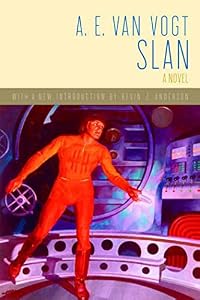
Jommy Cross is a slan, a genetically bred superhuman whose race was created to aid humanity but is now despised by normal humans. Slans are usually shot on sight, but that doesn't stop Jommy's mother from bringing him to see the world capital of Centropolis, the seat of power for Earth's dictator, Kier Gray. But on their latest trip to Centropolis, the two slans are discovered, and Jommy's mother is killed. Jommy, only nine years old, unwittingly becomes caught up in a plot to undermine show more Gray, who may be more sympathetic to slans than the public suspects. The nonstop action and root-for-the-underdog plot has made Slan a science fiction favorite. show lessTags
Recommendations





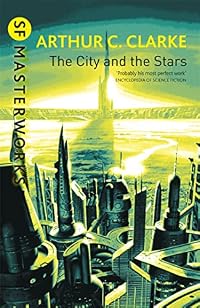

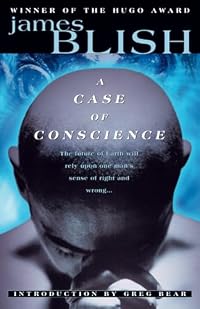


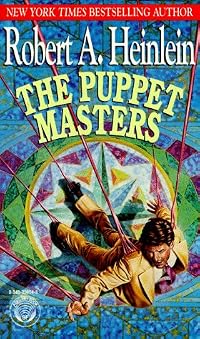


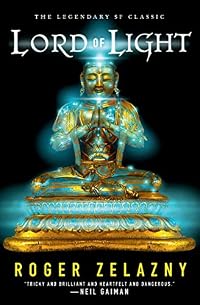











Member Recommendations

Member Reviews
My father bought a copy of Slan on June 23, 1953, a little over five years before I was born. I know because he recorded the date in the front of the book. In the back, he recorded the dates when he finished reading it: June 25, 1953, September 1, 2005, and January 6, 2016. The final date was about six months before he passed away, so this must have been one of the last books he read. Following his death, I brought home a stack of dad's old SF novels, and I'm only just getting to them now. Slan was on top, so I read it first.
I'd never read van Vogt before and didn't know what to expect. After reading it, I have such mixed feelings that I had to look him up on Wikipedia. Turns out he's often considered one of the most influential early show more SF writers but has also been heavily criticized on a number of counts. Many of his ideas came from dreams, and that may explain a lot. He also worked to a formula: after about 800 words, he would either introduce a new complication or resolve an old one. On top of it all, he had sympathy for absolute monarchies. All of this seems to come out to play in Slan.
The story operates on at least two levels. One is action/adventure, the other is social commentary. In this future world, there are two distinct races living in a post-apocalyptic era: ordinary humans, and slans, who it is believed are the result of genetic experimentation in the long ago. The slans have extraordinary powers: they are stronger, faster, and more intelligent than ordinary humans, plus they have telepathic powers. According to the official history, they attempted to subjugate ordinary humans, which resulted in a global war in which they were defeated. Now slans are hated and feared. The world government, led by the keenly intelligent and ruthless Kier Gray, hunts them down and exterminates them.
Into this world, the young slan Jommy Cross is born. His father, a brilliant physicist, passes along to him a terrible secret: a form of atomic energy so powerful it can defeat the normal humans and return the world to slan control. But Jommy's father is now dead, and his mother is captured and killed almost in front of him. He manages to escape and spends the ensuing years of his childhood, adolescence, and early adulthood seeking out and developing the power his father bequeathed to him. He also must try to locate other slans, who, strangely, seem to be all but nonexistent.
To say more would be to give away the store. van Vogt keeps readers on their toes with all manner of twists and turns, some minor, some huge, and he saves the biggest surprises for the final pages of the story. As a result, it's pretty hard to put the book down.
But for all that, there are problems, at least from the perspective of eighty years later. (The novel was originally published in 1940.) A lot of the dialogue consists of characters explaining things to the reader instead of interacting with each other. In many places, it's hard to distinguish the characters by their dialogue. Even as a teenager, Jommy tends to sound like a professor giving a lecture . . . as do most of the other characters. And of course, the science is so out of date it's funny, although one can hardly blame van Vogt for that. Science fiction becomes dated more quickly than most other forms of fiction.
Still, in terms of action/adventure and suspense, it's pretty darn good. Nothing in this story is quite what it seems. Beyond that, it's a fairly decent commentary on racism. As a Baha'i, I was interested to find that van Vogt had some sympathy for the concept of the unity of humanity--he explicitly mentions it near the end--even though he was not a Baha'i and probably had never even heard of the religion.
Overall, if you're a fan of classic science fiction, you'll probably enjoy this work. It's not perfect and is very dated, but it's worth the reading. show less
I'd never read van Vogt before and didn't know what to expect. After reading it, I have such mixed feelings that I had to look him up on Wikipedia. Turns out he's often considered one of the most influential early show more SF writers but has also been heavily criticized on a number of counts. Many of his ideas came from dreams, and that may explain a lot. He also worked to a formula: after about 800 words, he would either introduce a new complication or resolve an old one. On top of it all, he had sympathy for absolute monarchies. All of this seems to come out to play in Slan.
The story operates on at least two levels. One is action/adventure, the other is social commentary. In this future world, there are two distinct races living in a post-apocalyptic era: ordinary humans, and slans, who it is believed are the result of genetic experimentation in the long ago. The slans have extraordinary powers: they are stronger, faster, and more intelligent than ordinary humans, plus they have telepathic powers. According to the official history, they attempted to subjugate ordinary humans, which resulted in a global war in which they were defeated. Now slans are hated and feared. The world government, led by the keenly intelligent and ruthless Kier Gray, hunts them down and exterminates them.
Into this world, the young slan Jommy Cross is born. His father, a brilliant physicist, passes along to him a terrible secret: a form of atomic energy so powerful it can defeat the normal humans and return the world to slan control. But Jommy's father is now dead, and his mother is captured and killed almost in front of him. He manages to escape and spends the ensuing years of his childhood, adolescence, and early adulthood seeking out and developing the power his father bequeathed to him. He also must try to locate other slans, who, strangely, seem to be all but nonexistent.
To say more would be to give away the store. van Vogt keeps readers on their toes with all manner of twists and turns, some minor, some huge, and he saves the biggest surprises for the final pages of the story. As a result, it's pretty hard to put the book down.
But for all that, there are problems, at least from the perspective of eighty years later. (The novel was originally published in 1940.) A lot of the dialogue consists of characters explaining things to the reader instead of interacting with each other. In many places, it's hard to distinguish the characters by their dialogue. Even as a teenager, Jommy tends to sound like a professor giving a lecture . . . as do most of the other characters. And of course, the science is so out of date it's funny, although one can hardly blame van Vogt for that. Science fiction becomes dated more quickly than most other forms of fiction.
Still, in terms of action/adventure and suspense, it's pretty darn good. Nothing in this story is quite what it seems. Beyond that, it's a fairly decent commentary on racism. As a Baha'i, I was interested to find that van Vogt had some sympathy for the concept of the unity of humanity--he explicitly mentions it near the end--even though he was not a Baha'i and probably had never even heard of the religion.
Overall, if you're a fan of classic science fiction, you'll probably enjoy this work. It's not perfect and is very dated, but it's worth the reading. show less
How do I properly describe a novel that uses (incorrectly) atomic energy, but also addressing the fact that it was published in 1940?
Well, it's been 76 years since it came out, and its and integral part of the Campbellian SF revolution that said that we can have great Science in Science Fiction, but of course our understanding of these things change as we learn more, so I'm perfectly willing to let a lot of that slide. Still. The fact that it's 1940 when it was published, and he was talking about Atomic Energy as a resource and a weapon *is* also rather mind-blowingly cool. :)
That's one of the more noteworthy things about this adventure novel that strings up a ton of cool ideas for us to enjoy, being part dystopian future, part show more aftermath of a huge pogrom against alien "supermen" that the "supermen" lost, and partly a mirror to ourselves of the fact of insanely stupid prejudice.
The plot proceeds very quickly, which is an amazingly cool feature and expectation for this era's SF adventure books, moving at a nice pace for an Oliver Twist beginning all the way to find a macguffin that would save the benighted alien race of Slans, to learn the slightly surprising reveals about the Slan's origins, while putting us firmly in the hands of a few Slan MCs. Telepathy, strength, speed, and intelligence is all enhanced in these individuals.
That's no big surprise, of course. Nietzsche's insanely popular across the world in every continent at this time. Superman (comic) just came out. A war has just popped up over the ocean that bears a lot of identification with it. So much of our literature, and especially SF, has truly heroic super men. It's part of our zeitgeist.
What's most interesting is how these supermen are the most downtrodden in the novel, despite all their advantages.
But wait, you say, hasn't this been done a million times?
Well, yeah, but few before this time have done something quite as intelligently as Vogt. He's trying to send a global message and doing it across so many subjects with so much world building... and the point is, he's doing it with such economy of prose. It's a really short novel.
The only other novels that I know of that could pull this off only came later.
I'm thinking of [b:The Demolished Man|76740|The Demolished Man|Alfred Bester|https://d2arxad8u2l0g7.cloudfront.net/books/1360171879s/76740.jpg|1247570] and [b:The Stars My Destination|333867|The Stars My Destination|Alfred Bester|https://d2arxad8u2l0g7.cloudfront.net/books/1433671750s/333867.jpg|1398442], both by Alfred Bester, and probably these are probably the very best Golden Age SF novels that still hold up today.
I'm not going to judge this book by today's standards of SF, although it is superior in pacing and plot, if not characterization. It was also a phenomenon for about 15 years after it came out, being considered the best of the best. Popularity doesn't always mean quality, but this does have a lot of quality.
Unfortunately, it's also been copied a million times since then, diluting the effect and the enjoyment that we might have in it now.
At least we can point to it as one of the major supermen mythos stories with pride, and hopefully it won't be utterly forgotten in time. show less
Well, it's been 76 years since it came out, and its and integral part of the Campbellian SF revolution that said that we can have great Science in Science Fiction, but of course our understanding of these things change as we learn more, so I'm perfectly willing to let a lot of that slide. Still. The fact that it's 1940 when it was published, and he was talking about Atomic Energy as a resource and a weapon *is* also rather mind-blowingly cool. :)
That's one of the more noteworthy things about this adventure novel that strings up a ton of cool ideas for us to enjoy, being part dystopian future, part show more aftermath of a huge pogrom against alien "supermen" that the "supermen" lost, and partly a mirror to ourselves of the fact of insanely stupid prejudice.
The plot proceeds very quickly, which is an amazingly cool feature and expectation for this era's SF adventure books, moving at a nice pace for an Oliver Twist beginning all the way to find a macguffin that would save the benighted alien race of Slans, to learn the slightly surprising reveals about the Slan's origins, while putting us firmly in the hands of a few Slan MCs. Telepathy, strength, speed, and intelligence is all enhanced in these individuals.
That's no big surprise, of course. Nietzsche's insanely popular across the world in every continent at this time. Superman (comic) just came out. A war has just popped up over the ocean that bears a lot of identification with it. So much of our literature, and especially SF, has truly heroic super men. It's part of our zeitgeist.
What's most interesting is how these supermen are the most downtrodden in the novel, despite all their advantages.
But wait, you say, hasn't this been done a million times?
Well, yeah, but few before this time have done something quite as intelligently as Vogt. He's trying to send a global message and doing it across so many subjects with so much world building... and the point is, he's doing it with such economy of prose. It's a really short novel.
The only other novels that I know of that could pull this off only came later.
I'm thinking of [b:The Demolished Man|76740|The Demolished Man|Alfred Bester|https://d2arxad8u2l0g7.cloudfront.net/books/1360171879s/76740.jpg|1247570] and [b:The Stars My Destination|333867|The Stars My Destination|Alfred Bester|https://d2arxad8u2l0g7.cloudfront.net/books/1433671750s/333867.jpg|1398442], both by Alfred Bester, and probably these are probably the very best Golden Age SF novels that still hold up today.
I'm not going to judge this book by today's standards of SF, although it is superior in pacing and plot, if not characterization. It was also a phenomenon for about 15 years after it came out, being considered the best of the best. Popularity doesn't always mean quality, but this does have a lot of quality.
Unfortunately, it's also been copied a million times since then, diluting the effect and the enjoyment that we might have in it now.
At least we can point to it as one of the major supermen mythos stories with pride, and hopefully it won't be utterly forgotten in time. show less
This book speaks volumes about the difference in publishing between today and the '40s/50's/pick-an-olden-time. And maybe this comes from having just recently finished the 900+ pages of the latest volume of Game of Thrones. But one of my first impressions (beyond being impressed with the overall quality of the book) was that there is so much crammed in these 176 pages I couldn't help but think how easily it could be converted into a multi-book extravaganza.
On the one hand I think it is a pity that the story has not been fleshed out that way. On the other hand, the result is a tight, complete story that is far from bogged down in detail.
The upshot - It is a most excellent book. (I want to say novel, which, I guess it is, but by today's show more standards it might come in as a novelette. A mere quibble. I digress.)
It is the story of the Slan – humans who have special abilities which include the ability to read minds. The book follows the lives of two young Slan – separate stories that eventually come together – and it is a story that, in a very few pages, spans a great amount of time (taking the two protagonists well into adulthood) and themes. It is an exploration of how the Slan obtained their abilities (a major point of the book) and an exploration of the effect of xenophobia on the human race. This was probably a very compelling plot line at the time the book was written. And, in spite of time, it remains relevant and impactful today. Things just don't really change, do they?
There are a number of fascinating characters in the book that are not allowed to develop (again, the limitation placed on the author by the length of the book) and some interesting aspects of the civilization such as a side group of Slan who are not...complete...Slan, and the intrigue that is going on among the powers that be.
All in all, I wish I could have spent more time with this world and these people. I am not a fan of multi-book stories, but this is begging for a treatment that is, at least, a very long book.
But this is what we have, and it is a good thing to have, nonetheless.
By the way, to type the first line of this review I had to go back and look at the original publication date. I was shocked to see 1946. Aside from my comments about how slim the volume is, it should be emphasized and reemphasized that this book stands up in today's world. Van Vogt is a great, unsung writer of the past. And this book is evidence of just how good he was. show less
On the one hand I think it is a pity that the story has not been fleshed out that way. On the other hand, the result is a tight, complete story that is far from bogged down in detail.
The upshot - It is a most excellent book. (I want to say novel, which, I guess it is, but by today's show more standards it might come in as a novelette. A mere quibble. I digress.)
It is the story of the Slan – humans who have special abilities which include the ability to read minds. The book follows the lives of two young Slan – separate stories that eventually come together – and it is a story that, in a very few pages, spans a great amount of time (taking the two protagonists well into adulthood) and themes. It is an exploration of how the Slan obtained their abilities (a major point of the book) and an exploration of the effect of xenophobia on the human race. This was probably a very compelling plot line at the time the book was written. And, in spite of time, it remains relevant and impactful today. Things just don't really change, do they?
There are a number of fascinating characters in the book that are not allowed to develop (again, the limitation placed on the author by the length of the book) and some interesting aspects of the civilization such as a side group of Slan who are not...complete...Slan, and the intrigue that is going on among the powers that be.
All in all, I wish I could have spent more time with this world and these people. I am not a fan of multi-book stories, but this is begging for a treatment that is, at least, a very long book.
But this is what we have, and it is a good thing to have, nonetheless.
By the way, to type the first line of this review I had to go back and look at the original publication date. I was shocked to see 1946. Aside from my comments about how slim the volume is, it should be emphasized and reemphasized that this book stands up in today's world. Van Vogt is a great, unsung writer of the past. And this book is evidence of just how good he was. show less
John Thomas “Jommy” Cross is a member of the telepathic race of mutant humans called “slans,” eponymously named for Samuel Lann, believed to be their creator. The only physical distinction between the two races are the slan’s set of golden tendrils protruding from their scalps that serve as antennae for their telepathy.
On Earth, slans were overthrown by humans during an ancient war and are still considered the enemy. The police and military are ordered to destroy all slans on sight. Jommy’s father, a renown physicist, was killed when Jommy was a toddler, but not before concealing the secrets of his research in an underground cavern and bequeathing its location to his son.
At the age of nine, after his mother is murdered by show more the police in broad daylight, Jommy escapes and sets off on his own, but is soon captured by a penurious yet cunning old termagant who threatens to report him unless he uses his telepathic abilities for her selfish gain. While repulsed by the situation, Jommy realizes that he can use the woman’s hovel to hide from the police until he reaches adulthood, at which time, he will locate his father’s research and find a way to bring peace between slans and humans.
There is only one problem. During a shoplifting escapade at the behest of “Granny,” Jommy ventures across town to the space port and encounters a race of tendrilless slans! After reading their minds, Jommy discovers that this unfamiliar branch of the slan race has complete control of the spaceport and is building a fleet off world. At an appointed time, they will attack Earth and obliterate humans and “true” slans alike!
It’s up to Jommy to avoid capture, locate his father’s research, and find a way to stop this invasion before more atrocities are committed, but how can one man stop an armada led by a ruthless offshoot of his own race?
All told, a beautifully crafted, suspensful, and fast-paced tale. It is no wonder that SLAN is considered among the best works from one of science fiction's earliest grand masters. It's definitely among my top five all-time favorite SF novels. show less
On Earth, slans were overthrown by humans during an ancient war and are still considered the enemy. The police and military are ordered to destroy all slans on sight. Jommy’s father, a renown physicist, was killed when Jommy was a toddler, but not before concealing the secrets of his research in an underground cavern and bequeathing its location to his son.
At the age of nine, after his mother is murdered by show more the police in broad daylight, Jommy escapes and sets off on his own, but is soon captured by a penurious yet cunning old termagant who threatens to report him unless he uses his telepathic abilities for her selfish gain. While repulsed by the situation, Jommy realizes that he can use the woman’s hovel to hide from the police until he reaches adulthood, at which time, he will locate his father’s research and find a way to bring peace between slans and humans.
There is only one problem. During a shoplifting escapade at the behest of “Granny,” Jommy ventures across town to the space port and encounters a race of tendrilless slans! After reading their minds, Jommy discovers that this unfamiliar branch of the slan race has complete control of the spaceport and is building a fleet off world. At an appointed time, they will attack Earth and obliterate humans and “true” slans alike!
It’s up to Jommy to avoid capture, locate his father’s research, and find a way to stop this invasion before more atrocities are committed, but how can one man stop an armada led by a ruthless offshoot of his own race?
All told, a beautifully crafted, suspensful, and fast-paced tale. It is no wonder that SLAN is considered among the best works from one of science fiction's earliest grand masters. It's definitely among my top five all-time favorite SF novels. show less
Jommy Cross is a slan, a telepathic mutant with tendrils in his hair which function as the telepathic organ. Slans are considered a threat by ordinary humans and are exterminated wherever they are found. Jommy's late father invented a weapon which may help the slans and now it is up to Jommy to find it and help his people.
I loved A. E. Van Vogt's work as a teen, though I don't remember having read this one before. But now although I kept reading, I just wasn't much interested in any of it.
I loved A. E. Van Vogt's work as a teen, though I don't remember having read this one before. But now although I kept reading, I just wasn't much interested in any of it.
Important Work that Falls Victim to the Conventions of the Period: Centuries in the future, a new mutation has appeared in the human species. Known as the slans, this mutant group is physically stronger, smarter, and telekinetic via the tendrils that grow out of their hair. They are also hunted down and killed on sight by the dictatorship of Keir Gray. It seems, in the deep murky past, that the slans attempted to conquer the human race, and war began. But slans still live among humans, hiding in plain sight. One such slan is John Thomas "Jommy" Cross, who, after watching his parents' murder as a boy, is taken in by a greedy old woman, as he bides his time until he such time when he claim the inherited knowledge left by his father. show more Another slan is Kathleen Layton, a ostensible science project in the custody of Keir Gray himself, but in fact a pawn in the chess game of the Gray dictatorship.
A.E. Van Vogt's "Slan" is a historical piece of science fiction. It's easy to trace numerous concepts back to "Slan" (e.g. Marvel Comics "X-Men"). It is also an interesting allegory on human nature and the theme of "Man's inhumanity to man." It's probably no coincidence that this book was published in 1946, when WW II was over, and the genocide that it entailed was known. However, much like its contemporaries, "Slan" frequently falls victim to the conventions of science fiction of the time, and so a reader will almost certainly feel star-crossed.
Initially, Van Vogt starts his novel on a thrill, as Jommy is on the run from the humans. Images of a boy of nine running for his life, surrounded by hatred and greed and fear are chilling and gripping. Alternatively, Kathleen's observations of an attempted coup against Gray, and Gray's violent response, while perhaps not so frenzied as a chase, are however just as engrossing.
However, after initial rush, the pace slackens considerably, as Jommy lives a life as a thief, biding his time. While Van Vogt piques our curiosity with the revelation of slans who are not telekinetic, he spends a good deal of time with a contemplative Jommy, spectacularly loquacious secondary characters, and progressively neglected and underdeveloped Kathleen.
It certainly doesn't help that Van Vogt injects several dozen mysteries into his book without ever satisfactorily dealing with any of them. Are the slans really evil? How did the come to be, and how did that cause the war? What's the deal with the non-telekinetic slans? Why does Keir Gray seem so intent on holding on to Kathleen? What will Jommy do about any of it? With so many plot lines to juggle, Van Vogt never seems to give any one of them satisfactory time to develop. The end result is something of a disappointment.
While there is plenty to like about this book, I never felt completely satisfied with it. It tantalizes, but only rarely gratifies. It's historical value in the science-fiction is inarguable, and it's allegorical aspect is always important. Unfortunately, it's aesthetic is never quite able to live up to its potential. However, that doesn't diminish its value. It's absolutely worth reading. show less
A.E. Van Vogt's "Slan" is a historical piece of science fiction. It's easy to trace numerous concepts back to "Slan" (e.g. Marvel Comics "X-Men"). It is also an interesting allegory on human nature and the theme of "Man's inhumanity to man." It's probably no coincidence that this book was published in 1946, when WW II was over, and the genocide that it entailed was known. However, much like its contemporaries, "Slan" frequently falls victim to the conventions of science fiction of the time, and so a reader will almost certainly feel star-crossed.
Initially, Van Vogt starts his novel on a thrill, as Jommy is on the run from the humans. Images of a boy of nine running for his life, surrounded by hatred and greed and fear are chilling and gripping. Alternatively, Kathleen's observations of an attempted coup against Gray, and Gray's violent response, while perhaps not so frenzied as a chase, are however just as engrossing.
However, after initial rush, the pace slackens considerably, as Jommy lives a life as a thief, biding his time. While Van Vogt piques our curiosity with the revelation of slans who are not telekinetic, he spends a good deal of time with a contemplative Jommy, spectacularly loquacious secondary characters, and progressively neglected and underdeveloped Kathleen.
It certainly doesn't help that Van Vogt injects several dozen mysteries into his book without ever satisfactorily dealing with any of them. Are the slans really evil? How did the come to be, and how did that cause the war? What's the deal with the non-telekinetic slans? Why does Keir Gray seem so intent on holding on to Kathleen? What will Jommy do about any of it? With so many plot lines to juggle, Van Vogt never seems to give any one of them satisfactory time to develop. The end result is something of a disappointment.
While there is plenty to like about this book, I never felt completely satisfied with it. It tantalizes, but only rarely gratifies. It's historical value in the science-fiction is inarguable, and it's allegorical aspect is always important. Unfortunately, it's aesthetic is never quite able to live up to its potential. However, that doesn't diminish its value. It's absolutely worth reading. show less
This is a book I've wanted to read for a long time, finally that time arrived over the weekend. One of the real classics of the genre and it did not disappoint this reader at least. Written at a time when war and world domination was uppermost in peoples minds it's hardly surprising that this book follows those story lines.
We follow the life of a young Slan, (Slan: named after the scientist Samuel Lann in the book), Jommy as he learns about his abilities. Why his kind are hated by humans and why he is even hated by what appear to be his own kind.
This book is full of secret societies, natural hatred and enemies along with a few twists and turns from unexpected quarters. Although written in the early 40's this book ages well and most of show more the ideas are still quite believable.
I ploughed through this book, picking it up whenever I had five minutes to spare and thoroughly enjoyed every word. An excellent read in my opinion. show less
We follow the life of a young Slan, (Slan: named after the scientist Samuel Lann in the book), Jommy as he learns about his abilities. Why his kind are hated by humans and why he is even hated by what appear to be his own kind.
This book is full of secret societies, natural hatred and enemies along with a few twists and turns from unexpected quarters. Although written in the early 40's this book ages well and most of show more the ideas are still quite believable.
I ploughed through this book, picking it up whenever I had five minutes to spare and thoroughly enjoyed every word. An excellent read in my opinion. show less
Members
- Recently Added By
Lists

Best Science Fiction Novels
816 works; 430 members

Books Read in 2004
198 works; 7 members

La Bibliothèque idéale de la SF (Éditions Albin Michel, 1988)
52 works; 1 member

Les 100 principaux titres de la science-fiction (1981)
126 works; 3 members

An evolving science fiction novel canon
50 works; 2 members
Author Information

333+ Works 22,437 Members
A. E. Van Vogt was born on April 26, 1912 in Manitoba, Canada. He graduated from the University of Ottawa in 1928. His first story sales were to true story confession magazines in the early 1930s while he was working as a census clerk and representative of Maclean Trade Papers. He wrote plays for Canadian radio and in 1939, he began submitting show more stories and serials to Astounding Science Fiction. He wrote more than 35 novels during his lifetime including Slan, The Weapon Shops of Isher, The World of Null-A, The Pawns of Null-A, The Weapons Makers, The Violent Man, The Silkie, The Battle of Forever, and The House That Stood Still. He died on January 26, 2000 at the age of 87. (Bowker Author Biography) show less
Some Editions
Awards and Honors
Awards
Distinctions
Series

Belongs to Publisher Series
Panther Books (1132)
Kludde reeks (4)
TERRA Sonderband (13)
ハヤカワ文庫 SF (234)
Colecção Argonauta (23)
J'ai lu (381)
Science Fiction Book Club (2145)
Work Relationships
Is contained in
Inspired
Has as a commentary on the text
Common Knowledge
- Canonical title
- Slan
- Original title
- Slan
- Alternate titles*
- Il segreto degli Slan
- Original publication date
- 1946
- People/Characters
- Jommy Cross; Kier Gray; Kathleen Layton; John Petty; Granny
- Dedication
- To My Wife E. MAYNE HULL
- First words
- His mother's hand felt cold, clutching his.
- Last words
- (Click to show. Warning: May contain spoilers.)"Jommy Cross, I want you to meet Kathleen Layton Gray ... my daughter!"
- Original language
- English
*Some information comes from Common Knowledge in other languages. Click "Edit" for more information.
Classifications
Statistics
- Members
- 1,836
- Popularity
- 11,732
- Reviews
- 33
- Rating
- (3.46)
- Languages
- 10 — Czech, Dutch, English, French, German, Italian, Japanese, Polish, Spanish, Swedish
- Media
- Paper, Audiobook, Ebook
- ISBNs
- 39
- ASINs
- 76