
Kevin J. Anderson
Author of Dune: House Atreides
About the Author
Kevin J. Anderson was born on March 27, 1962. Before becoming a full-time author, he worked in California for twelve years as a technical writer and editor at the Lawrence Livermore National Laboratory. His science fiction books include Resurrection, Inc., the Star Wars Jedi Academy Trilogy, the show more Young Jedi Knights series, Ground Zero, Ruins, Climbing Olympus, Blindfold, and The Dark Between the Stars. He has also written several books with Doug Beason including Ignition, Virtual Destruction, Fallout, and Ill Wind. (Bowker Author Biography) Kevin J. Anderson has written twenty seven bestsellers and has been nominated for the Nebula Award, the Bram Stoker Award, and the SFX Reader's Choice Award. He also holds the Guinness world record for "The Largest Single-Author Signing". (Publisher Provided) show less
Disambiguation Notice:
The penname Gabriel Moesta is used by both Kevin J. Anderson and his wife Rebecca Moesta, and therefore should not be combined with either.
Series
Works by Kevin J. Anderson
The Martian War: A Thrilling Eyewitness Account of the Recent Alien Invasion as reported by Mr. H.G. Wells (2005) 161 copies, 6 reviews
Worldbuilding: From Small Towns to Entire Universes (The Million Dollar Writing Series) (2015) 20 copies
Star Wars: Tales of the Jedi: Dark Lords of the Sith #1 of 6 - Masters and Students of the Force (1994) 9 copies
Asimov's Science Fiction: Vol. 47, No. 11 & 12 [November/December 2023] (2023) — Contributor — 8 copies, 1 review
[Title missing] 6 copies
Star Wars: Tales of the Jedi: The Fall of the Sith Empire #1 of 5: Desperate Measures (1997) 6 copies
Star Wars: Tales of the Jedi: The Golden Age of the Sith #2 of 5: Funeral for a Dark Lord (1996) 5 copies
Star Wars: Tales of the Jedi: The Fall of the Sith Empire #5 of 5: End of an Empire (1998) — Author — 5 copies
Star Wars: Tales of the Jedi: The Sith War #1 of 6 - Edge of the Whirlwind (1995) — Author — 5 copies
Rough Draft [short story] 4 copies
Star Wars: Tales of the Jedi: The Golden Age of the Sith #0 of 5: Conquest and Unification (1996) 4 copies
Star Wars: Tales of the Jedi: The Fall of the Sith Empire #2 of 5: Forces in Collision (1997) 4 copies
Star Wars: Tales of the Jedi: The Golden Age of the Sith #3 of 5: The Fabric of an Empire (1996) 4 copies
Ink Spot [short story] 3 copies
Star Wars: Tales of the Jedi: The Golden Age of the Sith #4 of 5: Pawns of a Sith Lord (1997) 3 copies
Writing As a Team Sport: The Complete Writer’s Guide to Collaboration (Million Dollar Writing Series) (2018) 3 copies
Much at Stake [short story] 2 copies
Scientific Romance [short story] 2 copies
The Mammoth Book of Nebula AwardsSF 2 copies
Alien Landscapes, Volume 1 2 copies
Canals in the Sand [short story] 2 copies
The Hind 2 copies
Heart of Clay 2 copies
Stalag-X [dramatized adaptation] 2 copies
Star Wars: Tales of the Jedi: The Golden Age of the Sith #5 of 5: The Flight of Starbreaker 12 (1997) 2 copies
A Delicate Balance {short story} 2 copies
Tide Pools [short story] 2 copies
Liberation [short story] 2 copies
Slan Hunter, Part 1 of 3 1 copy
Alien Landscapes, Volume 2 1 copy
Newts [short story] 1 copy
Write Good or Die 1 copy
Dune: House Corrino / House Harkonnen / The Butlerian Jihad / The Machine Crusade / The Battle of Corrin (2001) 1 copy
The Authentic Touch 1 copy
Blood Oasis 1 copy
Slan Hunter, Part 2 of 3 1 copy
Slan Hunter, Part 3 of 3 1 copy
Prevenge [short story] 1 copy
But it's OK to help us return to the word of Frank Herbert and his magnificent creation. 1 copy, 1 review
The Sacrifice [short story] 1 copy
Bane of the Sith 1 copy
A Long Way from Home 1 copy
Dune: House Corrino #7 of 8 1 copy
Dune: House Corrino #1 of 8 1 copy
Dune: House Corrino #5 of 8 1 copy
Dune: House Corrino #3 of 8 1 copy
Dune: House Corrino #2 of 8 1 copy
Dune: House Corrino #4 of 8 1 copy
Dune: House Corrino #6 of 8 1 copy
Sleep With the Fishes 1 copy
Mundane Lane [short story] 1 copy
The New Essential Chronology 1 copy
Dune: The Butlerian Jihad / The Machine Crusade / House Atreides / House Harkonnen / House Corrino 1 copy
Good Old Days [short story] 1 copy
Loincloth 1 copy
Identity Crisis 1 copy
Dune: House Corrino #8 of 8 1 copy
Barsoom vol. 22 1 copy
Writing As a Team Sport: The Complete Writer’s Guide to Collaboration (Million Dollar Writing Series) (2018) 1 copy
Dark Carbuncle — Author — 1 copy
Death of the Hind 1 copy
Prisons 1 copy
Viaggio alieno 1 copy
The Ghosts of Goldilocks 1 copy
Associated Works
Under the Black Ensign (Stories from the Golden Age) (1935) — Foreword, some editions — 203 copies, 33 reviews
L. Ron Hubbard Presents Writers of the Future, Volume 23 (2007) — Contributor — 94 copies, 2 reviews
Frankenstein: Prodigal Son / City of Night / Dead and Alive (2010) — Co-Author — 88 copies, 1 review
L. Ron Hubbard Presents Writers of the Future, Volume 31 (2015) — Contributor — 79 copies, 13 reviews
Mister October: An Anthology in Memory of Rick Hautala (Volume 2) (2013) — Contributor — 62 copies, 18 reviews
Where Nightmares Come From: The Art of Storytelling in the Horror Genre (2017) — Interviewee — 46 copies, 3 reviews
L. Ron Hubbard Presents Writers of the Future, Volume 38 (2022) — Contributor — 43 copies, 8 reviews
Gauntlet: Exploring the Limits of Free Expression, No. 2 - Stephen King Special (1991) — Contributor — 31 copies, 1 review
L. Ron Hubbard Presents Writers of the Future, Volume 39 (2023) — Contributor — 29 copies, 6 reviews
Short Things: Tales Inspired by "Who Goes There?" by John W. Campbell, Jr. (2020) 22 copies, 1 review
Four Unpublished Novels: High-Opp, Angel's Fall, A Game of Authors, A Thorn in the Bush (2016) — Cover designer, some editions — 20 copies
Analog Science Fiction and Fact: Vol. CXIII, No. 14 (December 1993) (1993) — Contributor — 19 copies
Mister October: An Anthology in Memory of Rick Hautala (Volumes 1 and 2) (2013) — Contributor — 17 copies, 15 reviews
Analog Science Fiction and Fact: Vol. CXXII, No. 7 & 8 (July/August 2002) (2002) 14 copies, 1 review
Analog Science Fiction and Fact: Vol. CXX, No. 9 (September 2000) (2000) — Author, some editions — 11 copies
Starshipsofa Stories Vol 3 — Contributor — 4 copies
Asimov's Science Fiction: Vol. 44, No. 11 & 12 [November/December 2020] (2020) — Contributor — 4 copies
The Complete War of the Worlds — Foreword, some editions — 3 copies
Hidden Villains: Betrayed — Contributor — 1 copy
The War of the Worlds / Edison's Conquest of Mars / Star Begotten — Foreword — 1 copy
Tagged
Common Knowledge
- Legal name
- Anderson, Kevin James
- Other names
- Anderson, K. J.
Mesta, Gabriel - Birthdate
- 1962-03-27
- Gender
- male
- Education
- University of Wisconsin, Madison
- Occupations
- technical writer
editor
science fiction writer - Organizations
- Superstars Writing Seminar (cofounder)
- Awards and honors
- Guinness World Record (largest single-author signing, 1998)
Scribe Award (Grandmaster, Faust Award, 2012) - Agent
- John Silbersack
- Relationships
- Moesta, Rebecca (wife)
- Nationality
- USA
- Birthplace
- Racine, Wisconsin, USA
- Places of residence
- Oregon, Wisconsin, USA
Monument, Colorado, USA - Disambiguation notice
- The penname Gabriel Moesta is used by both Kevin J. Anderson and his wife Rebecca Moesta, and therefore should not be combined with either.
- Associated Place (for map)
- Wisconsin, USA
Members
Discussions
Found: YA/Children's book trilogy where female MC gets transported to another world in Name that Book (October 2023)
SciFi Series about Telepathic Trees in Name that Book (January 2017)
Reviews
DUNE: The Graphic Novel, Book 3: The Prophet (Dune: The Graphic Novel, 3) (Volume 3) by Brian Herbert
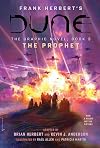
As promised in my review for the second installment in this rather comatose adaptation, I did indeed buy the last volume hoping (vainly) that it might improve.
This is the worst of the lot. The art this time around didn't even try to swing for the fences. An attempt would have been appreciated. Instead, we get 190 pages of dull, static people standing around, stiffly jumping or supposedly fighting, and lots of close ups of mostly dull expressions. For a book with the main title "DUNE" we get show more very little imagery of the greater world, and what we do get is boring.
So, dull, uninteresting, workmanlike art that has no place in an epic story as grand and challenging as DUNE.
But worse than the art is the writing by the man that proves that, on occasion, the apple can fall exceptionally far from the tree, then just keep rolling farther and farther away. Frank Herbert was a very cerebral, very distinctive author and, for a kid who apparently grew up hearing his father read his stories, he absorbed nothing of his father's careful cadence or storytelling ability. I've called the art workmanlike. But the writing? I think the only word that works here is "inept".
Oh sure, he knows all the terms. He knows all the characters. But where Frank would have subtle, mysterious conversations that bent and twisted with subterfuge and hidden meaning, Brian's got Paul just bellowing, "I'm the Kwisatz Haderach!" for all and sundry, like he's freaking Kanye West. The dialogue is stunted and choppy and dull, the pacing terrible. He's wrung the book through an old dirty sock and filtered out all that was fun and awe-inspiring and wondrous about DUNE and instead just strung a series of words and sentences along to barely hint at one of the most incredible stories of the 20th century.
This is awful. I've tried and tried to read something with Brian Herbert's name attached to it, but with this last garbage money grab, I'm officially done. This was crap.
Go read the book. Leave these adaptations in the washroom where the paper will get better use. show less
This is the worst of the lot. The art this time around didn't even try to swing for the fences. An attempt would have been appreciated. Instead, we get 190 pages of dull, static people standing around, stiffly jumping or supposedly fighting, and lots of close ups of mostly dull expressions. For a book with the main title "DUNE" we get show more very little imagery of the greater world, and what we do get is boring.
So, dull, uninteresting, workmanlike art that has no place in an epic story as grand and challenging as DUNE.
But worse than the art is the writing by the man that proves that, on occasion, the apple can fall exceptionally far from the tree, then just keep rolling farther and farther away. Frank Herbert was a very cerebral, very distinctive author and, for a kid who apparently grew up hearing his father read his stories, he absorbed nothing of his father's careful cadence or storytelling ability. I've called the art workmanlike. But the writing? I think the only word that works here is "inept".
Oh sure, he knows all the terms. He knows all the characters. But where Frank would have subtle, mysterious conversations that bent and twisted with subterfuge and hidden meaning, Brian's got Paul just bellowing, "I'm the Kwisatz Haderach!" for all and sundry, like he's freaking Kanye West. The dialogue is stunted and choppy and dull, the pacing terrible. He's wrung the book through an old dirty sock and filtered out all that was fun and awe-inspiring and wondrous about DUNE and instead just strung a series of words and sentences along to barely hint at one of the most incredible stories of the 20th century.
This is awful. I've tried and tried to read something with Brian Herbert's name attached to it, but with this last garbage money grab, I'm officially done. This was crap.
Go read the book. Leave these adaptations in the washroom where the paper will get better use. show less
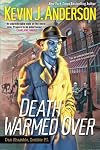
Once upon a time, a magic book called the Necronomicon got unwittingly invoked, and death went a little sideways in an event dubbed the Big Uneasy. The result is a hilarious urban fantasy series populated by zombies, ghosts, mummies, ghouls, witches, werewolves, and other paranormal creatures.
Private investigator Dan Chambeaux had already set up a practice in the Unnatural Quarter with lawyer Megan Deyer before he got shot in the head. But death isn't slowing down this zombie PI! He's show more determined to solve his own murder, the murder of his true love (who is now a ghost), as well as catch up on Chambeaux & Deyer Investigations' case load. With the Straight Edgers group out to end all non-humans, the demand for experienced investigations and litigation amongst Unnaturals is booming.
Anderson's writing is full of puns, allusions, dark humour, and witty buffoonery. Red herrings swim through all the multiple cases Dan tracks. If you are looking for a serious urban fantasy PI series, that knows how to not take itself seriously, the Dan Shamble, Zombie PI series is a winner! The world building is fun, suspenseful, and interesting. Gigante's narration is an added bonus. show less
Private investigator Dan Chambeaux had already set up a practice in the Unnatural Quarter with lawyer Megan Deyer before he got shot in the head. But death isn't slowing down this zombie PI! He's show more determined to solve his own murder, the murder of his true love (who is now a ghost), as well as catch up on Chambeaux & Deyer Investigations' case load. With the Straight Edgers group out to end all non-humans, the demand for experienced investigations and litigation amongst Unnaturals is booming.
Anderson's writing is full of puns, allusions, dark humour, and witty buffoonery. Red herrings swim through all the multiple cases Dan tracks. If you are looking for a serious urban fantasy PI series, that knows how to not take itself seriously, the Dan Shamble, Zombie PI series is a winner! The world building is fun, suspenseful, and interesting. Gigante's narration is an added bonus. show less
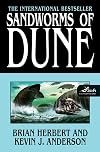
After reading Sandworms of Dune, I can finally set down the entire Dune Chronicles. I read The Legends of Dune trilogy, The Houses of Dune trilogy, Frank Herbert’s original 6 volumes in the Dune Chronicles and the concluding two volumes by his son and Kevin Anderson. This was a reading project that took me a couple of years to complete. I was unimpressed by Legends, found Houses to be entertaining, the original Dune is still a classic and the next four to be worth reading. FH’s last show more volume, Chapterhouse Dune was not as good though it ended on a very interesting note that I wish (as many others do) that he had been able to follow up on it. The last two volumes, Hunters of Dune and Sandworms of Dune by BH and KJA were a slog to read - I found them frustrating.
So what annoyed me in Sandworms? The colonial attitude that the universe is for humans to do with as they wish without thought of other lifeforms. Resources are there to be used by humanity. I also found this attitude to be extended to women which was odd as women think of each other as resources to use both in breeding programs and as axlotl tanks.
Axlotl tanks! What an abhorrent idea. In the Houses trilogy and in the first couple of volumes of Frank’s original Dune books, the idea of using women simply as incubators was treated as something awful. By Sandworms, it had become normalized and offered sort of like a career choice to women. What a sad thing to suggest and it made no sense to continue with the technique. Using the axlotl tanks to resurrect characters long dead because they had special properties that might help humanity defeat the thinking machines sort of made sense when the thinking machines were a threat. But at the end of Sandworms, there has been a reconciliation between human and machine. What is the point if dehumanizing women to simply be incubators. Once the threat was removed this abhorrent technology should have been completed dismantled. It made no sense to me that it should continue.
And at the end of Sandworms the Bene Gesserit breeding program is apparently going to continue? Why? That also makes no sense! The BG breeding program had as its goal to produce the Kwisatz Haderach but by the end of Sandworms, the BG have committed to not producing another KH. So what is the point of continuing the breeding program? Why is it assumed in the book that this sort of positive eugenics is a good thing? Something that kept coming up in the books is how prescience and controlling the future becomes boring and static and that what makes life worth living is being surprised. A breeding program tries to avoid surprises - the point is to control what offspring are produced. This did not make sense to me that it should continue.
I did not like the appearance of an ultimate Kwisatz Haderach. What made the idea of a KH interesting was that the individual would be uniquely gifted and that they were the result of careful breeding. But now it seems in Sandworms that KHs are all over the place and can be engineered by ghola engineering. The KH is no longer unique and became, for me, a boring concept even though at the end of Heretics of Dune, Frank Herbert did something really interesting with Miles Teg. But the character - the idea - didn’t develop well for me in subsequent novels.
I also did not appreciate how the Dune Chronicles ends with the other memory of the BG referred to as racial memory. I thought other memory was supposed to be something developed in humanity and not localized to a particular race.
Finally, at the end of Sandworms, there is supposed to be a great rapprochement between thinking machines and humans. But the ultimate KH gives the homeworld of the thinking machines to humans to do with as they see fit. Humans yet again get to colonize a world that was not theirs to begin with. And then, “thinking machines” are simply used by humans as workers to rehabilitate/terraform/rehabilitate worlds inhabited by humans. But there is no sense that these machine “partners” with humanity are given any agency. If they are thinking machines don’t they have their own goals/dreams/aspirations?
Very disappointing end to something that had such auspicious beginnings in the original Dune. show less
So what annoyed me in Sandworms? The colonial attitude that the universe is for humans to do with as they wish without thought of other lifeforms. Resources are there to be used by humanity. I also found this attitude to be extended to women which was odd as women think of each other as resources to use both in breeding programs and as axlotl tanks.
Axlotl tanks! What an abhorrent idea. In the Houses trilogy and in the first couple of volumes of Frank’s original Dune books, the idea of using women simply as incubators was treated as something awful. By Sandworms, it had become normalized and offered sort of like a career choice to women. What a sad thing to suggest and it made no sense to continue with the technique. Using the axlotl tanks to resurrect characters long dead because they had special properties that might help humanity defeat the thinking machines sort of made sense when the thinking machines were a threat. But at the end of Sandworms, there has been a reconciliation between human and machine. What is the point if dehumanizing women to simply be incubators. Once the threat was removed this abhorrent technology should have been completed dismantled. It made no sense to me that it should continue.
And at the end of Sandworms the Bene Gesserit breeding program is apparently going to continue? Why? That also makes no sense! The BG breeding program had as its goal to produce the Kwisatz Haderach but by the end of Sandworms, the BG have committed to not producing another KH. So what is the point of continuing the breeding program? Why is it assumed in the book that this sort of positive eugenics is a good thing? Something that kept coming up in the books is how prescience and controlling the future becomes boring and static and that what makes life worth living is being surprised. A breeding program tries to avoid surprises - the point is to control what offspring are produced. This did not make sense to me that it should continue.
I did not like the appearance of an ultimate Kwisatz Haderach. What made the idea of a KH interesting was that the individual would be uniquely gifted and that they were the result of careful breeding. But now it seems in Sandworms that KHs are all over the place and can be engineered by ghola engineering. The KH is no longer unique and became, for me, a boring concept even though at the end of Heretics of Dune, Frank Herbert did something really interesting with Miles Teg. But the character - the idea - didn’t develop well for me in subsequent novels.
I also did not appreciate how the Dune Chronicles ends with the other memory of the BG referred to as racial memory. I thought other memory was supposed to be something developed in humanity and not localized to a particular race.
Finally, at the end of Sandworms, there is supposed to be a great rapprochement between thinking machines and humans. But the ultimate KH gives the homeworld of the thinking machines to humans to do with as they see fit. Humans yet again get to colonize a world that was not theirs to begin with. And then, “thinking machines” are simply used by humans as workers to rehabilitate/terraform/rehabilitate worlds inhabited by humans. But there is no sense that these machine “partners” with humanity are given any agency. If they are thinking machines don’t they have their own goals/dreams/aspirations?
Very disappointing end to something that had such auspicious beginnings in the original Dune. show less
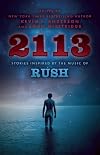
I was really bummed out by the news of the recent death of Neil Peart. I've said more than once that seeing Peart performing one of his extended virtuoso percussion solos live is the closest thing I've had to a religious experience, and that's only very slightly hyperbolic. It certainly wouldn't be at all hyperbolic to call it a transcendent experience.
So I was sort of wondering what I might do in memoriam, when I remembered I still had this volume sitting on my TBR shelves. And picking up a show more book seemed like a fitting way to pay tribute to a member of a band known for retiring to their hotel rooms to read while the other rock stars partied.
This anthology is pretty much exactly what the title says it is: stories inspired by various Rush songs, including both big hits and deep cuts. It also includes the story "A Nice Morning Drive" by Richard S. Foster, which directly inspired the song "Red Barchetta," and "Gonna Roll the Bones" by Fritz Leiber, which apparently was a vague and half-forgotten inspiration for "Roll the Bones."
I'll be honest, there are maybe three or four stories in here that I'd remotely describe as "good," and that's if you include the Fritz Leiber piece, which was written in 1967, and whose imaginative writing and fascinating weirdness are seriously marred by a couple of gratuitous racial slurs that felt like sudden and awful slaps across the face. Only one of them, Greg van Eekhout's "On the Fringes of the Fractal" (which I'd actually already encountered somewhere before, but which was worth re-reading), truly stands out. And even that one has a slightly weak ending.
The rest of them vary quite a bit in quality, but in general they're just... not terribly well-written. And yet, I did find the collection as a whole a bit more enjoyable than it seems to me that it objectively deserves. I'm sure some of that is me being in a forgiving and nostalgic mood. But I was also genuinely impressed by how even most of the weaker stories approached the subject matter. I more than half expected that we'd get a lot of pieces that read like novelizations of some of the more story-like songs, of which there are certainly plenty to choose from. But all of the authors put some real creativity into the assignment, and almost all of them gave us stories that have clear connections to the songs but build something unexpected on top of them. And even if I didn't think the results were always that great, I found that interesting enough to keep me fairly engaged. Mostly. show less
So I was sort of wondering what I might do in memoriam, when I remembered I still had this volume sitting on my TBR shelves. And picking up a show more book seemed like a fitting way to pay tribute to a member of a band known for retiring to their hotel rooms to read while the other rock stars partied.
This anthology is pretty much exactly what the title says it is: stories inspired by various Rush songs, including both big hits and deep cuts. It also includes the story "A Nice Morning Drive" by Richard S. Foster, which directly inspired the song "Red Barchetta," and "Gonna Roll the Bones" by Fritz Leiber, which apparently was a vague and half-forgotten inspiration for "Roll the Bones."
I'll be honest, there are maybe three or four stories in here that I'd remotely describe as "good," and that's if you include the Fritz Leiber piece, which was written in 1967, and whose imaginative writing and fascinating weirdness are seriously marred by a couple of gratuitous racial slurs that felt like sudden and awful slaps across the face. Only one of them, Greg van Eekhout's "On the Fringes of the Fractal" (which I'd actually already encountered somewhere before, but which was worth re-reading), truly stands out. And even that one has a slightly weak ending.
The rest of them vary quite a bit in quality, but in general they're just... not terribly well-written. And yet, I did find the collection as a whole a bit more enjoyable than it seems to me that it objectively deserves. I'm sure some of that is me being in a forgiving and nostalgic mood. But I was also genuinely impressed by how even most of the weaker stories approached the subject matter. I more than half expected that we'd get a lot of pieces that read like novelizations of some of the more story-like songs, of which there are certainly plenty to choose from. But all of the authors put some real creativity into the assignment, and almost all of them gave us stories that have clear connections to the songs but build something unexpected on top of them. And even if I didn't think the results were always that great, I found that interesting enough to keep me fairly engaged. Mostly. show less
Lists
1990s Star Wars (19)
Female Author (1)
To Read (1)
Books with Twins (1)
Missing Books (1)
Jarett's Books (1)
Awards


You May Also Like


Associated Authors
Statistics
- Works
- 463
- Also by
- 121
- Members
- 86,658
- Popularity
- #126
- Rating
- 3.5
- Reviews
- 1,134
- ISBNs
- 2,130
- Languages
- 26
- Favorited
- 43
