
A. C. Crispin (1950–2013)
Author of The Paradise Snare
About the Author
A. C. Crispin was born in Stamford, Connecticut on April 5, 1950. She received a bachelor's degree in English literature from the University of Maryland in 1972. Before becoming a full-time author, she worked for the US Census Bureau. Her first novel, Yesterday's Son, was published in 1983 and was show more part of the Star Trek series. She wrote three other Star Trek novels: Time for Yesterday, The Eyes of the Beholders, and Sarek. She wrote V, a novelization of the television miniseries, in 1984 and collaborated on two more books in the V series: East Coast Crisis with Howard Weinstein and Death Tide with Deborah Marshall. She also wrote Star Wars: The Han Solo Trilogy and The Starbridge Chronicles. Her most recent works include The Exiles of Boq'urain: Storms of Destiny, Pirates of the Caribbean: The Price of Freedom, and Time Horse. She died of cancer on September 6, 2013 at the age of 63. (Bowker Author Biography) show less
Series
Works by A. C. Crispin
Gespensterschiff / Planet des Untergangs / Die Augen der Betrachter. Star Trek (1994) — Contributor — 19 copies
Alien - O Regresso 1 copy
Last Words [short story] 1 copy
V - A Batalha Final - vol. 2 1 copy
Associated Works
Tagged
Common Knowledge
- Legal name
- Crispin, Ann Carol Tickell
- Birthdate
- 1950-04-05
- Date of death
- 2013-09-06
- Gender
- female
- Education
- University of Maryland (BA|1972)
- Occupations
- writer
college teacher - Organizations
- SFWA
Writer Beware (founder)
Anne Arundel Community College
Charles County Community College
Harrisburg Area Community College
Towson State University (show all 7)
International Association of Media Tie-In Writers - Awards and honors
- Scribe Award (Grandmaster, Faust Award, 2013)
- Relationships
- Capobianco, Michael (husband)
- Cause of death
- cancer
- Nationality
- USA
- Birthplace
- Stamford, Connecticut, USA
- Places of residence
- Maryland, USA
Atlanta, Georgia, USA - Place of death
- Waldorf, Maryland, USA
- Associated Place (for map)
- USA
Members
Reviews
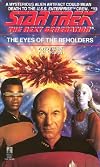
Like most people who from time to time like to read a non-episode book based on a television show they enjoyed, I’ve been disappointed on more than one occasion. Books in the Star Trek universe are notorious for the sometimes poor quality of writing and/or story, and failing to be true to the characters as portrayed on the show. Eyes of the Beholders has none of these shortcomings, and is in fact, one of the best books I’ve ever read in the Star Trek: The Next Generation group of show more stories.
The basic story of an alien artifact and the graveyard of ships it has lured to their demise, while hardly original, is wonderfully conceived and written by A.C. Crispin. He manages to make a somewhat familiar scenario seem fresh, even mysterious. The members of the crew seem themselves, and the reader feels like they are reading a well-written episode they missed somehow. The various crew members each have enough “screen” time that the reader’s desire to spend time with them again is satisfied. The answer to the mystery of whether the artifact is a weapon, or simply technology so alien that it drives humans to near madness is intriguing, and the solution rewarding.
Because the characters were themselves, it was very enjoyable spending time with them. But there is much more here. In addition to the main story, we also have Data attempting to write a romance novel. This adds humor to the narrative as he passes it to one friend on the ship after another to get their opinion on it. Crispin perhaps does his best job, however, in painting the relationship of the Vulcan doctor, Selar, and a young Andorian orphan girl who is blind, and because of her condition, is unwanted by her own people. The final solution to their story may be predictable, but it’s also warm and tender, and adds a great deal to the specialness of this entry in the Next Generation universe.
I loved this. Anyone who reads these for enjoyment, especially for the nostalgia of spending a bit more time with characters they came to know and love over the years, and looked forward to seeing each week, can’t go wrong with this one. Very highly recommended. show less
The basic story of an alien artifact and the graveyard of ships it has lured to their demise, while hardly original, is wonderfully conceived and written by A.C. Crispin. He manages to make a somewhat familiar scenario seem fresh, even mysterious. The members of the crew seem themselves, and the reader feels like they are reading a well-written episode they missed somehow. The various crew members each have enough “screen” time that the reader’s desire to spend time with them again is satisfied. The answer to the mystery of whether the artifact is a weapon, or simply technology so alien that it drives humans to near madness is intriguing, and the solution rewarding.
Because the characters were themselves, it was very enjoyable spending time with them. But there is much more here. In addition to the main story, we also have Data attempting to write a romance novel. This adds humor to the narrative as he passes it to one friend on the ship after another to get their opinion on it. Crispin perhaps does his best job, however, in painting the relationship of the Vulcan doctor, Selar, and a young Andorian orphan girl who is blind, and because of her condition, is unwanted by her own people. The final solution to their story may be predictable, but it’s also warm and tender, and adds a great deal to the specialness of this entry in the Next Generation universe.
I loved this. Anyone who reads these for enjoyment, especially for the nostalgia of spending a bit more time with characters they came to know and love over the years, and looked forward to seeing each week, can’t go wrong with this one. Very highly recommended. show less
This is the story of Sarek, Vulcan Ambassador, his marriage with Amanda Grayson, and his complicated relationship with his son, Spock.
We also follow Sarek's investigation of a plot he first began to suspect years ago, which seems to be coming to fruition now--but he doesn't yet have solid proof.
The Keep Earth Human League, which wants to expel all nonhumans from Earth, but especially Vulcans, has crept along as a minor fringe group for years. Suddenly it has become larger, more active, more show more visible, and better-funded. Part of Sarek's diplomatic duties has been meeting periodically with a representative of the intensely private Freelans, who reside on a planet in the region otherwise controlled by the Romulans. For some reason, the Romulans have never claimed this world.
The Freelans garb themselves in all-encompassing robes that conceal even their faces. That pinged my "yeah, right" response, and apparently it bothered Sarek, too. He is stepping up his efforts to gather real proof that he can present to the Federation without simply fueling the KEHL conspiracy theories about Vulcans.
Meanwhile, James Kirk's nephew, Peter Kirk, is preparing for his final exams at Starfleet Academy, feeling the pressure of being the nephew of his famous uncle, and realizing he'd really rather be a diplomat. He accidentally finds himself caught up on the edges of a KEHL riot, and turns it into an opportunity to infiltrate and see what information he can retrieve that authorities might find useful. After all, it's what a real Kirk would do, right?
If that's not enough for you, Amanda is dying. Sarek and Spock have both come home, and their fragile rapprochement is holding well--until an emergency on the Klingon Neutral Zone results in Sarek being called back to duty. Amanda doesn't want him to go, but recognizes his strong sense of duty. For Spock, though, Sarek is just once again ignoring Amanda and himself in favor of duty--while Amanda is dying, and unlikely to live to see Sarek again.
All of these plot lines become entangled, with interesting consequences that enlighten our understanding of all the major characters. It's rich and satisfying, for anyone who cares about any of these characters.
Recommended.
I bought this book. show less
We also follow Sarek's investigation of a plot he first began to suspect years ago, which seems to be coming to fruition now--but he doesn't yet have solid proof.
The Keep Earth Human League, which wants to expel all nonhumans from Earth, but especially Vulcans, has crept along as a minor fringe group for years. Suddenly it has become larger, more active, more show more visible, and better-funded. Part of Sarek's diplomatic duties has been meeting periodically with a representative of the intensely private Freelans, who reside on a planet in the region otherwise controlled by the Romulans. For some reason, the Romulans have never claimed this world.
The Freelans garb themselves in all-encompassing robes that conceal even their faces. That pinged my "yeah, right" response, and apparently it bothered Sarek, too. He is stepping up his efforts to gather real proof that he can present to the Federation without simply fueling the KEHL conspiracy theories about Vulcans.
Meanwhile, James Kirk's nephew, Peter Kirk, is preparing for his final exams at Starfleet Academy, feeling the pressure of being the nephew of his famous uncle, and realizing he'd really rather be a diplomat. He accidentally finds himself caught up on the edges of a KEHL riot, and turns it into an opportunity to infiltrate and see what information he can retrieve that authorities might find useful. After all, it's what a real Kirk would do, right?
If that's not enough for you, Amanda is dying. Sarek and Spock have both come home, and their fragile rapprochement is holding well--until an emergency on the Klingon Neutral Zone results in Sarek being called back to duty. Amanda doesn't want him to go, but recognizes his strong sense of duty. For Spock, though, Sarek is just once again ignoring Amanda and himself in favor of duty--while Amanda is dying, and unlikely to live to see Sarek again.
All of these plot lines become entangled, with interesting consequences that enlighten our understanding of all the major characters. It's rich and satisfying, for anyone who cares about any of these characters.
Recommended.
I bought this book. show less

Two years after the U.S.S. Enterprise's visit to the dying planet Sarpedion, a young crew member finds evidence that, when transported to the past during his time there, Spock fathered a son. Determined to rescue the boy and his mother, Spock, Kirk, and McCoy use the Guardian of Forever to journey to the planet's prehistory, where they meet Zar, Spock's son, and bring him back to their time. Though Zar acclimates quickly to his new surroundings, bonding with his father proves difficult until show more an incursion by the Romulans forces the two to work together — and Zar to confront his future.
A.C. Crispin's novel was one of the first of the Star Trek Pocket Books series that I read, and one of the ones I remembered most fondly. I was a little worried that revisiting it would cheapen my recollection; instead it only deepened my appreciation of what the author achieved with it. Crispin manages to achieve an ideal balance between the original series (integrating details and characters from five episodes) and her own creations for the book. Foremost among the latter, of course, is Spock's son Zar; while not an original idea (with the introduction of Kirk's son in the movie Wrath of Khan predating this book by a year), he is introduced in a way that is extremely faithful to the series. Yet the strongest element of the book is Zar's relationship with his father, which manages the difficult trick of being emotionally moving while remaining true to the depiction of Vulcans. Taken together, it makes for a model of what a Star Trek novel should be, setting a high bar for the many works that followed. show less
A.C. Crispin's novel was one of the first of the Star Trek Pocket Books series that I read, and one of the ones I remembered most fondly. I was a little worried that revisiting it would cheapen my recollection; instead it only deepened my appreciation of what the author achieved with it. Crispin manages to achieve an ideal balance between the original series (integrating details and characters from five episodes) and her own creations for the book. Foremost among the latter, of course, is Spock's son Zar; while not an original idea (with the introduction of Kirk's son in the movie Wrath of Khan predating this book by a year), he is introduced in a way that is extremely faithful to the series. Yet the strongest element of the book is Zar's relationship with his father, which manages the difficult trick of being emotionally moving while remaining true to the depiction of Vulcans. Taken together, it makes for a model of what a Star Trek novel should be, setting a high bar for the many works that followed. show less
A.C. Crispin is among that small handful of pro writers who can be counted on to handle classic Star Trek fiction well, but this is not her best effort.
Overburdened with a let’s-destroy-the-Federation plot based on complex, convoluted intrigues which have been decades in the making, and festooned with not just one, but two young-love subplots, the essential story – that of Sarek – threatens to disappear entirely.
That’s the bad news.
The good news is, Sarek is a tough old bird (as any show more devoted Trekfan already knows), and he is not about to surrender without a fight. When Crispin isn’t wrangling intergalactic warfare issues, she turns an insightful eye on the formidable Sarek of Vulcan, his human wife, Amanda, and his often-estranged son, Spock.
Father and son are again banging heads here, this time over Amanda’s impending death, when Sarek chooses to abandon her bedside to answer an ambassadorial call dealing with a political issue menacing thousands of lives. Spock is left to witness his mother’s final hours as she repeatedly calls for her absent mate. This pretty well wipes out the tenuous peace that had begun to build between the two men.
The action-adventure portion of the story sometimes forces these two into subordinate roles, though Sarek does reclaim the stage when he faces down the Main Bad Guy (and incidentally provides Peter Kirk – did we mention Captain Kirk’s nephew, Peter, is in the mix here? – with the means to deal with a third-plot-line challenge of his own).
Throughout the build-up to the adventure-plotline climax, Crispin has used flashbacks of Sarek’s early life, particularly focusing on his relationship with Amanda. Formative moments in the family structure emerge, with Amanda’s voice being kept strong in the story through the use of her journals. And once that pesky menace-to-galactic-peace issue has been resolved, it’s the journals that ultimately provide the pathway for father and son to begin a final reconciliation. There’s also some nice foreshadowing here of Spock’s far-in-the-future attempt to reunite Romulan and Vulcan civilizations. show less
Overburdened with a let’s-destroy-the-Federation plot based on complex, convoluted intrigues which have been decades in the making, and festooned with not just one, but two young-love subplots, the essential story – that of Sarek – threatens to disappear entirely.
That’s the bad news.
The good news is, Sarek is a tough old bird (as any show more devoted Trekfan already knows), and he is not about to surrender without a fight. When Crispin isn’t wrangling intergalactic warfare issues, she turns an insightful eye on the formidable Sarek of Vulcan, his human wife, Amanda, and his often-estranged son, Spock.
Father and son are again banging heads here, this time over Amanda’s impending death, when Sarek chooses to abandon her bedside to answer an ambassadorial call dealing with a political issue menacing thousands of lives. Spock is left to witness his mother’s final hours as she repeatedly calls for her absent mate. This pretty well wipes out the tenuous peace that had begun to build between the two men.
The action-adventure portion of the story sometimes forces these two into subordinate roles, though Sarek does reclaim the stage when he faces down the Main Bad Guy (and incidentally provides Peter Kirk – did we mention Captain Kirk’s nephew, Peter, is in the mix here? – with the means to deal with a third-plot-line challenge of his own).
Throughout the build-up to the adventure-plotline climax, Crispin has used flashbacks of Sarek’s early life, particularly focusing on his relationship with Amanda. Formative moments in the family structure emerge, with Amanda’s voice being kept strong in the story through the use of her journals. And once that pesky menace-to-galactic-peace issue has been resolved, it’s the journals that ultimately provide the pathway for father and son to begin a final reconciliation. There’s also some nice foreshadowing here of Spock’s far-in-the-future attempt to reunite Romulan and Vulcan civilizations. show less
Lists
1990s Star Wars (3)
One Letter Books (1)
Awards


You May Also Like


Associated Authors
Statistics
- Works
- 52
- Also by
- 14
- Members
- 12,638
- Popularity
- #1,852
- Rating
- 3.7
- Reviews
- 125
- ISBNs
- 198
- Languages
- 12
- Favorited
- 6
