On This Page
Description
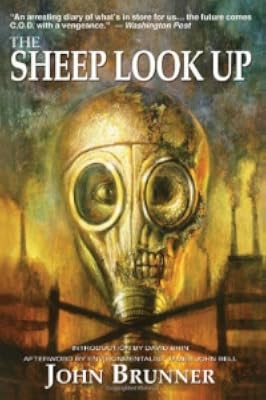
Nebula Award Finalist: A "brilliantly crafted, engrossing" dystopian novel of environmental disaster by the Hugo Award-winning author of Stand on Zanzibar (The Guardian). In a near future, the air pollution is so bad that everyone wears gas masks. The infant mortality rate is soaring, and birth defects, new diseases, and physical ailments of all kinds abound. The water is undrinkable--unless you're poor and have no choice. Large corporations fighting over profits from gas masks, drinking show more water, and clean food tower over an ineffectual, corrupt government. Environmentalist Austin Train is on the run. The "trainites," a group of violent environmental activists, want him to lead their movement; the government wants him dead; and the media demands amusement. But Train just wants to survive. More than a novel of science fiction, The Sheep Look Up is a skillful and frightening political and social commentary that takes its place next to other remarkable works of dystopian literature, such as Margaret Atwood's The Handmaid's Tale, Aldous Huxley's Brave New World, Ray Bradbury's Fahrenheit 451, and George Orwell's 1984. show lessTags
Recommendations






























Member Recommendations
Member Reviews
this deserves a proper review, but i need some time, some time to lie down and think, to stifle the cries inside my head, to internalize that this is a book written 50 years ago and not last week's twitter feed.
---
we're all dead, that is no news. whoever writes a story about the end of the world is always right, at least in part. some put too much weight on specific dates or ways in which things will come to pass, and so they are more wrong than right. others prefer to keep things vague, and so they better reflect the fact that it is always the end of the world for someone, and some day it will be the end of the world for everyone.
the thing with the sheep look up is that there are dates and countries and names, but it still is so, so show more right. it actually doesn't read so much as a prediction of what is going to happen if we don't get it together, but as a description of how things are. now. this week. today.
brunner wrote this 50 years ago.
the style reminded me a lot of peter watts, which is no surprise, since watts himself has mentioned brunner as one of his main and major influences.
style and content are there: ecocide, extraction capitalism, consumerism, chemical warfare, technology gone wrong, societal collapse. i can see now so many parallels with watts' rifters novels.
i'm rambling.
i'm just amazed by the prescience of this novel. the writing style helps, and perfectly mirrors the way we consume information nowadays. the book is a patchwork of snapshots, screencasts, conversations, headlines and traditional chapters. if brunner were writing it today, it would be a series of tweets, facebook status, podcasts, blogposts and leaked confidential documents.
and that's the thing: i didn't feel like i was reading a book so much as experiencing it. being in it.
this is not helpful, i know.
it's probably not going to convince anybody to read the book, except as a study on zeitgeist and foreknowledge.
i'm just impressed, because i've read a lot of old, classic scifi (and other stuff too), and usually, no matter how interesting the concept, condescendence comes easy: we know so much more now than when this book was written, we are so much better.
well, not here. nothing has changed in 50 years.
isn't that depressing? show less
---
we're all dead, that is no news. whoever writes a story about the end of the world is always right, at least in part. some put too much weight on specific dates or ways in which things will come to pass, and so they are more wrong than right. others prefer to keep things vague, and so they better reflect the fact that it is always the end of the world for someone, and some day it will be the end of the world for everyone.
the thing with the sheep look up is that there are dates and countries and names, but it still is so, so show more right. it actually doesn't read so much as a prediction of what is going to happen if we don't get it together, but as a description of how things are. now. this week. today.
brunner wrote this 50 years ago.
the style reminded me a lot of peter watts, which is no surprise, since watts himself has mentioned brunner as one of his main and major influences.
style and content are there: ecocide, extraction capitalism, consumerism, chemical warfare, technology gone wrong, societal collapse. i can see now so many parallels with watts' rifters novels.
i'm rambling.
i'm just amazed by the prescience of this novel. the writing style helps, and perfectly mirrors the way we consume information nowadays. the book is a patchwork of snapshots, screencasts, conversations, headlines and traditional chapters. if brunner were writing it today, it would be a series of tweets, facebook status, podcasts, blogposts and leaked confidential documents.
and that's the thing: i didn't feel like i was reading a book so much as experiencing it. being in it.
this is not helpful, i know.
it's probably not going to convince anybody to read the book, except as a study on zeitgeist and foreknowledge.
i'm just impressed, because i've read a lot of old, classic scifi (and other stuff too), and usually, no matter how interesting the concept, condescendence comes easy: we know so much more now than when this book was written, we are so much better.
well, not here. nothing has changed in 50 years.
isn't that depressing? show less
This is an early predecessor of today's cli-fi subgenre, exploring the landscape of environmental disaster. I wanted to experience the eerie prescience of its 1972 vision: a future in which the environment's total collapse is imminent, but the American president is too obsessed with political gamesmanship and keeping out immigrants to care. The signs of that collapse ramp ever up and up: smog and oxygen masks, skin rashes, tainted drinking water, birth defects, poisoned seas and oceans, antibiotic resistance, vermin invasions, epidemics ... all that I could find missing is rising temperatures and sea levels.
Brunner worked on a near future scale, with the obvious consequences fifty years on, and this is very much a product of the 1970s. show more I suspect he researched women's inner lives, for example, by reading Playboy magazine aided largely by the pictures. Value remains in his message: a novel centered on the topic of man-made environmental disaster speaks louder to us today than does most of his other work. When one of his characters says "You can't blame the people who can't hear the warnings; you have to blame the ones who can, and who ignore them", in the 2020s it's not difficult to read the former as his contemporary readers, and the latter as potentially us.
The novel's general population seems ignorant or uncaring of the links between human activity and the chaos they suffer under, even though these links are very direct and obvious. In place of UN environmental talks, street demonstrations and Greta Thunberg, they have only terrorists and survivalists. Brunner is telling us that if we don't prioritize the environment when influencing our political sphere, nothing meaningful enough will be done. We might congratulate ourselves in a relative sense, if we ignore how uncomfortably close Brunner's vision nears as we continue to dither. It's held back from being a classic for being too much of its time, but that time has not yet entirely run out. show less
Brunner worked on a near future scale, with the obvious consequences fifty years on, and this is very much a product of the 1970s. show more I suspect he researched women's inner lives, for example, by reading Playboy magazine aided largely by the pictures. Value remains in his message: a novel centered on the topic of man-made environmental disaster speaks louder to us today than does most of his other work. When one of his characters says "You can't blame the people who can't hear the warnings; you have to blame the ones who can, and who ignore them", in the 2020s it's not difficult to read the former as his contemporary readers, and the latter as potentially us.
The novel's general population seems ignorant or uncaring of the links between human activity and the chaos they suffer under, even though these links are very direct and obvious. In place of UN environmental talks, street demonstrations and Greta Thunberg, they have only terrorists and survivalists. Brunner is telling us that if we don't prioritize the environment when influencing our political sphere, nothing meaningful enough will be done. We might congratulate ourselves in a relative sense, if we ignore how uncomfortably close Brunner's vision nears as we continue to dither. It's held back from being a classic for being too much of its time, but that time has not yet entirely run out. show less
What a weird combination of eerie prescience and slapstick satire this is, for all that I'm pretty sure it was just supposed to be the latter.
The Sheep Look Up is very much a product of its time, when the Vietnam War was still raging and Rachel Carson's Silent Spring was still relatively new and shocking. As such, its view of the rest of the twentieth century -- the author's imagined future, our immediate past -- should come across as dated. There are no cell phones, no internet; computers are still big expensive things on which time must be reserved. But despite all this, the novel feels fresh as ever. Horribly, terrifyingly fresh.
I've read a lot of dystopian lit in the last few years, watched my world die and devolve in dozens of show more different ways in the (virtual) pages of all kinds of fiction. And some of those books have upset me, yes. But none have just plain scared me as much as this one did.
I finished reading and I had to rush outside and take in a deep gulp of the cold and still mostly clean night air of Cheyenne in January -- I say mostly because, well, there's an oil refinery on the south side of town, and an inversion layer like we've got going on tonight traps all that lovely sour crude smell, but at least I didn't need a filtration mask to breathe. Down in, say, Denver, though (where, incidentally, a lot of the most gruesome action in The Sheep Look Up takes place), well, they do have those smog warnings on some days, and some days I can look south and kind of see it.
The America of The Sheep Look Up is one in which no books like The Sheep Look Up ever got written, or, if they did, paid attention to. It's a grandly collapsing environmental catastrophe of the old school, where the air, water and soil have all been allowed to become so toxic that filtration masks to breathe are just the beginning; the Great Lakes are completely dead, no city's water supply is reliably safe, trace heavy metals and defoliants and pesticides contaminate even the food that is supposedly clean and organic and sold at a premium, and still the profit motive is king; even providers of global food aid expect to make a buck off it, to say nothing of those who are only too happy to get rich providing filtration masks and allegedly clean food and water purification devices.
The madness is presided over by a recently elected jackwagon of a President of the United States who is half Ronald Reagan and half George W. Bush (with a dash of Ferris F. Fremont thrown in), cavalier and clueless but quick to give the press a tough-talking John Wayne soundbite that puts all those America-hating traitors who think they should still be able to see the sun and the moon in the sky in their places. President Prexy is still hell bent on exporting the American Way of Life, by force if necessary, and seems all but unopposed in his military adventurism and his willingness to maintain the status quo at all costs.
Almost. Enter Austin Train, academic and agitator, a spiritual son of Ralph Nader whose message was even less well-received than Nader's had been at the time of this writing (1972), and who finally had a bit of a nervous breakdown and disappeared. Only wait, some people were listening, and in his name have formed a movement that some readers see as predicting the Occupiers of today. Even more marginalized than our Occupiers, though, they're all in sort of a holding pattern, struggling just to survive on a continent drowning in toxic waste, sewage and effluent, and barely holding on against drug resistant diseases, parasities, birth defects, chronic environmental disease and malnutrition. A lot of them seem barely able to hold a coherent thought in their heads; all of them are hoping that Train will come back and show them what to do.
Brunner conveys all of this in a very post-modern style, presenting us with a series of vignettes of different characters coping with this toilet of a world in different places intercut with snatches of mass media chatter that give the small, sad stories of his characters great depth and context. We get stories from both sides of the barricades, profiteers and agitators for a better world (or at least for an end to the madness, since this America may well be past the point of no return, environmentally). The plot that ties it all together is almost a whodunnit, but of course we know who did it.
Never before in life have I been so grateful to live in a world where the voices crying out against pollution and waste have not been totally marginalized. But lest I get too comfortable -- I read this book on an e-reader, that was manufactured using a pollution-intensive process, on another continent. The United States might not now, thanks to the culture of warning and concern of which novels like The Sheep Look Up have been a vital part, become the toilet this novel depicts, but that doesn't mean other places won't. There's a reason so many of our manufacturing jobs have disappeared, and that reason is the flight by pollution-causing industry to countries who don't have even our still rather lame environmental (and occupational) standards. We're still treating the planet as a toilet. We're just keeping our own bathrooms clean.
For now. show less
The Sheep Look Up is very much a product of its time, when the Vietnam War was still raging and Rachel Carson's Silent Spring was still relatively new and shocking. As such, its view of the rest of the twentieth century -- the author's imagined future, our immediate past -- should come across as dated. There are no cell phones, no internet; computers are still big expensive things on which time must be reserved. But despite all this, the novel feels fresh as ever. Horribly, terrifyingly fresh.
I've read a lot of dystopian lit in the last few years, watched my world die and devolve in dozens of show more different ways in the (virtual) pages of all kinds of fiction. And some of those books have upset me, yes. But none have just plain scared me as much as this one did.
I finished reading and I had to rush outside and take in a deep gulp of the cold and still mostly clean night air of Cheyenne in January -- I say mostly because, well, there's an oil refinery on the south side of town, and an inversion layer like we've got going on tonight traps all that lovely sour crude smell, but at least I didn't need a filtration mask to breathe. Down in, say, Denver, though (where, incidentally, a lot of the most gruesome action in The Sheep Look Up takes place), well, they do have those smog warnings on some days, and some days I can look south and kind of see it.
The America of The Sheep Look Up is one in which no books like The Sheep Look Up ever got written, or, if they did, paid attention to. It's a grandly collapsing environmental catastrophe of the old school, where the air, water and soil have all been allowed to become so toxic that filtration masks to breathe are just the beginning; the Great Lakes are completely dead, no city's water supply is reliably safe, trace heavy metals and defoliants and pesticides contaminate even the food that is supposedly clean and organic and sold at a premium, and still the profit motive is king; even providers of global food aid expect to make a buck off it, to say nothing of those who are only too happy to get rich providing filtration masks and allegedly clean food and water purification devices.
The madness is presided over by a recently elected jackwagon of a President of the United States who is half Ronald Reagan and half George W. Bush (with a dash of Ferris F. Fremont thrown in), cavalier and clueless but quick to give the press a tough-talking John Wayne soundbite that puts all those America-hating traitors who think they should still be able to see the sun and the moon in the sky in their places. President Prexy is still hell bent on exporting the American Way of Life, by force if necessary, and seems all but unopposed in his military adventurism and his willingness to maintain the status quo at all costs.
Almost. Enter Austin Train, academic and agitator, a spiritual son of Ralph Nader whose message was even less well-received than Nader's had been at the time of this writing (1972), and who finally had a bit of a nervous breakdown and disappeared. Only wait, some people were listening, and in his name have formed a movement that some readers see as predicting the Occupiers of today. Even more marginalized than our Occupiers, though, they're all in sort of a holding pattern, struggling just to survive on a continent drowning in toxic waste, sewage and effluent, and barely holding on against drug resistant diseases, parasities, birth defects, chronic environmental disease and malnutrition. A lot of them seem barely able to hold a coherent thought in their heads; all of them are hoping that Train will come back and show them what to do.
Brunner conveys all of this in a very post-modern style, presenting us with a series of vignettes of different characters coping with this toilet of a world in different places intercut with snatches of mass media chatter that give the small, sad stories of his characters great depth and context. We get stories from both sides of the barricades, profiteers and agitators for a better world (or at least for an end to the madness, since this America may well be past the point of no return, environmentally). The plot that ties it all together is almost a whodunnit, but of course we know who did it.
Never before in life have I been so grateful to live in a world where the voices crying out against pollution and waste have not been totally marginalized. But lest I get too comfortable -- I read this book on an e-reader, that was manufactured using a pollution-intensive process, on another continent. The United States might not now, thanks to the culture of warning and concern of which novels like The Sheep Look Up have been a vital part, become the toilet this novel depicts, but that doesn't mean other places won't. There's a reason so many of our manufacturing jobs have disappeared, and that reason is the flight by pollution-causing industry to countries who don't have even our still rather lame environmental (and occupational) standards. We're still treating the planet as a toilet. We're just keeping our own bathrooms clean.
For now. show less
****.5
As a novel, it's not fantastic. More a pastiche of news alerts, adverts, and short vignettes than a plot-based narrative, with sketchily drawn characters. But that doesn't make it any less powerful. The snippets serve their purpose, and slowly build up as things inexorably continue to decline. Like a frog in a pot of heating water, the extent of the danger isn't fully comprehended until it's too late.
Written 50 years ago as a cautionary tale, many of the warnings have sadly has been proven more prophetic than alarmist. From air and water pollution, acid rain, pesticide resistant pests, antibiotic resistant germs, epidemics and pandemics, crop failures, GMOs and junk food, to terrorism, needless wars, increasing inequality, and the show more creeping fascism of the surveillance state, much of it has happened as predicted.
The tone is aggressively preachy, Brunner is clearly scared and angry as what he sees as criminal negligence to deal with any of the threats. It's therefore not a particularly easy or a fun read, but given our propensity to ignore the call to action, it's also a #MustRead. show less
As a novel, it's not fantastic. More a pastiche of news alerts, adverts, and short vignettes than a plot-based narrative, with sketchily drawn characters. But that doesn't make it any less powerful. The snippets serve their purpose, and slowly build up as things inexorably continue to decline. Like a frog in a pot of heating water, the extent of the danger isn't fully comprehended until it's too late.
Written 50 years ago as a cautionary tale, many of the warnings have sadly has been proven more prophetic than alarmist. From air and water pollution, acid rain, pesticide resistant pests, antibiotic resistant germs, epidemics and pandemics, crop failures, GMOs and junk food, to terrorism, needless wars, increasing inequality, and the show more creeping fascism of the surveillance state, much of it has happened as predicted.
The tone is aggressively preachy, Brunner is clearly scared and angry as what he sees as criminal negligence to deal with any of the threats. It's therefore not a particularly easy or a fun read, but given our propensity to ignore the call to action, it's also a #MustRead. show less
Gah, dystopian fiction is so depressing; yet when it's done well, it is such a good read. This is one such book. It came up on my Goodreads recommendations, and I'm surprised I hadn't encountered it before, since I've been reading a lot of science fiction & futuristic fiction in the past few years. I hadn't read or heard anything about the author before, which usually makes me a little wary. However, once I started this book, I didn't want to put it down.
In the novel, a company called Bamberly Hydroponics has created and is distributing a food product called Nutripon. Several batches of it are sent overseas as humanitarian aid; shortly thereafter, terrible sickness and mental illness strikes those countries. Meanwhile, the pollution and show more contamination are growing stateside; the water supply, being diverted from rural areas into the city, is recycled without proper sanitation and perpetuates a cycle of sickness that is deadly for the very young, very old, and poor; acid rain, crop failures, and transmissible disease compound the problems. Still, the wealthy business owners, such as Mr. Bamberly and his officers deny any implication of wrongdoing in the nationwide problems.
This book chronicles one year in an ambiguously future America; technology is not described at length, but the economy is faltering, food supplies are either contaminated or prohibitively expensive, air quality is so poor that you cannot be outside without a filtermask for more than a few minutes, the rich are getting richer and the poor getting poorer. It all seems so conspiracy theoretic, but on second glance, it's not too hard to see our own situation growing into this chaotic state -- the "Puritan" health food craze, the use of military force in developing countries, the manipulation of food and water supplies, the corporate zeal for profit at the expense of humanity.
This is one of those books akin to "1984" -- you shake your head and think, "That will never happen here," -- yet it is happening all around you. show less
In the novel, a company called Bamberly Hydroponics has created and is distributing a food product called Nutripon. Several batches of it are sent overseas as humanitarian aid; shortly thereafter, terrible sickness and mental illness strikes those countries. Meanwhile, the pollution and show more contamination are growing stateside; the water supply, being diverted from rural areas into the city, is recycled without proper sanitation and perpetuates a cycle of sickness that is deadly for the very young, very old, and poor; acid rain, crop failures, and transmissible disease compound the problems. Still, the wealthy business owners, such as Mr. Bamberly and his officers deny any implication of wrongdoing in the nationwide problems.
This book chronicles one year in an ambiguously future America; technology is not described at length, but the economy is faltering, food supplies are either contaminated or prohibitively expensive, air quality is so poor that you cannot be outside without a filtermask for more than a few minutes, the rich are getting richer and the poor getting poorer. It all seems so conspiracy theoretic, but on second glance, it's not too hard to see our own situation growing into this chaotic state -- the "Puritan" health food craze, the use of military force in developing countries, the manipulation of food and water supplies, the corporate zeal for profit at the expense of humanity.
This is one of those books akin to "1984" -- you shake your head and think, "That will never happen here," -- yet it is happening all around you. show less
El rebaño ciego está escrita en 1972, y eso hay que tenerlo presente a lo largo de la novela, muchas veces, porque parece una novela escrita el año pasado. John Brunner (1934–1995) construye aquí un vasto mosaico de lo que puede llegar a ser el mundo si se sigue abusando de la contaminación desaforada.
Entendámonos. No llega del todo a ser un libro catastrofista al estilo “arrepentíos pecadores”, y al mismo tiempo nos muestra el peor panorama posible para la raza humana en un mundo gris, contaminado, tóxico y dañino. La novela narra las vidas de unas decenas de personajes que intentan básicamente sobrevivir en unos EE.UU. (el autor es británico) donde hace mucho tiempo que no se puede ir a la playa, donde hace demasiado show more tiempo que no se puede salir a la calle sin mascarilla, donde las plagas son inmunes a la inmensa mayoría de los insecticidas, que de tanto usarse mal las han inmunizado. Un mundo horrible, muy bien descrito, sin sentimentalismos, son simples descripciones de cómo son (serían, según el autor) las cosas.
La novela gira en torno a Austin Train, sin llegar a él, pues aparece muy poco. Austin Train es un ecologista al que la sociedad ha puesto en el ojo del huracán sin que él mismo estuviera muy por la labor. Miles de personas se autodenominan los trainitas y emprenden acciones de guerrilla urbana por todo el país, para intentar que la gente deje de usar coches que contaminan, o que dejen de usar productos en cuya elaboración se contamina más de la cuenta.
Uno de los pasajes tragicómicos de la novela tiene lugar cuando un grupo de trainitas secuestra al hijo de una multinacional y como único castigo le dan a beber agua del grifo. Esto equivale casi a condenarlo a muerte.
El único fallo “clamoroso”, a pesar de tratarse de una novela, es que el autor habla de que de un tiempo a esta parte cada vez hay más terremotos en Denver, dejando caer que se debe a la mano del hombre. Ni siquiera en una obra de ciencia ficción soft queda bien.
Por lo demás, cuesta a veces seguir la vertiginosa historia, que salta con enorme vitalidad entre personajes que al principio nada tienen que ver entre ellos. Pero está muy bien escrita y el autor da multitud de argumentos –sin darlos explícitamente, sino describiendo sus efectos en un futuro cercano– para poner cuidado en el uso que hacemos de los recursos naturales. Es un libro ecologista escrito cuando Greenpeace estaba aún en pañales.
Mejor aún, viendo el estupendo estilo de esta novela, a uno le entran muchas ganas de leer otros libros del mismo autor como Todos sobre Zanzíbar, sobre la superpoblación mundial, y El jinete de la Onda de choque (1969), en el que se profetiza, cosa muy poco común, la aparición del ordenador personal y se habla de “hiperenlaces” y “multimedia”. Recuerden, 1969. show less
Entendámonos. No llega del todo a ser un libro catastrofista al estilo “arrepentíos pecadores”, y al mismo tiempo nos muestra el peor panorama posible para la raza humana en un mundo gris, contaminado, tóxico y dañino. La novela narra las vidas de unas decenas de personajes que intentan básicamente sobrevivir en unos EE.UU. (el autor es británico) donde hace mucho tiempo que no se puede ir a la playa, donde hace demasiado show more tiempo que no se puede salir a la calle sin mascarilla, donde las plagas son inmunes a la inmensa mayoría de los insecticidas, que de tanto usarse mal las han inmunizado. Un mundo horrible, muy bien descrito, sin sentimentalismos, son simples descripciones de cómo son (serían, según el autor) las cosas.
La novela gira en torno a Austin Train, sin llegar a él, pues aparece muy poco. Austin Train es un ecologista al que la sociedad ha puesto en el ojo del huracán sin que él mismo estuviera muy por la labor. Miles de personas se autodenominan los trainitas y emprenden acciones de guerrilla urbana por todo el país, para intentar que la gente deje de usar coches que contaminan, o que dejen de usar productos en cuya elaboración se contamina más de la cuenta.
Uno de los pasajes tragicómicos de la novela tiene lugar cuando un grupo de trainitas secuestra al hijo de una multinacional y como único castigo le dan a beber agua del grifo. Esto equivale casi a condenarlo a muerte.
El único fallo “clamoroso”, a pesar de tratarse de una novela, es que el autor habla de que de un tiempo a esta parte cada vez hay más terremotos en Denver, dejando caer que se debe a la mano del hombre. Ni siquiera en una obra de ciencia ficción soft queda bien.
Por lo demás, cuesta a veces seguir la vertiginosa historia, que salta con enorme vitalidad entre personajes que al principio nada tienen que ver entre ellos. Pero está muy bien escrita y el autor da multitud de argumentos –sin darlos explícitamente, sino describiendo sus efectos en un futuro cercano– para poner cuidado en el uso que hacemos de los recursos naturales. Es un libro ecologista escrito cuando Greenpeace estaba aún en pañales.
Mejor aún, viendo el estupendo estilo de esta novela, a uno le entran muchas ganas de leer otros libros del mismo autor como Todos sobre Zanzíbar, sobre la superpoblación mundial, y El jinete de la Onda de choque (1969), en el que se profetiza, cosa muy poco común, la aparición del ordenador personal y se habla de “hiperenlaces” y “multimedia”. Recuerden, 1969. show less
A seminal dystopian novel detailing America's rapid collapse due to extreme ecological catastrophe, corporate greed, and political apathy. A nightmarish future where air is toxic, water is poisonous, and society is broken. It follows various characters experiencing the, environmental degradation, including the followers of environmentalist Austin Train.
Members
- Recently Added By
Lists

Best Dystopias
280 works; 277 members

Best Science Fiction Novels
816 works; 430 members
Survey of Classic Science Fiction
171 works; 48 members

Recommended Apocalyptic Novels
53 works; 23 members

Survey of Classic Dystopias
29 works; 4 members

Dystopian and Apocalyptic Literature
350 works; 74 members

David Brin: Dire Warnings And Self-Preventing Prophecies
17 works; 3 members

An End of the World Reading List
63 works; 4 members
501 Must-Read Books
529 works; 72 members

Fiction to Read for Earth Day
50 works; 8 members

Jones and Newman's Horror: The 100 Best Books
100 works; 4 members

Animals in the Title
498 works; 11 members

Best Horror Mega-List
342 works; 6 members

Books Read in 2024
4,727 works; 128 members

2025 Reading List
51 works; 2 members
Favorite Science Fiction
456 works; 219 members
Author Information

290+ Works 24,591 Members
Legendary science fiction author John Brunner was the winner of the Hugo award and two-time winner of the British Science Fiction Award. He was perhaps the first science fiction author to predict the Internet and coined the term "worm" to descibe computer viruses. Mr. Brunner died in 1995
Some Editions
Awards and Honors
Series

Belongs to Publisher Series
Work Relationships
Is contained in
Common Knowledge
- Canonical title
- The Sheep Look Up
- Original title
- The Sheep Look Up
- Original publication date
- 1972
- Epigraph
- PLEASE HELP
KEEP PIER CLEAN
THROW REFUSE OVERSIDE
- Sign pictured in God's Own Junkyard, edited by Peter Blake - Dedication
- To
ISOBEL GRACE SAUER (née. ROSAMOND)
1887-1970
IN MEMORIAM - First words
- Hunted?
By wild animals?
In broad daylight on the Santa Monica freeway? Mad! Mad! - Quotations
- You can't blame the people who can't hear the warnings; you have to blame the ones who can, and who ignore them.
- Last words
- (Click to show. Warning: May contain spoilers.)"The brigade would have a long way to go," the doctor told her curtly. "It's from America. The wind's blowing that way."
- Blurbers
- Blish, James; Russ, Joanna; Bloch, Robert
- Original language
- English
Classifications
Statistics
- Members
- 1,822
- Popularity
- 11,978
- Reviews
- 51
- Rating
- (3.92)
- Languages
- 8 — Dutch, English, French, German, Italian, Norwegian, Polish, Spanish
- Media
- Paper, Audiobook, Ebook
- ISBNs
- 38
- ASINs
- 20