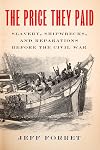
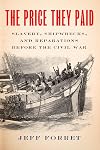
The Price They Paid: Slavery, Shipwrecks, and Reparations Before the Civil War
by Jeff Forret
On This Page
Description
"A prizewinning historian uncovers the first instances of reparations in America, paid to slaveholders, not former slaves"--Tags
Recommendations






Member Reviews
This is a dry text about insurance claims, particulars of what amounts to maritime salvage law, legal quibbles from 200 years ago, public opinion and its effect on appointed government, and who needs to pay how much to whom.
It's also very informative in its mundanity because the insurance claims were filed on human beings. Although this is not the easiest read due to the density of information about finance, legal questions, generally unexciting political stuff and whatnot else, it's an important text because of how it shows that slavery wasn't just brutal overseers whipping slaves in the fields, it was a huge complicated bureaucracy that rose to the level of the President in terms of answering claims and making national policy for show more stuff supporting slavery, like "are we going to go to war with the British over their policy on freeing slaves in the Bahamas?" There's more than a little bit of the "banality of evil" going on with the arguments about insurance policies, legal questions, how much should be paid in compensation to whom, etc.
It also plays fair in terms of showing that the British in the Bahamas, despite generally coming down on the side of abolition and freedom, had their own internal arguments - the governor was an abolitionist, but a lot of white locals definitely were not. This is definitely not a simple case of good guys versus bad guys here.
The author connects the series of incidents in this book to the argument regarding reparations for slavery, including how the original reparations for slavery were unsurprisingly given to white slaveowners instead of former slaves. He also makes a very interesting allusion to how the US government was perfectly happy to bail out rich white capital because of the amount of money tied up in slaves, insuring slaves, transporting slaves, etc, a pattern that has continued into the 21st century with the government gladly bailing out irresponsible big banks in 2008/9 and letting ordinary people go bankrupt. show less
It's also very informative in its mundanity because the insurance claims were filed on human beings. Although this is not the easiest read due to the density of information about finance, legal questions, generally unexciting political stuff and whatnot else, it's an important text because of how it shows that slavery wasn't just brutal overseers whipping slaves in the fields, it was a huge complicated bureaucracy that rose to the level of the President in terms of answering claims and making national policy for show more stuff supporting slavery, like "are we going to go to war with the British over their policy on freeing slaves in the Bahamas?" There's more than a little bit of the "banality of evil" going on with the arguments about insurance policies, legal questions, how much should be paid in compensation to whom, etc.
It also plays fair in terms of showing that the British in the Bahamas, despite generally coming down on the side of abolition and freedom, had their own internal arguments - the governor was an abolitionist, but a lot of white locals definitely were not. This is definitely not a simple case of good guys versus bad guys here.
The author connects the series of incidents in this book to the argument regarding reparations for slavery, including how the original reparations for slavery were unsurprisingly given to white slaveowners instead of former slaves. He also makes a very interesting allusion to how the US government was perfectly happy to bail out rich white capital because of the amount of money tied up in slaves, insuring slaves, transporting slaves, etc, a pattern that has continued into the 21st century with the government gladly bailing out irresponsible big banks in 2008/9 and letting ordinary people go bankrupt. show less
 This review was written for LibraryThing Early Reviewers.
This is the first book I've read by the author and am looking forward to reading the rest of his work. I enjoy books about the lesser-known intricacies of history and how they connect to larger issues, and this one fits the bill perfectly. The time and effort that went into producing this I also enjoyed the cast of historical figures at the beginning of the book, which is a necessary and useful addition to texts like these considering the large group of people and the various spheres they inhabited. Reading through the bibliography in the back was a fun exercise in itself. As others have mentioned, the book is dense, but that's to be expected with the subject matter.
In a method similar to that used in books such as "The Half Has Never show more Been Told" and "The 272," Forret outlines slavery's deeply systemic and entrenched connection to ALL aspects of American life; no one's hands were clean, regardless of industry. While reading, I found myself thinking about the history of the shipbuilding industry in New England and its deep connection to the domestic slave trade. Forret also strongly demonstrates how it isn’t a lack of knowledge or concerns about “logistics” (to borrow a current phrase) that delay reparations; certain individuals/entities had no problem distributing them to various parties, depending on who they were. There’s a cruel irony in the fact that the enslavers and those within their circle, but not the enslaved, were viewed as the wronged parties, in spite of the circumstances. These larger questions about whom society deems valuable and “worthy” of receiving recompense undergird the current reparations debate.
The only caveat I have is that I would have liked more information about the lives of the formerly enslaved people once they stayed in the Bahamas. How did they integrate with the preexisting Black populations on the islands? Did they form their own enclaves, or keep any traditions from the United States? Are their descendants still there and do they keep their unique history alive and so on. It would be interesting to read more details from their own voices.
Last note: This book reaffirmed my dislike for Martin Van Buren. show less
In a method similar to that used in books such as "The Half Has Never show more Been Told" and "The 272," Forret outlines slavery's deeply systemic and entrenched connection to ALL aspects of American life; no one's hands were clean, regardless of industry. While reading, I found myself thinking about the history of the shipbuilding industry in New England and its deep connection to the domestic slave trade. Forret also strongly demonstrates how it isn’t a lack of knowledge or concerns about “logistics” (to borrow a current phrase) that delay reparations; certain individuals/entities had no problem distributing them to various parties, depending on who they were. There’s a cruel irony in the fact that the enslavers and those within their circle, but not the enslaved, were viewed as the wronged parties, in spite of the circumstances. These larger questions about whom society deems valuable and “worthy” of receiving recompense undergird the current reparations debate.
The only caveat I have is that I would have liked more information about the lives of the formerly enslaved people once they stayed in the Bahamas. How did they integrate with the preexisting Black populations on the islands? Did they form their own enclaves, or keep any traditions from the United States? Are their descendants still there and do they keep their unique history alive and so on. It would be interesting to read more details from their own voices.
Last note: This book reaffirmed my dislike for Martin Van Buren. show less
This review was written for LibraryThing Early Reviewers."The Price They Paid" by Jeff Forret shows starkly the moral and ethical atrocities of the slave trade through a small part of the world's history, specifically the incident of a shipwreck off the Bahamas in the 1830s. The British authorities' decision to free the enslaved people cast a bright spotlight on the horrific cruelty and injustice of slavery, further sparking intense debates that highlight the inhumanity and the enslaved exploitation endured by countless individuals. Forret’s writings here emphasize the profound wrongness of treating human lives as nothing mor than the property of others.
This review was written for LibraryThing Early Reviewers.I found this book to be incredibly thought provoking! While at times the reading can feel a bit slow or repetitive it's only because the course of historical progress and documentation at the time was also slow and repetitive. However, in each "retelling" of the facts a careful reading further illuminated by the author's explanations will show the changing opinions of individuals and the countries of the United States and Great Britain with respect to both slavery and reparations.
This highly factual and thoroughly researched book does not attempt to be a broad coverage of all topics involved but rather is an in-depth look at a series of shipwrecks in a contained place and period of time. Through this microcosmic look we can extrapolate show more about the wider opinions held and gain insight into very particular histories that are often disregarded or undervalued in more wide-ranging overviews.
While the focus of this book is historical reparations being paid by slaveholders it cannot be overlooked the role that insurance companies and the system of capitalistic debt had in maintaining and promoting slavery. If someone was unsure about the way that these topics interconnected and how these systems maintain historic and present-day inequalities, you can gain a clear understanding from seeing the actions taken by the historical players involved. show less
This highly factual and thoroughly researched book does not attempt to be a broad coverage of all topics involved but rather is an in-depth look at a series of shipwrecks in a contained place and period of time. Through this microcosmic look we can extrapolate show more about the wider opinions held and gain insight into very particular histories that are often disregarded or undervalued in more wide-ranging overviews.
While the focus of this book is historical reparations being paid by slaveholders it cannot be overlooked the role that insurance companies and the system of capitalistic debt had in maintaining and promoting slavery. If someone was unsure about the way that these topics interconnected and how these systems maintain historic and present-day inequalities, you can gain a clear understanding from seeing the actions taken by the historical players involved. show less
This review was written for LibraryThing Early Reviewers.This book has scratched an itch I did not know I had. I have been reading and collecting books on the Civil War for over 50 years and by doing so, one can think you have looked at or thought about most of the points and situations relative to such a a great struggle. Then along comes this book. With a word in the title that caught me off-guard because it has become so culturally loaded with racial dynamite. I had to have it once I read the blurb and what an amazing read it is. Most readers who have an interest in the boiling pot of contrasting issues that was the American political/economical scene in that heady time from the Mexican War to the outbreak of hostilities in Charleston will know that the peculiar institution had deep roots. show more The author of this book tells us straight up just how deep those roots can go and what that means. Reparations is not the same word then as it is now. Forget what you think you know about your insurance company or the way you see sailing ships. The British did an amazing thing when they declared the institution of slavery the great criminal endeavor that it is and they put their navy and diplomatic corps where their mouth was. This, with some tangible success from abolitionists at home, resulted in the closure of the direct from Africa slave trade. But, it increased the the shifting around of thousands of poor, chained souls from one state to another. Many by ship from Virginia and the East Coast to the slave markets of New Orleans, on their way to the newly available land in the Texas Republic.. Ships sank with the loss of everyone on board or were blown of course and wrecked on the reefs of the islands that were under control of the British Crown. It is here that the author takes the "peculiar institution" and uses it to beat all the guilty parties. It was long assumed that it was not just Southern aristocrats that were guilty of this sin. As the term goes, "Follow the Money". This is not a pretty picture. The book is not meant for those that will get the vapors over people treating other people bad. It approaches this in such a way that the reader will be shaking his head with open eyes and realize that the United States did have serious issues to work out. The Civil War was nasty for so many reasons. This was another one. The book is well researched and indexed and is a rewarding read. May not be for everyone. For those that read on slavery and antebellum time periods this would be a welcome read.For insight in diplomatic relations in the time period, this is also a real plus because it spells out how touchy things can be. "The Price They Paid" is an exceptional title because it may fool someone. Who is paying the price? show less
This review was written for LibraryThing Early Reviewers.I found this book to be very well researched. It made sense out of a very questionable part of history. Everything discussed in the book about the slave trade prior to the civil war appears to have been thoroughly examined. It is really hard to digest the fact that human lives were insured by companies in case the ship went down or for other reasons that the person died on the trip. Not that the insured got any restitution from the insurance co. but that the owner of said person could be reimbursed. Excellent book and causes a person to think about our history.
This review was written for LibraryThing Early Reviewers.Jeff Forret's The Price They Paid: Slavery, Shipwrecks, and Reparations Before the Civil War is a fascinating book on the fight between slave owners, the U.S. government and the British Government over reparations for slaves freed when the U.S. ships the Comet, Encomium, Enterprise, and the Hermosa which due to inclement weather were forced to land or be brought to the Bahamas where due to British Law outlawing the slave trade and a later act to outlaw slavery the slaves being transportec were given the option of being emancipated and the Creole were the slaves took obey the ship to escape slavery by a forced landing at Nassau and were subsequently freed from slavery.
The freeing of the slaves from these ships led to a nearly two decade show more fight between the owners of the freed slaves, U.S. insurance companies, the U.S. Government and the British Government for reparations for the freed slaves as well as trying to determine which countries laws were paramount and how to determine maritime law.
This is an outstanding micro-history that addresses a seldom reviewed aspect of slavery in the United States. show less
The freeing of the slaves from these ships led to a nearly two decade show more fight between the owners of the freed slaves, U.S. insurance companies, the U.S. Government and the British Government for reparations for the freed slaves as well as trying to determine which countries laws were paramount and how to determine maritime law.
This is an outstanding micro-history that addresses a seldom reviewed aspect of slavery in the United States. show less
This review was written for LibraryThing Early Reviewers.Members
- Recently Added By
Lists

Books We Discovered On LibraryThing
530 works; 130 members
Author Information
9 Works 66 Members
Jeff Forret is an assistant professor of history at Lamar University in Beaumont, Texas.
Awards and Honors
Classifications
- Genres
- Nonfiction, Politics and Government, History, General Nonfiction
- DDC/MDS
- 342.7308 — Society, government, & culture Law U.S. Constitution - Bill of Rights, Amendments North America Constitutional law--United States Jurisdiction over persons
- LCC
- KF4757 .F67 — Law Law of the United States Law of the United States (Federal) Constitutional law Individual and state Civil and political rights and liberties
Statistics
- Members
- 22
- Popularity
- 1,185,944
- Reviews
- 9
- Rating
- (4.81)
- Languages
- English
- Media
- Paper, Ebook
- ISBNs
- 3
- ASINs
- 1