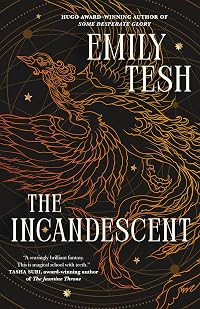
The Incandescent
by Emily Tesh
On This Page
Description
Dr. Walden is the Director of Magic at Chetwood Academy and one of the most powerful magicians in England. Her days consist of meetings, teaching A-Level Invocation to four talented, chaotic sixth formers, more meetings and securing the school's boundaries from demonic incursions. Walden is good at her job, no, Walden is great at her job. But demons are masters of manipulation. It's her responsibility to keep her school with its six hundred students and centuries-old legacy safe. But it's show more possible the entity Walden most needs to keep her school safe from, is herself. show lessTags
Recommendations
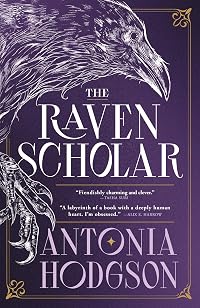
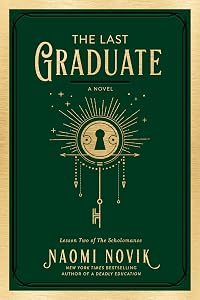
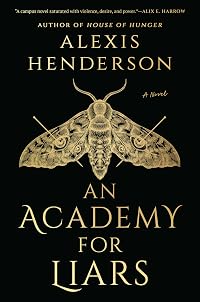
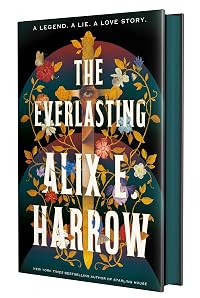






Member Recommendations
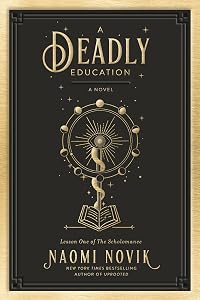
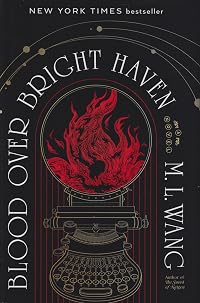
Aquila These are both variations on the "Why would you send your kids to a dangerous magical school?" question and they are wonderfully different. At the Scholomance everyone knows they are in danger, whereas Chetwood has health and safety paperwork and with it a lot more assumption that any danger has been mitigated. Very good books telling very different stories.
Member Reviews
Emily Tesh won the 2024 Hugo Award for Best Novel for Some Desperate Glory, which I really enjoyed. So I was very much looking forward to The Incandescent. While Some Desperate Glory was a science fiction novel about fascism, The Incandescent is a magic school novel—so quite different in terms of genre, though I think animated by some common concerns.
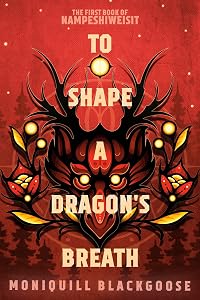
Harry Potter didn't invent the magic school novel, of course, but there's a generation of readers and writers for whom it did. Some of these probably pretty much reproduce the tropes of the genre as is, but many others take the features and project of the genre and complicate them. Naomi Novik's Scholomance books, for example, clearly have as their starting point the question, "Why show more would you send your kid to a school where the students are always dying?" and come up with an arrangement where that's better than the alternative. Moniquill Blackgoose's To Shape a Dragon's Breath, on the other hand, uses a Native American character to explore questions of class and race and privilege that J. K. Rowling pushes to the side. As Nicole Schrag astutely points out, the school novel is usually about the school changing the student, and so Blackgoose purposefully writes a school novel where the student protagonist is resolutely unchanged by forces attempting to remake her in their own image.
The Incandescent's tweak on the genre is that it tells the magic school story from the perspective of the teachers, as opposed to the students. This seems so obvious once you say it, yet as far as I know, no one has ever made this move before.
Genre, famously, has two levels: features and project. The first of those means the things that appear in the story, the things that let you know you're looking at a school story. (For example, this book has the obligatory scene where the kids think about going to an adult, but don't, though it provides a nice explanation as to why.) Related to this, I think, is the pleasure of what China Miéville calls "rationalized alienation": a world that is not your world, but is nonetheless built on rational lines. Tesh introduces that quite clearly from the opening, which is about risk assessment forms... for a magic lab! A lot of the pleasure of the book, as a teacher myself, is seeing the world of teaching accurately rendered, but in this totally new context. I can believe that if magic was real, magic school would work like this. (At a fancy British prep school, anyway.) It's a lot like the pleasure I get out of reading Novik's Temeraire novels. Which is funny, because even though both The Incandescent and Novik's own Scholomance novels think through how a magic school would "really" work, Novik just removes the entire idea of teachers! On the other hand, Tesh's conception of magical demons seems to owe a bit to Novik's, or at least they were thinking along similar lines.
There are lots of clever bits: demons occupy small living things. But they can also occupy objects people treat like living things. Swear at your copy machine enough, and a demon can reside in it. Thus, mobile phones represent a huge threat vector. As Saffy says to one of her students, that means her students are at threat in a way she never was, because her students have phones on them at all times since middle school. Which is literally true in the world of the story... but also obviously a metaphor for ours!
If this is all this book did, it would be a good book. But genre also works on the level of project: what is the story doing? What point is it trying to make by flipping around how the school story usually operates? I think there's two things The Incandescent is up to, both related to the purpose of education. The purpose of education if you're a student in a school story, is self-actualization: like most YA fiction, it's about working out your place in the universe. By the end of a school story, you know who you are, and that's who you will be. I keep talking about Harry Potter in this review for obvious reasons, and that's certainly true there: by the end of book seven, Harry Potter is Harry Potter. He has entered adulthood, and he is fully formed. But I think a particularly good example of this is a different magic school story, Ursula K. Le Guin's A Wizard of Earthsea, where the climax of the book hinges around the protagonist Naming himself.
But is that what education is for from the perspective of the adults? Does a parent send a student to school for self-actualization; does a teacher teach self-actualization? Arguably not. "'Character' was one of the things that every school claimed to instil and that no school could really control" (406). But if school is not really about self-actualization, then what is it about?
As our protagonist Saffy reflects, "no one was paying for magical boarding school because of the magic.... No: Chetwood's school fees were insurance money, a policy taken out against the future. Let my child be safe. Let my child be happy. Let my child have every single possible chance at freedom, joy, hope, power.... You could never completely future-proof your children. But power would keep them safe from the bitter grind of survival in a way nothing else could" (325). What school is really for—if you're a parent, anyway—is to give your child the best possible chance to succeed in a difficult and hostile universe. Shades of the Scholomance again, actually; like those books, this book makes this literal by having demons out there ready to pick off kids if they don't learn their lessons adequately.
I've seen some criticisms that The Incandescent's setting of an elite private magical school seems unnecessary and elitist... but I would argue that it's fundamental to what the book is doing. All of the adult characters we see here have parlayed or are parlaying their education into power: Saffy, Laura, Mark. Making it into a magic school literalizes that aspect of education, education is literally power. Making it into an elite school heightens that aspect of how the novel plays with the genre: it just wouldn't be as significant if Saffy was teaching at, say, a public comprehensive or something. As she remarks much later, "Mark was exactly the kind of person that Chetwood School existed to create: powerful, free, capable of anything, capable of getting away with anything" (401).
But even if there's another angle to it from the perspective of teachers and parents, the school story is still about self-actualization. Your character who enters school as a child will exit it as an adult. If you think through the logic of school story, what that implies is that when you leave... you're done! You don't change anymore, you are who you will be. To go back to Harry Potter yet again, this is probably why everyone hates the epilogue. Harry Potter nineteen years later is the same person he was when he finished school at age 18, because that's how the school story works: you're an adult now, so no more growth and development. (You can also see this in how for every adult in the Harry Potter books, nothing significant seems to have happened to them since they graduated from school.) You can get away with this if your books don't ever show your characters in their thirties, but J. K. Rowling unwisely chose to do this. (Actually, to circle back to Tesh's previous novel, which was also a school story of sorts, Some Desperate Glory even implies this to a degree: Valkyr has learned how the world works by the end of the novel, so she's done developing. She's entered adulthood!)
By placing a late thirties protagonist (I actually think Saffy is basically exactly my age, plus or minus one year), among all these teenagers Tesh highlights some of the complexities of this. Earlier in the novel Saffy seems to think she's done growing: "And you became old, and strong, and terrible" (352).
And indeed, it would be terrible if you never continued to grow or develop once you entered adulthood. But the lesson that Saffy learns here is that, contrary to what the project of the school story implies, the end of your education is not the end of your growth and development. It would be terrible if we never did become new people, if we were always stuck being who we are when we enter adulthood. But it's not true, you're never stuck being who you have become. (This, like many life lessons, is one that's easy to hear or read intellectually, but hard to believe emotionally.) That we always can become a new self is probably the greatest blessing we have as human beings. "You're never too old to learn" (414). By telling a school story from the perspective of a fully grown adult, someone who technically is fully self-actualized, Tesh can highlight how we're never too old to keep growing and keep learning. I think this is a clever and well-done move, and really made the book for me.
It's well-written, does some clever stuff with form, and is genuinely exciting. I have one plot quibble (it's hard to believe Laura was never briefed about Old Faithful given it killed multiple students!), but I really enjoyed this book. The best Hugo finalist I've read so far. show less
Harry Potter didn't invent the magic school novel, of course, but there's a generation of readers and writers for whom it did. Some of these probably pretty much reproduce the tropes of the genre as is, but many others take the features and project of the genre and complicate them. Naomi Novik's Scholomance books, for example, clearly have as their starting point the question, "Why show more would you send your kid to a school where the students are always dying?" and come up with an arrangement where that's better than the alternative. Moniquill Blackgoose's To Shape a Dragon's Breath, on the other hand, uses a Native American character to explore questions of class and race and privilege that J. K. Rowling pushes to the side. As Nicole Schrag astutely points out, the school novel is usually about the school changing the student, and so Blackgoose purposefully writes a school novel where the student protagonist is resolutely unchanged by forces attempting to remake her in their own image.
The Incandescent's tweak on the genre is that it tells the magic school story from the perspective of the teachers, as opposed to the students. This seems so obvious once you say it, yet as far as I know, no one has ever made this move before.
Genre, famously, has two levels: features and project. The first of those means the things that appear in the story, the things that let you know you're looking at a school story. (For example, this book has the obligatory scene where the kids think about going to an adult, but don't, though it provides a nice explanation as to why.) Related to this, I think, is the pleasure of what China Miéville calls "rationalized alienation": a world that is not your world, but is nonetheless built on rational lines. Tesh introduces that quite clearly from the opening, which is about risk assessment forms... for a magic lab! A lot of the pleasure of the book, as a teacher myself, is seeing the world of teaching accurately rendered, but in this totally new context. I can believe that if magic was real, magic school would work like this. (At a fancy British prep school, anyway.) It's a lot like the pleasure I get out of reading Novik's Temeraire novels. Which is funny, because even though both The Incandescent and Novik's own Scholomance novels think through how a magic school would "really" work, Novik just removes the entire idea of teachers! On the other hand, Tesh's conception of magical demons seems to owe a bit to Novik's, or at least they were thinking along similar lines.
There are lots of clever bits: demons occupy small living things. But they can also occupy objects people treat like living things. Swear at your copy machine enough, and a demon can reside in it. Thus, mobile phones represent a huge threat vector. As Saffy says to one of her students, that means her students are at threat in a way she never was, because her students have phones on them at all times since middle school. Which is literally true in the world of the story... but also obviously a metaphor for ours!
If this is all this book did, it would be a good book. But genre also works on the level of project: what is the story doing? What point is it trying to make by flipping around how the school story usually operates? I think there's two things The Incandescent is up to, both related to the purpose of education. The purpose of education if you're a student in a school story, is self-actualization: like most YA fiction, it's about working out your place in the universe. By the end of a school story, you know who you are, and that's who you will be. I keep talking about Harry Potter in this review for obvious reasons, and that's certainly true there: by the end of book seven, Harry Potter is Harry Potter. He has entered adulthood, and he is fully formed. But I think a particularly good example of this is a different magic school story, Ursula K. Le Guin's A Wizard of Earthsea, where the climax of the book hinges around the protagonist Naming himself.
But is that what education is for from the perspective of the adults? Does a parent send a student to school for self-actualization; does a teacher teach self-actualization? Arguably not. "'Character' was one of the things that every school claimed to instil and that no school could really control" (406). But if school is not really about self-actualization, then what is it about?
As our protagonist Saffy reflects, "no one was paying for magical boarding school because of the magic.... No: Chetwood's school fees were insurance money, a policy taken out against the future. Let my child be safe. Let my child be happy. Let my child have every single possible chance at freedom, joy, hope, power.... You could never completely future-proof your children. But power would keep them safe from the bitter grind of survival in a way nothing else could" (325). What school is really for—if you're a parent, anyway—is to give your child the best possible chance to succeed in a difficult and hostile universe. Shades of the Scholomance again, actually; like those books, this book makes this literal by having demons out there ready to pick off kids if they don't learn their lessons adequately.
I've seen some criticisms that The Incandescent's setting of an elite private magical school seems unnecessary and elitist... but I would argue that it's fundamental to what the book is doing. All of the adult characters we see here have parlayed or are parlaying their education into power: Saffy, Laura, Mark. Making it into a magic school literalizes that aspect of education, education is literally power. Making it into an elite school heightens that aspect of how the novel plays with the genre: it just wouldn't be as significant if Saffy was teaching at, say, a public comprehensive or something. As she remarks much later, "Mark was exactly the kind of person that Chetwood School existed to create: powerful, free, capable of anything, capable of getting away with anything" (401).
But even if there's another angle to it from the perspective of teachers and parents, the school story is still about self-actualization. Your character who enters school as a child will exit it as an adult. If you think through the logic of school story, what that implies is that when you leave... you're done! You don't change anymore, you are who you will be. To go back to Harry Potter yet again, this is probably why everyone hates the epilogue. Harry Potter nineteen years later is the same person he was when he finished school at age 18, because that's how the school story works: you're an adult now, so no more growth and development. (You can also see this in how for every adult in the Harry Potter books, nothing significant seems to have happened to them since they graduated from school.) You can get away with this if your books don't ever show your characters in their thirties, but J. K. Rowling unwisely chose to do this. (Actually, to circle back to Tesh's previous novel, which was also a school story of sorts, Some Desperate Glory even implies this to a degree: Valkyr has learned how the world works by the end of the novel, so she's done developing. She's entered adulthood!)
By placing a late thirties protagonist (I actually think Saffy is basically exactly my age, plus or minus one year), among all these teenagers Tesh highlights some of the complexities of this. Earlier in the novel Saffy seems to think she's done growing: "And you became old, and strong, and terrible" (352).
And indeed, it would be terrible if you never continued to grow or develop once you entered adulthood. But the lesson that Saffy learns here is that, contrary to what the project of the school story implies, the end of your education is not the end of your growth and development. It would be terrible if we never did become new people, if we were always stuck being who we are when we enter adulthood. But it's not true, you're never stuck being who you have become. (This, like many life lessons, is one that's easy to hear or read intellectually, but hard to believe emotionally.) That we always can become a new self is probably the greatest blessing we have as human beings. "You're never too old to learn" (414). By telling a school story from the perspective of a fully grown adult, someone who technically is fully self-actualized, Tesh can highlight how we're never too old to keep growing and keep learning. I think this is a clever and well-done move, and really made the book for me.
It's well-written, does some clever stuff with form, and is genuinely exciting. I have one plot quibble (it's hard to believe Laura was never briefed about Old Faithful given it killed multiple students!), but I really enjoyed this book. The best Hugo finalist I've read so far. show less
I didn’t fully understand what ‘The Incandescent’ was about until after I finished reading it. It’s not that the book was confusing or obscure; it was accessible, engaging and disarmingly familiar. It read like a solid, albeit conventional, fantasy about an elite boarding school for magically gifted children that is under threat from the demonic realm. The story is told from the point of view of Dr Walen, the school’s Director of Magic. She is a prominent academic specialising in the control and use of demons and their magic, and an extremely powerful practitioner in her own right.
The story was strongly grounded in Walden’s day-to-day experience of teaching in a Public School and so shaped by her understanding of herself and show more her world that I became completely immersed in her point of view, unconsciously sharing her blind spots and accepting her assumptions. Only when the action was over was I able to take a breath, look back and see what had really been going on.
Walden and her school were so realistically drawn that I felt as though I was reading a mainstream novel with the addition of demons, an elaborate system of magic, and some scary violence to add colour. Looking back, I think this was partly camouflage and partly to make it clear that we in the real world may also share Waldon’s error, although it would manifest differently.
’The Incandescent’ isn’t just an action thriller with magic-weilding heroes, duplicitous demons, talented but reckless students, and political subplots, although it has all of those. Behind all that, ‘The Incandescent’ is an invitation for the reader to think about what it means to have a self, how many of them we have, whether all of them are true and why and how they change. It stress tests these concepts by having Walen rethink who she wants to be while facing off with powerful demons who, in addition to being hungry for power, yearn to reify in our world by gaining enough complexity to develop a sense of self.
Throughout the book, Walden refers to herself as if she were mulitple people, The self who is Dr Walden, Director of Magic, the ever-present ghost of her teenage self who is still shrouded in trauma generated guilt, the Saffy Walden who was a scarily powerful controlller of demons, wooed by the CIA, and the mild-aged, mostly solitary Saffy, who is mildly bemused by her attaction to a sword-wielding, armour-wearing, Warden with scant education but a lot of focused power. Each of these selves was so well-drawn that I failed to see how fractured Walden was. Which was the point of course. It made her blind to her own hubris and the real nature of the demonic threat.
I enjoyed reading ‘The Incandescent’ and thinking about it afterwards. It’s not a fast-paced supernatural thriller. Nor is it a young magician coming of age and saving the world, School of Magic plot. It’s the story of the downfall of an accomplished woman, at the height of her powers, who has retained an ‘incandescent’ adolescent confidence in her abilities, unaware that this is the main source of her vulnerability.
I read ’The Incandescent’ because it's a finalist for the 2026 Hugo Award for Best Novel. I’m impressed with Emily Tesh’s writing, so I’ve bought her debut novel, ‘Some Desperate Glory’ (2023), which won the Hugo Award for Best Novel.
I recommend the audiobook version of ‘The Incandescent’, narrated by Zara Ramm. Click on the YouTube link below to hear a sample.
https://youtu.be/7Am6tI4OAdw?si=-FTulhdhMwjze8K- show less
The story was strongly grounded in Walden’s day-to-day experience of teaching in a Public School and so shaped by her understanding of herself and show more her world that I became completely immersed in her point of view, unconsciously sharing her blind spots and accepting her assumptions. Only when the action was over was I able to take a breath, look back and see what had really been going on.
Walden and her school were so realistically drawn that I felt as though I was reading a mainstream novel with the addition of demons, an elaborate system of magic, and some scary violence to add colour. Looking back, I think this was partly camouflage and partly to make it clear that we in the real world may also share Waldon’s error, although it would manifest differently.
’The Incandescent’ isn’t just an action thriller with magic-weilding heroes, duplicitous demons, talented but reckless students, and political subplots, although it has all of those. Behind all that, ‘The Incandescent’ is an invitation for the reader to think about what it means to have a self, how many of them we have, whether all of them are true and why and how they change. It stress tests these concepts by having Walen rethink who she wants to be while facing off with powerful demons who, in addition to being hungry for power, yearn to reify in our world by gaining enough complexity to develop a sense of self.
Throughout the book, Walden refers to herself as if she were mulitple people, The self who is Dr Walden, Director of Magic, the ever-present ghost of her teenage self who is still shrouded in trauma generated guilt, the Saffy Walden who was a scarily powerful controlller of demons, wooed by the CIA, and the mild-aged, mostly solitary Saffy, who is mildly bemused by her attaction to a sword-wielding, armour-wearing, Warden with scant education but a lot of focused power. Each of these selves was so well-drawn that I failed to see how fractured Walden was. Which was the point of course. It made her blind to her own hubris and the real nature of the demonic threat.
I enjoyed reading ‘The Incandescent’ and thinking about it afterwards. It’s not a fast-paced supernatural thriller. Nor is it a young magician coming of age and saving the world, School of Magic plot. It’s the story of the downfall of an accomplished woman, at the height of her powers, who has retained an ‘incandescent’ adolescent confidence in her abilities, unaware that this is the main source of her vulnerability.
I read ’The Incandescent’ because it's a finalist for the 2026 Hugo Award for Best Novel. I’m impressed with Emily Tesh’s writing, so I’ve bought her debut novel, ‘Some Desperate Glory’ (2023), which won the Hugo Award for Best Novel.
I recommend the audiobook version of ‘The Incandescent’, narrated by Zara Ramm. Click on the YouTube link below to hear a sample.
https://youtu.be/7Am6tI4OAdw?si=-FTulhdhMwjze8K- show less
https://fromtheheartofeurope.eu/the-incandescent-by-emily-tesh/
Emily Tesh again shows her extraordinary versatility, with a story of a queer teacher in charge of safeguarding vulnerable pupils at a magical boarding school against dark forces while securing her own back against bureaucratic enemies. This is contemporary Britain, but with demons and a professional structure for the magically talented people who control them; it’s also a Britain where our friends class and race are alive and well, especially in a school where some of the scholarship pupils are also orphans. There’s cracking emotional chemistry as well between Sapphire Walden, the damaged but still idealistic protagonist, and her love interests; and finely observed show more dynamics of how a small group of gifted teenagers interact with the outside world.
It’s brilliant stuff, and really it makes you realize how few of the well-known magic school stories, from Roke to Hogwarts to the Scholomance, tell the story from the viewpoint of the teachers rather than the pupils. (There’s Unseen University in Discworld, but it’s a third-level institution rather than school and it also seems to have very few students.) Of course there’s always mileage in a rite-of-passage story, but the children’s point of view sees only the part of the educational iceberg that is above the surface. If you see what I mean. show less
Emily Tesh again shows her extraordinary versatility, with a story of a queer teacher in charge of safeguarding vulnerable pupils at a magical boarding school against dark forces while securing her own back against bureaucratic enemies. This is contemporary Britain, but with demons and a professional structure for the magically talented people who control them; it’s also a Britain where our friends class and race are alive and well, especially in a school where some of the scholarship pupils are also orphans. There’s cracking emotional chemistry as well between Sapphire Walden, the damaged but still idealistic protagonist, and her love interests; and finely observed show more dynamics of how a small group of gifted teenagers interact with the outside world.
It’s brilliant stuff, and really it makes you realize how few of the well-known magic school stories, from Roke to Hogwarts to the Scholomance, tell the story from the viewpoint of the teachers rather than the pupils. (There’s Unseen University in Discworld, but it’s a third-level institution rather than school and it also seems to have very few students.) Of course there’s always mileage in a rite-of-passage story, but the children’s point of view sees only the part of the educational iceberg that is above the surface. If you see what I mean. show less
Saffy Walden is the Director of Magic at the elite boarding school - it's expensive, but they're hurting for free cash - and teaching a small group of students how to (safely) summon a demon for magical purposes. Because a bunch of free magic and teenagers can attract demons who feed on such things, there's a rather large demon nicknamed Old Faithful who has lain mostly dormant under the school. But when a summoning goes wrong at one of the classes, and Old Faithful wakes, a chain reaction begins that is going to take every ounce of expertise that Walden has, as well as some help from her talented students.
Gotta love a fantasy school story, and this is very much in that vein but for adults, with the main character an admin rather than a show more student. She has real affection for her students, and even in her late 30s not above making a few mistakes and misjudgments of character. There's a sapphic love interest (Walden is bi), and an interesting & consistent take on what magic could look like in a world similar to our own. Despite the stakes, it was somewhat slow paced which is the main reason I'm knocking it down to 4 stars. show less
Gotta love a fantasy school story, and this is very much in that vein but for adults, with the main character an admin rather than a show more student. She has real affection for her students, and even in her late 30s not above making a few mistakes and misjudgments of character. There's a sapphic love interest (Walden is bi), and an interesting & consistent take on what magic could look like in a world similar to our own. Despite the stakes, it was somewhat slow paced which is the main reason I'm knocking it down to 4 stars. show less
Delightful. Reminds me a little of Scholomance, without being like Scholomance at all. Love that it's centered on teaching and on the neverending day-to-day of adulthood in a boarding school. Love that the main character is brilliant at her job and not so brilliant at peopling. Love that this keeps the lives of teenagers at the center of it and is still mostly about the lives of adults. I also love that the fundamental message is about making mistakes and learning from them. The magical system is fascinating, the nostalgia is intense, the beauty of a teacher's love for her school is pretty glorious, and let's hear it for a bisexual main character.
Advanced Reader's Copy provided by Edelweiss.
Advanced Reader's Copy provided by Edelweiss.
Series Info/Source: This is a stand alone book. I borrowed this on ebook from the library.
Thoughts: I really enjoyed this a lot. The characters are intriguing as is the world. This is very much a "day in the life of" type of story with some fantastic elements thrown in. Previous to reading this I also read Tesh's Greenhollow Duology and "Some Desperate Glory" and absolutely loved all of those books. I didn't love this book quite as much because it feels a bit slow at parts.
Doctor Walden is the Director of Magic at Chetwood school. She is an incredibly powerful magician but loves teaching and ends up wrapped up in a lot of administrative work. When a top student accidentally causes a demon incursion, it is up to Walden to save the show more school. However, Walden has secrets of her own, and who is going to protect her from herself?
This was very well done, and much of the book is about a very sought after and highly capable woman trying to make her extremely busy life work day to day. She has a lot of responsibilities in teaching, administration, and magical security and works very long days. However, even she has her limits, and when she hits them she is intrigued by the woman who steps up to support her.
I loved the world here; this has very dark academia vibes. There is magic in this world and demons, the demons like to infest technology and are drawn to other magic which makes powerful magic school like Chetwood tricky to secure. I loved the characters as well; they are all complex and intriguing to read about.
The only slight weakness for me was that the day to day vibe of the book got a bit slow at points. Don't get me wrong, there are amazing and fantastical things that happen in this book. However, a lot of this is about Walden getting through each busy day without a disaster, and while that was part of the point of the story, it did get slightly repetitive. There is definitely a theme of work-life balance throughout. Walden loves her job, but it is her life. She doesn't even really realize that maybe there should be more to her life than her job until things get to a breaking point.
This was very well written and very engaging. Tesh is definitely a go-to author for me and writes books that are entertaining, intriguing, emotionally engaging, and thoughtful.
My Summary (4.5/5): Overall I really enjoyed this book a lot. This is the day to day life story of an accomplished and magically powerful woman interspersed with some rather intense demonic incursions. The tone is witty and practical. There are some parts that feel a bit slow compared to the rest of the story, but I really did love every aspect of this book. I am looking forward to the next story from Tesh. show less
Thoughts: I really enjoyed this a lot. The characters are intriguing as is the world. This is very much a "day in the life of" type of story with some fantastic elements thrown in. Previous to reading this I also read Tesh's Greenhollow Duology and "Some Desperate Glory" and absolutely loved all of those books. I didn't love this book quite as much because it feels a bit slow at parts.
Doctor Walden is the Director of Magic at Chetwood school. She is an incredibly powerful magician but loves teaching and ends up wrapped up in a lot of administrative work. When a top student accidentally causes a demon incursion, it is up to Walden to save the show more school. However, Walden has secrets of her own, and who is going to protect her from herself?
This was very well done, and much of the book is about a very sought after and highly capable woman trying to make her extremely busy life work day to day. She has a lot of responsibilities in teaching, administration, and magical security and works very long days. However, even she has her limits, and when she hits them she is intrigued by the woman who steps up to support her.
I loved the world here; this has very dark academia vibes. There is magic in this world and demons, the demons like to infest technology and are drawn to other magic which makes powerful magic school like Chetwood tricky to secure. I loved the characters as well; they are all complex and intriguing to read about.
The only slight weakness for me was that the day to day vibe of the book got a bit slow at points. Don't get me wrong, there are amazing and fantastical things that happen in this book. However, a lot of this is about Walden getting through each busy day without a disaster, and while that was part of the point of the story, it did get slightly repetitive. There is definitely a theme of work-life balance throughout. Walden loves her job, but it is her life. She doesn't even really realize that maybe there should be more to her life than her job until things get to a breaking point.
This was very well written and very engaging. Tesh is definitely a go-to author for me and writes books that are entertaining, intriguing, emotionally engaging, and thoughtful.
My Summary (4.5/5): Overall I really enjoyed this book a lot. This is the day to day life story of an accomplished and magically powerful woman interspersed with some rather intense demonic incursions. The tone is witty and practical. There are some parts that feel a bit slow compared to the rest of the story, but I really did love every aspect of this book. I am looking forward to the next story from Tesh. show less
Brilliant idea—a magical school book focusing on a teacher, with the students having their adolescent crises in the background. And I loved the execution as well. The heroine is deeply committed to helping children/teenagers grow up. Magic is well-known and many people who are talented end up doing other things because there’s also technology and magic can be dangerous; magical children can cause demonic incursions. I don’t want to be too spoilery but it’s a strong recommend, especially if you like the Scholomance or the Goblin Emperor (for competent people trying to do the right thing).
Members
- Recently Added By
Lists

hypatian_kat to-read
429 works; 3 members

2026 Hugo Awards -- Eligible Works -- Novels
18 works; 2 members

Books Read in 2025
4,091 works; 97 members

Top Five Books of 2025
954 works; 303 members

2025 Christmas Gifts
70 works; 19 members
Author Information

6+ Works 3,690 Members
Some Editions
Awards and Honors
Awards
Distinctions
Common Knowledge
- Original publication date
- 2025-05-13
- People/Characters
- Dr. Sapphire "Saffy" Walden; Doctor Walden; Laura Kenning; Mark Daubery; Lilly Tibbett; Reverend Ezekiel (show all 12); Todd Cartwright; Nicola Conway; William Daubery; Mathias Wick; Aneeta Shah; David Bern
- Epigraph
- O adolescence, adolesence,
I wince before thine incandesence!
Thy constitution young and hearty
Is too much for this aged party.
-Ogden Nash - Dedication
- For A.K. Larkwood
- First words
- Doctor Walden looked glumly at the form she had to fill in.
- Quotations
- ... I've never asked someone out after chopping her arm off before. (p. 412)
It was an unfortunate truth that in the Venn diagram of 'qualified to teach magic' and 'still alive,' the overlap consisted almost entirely of people who had always been much too sensible to accidentally get eaten by a demon.
No sensible woman over the age of twenty-five felt anything but dubious in the face of a smiling posh chap with good cheekbones. - Last words
- (Click to show. Warning: May contain spoilers.)"You're never too old to learn."
- Blurbers
- Suri, Tasha; Marske, Freya; Harrow, Alix E.; Parker-Chan, Shelley; Blake, Olivie; Fraimow, Rebecca (show all 7); Maxwell, Everina
- Original language
- English
Classifications
Statistics
- Members
- 665
- Popularity
- 43,308
- Reviews
- 30
- Rating
- (4.11)
- Languages
- English
- Media
- Paper, Audiobook, Ebook
- ISBNs
- 10
- ASINs
- 5