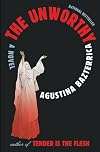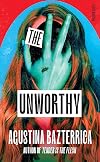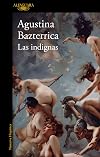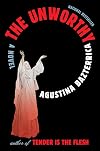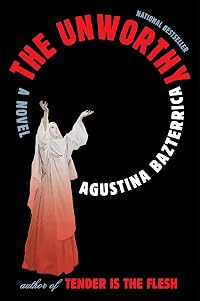
The Unworthy
by Agustina Bazterrica
On This Page
Description
"From her cell in a mysterious convent, a woman writes the story of her life in whatever she can find--discarded ink, dirt, and even her own blood. A lower member of the Sacred Sisterhood, deemed an unworthy, she dreams of ascending to the ranks of the Enlightened at the center of the convent and of pleasing the foreboding Superior Sister. Outside, the world is plagued by catastrophe--cities are submerged underwater, electricity and the internet are nonexistent, and bands of survivors fight show more and forage in a cruel, barren landscape. Inside, the narrator is controlled, punished, but safe. But when a stranger makes her way past the convent walls, joining the ranks of the unworthy, she forces the narrator to consider her long-buried past--and what she may be overlooking about the Enlightened. As the two women grow closer, the narrator is increasingly haunted by questions about her own past, the environmental future, and her present life inside the convent. How did she get to the Sacred Sisterhood? Why can't she remember her life before? And what really happens when a woman is chosen as one of the Enlightened?" -- show lessTags
Recommendations




Member Reviews
El mundo atravesó guerras por el agua y catástrofes ambientales. Los días pasan de gélidos a sofocantes en cuestión de horas, el aire está saturado de olores pestilentes y el cielo se cubre con nieblas espesas y pegajosas como telas de araña. En este presente desolador, confinadas en la Casa de la Hermandad Sagrada, varias mujeres sobreviven sometidas a los designios de un culto religioso y son objeto de torturas y sacrificios en nombre de la iluminación. Todas se encuentran bajo el mando estricto de la Hermana Superior, por encima de quien solo se erige "Él". ¿Quién es Él? Poco se sabe; nadie puede verlo, pero desde las sombras las domina. Narrado a través de las anotaciones dispersas del diario en el que la protagonista show more lleva el registro de las ceremonias y de sus descubrimientos, toma forma este libro de la noche. Sus páginas se ocultan en recovecos secretos, acaso sin esperanza de liberación; apenas para que alguien sepa de ellas cuando ya no estén. show less
Agustina Bazterrica, an Argentine writer whose reputation has grown internationally due to her searing, dystopian explorations of violence, power, and human nature, has once again delivered a provocative narrative with The Unworthy. Best known for Tender is the Flesh (check out our review), a harrowing dissection of a society that normalizes cannibalism, Bazterrica continues to examine the fragility of morality when faced with oppressive systems. Her work often probes at the intersection of power, religion, and bodily autonomy, crafting visceral and unsettling worlds that force readers into moral contemplation.
In an interview, Bazterrica commented on the purpose of her writing: "I don’t know if literature can really change things, but show more I do believe it often offers new perspectives on the world. And I’m not interested in creating partisan, moralistic literature. I am interested, though, in the book moving people, asking them questions, making them reflect." This encapsulates her approach in The Unworthy, where she crafts a world that disturbs, provokes, and demands engagement.
Set in a bleak post-apocalyptic world ravaged by environmental catastrophes and wars over water, The Unworthy presents a society in which a theocratic order governs with absolute control. The story follows a young woman trapped within the House of the Sacred Brotherhood, a secluded religious institution where women are indoctrinated, brutalized, and sacrificed in the name of an enigmatic higher power known only as “Him.” The novel unfolds through the fragmented, diary-like entries of the protagonist, offering an intimate glimpse into a mind both indoctrinated and struggling against its confinement.
The protagonist records the grotesque rituals and ascetic punishments inflicted upon the women under the rule of the severe and enigmatic Superior Sister. A hierarchy of suffering is established, with The Unworthy enduring relentless discipline, while the highest echelons of the faithful—The Enlightened—serve as spiritual conduits between the followers and their invisible deity. As the protagonist’s observations sharpen, her internal struggle emerges, leading her to question the legitimacy of her captors’ authority. Yet, her rebellion is not one of grandiose heroism but of slow, painful realization, tainted by fear and doubt.
Bazterrica’s novel is a meditation on the nature of faith, indoctrination, and control, drawing parallels to historical and contemporary theocracies where women’s bodies become battlegrounds for ideological warfare. Through her protagonist’s constrained existence, she examines the psychology of submission and the slow corrosion of selfhood under systemic oppression.
Religious fanaticism is at the heart of The Unworthy, depicted through rituals of self-flagellation, purification rites, and the cruel elevation of suffering as a means to spiritual transcendence. The faceless deity known as "Him" remains an unknowable presence, reinforcing the asymmetry of power: faith is demanded without proof, suffering is meted out as a divine test, and dissent is met with retribution.
Another key theme is the manipulation of language and knowledge. The protagonist’s diary is both an act of defiance and a means of self-preservation. Her writing becomes an archive of the unspeakable, a resistance against forced amnesia. This recalls Orwellian themes of linguistic control, where the ability to articulate dissent is systematically eroded. Bazterrica has spoken about her fascination with language in previous works, stating, "When you want to impose a new paradigm—like, in this case, eating human flesh[referring to Tender Is the Flesh]—language is fundamental, because language creates reality." This manipulation of reality through controlled narratives is an ever-present force in The Unworthy as well.
The novel also leans heavily on gothic and dystopian imagery. The convent-like House of the Sacred Brotherhood functions as both a fortress and a prison, its halls steeped in whispered conspiracies and silent suffering. The constant presence of surveillance and the omnipotent yet absent "Him" evoke a sense of inescapable doom reminiscent of The Handmaid’s Tale and Never Let Me Go.
Bazterrica’s prose in The Unworthy is both poetic and grotesque, weaving lyricism into scenes of extreme brutality. The novel’s fragmented, diary-like structure allows the protagonist’s voice to shift from detached observation to suffocating paranoia, making the reading experience deeply immersive. This fragmented style mirrors the protagonist’s fractured reality, where the boundaries between faith, fear, and reality blur.
Her use of sensory detail is particularly striking. The reader can almost smell the decay in the air, feel the chill of the stone walls, and hear the distant echoes of suffering. The novel’s claustrophobic atmosphere is heightened by Bazterrica’s precise, almost surgical use of language. Like Tender is the Flesh, The Unworthy forces the reader into an intimate confrontation with discomfort, using language as a scalpel to dissect themes of bodily control and systemic violence.
One of The Unworthy’s greatest strengths is its ability to sustain tension through ambiguity. Bazterrica refuses to offer easy explanations, leaving much of the novel’s horror to fester in the reader’s mind. Is "Him" truly divine, or just another mechanism of control? Are The Enlightened truly enlightened, or merely the most successful at self-delusion? The novel does not dictate answers, which enhances its haunting impact.
The psychological depth of the protagonist is another highlight. Her oscillation between reverence and skepticism, between complicity and silent rebellion, makes her a deeply compelling character. Unlike conventional dystopian heroines, she does not embody a clear-cut revolution, but rather a more nuanced, hesitant reckoning with truth. The novel’s critique of religious extremism and its parallels to real-world oppressive systems is both timely and universal. By setting the story in an ambiguous, ruined world, Bazterrica sidesteps direct allegory, making her message feel disturbingly applicable across different societies and historical periods.
Bazterrica herself acknowledges the role of discomfort in her storytelling: "Good art, or the art that interests me, is art that keeps bringing up new questions or making me feel uncomfortable. And, for me, that’s a political position." This discomfort is central to The Unworthy, ensuring that the reader is never allowed to settle into passive consumption.
While The Unworthy is a triumph of atmosphere and thematic depth, its commitment to ambiguity may frustrate. The lack of a traditional narrative arc—where actions build toward a climactic resolution—makes the novel feel like an extended meditation rather than a structured story. Some may find the protagonist’s passive resistance unsatisfying, longing for a more active rebellion against the system... though there is something potentially more realistic and horrifying with Bazterrica's approach here. Additionally, the relentless bleakness of the novel can feel overwhelming. Unlike Tender is the Flesh, which had moments of sardonic humor to offset its grimness, The Unworthy offers little respite from its oppressive world. While this serves the novel’s thematic intentions, it is certain to alienate those who depend upon narrative momentum or catharsis.
The Unworthy is a masterful, unsettling work that solidifies Agustina Bazterrica’s status as a leading voice in contemporary dystopian fiction. Its exploration of faith, indoctrination, and bodily autonomy is both chilling and thought-provoking, and its prose lingers like a fever dream. Though its ambiguity and unrelenting bleakness may not appeal to all, those who appreciate literary horror and dystopian fiction (The BWAF readership?) will find it a rewarding, if harrowing, read. show less
In an interview, Bazterrica commented on the purpose of her writing: "I don’t know if literature can really change things, but show more I do believe it often offers new perspectives on the world. And I’m not interested in creating partisan, moralistic literature. I am interested, though, in the book moving people, asking them questions, making them reflect." This encapsulates her approach in The Unworthy, where she crafts a world that disturbs, provokes, and demands engagement.
Set in a bleak post-apocalyptic world ravaged by environmental catastrophes and wars over water, The Unworthy presents a society in which a theocratic order governs with absolute control. The story follows a young woman trapped within the House of the Sacred Brotherhood, a secluded religious institution where women are indoctrinated, brutalized, and sacrificed in the name of an enigmatic higher power known only as “Him.” The novel unfolds through the fragmented, diary-like entries of the protagonist, offering an intimate glimpse into a mind both indoctrinated and struggling against its confinement.
The protagonist records the grotesque rituals and ascetic punishments inflicted upon the women under the rule of the severe and enigmatic Superior Sister. A hierarchy of suffering is established, with The Unworthy enduring relentless discipline, while the highest echelons of the faithful—The Enlightened—serve as spiritual conduits between the followers and their invisible deity. As the protagonist’s observations sharpen, her internal struggle emerges, leading her to question the legitimacy of her captors’ authority. Yet, her rebellion is not one of grandiose heroism but of slow, painful realization, tainted by fear and doubt.
Bazterrica’s novel is a meditation on the nature of faith, indoctrination, and control, drawing parallels to historical and contemporary theocracies where women’s bodies become battlegrounds for ideological warfare. Through her protagonist’s constrained existence, she examines the psychology of submission and the slow corrosion of selfhood under systemic oppression.
Religious fanaticism is at the heart of The Unworthy, depicted through rituals of self-flagellation, purification rites, and the cruel elevation of suffering as a means to spiritual transcendence. The faceless deity known as "Him" remains an unknowable presence, reinforcing the asymmetry of power: faith is demanded without proof, suffering is meted out as a divine test, and dissent is met with retribution.
Another key theme is the manipulation of language and knowledge. The protagonist’s diary is both an act of defiance and a means of self-preservation. Her writing becomes an archive of the unspeakable, a resistance against forced amnesia. This recalls Orwellian themes of linguistic control, where the ability to articulate dissent is systematically eroded. Bazterrica has spoken about her fascination with language in previous works, stating, "When you want to impose a new paradigm—like, in this case, eating human flesh[referring to Tender Is the Flesh]—language is fundamental, because language creates reality." This manipulation of reality through controlled narratives is an ever-present force in The Unworthy as well.
The novel also leans heavily on gothic and dystopian imagery. The convent-like House of the Sacred Brotherhood functions as both a fortress and a prison, its halls steeped in whispered conspiracies and silent suffering. The constant presence of surveillance and the omnipotent yet absent "Him" evoke a sense of inescapable doom reminiscent of The Handmaid’s Tale and Never Let Me Go.
Bazterrica’s prose in The Unworthy is both poetic and grotesque, weaving lyricism into scenes of extreme brutality. The novel’s fragmented, diary-like structure allows the protagonist’s voice to shift from detached observation to suffocating paranoia, making the reading experience deeply immersive. This fragmented style mirrors the protagonist’s fractured reality, where the boundaries between faith, fear, and reality blur.
Her use of sensory detail is particularly striking. The reader can almost smell the decay in the air, feel the chill of the stone walls, and hear the distant echoes of suffering. The novel’s claustrophobic atmosphere is heightened by Bazterrica’s precise, almost surgical use of language. Like Tender is the Flesh, The Unworthy forces the reader into an intimate confrontation with discomfort, using language as a scalpel to dissect themes of bodily control and systemic violence.
One of The Unworthy’s greatest strengths is its ability to sustain tension through ambiguity. Bazterrica refuses to offer easy explanations, leaving much of the novel’s horror to fester in the reader’s mind. Is "Him" truly divine, or just another mechanism of control? Are The Enlightened truly enlightened, or merely the most successful at self-delusion? The novel does not dictate answers, which enhances its haunting impact.
The psychological depth of the protagonist is another highlight. Her oscillation between reverence and skepticism, between complicity and silent rebellion, makes her a deeply compelling character. Unlike conventional dystopian heroines, she does not embody a clear-cut revolution, but rather a more nuanced, hesitant reckoning with truth. The novel’s critique of religious extremism and its parallels to real-world oppressive systems is both timely and universal. By setting the story in an ambiguous, ruined world, Bazterrica sidesteps direct allegory, making her message feel disturbingly applicable across different societies and historical periods.
Bazterrica herself acknowledges the role of discomfort in her storytelling: "Good art, or the art that interests me, is art that keeps bringing up new questions or making me feel uncomfortable. And, for me, that’s a political position." This discomfort is central to The Unworthy, ensuring that the reader is never allowed to settle into passive consumption.
While The Unworthy is a triumph of atmosphere and thematic depth, its commitment to ambiguity may frustrate. The lack of a traditional narrative arc—where actions build toward a climactic resolution—makes the novel feel like an extended meditation rather than a structured story. Some may find the protagonist’s passive resistance unsatisfying, longing for a more active rebellion against the system... though there is something potentially more realistic and horrifying with Bazterrica's approach here. Additionally, the relentless bleakness of the novel can feel overwhelming. Unlike Tender is the Flesh, which had moments of sardonic humor to offset its grimness, The Unworthy offers little respite from its oppressive world. While this serves the novel’s thematic intentions, it is certain to alienate those who depend upon narrative momentum or catharsis.
The Unworthy is a masterful, unsettling work that solidifies Agustina Bazterrica’s status as a leading voice in contemporary dystopian fiction. Its exploration of faith, indoctrination, and bodily autonomy is both chilling and thought-provoking, and its prose lingers like a fever dream. Though its ambiguity and unrelenting bleakness may not appeal to all, those who appreciate literary horror and dystopian fiction (The BWAF readership?) will find it a rewarding, if harrowing, read. show less
The Unworthy is brutal, unrelenting, and often unbearable—but also brilliant in its design. Bazterrica extends the bleak logic of Tender Is the Flesh into a world where knowledge itself is mutilated, buried, or corrupted. Images like the empty bookshelves, the mutilated “enlightened,” and the blue-smell of Lucia will stay with me long after the last page.
The climax felt both obvious and anticlimactic, and the rushed final act undercut the slow, timeless dread the book had built. Instead of the devastating inevitability of Tender Is the Flesh, I was left with a sense of being cut off rather than concluded.
Yet the book’s power lies not in twists but in symbols: burial vs. suspension, decomposition as wisdom, names as show more fossil-memory, even Athena fragments whispering from a lost world. It’s a novel of traces, insisting that even in systems built on hatred, testimony endures. The cut-off journal ending is perfectly cruel—it denies closure but preserves witness.
This isn’t a book I liked so much as one that will haunt me. Bazterrica is one of the few writers willing to strip away the fantasy of goodness and show how systems consume even hope. For that courage, this novel earns its place beside Tender Is the Flesh. show less
The climax felt both obvious and anticlimactic, and the rushed final act undercut the slow, timeless dread the book had built. Instead of the devastating inevitability of Tender Is the Flesh, I was left with a sense of being cut off rather than concluded.
Yet the book’s power lies not in twists but in symbols: burial vs. suspension, decomposition as wisdom, names as show more fossil-memory, even Athena fragments whispering from a lost world. It’s a novel of traces, insisting that even in systems built on hatred, testimony endures. The cut-off journal ending is perfectly cruel—it denies closure but preserves witness.
This isn’t a book I liked so much as one that will haunt me. Bazterrica is one of the few writers willing to strip away the fantasy of goodness and show how systems consume even hope. For that courage, this novel earns its place beside Tender Is the Flesh. show less
Real Rating: 3.75* of five
The Publisher Says: The long-awaited new novel from the author of global sensation Tender Is the Flesh: a thrilling work of literary horror about a woman cloistered in a secretive, violent religious order, while outside the world has fallen into chaos.
From her cell in a mysterious convent, a woman writes the story of her life in whatever she can find—discarded ink, dirt, and even her own blood. A lower member of the Sacred Sisterhood, deemed an unworthy, she dreams of ascending to the ranks of the Enlightened at the center of the convent and of pleasing the foreboding Superior Sister. Outside, the world is plagued by catastrophe—cities are submerged underwater, electricity and the internet are nonexistent, show more and bands of survivors fight and forage in a cruel, barren landscape. Inside, the narrator is controlled, punished, but safe.
But when a stranger makes her way past the convent walls, joining the ranks of the unworthy, she forces the narrator to consider her long-buried past—and what she may be overlooking about the Enlightened. As the two women grow closer, the narrator is increasingly haunted by questions about her own past, the environmental future, and her present life inside the convent. How did she get to the Sacred Sisterhood? Why can’t she remember her life before? And what really happens when a woman is chosen as one of the Enlightened?
A searing, dystopian tale about climate crisis, ideological extremism, and the tidal pull of our most violent, exploitative instincts, this is another unforgettable novel from a master of feminist horror.
I RECEIVED A DRC FROM THE PUBLISHER VIA NETGALLEY. THANK YOU.
My Review: Seemingly alone among readers, I did not like Tender Is the Flesh because its conceit was simply too absurd for me. I was unable take it seriously enough to get into the real story. Not at all the issue with this top-flight idea. "The Enlightened" are so very of the moment, and so perfectly limned as the abuser tech bros and Aynholes they're...parodying? illuminating in 3D, certainly. By gender-flipping the baddies, Author Bazterrica bypasses facile dismissive male critics' inevitable sexist takedowns of the story's, um, Gothic excesses. She's also thereby making a powerful point about women and their missing solidarity. The (female) abusers rise to the top, thereby to use their power in pointlessly sadistic rituals of pain and humiliation.
Hence my lower-than-expected rating. I do not wish to examine women in any remotely sexual light. It's metaphorical here, granted; I still do not enjoy it; so not-quite-four is my rating of a solid five-star story. YMMV, of course, and I very much hope it will.
Scribner will say "$13.99 please" at checkout. show less
The Publisher Says: The long-awaited new novel from the author of global sensation Tender Is the Flesh: a thrilling work of literary horror about a woman cloistered in a secretive, violent religious order, while outside the world has fallen into chaos.
From her cell in a mysterious convent, a woman writes the story of her life in whatever she can find—discarded ink, dirt, and even her own blood. A lower member of the Sacred Sisterhood, deemed an unworthy, she dreams of ascending to the ranks of the Enlightened at the center of the convent and of pleasing the foreboding Superior Sister. Outside, the world is plagued by catastrophe—cities are submerged underwater, electricity and the internet are nonexistent, show more and bands of survivors fight and forage in a cruel, barren landscape. Inside, the narrator is controlled, punished, but safe.
But when a stranger makes her way past the convent walls, joining the ranks of the unworthy, she forces the narrator to consider her long-buried past—and what she may be overlooking about the Enlightened. As the two women grow closer, the narrator is increasingly haunted by questions about her own past, the environmental future, and her present life inside the convent. How did she get to the Sacred Sisterhood? Why can’t she remember her life before? And what really happens when a woman is chosen as one of the Enlightened?
A searing, dystopian tale about climate crisis, ideological extremism, and the tidal pull of our most violent, exploitative instincts, this is another unforgettable novel from a master of feminist horror.
I RECEIVED A DRC FROM THE PUBLISHER VIA NETGALLEY. THANK YOU.
My Review: Seemingly alone among readers, I did not like Tender Is the Flesh because its conceit was simply too absurd for me. I was unable take it seriously enough to get into the real story. Not at all the issue with this top-flight idea. "The Enlightened" are so very of the moment, and so perfectly limned as the abuser tech bros and Aynholes they're...parodying? illuminating in 3D, certainly. By gender-flipping the baddies, Author Bazterrica bypasses facile dismissive male critics' inevitable sexist takedowns of the story's, um, Gothic excesses. She's also thereby making a powerful point about women and their missing solidarity. The (female) abusers rise to the top, thereby to use their power in pointlessly sadistic rituals of pain and humiliation.
Hence my lower-than-expected rating. I do not wish to examine women in any remotely sexual light. It's metaphorical here, granted; I still do not enjoy it; so not-quite-four is my rating of a solid five-star story. YMMV, of course, and I very much hope it will.
Scribner will say "$13.99 please" at checkout. show less
An evocative and unique novella, but at times far too over-written for what it is. The first half of the book was thought provoking and subtle, and I thought it would be a favourite. Unfortunately, the power of the climate catastrophe felt undercut by the inclusion of both Lucía (a magical girl who can fix everything) and that the earth somehow heals by the end. The unnamed main character's backstory also felt a tad bit under-utilized.
Basically, using such loquacious prose for a work with both underdeveloped and hackneyed themes just gets a bit boring and shows a sense of hollow aestheticism I do not appreciate. Like, did you know the power of love can actually reverse climate change? Bffr.
I will give this novel its flowers though for show more its experimentation and intelligence of form. It's a relatively smart novel with mass appeal and is supremely evocative of the emotions it is trying to convey, baring some ridiculous examples I've already bitched about. Would still recommend for a lazy read. show less
Basically, using such loquacious prose for a work with both underdeveloped and hackneyed themes just gets a bit boring and shows a sense of hollow aestheticism I do not appreciate. Like, did you know the power of love can actually reverse climate change? Bffr.
I will give this novel its flowers though for show more its experimentation and intelligence of form. It's a relatively smart novel with mass appeal and is supremely evocative of the emotions it is trying to convey, baring some ridiculous examples I've already bitched about. Would still recommend for a lazy read. show less
What I love about Bazterrica -- at least, through Moses's translation -- is that everything is so obvious, blunt, and plain, that I have so much room to play between the lines and read-in entire meanings that may or may not have been intentional. As with Tender Is The Flesh, I've come away with a highly metaphorical, perhaps even allegorical, interpretation of the work that is in no way connected to the surface narrative. From my reading, the message of The Unworthy had nothing to do with religion, climate, or love. However, that leaves me unable to discern whether the novel as written was a success (in its compelling symbolism) or a major flop (in its inability to tell a story interesting enough that I don't have to invent my own).
She lives hidden behind the walls of a mysterious convent. Once a place of monastic devotion, it now stands as the last oasis in a dying world, untouched by the erroneous God, the false son, or the negative mother. In this cloistered dystopia, only one law remains: His Word, spoken by a mysterious male figure whom only the Enlightened may know. The rest are deemed Unworthy.
Words are forbidden. Yet she writes, furtively, feverishly, in a secret diary no one may ever read. With pen and ink left behind by long-departed monks, she writes in charcoal, in blood, by the flicker of a candle in her cell, while listening for footsteps in the hall. Her words are sharp, searing, aflame. Through them she remembers. Through them, she tries to show more forget.
Born into a world already broken, where food and water are luxuries, she inherits a fading knowledge from her mother: the art of reading, of writing. Architecture. Culture.
After her mother’s death on the kitchen floor, Circe was her enchantress, a light in the darkness. A light that has since been extinguished. After her came Helena, but Helena is gone now too. Only a grave remains, one she sometimes weeps over. Lucia is now her everything. Lucia, who dreamed her into being.
Agustina Bazterrica’s previous novel, Tender Is the Flesh, carved out a place in contemporary literature with its grotesque vision of a society where humans are processed as livestock. Her latest work, The Unworthy, is no less brutal, perhaps even more psychologically unsettling. Here, the violence is quieter, more insidious, and cloaked in ritual.
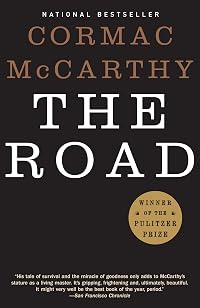
Written in a sparse yet hypnotic style, the novel unfurls through diary entries and inner monologue, offering glimpses into a world of spiritual tyranny, ecological collapse, and gendered power. It is an epistolary dystopia echoing Margaret Atwood’s The Handmaid's Tale, the metaphysical despair of Cormac McCarthy’s The Road, the theological shadows of Gene Wolfe’s The Book of the New Sun, and the surreal disintegration of Anna Kavan’s Ice. Add a bit of Argento’s Suspiria as a cherry on top. Bazterrica channels the best of each, forging a hybrid that feels entirely her own.
This is a world where language is dangerous, memory is rebellion, and mysticism veils systemic cruelty. The unnamed narrator’s reflections are laced with longing and defiance, even when she herself remains unsure what freedom might look like.
Still, the novel is not without its flaws. As is often the case with dystopian fiction, it risks stepping into familiar genre tropes. Bazterrica’s depiction of life beyond the convent, while thematically resonant, feels less refined than the cloistered brutality of the first half. Some readers may also find the novel’s refusal to explain its apocalypse frustrating. The how and why of this world’s fall are never fully revealed.
But to demand such answers is to miss the point.
The Unworthy is not about the origins of the end, but about survival after meaning has collapsed. Bazterrica is less concerned with building a coherent system of speculative logic and more invested in evoking a mood. A spiritual exhaustion, a hunger for connection, a desperate act of remembering through forbidden words.
What makes Bazterrica’s work so arresting is her ability to say much with little. Her prose avoids overt spectacle and yet leaves the reader winded. Violence is suggested, never gratuitous, but always searing. She trusts her readers to fill in the gaps with their own dread.
Not all will find comfort in the silence this novel leaves behind. It ends, as it begins, in shadow. But for those willing to surrender to its hypnotic rhythm, The Unworthy offers something rare: a vision of dystopia that is not only bleak, but hauntingly sacred. A whispered prayer in a ruined chapel. A final ember of resistance in the dark. show less
Words are forbidden. Yet she writes, furtively, feverishly, in a secret diary no one may ever read. With pen and ink left behind by long-departed monks, she writes in charcoal, in blood, by the flicker of a candle in her cell, while listening for footsteps in the hall. Her words are sharp, searing, aflame. Through them she remembers. Through them, she tries to show more forget.
Born into a world already broken, where food and water are luxuries, she inherits a fading knowledge from her mother: the art of reading, of writing. Architecture. Culture.
After her mother’s death on the kitchen floor, Circe was her enchantress, a light in the darkness. A light that has since been extinguished. After her came Helena, but Helena is gone now too. Only a grave remains, one she sometimes weeps over. Lucia is now her everything. Lucia, who dreamed her into being.
Agustina Bazterrica’s previous novel, Tender Is the Flesh, carved out a place in contemporary literature with its grotesque vision of a society where humans are processed as livestock. Her latest work, The Unworthy, is no less brutal, perhaps even more psychologically unsettling. Here, the violence is quieter, more insidious, and cloaked in ritual.
Written in a sparse yet hypnotic style, the novel unfurls through diary entries and inner monologue, offering glimpses into a world of spiritual tyranny, ecological collapse, and gendered power. It is an epistolary dystopia echoing Margaret Atwood’s The Handmaid's Tale, the metaphysical despair of Cormac McCarthy’s The Road, the theological shadows of Gene Wolfe’s The Book of the New Sun, and the surreal disintegration of Anna Kavan’s Ice. Add a bit of Argento’s Suspiria as a cherry on top. Bazterrica channels the best of each, forging a hybrid that feels entirely her own.
This is a world where language is dangerous, memory is rebellion, and mysticism veils systemic cruelty. The unnamed narrator’s reflections are laced with longing and defiance, even when she herself remains unsure what freedom might look like.
Still, the novel is not without its flaws. As is often the case with dystopian fiction, it risks stepping into familiar genre tropes. Bazterrica’s depiction of life beyond the convent, while thematically resonant, feels less refined than the cloistered brutality of the first half. Some readers may also find the novel’s refusal to explain its apocalypse frustrating. The how and why of this world’s fall are never fully revealed.
But to demand such answers is to miss the point.
The Unworthy is not about the origins of the end, but about survival after meaning has collapsed. Bazterrica is less concerned with building a coherent system of speculative logic and more invested in evoking a mood. A spiritual exhaustion, a hunger for connection, a desperate act of remembering through forbidden words.
What makes Bazterrica’s work so arresting is her ability to say much with little. Her prose avoids overt spectacle and yet leaves the reader winded. Violence is suggested, never gratuitous, but always searing. She trusts her readers to fill in the gaps with their own dread.
Not all will find comfort in the silence this novel leaves behind. It ends, as it begins, in shadow. But for those willing to surrender to its hypnotic rhythm, The Unworthy offers something rare: a vision of dystopia that is not only bleak, but hauntingly sacred. A whispered prayer in a ruined chapel. A final ember of resistance in the dark. show less
Members
- Recently Added By
Lists

Books for Birute
39 works; 1 member

el
1,139 works; 1 member

Books Read in 2026
1,950 works; 66 members

For Commonweal
25 works; 1 member
Author Information

5+ Works 6,418 Members
Some Editions
Awards and Honors
Awards
Distinctions
Common Knowledge
- Canonical title
- The Unworthy
- Original title
- Las indignas
- Original publication date
- 2023
- People/Characters
- Superior Sister; María de las Soledades; Lucía; Lourdes; Circe
- Important places
- House of the Sacred Sisterhood
- Epigraph
- In this town there were no mirrors / or windows /
we looked at each other in the walls /
dirtied by disasters with no origin /
the roots tangled in whips.
—Gabriela Clara Pignataro
. . . hearing the dark land talking the voiceless speech.
—William Faulkner
Can the shape of light be forgotten?
—Ximena Santaolalla - First words
- Someone is screaming in the dark.
- Last words
- (Click to show. Warning: May contain spoilers.)They're coming.
- Blurbers
- Tremblay, Paul; Rose, Lucy; Darwent, Heather
- Original language
- Spanish
Classifications
- Genres
- Horror, Fiction and Literature, Science Fiction, General Fiction
- DDC/MDS
- 863.7 — Literature & rhetoric Spanish Literature Spanish fiction 21st Century
- LCC
- PQ7798.412 .A9847 .I53 — Language and Literature French, Italian, Spanish and Portuguese literatures Spanish literature Provincial, local, colonial, etc. Spanish America
- BISAC
Statistics
- Members
- 933
- Popularity
- 28,570
- Reviews
- 25
- Rating
- (3.72)
- Languages
- 5 — English, French, German, Polish, Spanish
- Media
- Paper, Audiobook, Ebook
- ISBNs
- 27
- ASINs
- 10