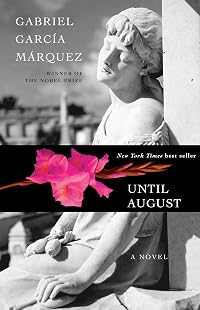
Until August: A novel
by Gabriel Garcia Marquez
On This Page
Description
"Sitting alone beside the languorous blue waters of the lagoon, Ana Magdalena Bach contemplates the men at the hotel bar. She has been happily married for twenty-seven years and has no reason to escape the life she has made with her husband and children. And yet, every August, she travels by ferry here to the island where her mother is buried, and for one night takes a new lover. Across sultry Caribbean evenings full of salsa and boleros, lotharios and conmen, Ana journeys further each year show more into the hinterland of her desire and the fear hidden in her heart. Constantly surprising, joyously sensual, Until August is a profound meditation on freedom, regret, self-transformation, and the mysteries of love--an unexpected gift from one of the greatest writers the world has ever known." --. show lessTags
Recommendations























Member Reviews
So, I want to say up front, this novella has hung around. It's a simple story, but there is something about it that has stayed with me. And I'm happy to keep in mind.
The main story that you are likely to encounter with this book are the questions of it's even being published. It's an ethically trying story. García Márquez was openly writing this novel for years, and had published sections. But his memory was fading and he finally decided to stop. He told his family it wasn't going to work and asked that be destroyed. So, the decision to publish is goes directly against the author's stated wishes. And it risks exposing an unpolished work that was maybe not ready or any good (it's really good, though). And there is that scent of raw show more capitalistic greed.
But curiosity has its power and paved over all these concerns for me. I've read almost all of his books and I adore them. I love his early and later styles and find him masterful in certain elements of literature. And so I was, to put it mildly, very curious.
The book is the story of Ana Magdalena Bach, a happily married middle-aged women who visits her mom's gravesite on a Caribbean island once a year. One year she has a sexual fling. Then she goes home and pretends everything is normal. The next year she is looking for a one-night fling.
It's not an appealing plot summary. It sounds cheap. But the book works. It presses on questions about who we are, and what we know, and what we want. Philandering can, for example, be looked at from a literary view. Cheating on certain books by reading others book, bad bad reader; and, even if these other books are flawed, having somehow found the different experience meaningful. In any case, it left me thinking there is something more here, and that's why I'm still thinking about it. There is something more here.
I recommend everything by García Márquez. This too.
2026
https://www.librarything.com/topic/384249#9207047 show less
The main story that you are likely to encounter with this book are the questions of it's even being published. It's an ethically trying story. García Márquez was openly writing this novel for years, and had published sections. But his memory was fading and he finally decided to stop. He told his family it wasn't going to work and asked that be destroyed. So, the decision to publish is goes directly against the author's stated wishes. And it risks exposing an unpolished work that was maybe not ready or any good (it's really good, though). And there is that scent of raw show more capitalistic greed.
But curiosity has its power and paved over all these concerns for me. I've read almost all of his books and I adore them. I love his early and later styles and find him masterful in certain elements of literature. And so I was, to put it mildly, very curious.
The book is the story of Ana Magdalena Bach, a happily married middle-aged women who visits her mom's gravesite on a Caribbean island once a year. One year she has a sexual fling. Then she goes home and pretends everything is normal. The next year she is looking for a one-night fling.
It's not an appealing plot summary. It sounds cheap. But the book works. It presses on questions about who we are, and what we know, and what we want. Philandering can, for example, be looked at from a literary view. Cheating on certain books by reading others book, bad bad reader; and, even if these other books are flawed, having somehow found the different experience meaningful. In any case, it left me thinking there is something more here, and that's why I'm still thinking about it. There is something more here.
I recommend everything by García Márquez. This too.
2026
https://www.librarything.com/topic/384249#9207047 show less
They should have listened to García Márquez and honored his wishes; this should never have been published. It’s a slight story and because it was published posthumously the author never had the chance to go back and clean up various problems with it. The plot revolves around a woman who returns to an unnamed island every year for one day in order to place flowers on her mother’s grave. She falls into the habit of taking a lover for one night each time she returns. There is a bit more to it than this, but not a lot. I suspect that if García Márquez had had the time and inclination to focus on the book (he thought it unworthy)—it’s really only a novella—it might have become more like a pleasant diversion. As it is, it’s show more mostly an embarrassment and one can only hope that his sons (who were responsible for its publication) genuinely believed that despite their “act of betrayal” (their own words), it was worth putting “his readers’ pleasure ahead of all other considerations.” I prefer not to think that they were simply in need of money. show less
The writing is excellent. The plot leaves me bewildered. Does Ana Magdelena visit the island where her mother is buried to pay her respects, to get away from her regular routine, or to enjoy a romantic adventure? If the latter, if she is happily married, why?
Why is Ana upset when one man leaves her a $20 bill? If you behave immorally and wantonly, what do you expect?
Truly bizarre that to put an end to whatever she was doing on the island she disinters her mother's bones and brings them home with her.
For me this is a truly strange and uncomfortable novel, not in a good sense.
Why is Ana upset when one man leaves her a $20 bill? If you behave immorally and wantonly, what do you expect?
Truly bizarre that to put an end to whatever she was doing on the island she disinters her mother's bones and brings them home with her.
For me this is a truly strange and uncomfortable novel, not in a good sense.
Every corner of this Márquez gem glitters with his signature blend of wonder and melancholic beauty. While Ana Magdalena Bach remains an enigma, her fleeting glimpses leave a lasting impression. The fragmentary structure masterfully evokes complex emotions of regret and liberation.
The voice is further amplified by Inam Nadeem's excellent Urdu translation. Though not a conventional narrative, the brilliance lies in its exploration of the subconscious.
The voice is further amplified by Inam Nadeem's excellent Urdu translation. Though not a conventional narrative, the brilliance lies in its exploration of the subconscious.
En agosto nos vemos es una novela póstuma de Gabriel García Márquez que narra la historia de Ana Magdalena Bach, una mujer casada que, cada agosto, viaja a una isla caribeña para visitar la tumba de su madre. Durante estos viajes, Ana experimenta una transformación personal, viviendo encuentros amorosos que contrastan con su vida rutinaria. A través de sus reflexiones y deseos, la novela explora temas como el amor, la libertad, la identidad y el paso del tiempo. Escrita con el estilo lírico y sugestivo característico de García Márquez, la obra revela una mirada íntima sobre el deseo femenino y la autonomía.
3.5 Published posthumously, 10 years after García Marquez’s death, this novel is believed to be his last and according to the preface by his sons, a heroic battle against memory loss which he felt was the ultimate threat to his creativity. “Memory is at once my source material and my tool. Without it, there is nothing.” The book contains a sample at the end of his self-edited pages. The premise is Ana Magdalena Bach makes an annual overnight trip to place flowers on her mother’s grave on the anniversary of her death. One year she has a one-night stand fling with a man she meets in the hotel bar, and she makes this part of the yearly tradition too. She becomes almost predatory as she selects her man for the night, but it often show more is a matter of happenstance. She is able to resume her’ normal’ life with her husband Domenico when she returns, but ironically begins to suspect him of infidelity. Because it is such a short novel and Ana is the focus, this relationship isn’t fully explored, but operates as a foil to her flings. We get 4 years of her ‘tradition’ and on the 5th year, when she has turned 50, something is revealed to her about her beloved mother and the ending has a dramatic turn that makes the story worthwhile. show less
Two things:
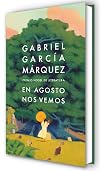
1) This hardcover edition is so visually gorgeous! Even if you don't like the book, the edition is visually stunning with such a nice mate jacket and gold foil for the book title.
2) I was never planning to buy this book. But it looked like something that could be read real fast and the book is reasonably small so it easily fit in my backpack.
This is a very short novella Gabriel was working on during his last 3-4 years of his life. What we have today is a fixed up mixture between the 1st and 5th drafts. Unlike what I believe were the final projects of Tolkien or Douglas Adams, this book was pretty much finished. There were just lots of plot holes in the notes (like characters having their hair color and age changing each show more chapter). The author apparently had difficulty selecting an appropriate ending for the book.
So, when his children re read the draft 10 years after his death, they realized it was quite promising, just needed a good edition. In this respect, this specific edition did its job very well. Great homage to the author and it is selling like pancakes in Latin America. An English edition should be available soon.
Now, while I loved the quality of the editing and book, I was meh about the story. I think I read 100 years of solitude over 20 years ago and didn't like it that much for some reason. So, I was entering this book well aware the author is gifted with words (or else, he would have never won a Nobel prize), but not my cup of tea.
Since I haven't read Gabriel's best works, I don't have a baseline to compare to this book.
The plot?
It is... odd. A bored 46 year old married Colombian woman from some random city visits her mom's grave in an impoverished touristy island once a year in August as an apology for missing her funeral. Mom died in the mainland, but wanted to be buried in that island for unknown reasons.
It becomes a sort of personal voyage. Just that... she cheats on her husband for no apparent reason. She doesn't know why or care. But she gets angry the mystery man left a 20 dollar bill. And thus she spends the whole book angry at herself, which seems to be 90% of the plot.
The book is still fun to read. At only 125 pages with very large text, I could read it in a bit over 1 hour. I think it is around 30,000 words, so the read is real quick. For the complexity of the story, I think the length is ok. The protagonist doesn't really know what she is doing or really why she doesn't divorce her husband. Or why her daughter loves sleeping with tons of men but wants to be a nun. The book is all over the place.
While the edition did a great job mending two drafts, the prose is okay, but... Well... I feel there is this dissociation between what readers demand of new indie authors and established trad authors. There is a lot of word repetition in this book and some words are used in an odd context when Spanish has better words to describe a specific action. I still think editors did a marvelous job fixing the book as much as possible.
Some aspects of the book are dated (despite being written in 2005), the way men chase after women and enter their hotel room. And then she ends up melting in his arms and sleeping with him? I swear I felt the book felt like it was written in the 80s. Chances are there is is some truth the book happens before 1990 because cellphones and internet don't seem to exist. But even so, the aggressive way men behave to swoon a woman to sleep with them felt problematic to me. Also, the othering of Afrocolombians. It felt very jarring and I am certain other reviewers will notice this.
And so, the book at brief times was quite good. I am certain if I read the author's earlier works, I will enjoy them. As for this book, it is more a novelty experience because it was his final previously unpublished work. show less
1) This hardcover edition is so visually gorgeous! Even if you don't like the book, the edition is visually stunning with such a nice mate jacket and gold foil for the book title.
2) I was never planning to buy this book. But it looked like something that could be read real fast and the book is reasonably small so it easily fit in my backpack.
This is a very short novella Gabriel was working on during his last 3-4 years of his life. What we have today is a fixed up mixture between the 1st and 5th drafts. Unlike what I believe were the final projects of Tolkien or Douglas Adams, this book was pretty much finished. There were just lots of plot holes in the notes (like characters having their hair color and age changing each show more chapter). The author apparently had difficulty selecting an appropriate ending for the book.
So, when his children re read the draft 10 years after his death, they realized it was quite promising, just needed a good edition. In this respect, this specific edition did its job very well. Great homage to the author and it is selling like pancakes in Latin America. An English edition should be available soon.
Now, while I loved the quality of the editing and book, I was meh about the story. I think I read 100 years of solitude over 20 years ago and didn't like it that much for some reason. So, I was entering this book well aware the author is gifted with words (or else, he would have never won a Nobel prize), but not my cup of tea.
Since I haven't read Gabriel's best works, I don't have a baseline to compare to this book.
The plot?
It is... odd. A bored 46 year old married Colombian woman from some random city visits her mom's grave in an impoverished touristy island once a year in August as an apology for missing her funeral. Mom died in the mainland, but wanted to be buried in that island for unknown reasons.
It becomes a sort of personal voyage. Just that... she cheats on her husband for no apparent reason. She doesn't know why or care. But she gets angry the mystery man left a 20 dollar bill. And thus she spends the whole book angry at herself, which seems to be 90% of the plot.
The book is still fun to read. At only 125 pages with very large text, I could read it in a bit over 1 hour. I think it is around 30,000 words, so the read is real quick. For the complexity of the story, I think the length is ok. The protagonist doesn't really know what she is doing or really why she doesn't divorce her husband. Or why her daughter loves sleeping with tons of men but wants to be a nun. The book is all over the place.
While the edition did a great job mending two drafts, the prose is okay, but... Well... I feel there is this dissociation between what readers demand of new indie authors and established trad authors. There is a lot of word repetition in this book and some words are used in an odd context when Spanish has better words to describe a specific action. I still think editors did a marvelous job fixing the book as much as possible.
Some aspects of the book are dated (despite being written in 2005), the way men chase after women and enter their hotel room. And then she ends up melting in his arms and sleeping with him? I swear I felt the book felt like it was written in the 80s. Chances are there is is some truth the book happens before 1990 because cellphones and internet don't seem to exist. But even so, the aggressive way men behave to swoon a woman to sleep with them felt problematic to me. Also, the othering of Afrocolombians. It felt very jarring and I am certain other reviewers will notice this.
And so, the book at brief times was quite good. I am certain if I read the author's earlier works, I will enjoy them. As for this book, it is more a novelty experience because it was his final previously unpublished work. show less
Members
- Recently Added By
Published Reviews
ThingScore 50
Until August is a sketch, as blurry and flawed as sketches generally are, but a sketch from a master is welcome.
added by Nevov
Lists

Para comprar
5 works; 1 member
Talk Discussions
Past Discussions
OT: Gabriel Garcia Marquez’s last unfinished work being published in Folio Society Devotees (March 2024)
Author Information

388+ Works 147,110 Members
Gabriel García Márquez was born in Aracataca, Colombia on March 6, 1927. After studying law and journalism at the National University of Colombia in Bogota, he became a journalist. In 1965, he left journalism, to devote himself to writing. His works included Leaf Storm, No One Writes to the Colonel, The Evil Hour, One Hundred Years of Solitude, show more Love in the Time of Cholera, The Autumn of the Patriarch, Chronicle of a Death Foretold, The General in His Labyrinth, Clandestine in Chile, and the memoir Living to Tell the Tale. He won the Nobel Prize for Literature in 1982. He died on April 17, 2014 at the age of 87. (Bowker Author Biography) show less
Some Editions
Awards and Honors
Awards
Distinctions
Common Knowledge
- Canonical title*
- Ci vediamo in agosto
- Original title
- En agosto nos vemos
- Original publication date
- 2024; 2024-03-04; 2024 (English: McLean) (English: McLean)
- People/Characters
- Ana Magdalena Bach
- Important places
- The Caribbean
- First words*
- La perdita della memoria che ha afflitto nostro padre nei suoi ultimi anni è stata, com'è facile immaginare, durissima per tutti noi.
- Last words*
- (Click to show. Warning: May contain spoilers.)Anzi, credo fosse l'unica ad averlo già capito quando decise di farsi seppellire sull'isola.
*Some information comes from Common Knowledge in other languages. Click "Edit" for more information.
Classifications
- Genres
- General Fiction, Fiction and Literature, Romance
- DDC/MDS
- 863.64 — Literature & rhetoric Spanish Literature Spanish fiction 20th Century 1945-2000
- LCC
- PQ8180.17 .A73 .E5 — Language and Literature French, Italian, Spanish and Portuguese literatures Spanish literature Provincial, local, colonial, etc. Spanish America
- BISAC
Statistics
- Members
- 640
- Popularity
- 45,202
- Reviews
- 30
- Rating
- (3.61)
- Languages
- 13 — Chinese, Czech, Dutch, English, Finnish, French, German, Hungarian, Italian, Portuguese, Russian, Spanish, Turkish
- Media
- Paper, Audiobook, Ebook
- ISBNs
- 36
- ASINs
- 12