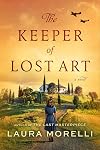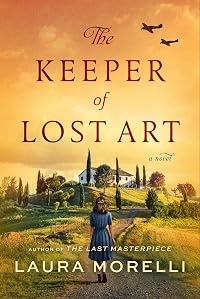
The Keeper of Lost Art: A Novel
by Laura Morelli 
On This Page
Description
During World War II, a girl makes an unbreakable connection with a boy sheltering in her family's Tuscan villa, where the treasures of the Uffizi Galleries are hidden. A moving coming-of-age story about the power of art in wartime, based on true events-- Provided by publisher.Tags
Recommendations






Member Reviews
This was an exquisitely rendered coming-of-age-in-wartime story, highlighting the role of art in one's culture and soul, and finding beauty and compassion when much about you is bleak. Author Laura Morelli, a fine writer and respected art historian, delivered a beautiful and heartfelt story drawing upon the historic record of Italy in World War II. The research which went into the story is vast. Her descriptions of the featured art pieces were grand, rich and lovely. Her passion for art and its safekeeping is absolutely apparent. For readers of historical fiction with an interest in fine art and its own history, I commend this book to you.
I am grateful to author Laura Morrelli and publisher William Morrow for having provided a show more complimentary copy of this book. Their generosity, however, has not influenced this review - the words of which are mine alone.
Publisher: William Morrow Paperbacks
Publication Date: April 22, 2025
Number of Pages: 352
ISBN: 978-0063206014 show less
I am grateful to author Laura Morrelli and publisher William Morrow for having provided a show more complimentary copy of this book. Their generosity, however, has not influenced this review - the words of which are mine alone.
Publisher: William Morrow Paperbacks
Publication Date: April 22, 2025
Number of Pages: 352
ISBN: 978-0063206014 show less
3.5 stars
I received this book for free, this does not affect my opinion of the book or the content of my review
“That's the power of art,” the maestra adds. “It can tell a story. An official story. But each one of you might also see your own story in it. At a minimum, you might find hope, even when there is darkness.”
The Keeper of Lost Art was a historical fiction story told from a twelve year old girl's eyes in Italy during World War II. It's a coming of age character story inside a dark historical time period. It's 1942 Italy and Stella has been sent to the countryside by her mother to her uncle and aunt's, in hopes it will be safer for her. Stella has never met them but with two girl cousins around her age, even with an aunt show more that seems to dislike her, she's trying to fit it. Her uncle was the driver for the owners of the villa but with the English owners escaping to Switzerland, Stella's family is left in charge. It makes her uncle's decision to agree to hide paintings from the Uffizi Galleries even more brave and dangerous. As the war rages on, even the countryside begins to feel it's effects as German soldiers and then all nationalities descend on their villa, all while Stella gets a front row seat to the vagaries of human nature and the importance and meaning of cultural art.
All they want is an end to the interminable suffering, a solution that will bring their husbands and sons and fathers back to them. And they just want to go home.
Having the story told from a twelve year old girl's eyes, who ends up fifteen by the end of the story, added a naiveté that worked to allow the author to add historical explanations and emotional building while keeping the gritty and darkest tones at bay. The aunt knows the threat of violence specific to Stella and her cousins but Stella doesn't quite comprehend it, as she ages she emotionally grows and it starts to creep into her conscious but the tone and direction of the story was more about how works of art, cultural touchstones, can inspire and give people reasons to hope during dark times. The works hidden at the villa focus on Botticellis', specifically his Primavera. When Stella befriends, Sandro, a refugee boy her age, his interest in art builds her own and we get looks at how much art can mean to people.
“You mean we risk our lives to save the paintings,” Sandro says.
Signor Fasola stands silent for a long time. “Yes. That is the reality of it. But we can't let them take or destroy whatever they want.”
“But...why us?” Sandro asks.
“Why not us?” Signor Fasola says, the twin frames of his glasses reflecting the glowing light. “If we don't take some action---any one of us---then who will?”
I thought the middle and latter half dragged a bit as the story began to, not quite wax poetic, but indulge in the emotional hope and uplifting of cultural art. As it's told from Stella, there's allowance for a less outwardly scope but these people were starving and living in threat from all avenues, so the continued art talk started to drag-on. Even though Stella and her specific family were fictional, the historical events and villas in the Italian countryside hiding art to protect it from war, were all true. Each chapter started with a fictional entry from Botticelli's diary and an American Captain from the famed Monuments Men and Women division that worked to save and recover cultural artifacts. This was a good additive as Botticelli's musings from the 1400s echoed the Captain's from the 1940s, showing shared importance and circular problems humans create for themselves.
A long chain of people who cared enough to risk their lives, to devote their whole careers, to preserving the things that matter. Artist or no artist.
You'll begin to care for Stella and the characters that start to make-up her family, part of the dragging issues in the latter half I discussed involve abandoning these human characters in favor of the art, and realize that, yes, saving the Humanities, is extremely important. The ending delivered sadness and hope, with Stella taking what she learned during those three years and having the courage to chase those wants and dreams. show less
I received this book for free, this does not affect my opinion of the book or the content of my review
“That's the power of art,” the maestra adds. “It can tell a story. An official story. But each one of you might also see your own story in it. At a minimum, you might find hope, even when there is darkness.”
The Keeper of Lost Art was a historical fiction story told from a twelve year old girl's eyes in Italy during World War II. It's a coming of age character story inside a dark historical time period. It's 1942 Italy and Stella has been sent to the countryside by her mother to her uncle and aunt's, in hopes it will be safer for her. Stella has never met them but with two girl cousins around her age, even with an aunt show more that seems to dislike her, she's trying to fit it. Her uncle was the driver for the owners of the villa but with the English owners escaping to Switzerland, Stella's family is left in charge. It makes her uncle's decision to agree to hide paintings from the Uffizi Galleries even more brave and dangerous. As the war rages on, even the countryside begins to feel it's effects as German soldiers and then all nationalities descend on their villa, all while Stella gets a front row seat to the vagaries of human nature and the importance and meaning of cultural art.
All they want is an end to the interminable suffering, a solution that will bring their husbands and sons and fathers back to them. And they just want to go home.
Having the story told from a twelve year old girl's eyes, who ends up fifteen by the end of the story, added a naiveté that worked to allow the author to add historical explanations and emotional building while keeping the gritty and darkest tones at bay. The aunt knows the threat of violence specific to Stella and her cousins but Stella doesn't quite comprehend it, as she ages she emotionally grows and it starts to creep into her conscious but the tone and direction of the story was more about how works of art, cultural touchstones, can inspire and give people reasons to hope during dark times. The works hidden at the villa focus on Botticellis', specifically his Primavera. When Stella befriends, Sandro, a refugee boy her age, his interest in art builds her own and we get looks at how much art can mean to people.
“You mean we risk our lives to save the paintings,” Sandro says.
Signor Fasola stands silent for a long time. “Yes. That is the reality of it. But we can't let them take or destroy whatever they want.”
“But...why us?” Sandro asks.
“Why not us?” Signor Fasola says, the twin frames of his glasses reflecting the glowing light. “If we don't take some action---any one of us---then who will?”
I thought the middle and latter half dragged a bit as the story began to, not quite wax poetic, but indulge in the emotional hope and uplifting of cultural art. As it's told from Stella, there's allowance for a less outwardly scope but these people were starving and living in threat from all avenues, so the continued art talk started to drag-on. Even though Stella and her specific family were fictional, the historical events and villas in the Italian countryside hiding art to protect it from war, were all true. Each chapter started with a fictional entry from Botticelli's diary and an American Captain from the famed Monuments Men and Women division that worked to save and recover cultural artifacts. This was a good additive as Botticelli's musings from the 1400s echoed the Captain's from the 1940s, showing shared importance and circular problems humans create for themselves.
A long chain of people who cared enough to risk their lives, to devote their whole careers, to preserving the things that matter. Artist or no artist.
You'll begin to care for Stella and the characters that start to make-up her family, part of the dragging issues in the latter half I discussed involve abandoning these human characters in favor of the art, and realize that, yes, saving the Humanities, is extremely important. The ending delivered sadness and hope, with Stella taking what she learned during those three years and having the courage to chase those wants and dreams. show less
Stella’s mother sent her to live with her aunt and uncle so she would be safe from the bombings.
It wasn’t a pleasant place to be. Her aunt really didn’t like her and she didn’t know why.
A lot of interesting things were happening while she was there. The most interesting thing was that they were given the job of hiding valuable paintings in their villa, but then Zio Tino decides he is going to allow refugees stay in the villa.
Will the paintings be safe?
Find out how everything works out and how Stella grows in this beautifully written, well-researched, visit to Italy as we learn how citizens survived and how they loyally saved the art in their care.
Fans of art history will fall in love with the storyline and hearing the names of show more artists and paintings.
You will have to brush up on your Italian, but will enjoy being there. 4/5
Thank you to the publisher for a copy of this book. All opinions are my own. show less
It wasn’t a pleasant place to be. Her aunt really didn’t like her and she didn’t know why.
A lot of interesting things were happening while she was there. The most interesting thing was that they were given the job of hiding valuable paintings in their villa, but then Zio Tino decides he is going to allow refugees stay in the villa.
Will the paintings be safe?
Find out how everything works out and how Stella grows in this beautifully written, well-researched, visit to Italy as we learn how citizens survived and how they loyally saved the art in their care.
Fans of art history will fall in love with the storyline and hearing the names of show more artists and paintings.
You will have to brush up on your Italian, but will enjoy being there. 4/5
Thank you to the publisher for a copy of this book. All opinions are my own. show less
I found the historical data to be well researched. I didn’t like some of the characters, which is why I gave it 3 stars.
Ratings
Members
- Recently Added By
Lists

Violette's Best Historical Fiction 2025
5 works; 1 member

Violette's Top 5 Books of 2025
5 works; 1 member
Author Information

17 Works 1,004 Members
Laura Morelli is a LibraryThing Author, an author who lists their personal library on LibraryThing.
Classifications
Statistics
- Members
- 65
- Popularity
- 479,138
- Reviews
- 4
- Rating
- (3.78)
- Languages
- English
- Media
- Paper, Audiobook, Ebook
- ISBNs
- 8
- ASINs
- 2