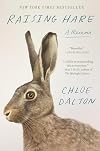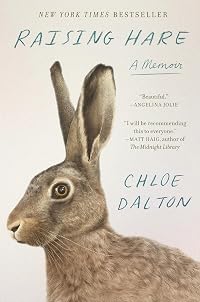
Raising Hare: A Memoir
by Chloe Dalton
On This Page
Description
"A moving and fascinating meditation on freedom, trust, loss, and our relationship with the natural world, explored through the story of one woman's unlikely friendship with a wild hare. Imagine you could hold a baby hare and bottle-feed it. Imagine that it lived under your roof and lolloped around your bedroom at night, drumming on the duvet cover when it wanted your attention. Imagine that, over two years later, it still ran in from the fields when you called it and slept in your house for show more hours on end and gave birth to leverets in your study. For political advisor and speechwriter Chloe Dalton, who spent lockdown deep in the English countryside, far away from her usual busy London life, this became her unexpected reality. In February 2021, Dalton stumbles upon a newborn hare-a leveret-that had been chased by a dog. Fearing for its life, she brings it home, only to discover how impossible it is to rear a wild hare, most of whom perish in captivity from either shock or starvation. Through trial and error, she learns to feed and care for the leveret with every intention of returning it to the wilderness. Instead, it becomes her constant companion, wandering the fields and woods at night and returning to Dalton's house by day. Though Dalton feared that the hare would be preyed upon by foxes, stoats, feral cats, raptors, and even people, she never tried to restrict it to the house. Each time the hare leaves, Chloe knows she may never see it again. Yet she also understands that to confine it would be its own kind of death. Raising Hare chronicles their journey together, while also taking a deep dive into the lives and nature of hares, and the way they have been viewed historically in art, literature, and folklore. We witness first-hand the joy at this extraordinary relationship between human and animal, which serves as a reminder that the best things, and most beautiful experiences, arise when we least expect them"-- show lessTags
Recommendations









Member Reviews
In December of 1973 we brought home a Dutch rabbit who we house trained to a litter box. But before Nasturtium, we raised a litter of wild bunnies. Their nest was in a garden plot scheduled to be rototilled. We feed them every two hours, treated them for worms, and released them at the age their mother would have abandoned them.
the baby bunnies we raised
Reading Raising Hare, how Chloe Dalton cared for an injured hare and the relationshpip they created, brought back memories of our bunnies. Although the British hare and the American cottontail are different species, they share many common traits. The deliberate and thorough grooming, the way they settle down with their feet under them, eyes closed, gritting their teeth. The way they show more stretch out and open their mouth wide as if in a yawn.
I loved reading this gentle, thoughtful memoir. Dalton writes with precision and grace. Caring for the injured leveret required decisions to protect it’s wildness. She opened doors so the hare could come and go at will. Its routine brought it back to sleep during the day, even when grown and running at night with the other hare. It raised its young in Dalton’s garden, and even made a nest in the house.
Dalton understood the remarkable gift she was given to live so close in parallel with a wild creature and gave the hare space to be.
Coexistence gives our own existence greater poignancy, and perhaps even grandeur. My wish now is for an environment that is safer for hares and other creatures of the land, wherever they may life: not at the expense of humans, but in balance with our priorities. from Raising Hare by Chloe Dalton
The experience brought Dalton to grapple with larger issues of human impact on the habitat of animals. Most hare are killed by industrial farming, and extensive farmland has destroyed their environment.
This memoir is sure to become a perennial favorite of nature writing.
Thanks to the publisher for a free book. show less
the baby bunnies we raised
Reading Raising Hare, how Chloe Dalton cared for an injured hare and the relationshpip they created, brought back memories of our bunnies. Although the British hare and the American cottontail are different species, they share many common traits. The deliberate and thorough grooming, the way they settle down with their feet under them, eyes closed, gritting their teeth. The way they show more stretch out and open their mouth wide as if in a yawn.
I loved reading this gentle, thoughtful memoir. Dalton writes with precision and grace. Caring for the injured leveret required decisions to protect it’s wildness. She opened doors so the hare could come and go at will. Its routine brought it back to sleep during the day, even when grown and running at night with the other hare. It raised its young in Dalton’s garden, and even made a nest in the house.
Dalton understood the remarkable gift she was given to live so close in parallel with a wild creature and gave the hare space to be.
Coexistence gives our own existence greater poignancy, and perhaps even grandeur. My wish now is for an environment that is safer for hares and other creatures of the land, wherever they may life: not at the expense of humans, but in balance with our priorities. from Raising Hare by Chloe Dalton
The experience brought Dalton to grapple with larger issues of human impact on the habitat of animals. Most hare are killed by industrial farming, and extensive farmland has destroyed their environment.
This memoir is sure to become a perennial favorite of nature writing.
Thanks to the publisher for a free book. show less
I’m drawn to memoirs, not necessarily because of their stories, although many have been wonderful. Rather, I’m drawn to them because more often than not, the quality of their writing is so much better than that of novels. This memoir is no exception. It is beautifully written and, as a bonus, delivers a beautiful message of hope in this time where there seems so little to hope for, especially where humankind if concerned. Chloe Dalton’s story isn’t a cute “wild animal as pet” story. In fact, she purposely never names the hare. And she also purposely has very little physical contact with the hare or her offspring. As she said on more than one occasion in the book, she only allowed the animal to come into her life as much or show more as little as it wanted. She never forced herself on it. That made their relationship all the more rewarding for the reader. I put “Raising Hare: A Memoir” in my “very special books” compartment. That’s the one that I reserve for books (and there are very few) that I want to come back to in the future and reread. It’s just that special. show less
A lovely, quiet, contemplative memoir about the author’s experience of sheltering a wild hare that she rescued as a leveret. The writing is lovely, and aside from describing the hare and her life in such detail that we can learn to appreciate hares ourselves, the author makes a case for preserving nature and wildlife: “I wish there were more wild, undisturbed places, for both wildlife and for us as humans, and a greater understanding that restoring and appreciating nature meets needs we sometimes forget we have.”
If, like me, you’re concerned about the death of animals in this book, there are several deaths of hares and leverets and some other wildlife, but the fate of the author’s hare is never made explicit. She show more philosophizes about the brevity and fragility of wild hares’ lives, and she speculates about the future when the hare is gone: “If I blinked or looked away for an instant, suddenly she would be gone. I know this is how her story with me will end, one day—as quietly as it began.” show less
(8) I adored this book. Take it with a grain of salt perhaps as one of my favorite books of all time is 'Watership Down.' The author is a busy politico of some type that covers conflicts all over the globe, but has a country house outside of London she occasionally returns to. But in the aftermath of COVID, she spends more time in the country and one day she stumbles upon a tiny hare baby (a leveret, my new favorite word.) It is lost and vulnerable and she ultimately decides to take it in against her better judgement. And so begins a beautiful story that is not -- "Oh, how cute, a pet" - but instead awe-filled, quiet, reflective, and for me - life-affirming.
The details of how she welcomes the hare and adapts to its comings and goings show more were delightful. Her musings on botany and nature toward the end got a little ponderous - but overall I admired the writing, the detail, the stillness and the joy she must have felt watching hare stretch out on her bench. I was envious of the experience and it made me want nothing more than to move out to the country and unplug.
This is not just a cutesy animal story with a wild creature tamed and anthropomorphized - instead the author achieves something amazing. The hare is fully realized as something not human, but perhaps just as valuable and dear. This is my favorite book of the year so far and I am so glad I discovered in a list of the best books from 2025. It is a quiet gem and very well-written. show less
The details of how she welcomes the hare and adapts to its comings and goings show more were delightful. Her musings on botany and nature toward the end got a little ponderous - but overall I admired the writing, the detail, the stillness and the joy she must have felt watching hare stretch out on her bench. I was envious of the experience and it made me want nothing more than to move out to the country and unplug.
This is not just a cutesy animal story with a wild creature tamed and anthropomorphized - instead the author achieves something amazing. The hare is fully realized as something not human, but perhaps just as valuable and dear. This is my favorite book of the year so far and I am so glad I discovered in a list of the best books from 2025. It is a quiet gem and very well-written. show less
A favorite read of the year! Raising Hare possesses the full triple threat criteria for a perfect memoir: interesting subject material, a story that readers can empathize with and feel connected to, AND beautiful writing.
The author, Chloe Dalton, is working from home during the pandemic, and stumbles across an abandoned leveret (a newborn hare) on her property. Concerned about its survival, she takes it home and embarks on a journey to care for it and return it to the wild.
If you love animals, I can’t possibly recommend this book more highly. Even if you think you’re not interested enough in hares, specifically, to read this, I guarantee you will be if you give this book a try! I read a physical copy, but I have a hunch that show more Raising Hare would make for an incredible audiobook experience.
There was so much about hares I did not know! I spent most of this book with my jaw on the floor. The opportunity that Chloe Dalton had to observe the hare she cared for first hand is incredible, and leads to all sorts of fascinating observations about their behavior.
The extent to which Dalton endeavored to remain hands off and do what was best for the hare is beyond admirable. She goes so far as to not ever actually name the hare, because, despite the care she provides, Dalton recognizes that it does not belong to her. She cannot own it, so she does not name it! And, while the author is transparent about not previously being the sort of person who gets attached to animals, watching her level of care about the hare grow throughout the book is deeply touching.
If there is a drawback to this book, it’s that the chapters meander a bit at times, but the writing was so gorgeous that I didn’t mind at all. show less
The author, Chloe Dalton, is working from home during the pandemic, and stumbles across an abandoned leveret (a newborn hare) on her property. Concerned about its survival, she takes it home and embarks on a journey to care for it and return it to the wild.
If you love animals, I can’t possibly recommend this book more highly. Even if you think you’re not interested enough in hares, specifically, to read this, I guarantee you will be if you give this book a try! I read a physical copy, but I have a hunch that show more Raising Hare would make for an incredible audiobook experience.
There was so much about hares I did not know! I spent most of this book with my jaw on the floor. The opportunity that Chloe Dalton had to observe the hare she cared for first hand is incredible, and leads to all sorts of fascinating observations about their behavior.
The extent to which Dalton endeavored to remain hands off and do what was best for the hare is beyond admirable. She goes so far as to not ever actually name the hare, because, despite the care she provides, Dalton recognizes that it does not belong to her. She cannot own it, so she does not name it! And, while the author is transparent about not previously being the sort of person who gets attached to animals, watching her level of care about the hare grow throughout the book is deeply touching.
If there is a drawback to this book, it’s that the chapters meander a bit at times, but the writing was so gorgeous that I didn’t mind at all. show less
We can start with the fact that I've never really given a lot of thought to rabbits and hares being distinct animals, although it registered somewhere in the back-burner of my brain. I think I'm probably not alone. Dalton's memoir sets out to change that, at least in passing. When she encounters an abandoned leveret (baby hare), her life is forever changed (and that isn't hyperbole). Yes, it is a story of one woman and and at least at first, one hare. But it is also a very thoughtful meditation on the fragile ecosystem and how humans must struggle to maintain some sort of precarious equilibrium, as the balance was long ago upset. Dalton is transparent about her struggles and her questions (of herself, of the relatively isolated world of show more hare-related knowledge, of her little furry friend(?)). It is this questioning that keeps things from falling into the trap of an overly saccharine and anthropomorphized tale. She reels us in with her narrative in such a way that we find ourselves holding our breath as she writes of circling hawks and various other garden predators, any of whom would like a lunch of leveret. She introduces us to previous chronicles offered by hunters, poachers, and poets alike, who offer musings and (mis)characterizations of these enigmatic animals. Dalton seems conscious of adding her voice to the small trove of information so that sometime in the future, another leveret-encounterer might turn to her memoir for assistance.
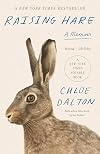
The hare is never named and this is ultimately an act of respect, but, also, one suspects, an act of self-preservation. While Dalton works hard not to domesticate the animal, there is something else -- some undefined opportunity to commune (sort of) with another species. I picked this up in the airport because I had heard about it and I wanted something short enough to finish over the course of two shorter flights. I might not have gotten around to it otherwise, so I'll thank not only the airport bookstore, but also Denise Nestor's gorgeous illustration on the front cover (and those that are included inside the book as well). It is truly a delightful and tender read. show less
The hare is never named and this is ultimately an act of respect, but, also, one suspects, an act of self-preservation. While Dalton works hard not to domesticate the animal, there is something else -- some undefined opportunity to commune (sort of) with another species. I picked this up in the airport because I had heard about it and I wanted something short enough to finish over the course of two shorter flights. I might not have gotten around to it otherwise, so I'll thank not only the airport bookstore, but also Denise Nestor's gorgeous illustration on the front cover (and those that are included inside the book as well). It is truly a delightful and tender read. show less
Chloe Dalton was a political advisor living in the English countryside when she came across a baby hare (leveret) on a country lane near her home. Leaving it for a few hours in the hope it would be found by its mother, Dalton later returned to the location to find the leveret still sitting there. Deciding to take it home, Dalton discovers very little information on how to look after a leveret and embarks on a crash course of trial and error.
Raising Hare - A Memoir documents Chloe Dalton's life changing experience finding and raising the leveret and I was totally there for it. I'm not really an animal person but I loved listening to the antics of the leveret as it slowly developed into an adult hare. From the outset the author strived show more not to stroke or cuddle the leveret, believing it should remain wild and one day be released into its natural habitat. The author's detailed observations and interactions with the leveret were endearing and greatly entertaining and I enjoyed following her experiences.
During this period, Dalton takes an interest in learning about the history of hares, and takes the reader along for the ride. I knew the hare was symbolic in certain cultures, but this was a timely reminder:
"The mythology and lore around hares was puzzling to me since it appeared to divide into extremes, with the hare a signifier of virtue, renewal and self sacrifice on the one hand, and a witch's familiar and harbinger of death, revenge or misfortune on the other. How, I wondered, could the same creature be both sacred and profane, chaste and promiscuous, lucky and unlucky, an emblem of self sacrifice but also a witch in animal form, the embodiment of madness and foolishness but also wisdom." Chapter 5 May Days: Witch-Hare
Hares are mythical creatures and in medieval times it was believed hares were shapeshifters. Hares have been seen as sacred animals connected to the supernatural world and were once linked to the underworld in Ancient Egypt.
I admired the lengths the author went to in order to accomodate the leveret but I'll admit I found myself wishing I had a leveret to keep me company in my study.
Ultimately I'll remember this book for the nature writing and sheer wonder of raising a wild animal in a domestic setting. I listened to the audiobook perfectly narrated by Louise Brealey, who sounds - to me at least - like the character of Anna Bates in Downton Abbey, making this a sheer delight to listen to.
Raising Hare by Chloe Dalton was a real unexpected joy and I'll be recommending it to my sister! show less
Raising Hare - A Memoir documents Chloe Dalton's life changing experience finding and raising the leveret and I was totally there for it. I'm not really an animal person but I loved listening to the antics of the leveret as it slowly developed into an adult hare. From the outset the author strived show more not to stroke or cuddle the leveret, believing it should remain wild and one day be released into its natural habitat. The author's detailed observations and interactions with the leveret were endearing and greatly entertaining and I enjoyed following her experiences.
During this period, Dalton takes an interest in learning about the history of hares, and takes the reader along for the ride. I knew the hare was symbolic in certain cultures, but this was a timely reminder:
"The mythology and lore around hares was puzzling to me since it appeared to divide into extremes, with the hare a signifier of virtue, renewal and self sacrifice on the one hand, and a witch's familiar and harbinger of death, revenge or misfortune on the other. How, I wondered, could the same creature be both sacred and profane, chaste and promiscuous, lucky and unlucky, an emblem of self sacrifice but also a witch in animal form, the embodiment of madness and foolishness but also wisdom." Chapter 5 May Days: Witch-Hare
Hares are mythical creatures and in medieval times it was believed hares were shapeshifters. Hares have been seen as sacred animals connected to the supernatural world and were once linked to the underworld in Ancient Egypt.
I admired the lengths the author went to in order to accomodate the leveret but I'll admit I found myself wishing I had a leveret to keep me company in my study.
Ultimately I'll remember this book for the nature writing and sheer wonder of raising a wild animal in a domestic setting. I listened to the audiobook perfectly narrated by Louise Brealey, who sounds - to me at least - like the character of Anna Bates in Downton Abbey, making this a sheer delight to listen to.
Raising Hare by Chloe Dalton was a real unexpected joy and I'll be recommending it to my sister! show less
Members
- Recently Added By
Lists

Books Read in 2025
4,091 works; 97 members

Top Five Books of 2025
954 works; 303 members

Favorite Reads of 2025
25 works; 1 member

CXB Books read in 2025
16 works; 1 member

Books Read in 2026
1,950 works; 66 members
Author Information

4 Works 803 Members
All Editions
Awards and Honors
Common Knowledge
- Original title
- Raising Hare. The heart-warming true story of an unlikely friendship
- Original publication date
- 2025
- People/Characters
- Chloe Dalton; Hare
- Important places
- England
- Epigraph
- Of hares, some go faster and be stronger than others, as it is of men and other beasts. -Edward of Norwich, "The Master of the Game"
Shadow and sun, so too our lives are made
Yet think how great the sun
How small the shade.
-Motto on a sundial - Dedication
- To my family and friends
- First words
- Prologue: January was arctic.
1: A Winter Leveret: Standing by the back door, readying for a long walk, I heard a dog barking. - Quotations
- Siberians name hares by the time of their birth: nastovik (born in March, when snow is covered with crust,), letnik (born in summer), listopadnik (born in the fall, when leaves fall from trees.) -A. A. Cherkassov, "Notes of a... (show all)n East Siberian Hunter" 1865
The sticky, squishy sound of a hare eating a raspberry has to be heard to be believed. Since hares don't use their paws to help them eat, in the way that dogs or parrots grip their food at times to gain a better purchase, it ... (show all)would pick up the thimble-shaped cone in its mouth by one edge and slowly mash its jaws, drawing it in bead by bead while the raspberry bobbed up and down in front of its nose. There was something serious, almost ponderous, in the slow and methodical manner in which the leveret ate a berry. (p. 54)
...each leveret is born a perfect replica of an adult hare, with a full coat of fur and its eyes open. Whereas baby rabbits are born blind, pink and hairless in a nest underground, leverets must fend for themselves from birth... (show all), living in the open. (p. 57)
Through the leveret, I had rediscovered the pleasure of attachment to a place and the contentment that can be derived from exploring it fully, rather than constantly seeking ways to leave it and believing that satisfaction ca... (show all)n only lie in novel experiences. (p. 129-30)
The house smelled faintly like digestive biscuits: the scent of hares. (p 197)
...admire her qualities, and to associate them with some of the human qualities to which many of us aspire: patience, dignity, calm and strength among them. Were it in my power, I would replace "mad as a March hare" in our la... (show all)nguage with "as gentle as a hare," "as faithful as a hare" and "as constant." (p. 262-3)
If it is possible, as William Blake would have it, "to see a world in a grain of sand," then perhaps we can see all nature in a hare: its simplicity and intricacy, fragility and glory, transience and beauty. (p. 264) - Last words
- (Click to show. Warning: May contain spoilers.)I will remember her leaving, but will know that before she did, she always, first, looked back.
Classifications
Statistics
- Members
- 794
- Popularity
- 35,039
- Reviews
- 54
- Rating
- (4.35)
- Languages
- 5 — Dutch, English, French, German, Swedish
- Media
- Paper, Audiobook, Ebook
- ISBNs
- 17
- ASINs
- 6