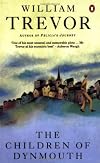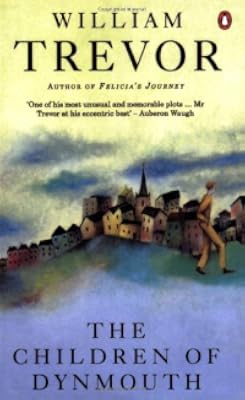
The Children of Dynmouth
by William Trevor
On This Page
Description
A small, pretty seaside town is harshly exposed by a young boy's curiosity. His prudent interest, oddly motivated, leaves few people unaffected - and the consequences cannot be ignored.Tags
Recommendations




























Member Recommendations


Member Reviews
In a seaside English town Timothy Gedge, a lonely, creepy teenager with no verbal governor seems to be building up to something horrible. He follows people, peeks in windows, and uses what he learns to blackmail them into helping him in an Easter talent competition, of all things. He tells children, old people, anyone, about the blackness in their hearts - in the hearts of loved ones. The worst of it is, in this quest to ruin lives, Timothy may have stumbled on some truths about them, and the town of Dynmouth, buried in his bizarre tales.
Fifteen year old Tim spies on the people of the small seaside town of Dynmouth, and uses the information to "blackmail" them into giving him what he wants--in this case a tin bath, a wedding dress, and a man's suit. He needs these props to use in a gruesomely inappropriate comedy skit he intends to put on at the town talent show. Tim lives in a fanatasy world, and imagines he will be discovered by a famous talent scout at the show, and become rich and famous.
In Tim, Trevor has created an immensely creepy character, but also a very sad character. Trevor is so skillful, that I was never quite sure whether Tim was totally evil, intelligent and deliberatively manipulative, or whether he was simply dull-witted and clueless (though show more monomaniacal) about what he was doing. Excellent book. show less
In Tim, Trevor has created an immensely creepy character, but also a very sad character. Trevor is so skillful, that I was never quite sure whether Tim was totally evil, intelligent and deliberatively manipulative, or whether he was simply dull-witted and clueless (though show more monomaniacal) about what he was doing. Excellent book. show less
William Trevor was one of the Booker Prize's perennial bridesmaids, and this book was shortlisted in 1976. The setting is Dynmouth, an outwardly sleepy Dorset seaside town rather reminiscent of Lyme Regis. Like another book I read recently, Michael Frayn's [b:Spies|287022|Spies|Michael Frayn|https://images.gr-assets.com/books/1347813589s/287022.jpg|2300254], this is a story about innocence and experience, and childhood games colliding with adult secrets with unforeseen consequences.
The central character is brilliantly drawn. Timothy Gedge is a 15-year old loner who spends much of his time watching people. At the start this seems fairly innocent and harmless - he dreams of escaping his inevitable destiny in the town's sandpaper factory show more via a talent contest, for which his act requires the help of various props he can only obtain by revealing what he has seen while watching people. It becomes clear that he has learning difficulties, and although he has seen and remembered much, he understands little and uses a lively imagination to fill in the gaps.
As he cannot resist talking to everyone he can, his revelations leave a trail of destruction. This is largely described via his harassment of Stephen and Kate, two 12 year olds who have been brought together because Stephen's widowed father has just married Kate's divorced mother.
The portrait of the community is fully realised and full of comic 70s detail - as somebody who was brought up in 70s England this had many resonances. The ending is surprising and has an element of redemption. show less
The central character is brilliantly drawn. Timothy Gedge is a 15-year old loner who spends much of his time watching people. At the start this seems fairly innocent and harmless - he dreams of escaping his inevitable destiny in the town's sandpaper factory show more via a talent contest, for which his act requires the help of various props he can only obtain by revealing what he has seen while watching people. It becomes clear that he has learning difficulties, and although he has seen and remembered much, he understands little and uses a lively imagination to fill in the gaps.
As he cannot resist talking to everyone he can, his revelations leave a trail of destruction. This is largely described via his harassment of Stephen and Kate, two 12 year olds who have been brought together because Stephen's widowed father has just married Kate's divorced mother.
The portrait of the community is fully realised and full of comic 70s detail - as somebody who was brought up in 70s England this had many resonances. The ending is surprising and has an element of redemption. show less
The great William Trevor passed away this week. I have long so admired his writing and he leaves us with some of the most entrancing works in our language. He was widely known for his short stories, surely one of the century's great craftsmen of this genre. His novels are similarly jewels of writing. A short time ago I purchased from one of the remainder websites a set of Penguin reprints of his early novels none of which I had read before except the marvelous novella "Nights at the Alexandra". That work was actually the first of his I read years ago and was completely captivated by his extraordinarily luminous and supple prose.
The "Children of Dynmouth" follows a motif seen in many of his works. Dynmouth is a rather ordinary sea side show more resort town inhabited by unremarkable people. There is Quentin Featherston, the vicar, and his wife Lavinia. He is struggling with a declining congregation and she from the despondency of a recent miscarriage. Commodore Abigail and his wife live quietly in retirement, having long ago worked out a functional pattern of marital relationship. The Dass's are likewise, he retired from banking and she an invalid. Mr. Plant operates the local pub. Step-siblings Stephen and Kate are twelve-years old who have just come to live together when his widowed father and her divorced mother wed.
Into this fairly placid setting emerges Timothy Gedge. Timothy is fifteen-years old, the son of a mother whose husband abandoned the family and with an older sister. His family pretty much ignores Timothy who is free to roam the town without supervision or question. Timothy is an odd and lonely boy who has gotten the notion that he can become famous by staging a morbid comedy sketch at the upcoming fund raising talent show sponsored by the church. He fantasizes that the host of a national TV show somehow will see his act and propel him to stardom. To put on his performance, he needs certain props that others can provide -- a derelict bathtub, a suit of clothes, a wedding dress and curtains for the stage. Timothy has a manner of cheerfully and unrelentingly attempting to ingratiate himself to others and he uses this to worm his way into the lives of those whose help he needs. They all perceive him as a pest, but Timothy is a snoop who claims awareness of the secrets of others and hints that he will remain discreet if only they will help him get what he needs for his act. While giving the appearance of amiability and good will he torments others in the most vicious and destructive manner conceivable. In modern typology Timothy would clearly be consider sociopathic. The subjects of his manipulations are devastated by his claims to hold their secrets, some of which have a basis in truth and others false.
Without revealing the secrets or the denouement, Timothy's fantasy is not realized, but the others are left permanently affected by his interactions with them. As is often seen in Trevor's stories, beneath the calm and benign surface of people's lives lay angst, turmoil and shame.
William Trevor, you will be greatly missed. show less
The "Children of Dynmouth" follows a motif seen in many of his works. Dynmouth is a rather ordinary sea side show more resort town inhabited by unremarkable people. There is Quentin Featherston, the vicar, and his wife Lavinia. He is struggling with a declining congregation and she from the despondency of a recent miscarriage. Commodore Abigail and his wife live quietly in retirement, having long ago worked out a functional pattern of marital relationship. The Dass's are likewise, he retired from banking and she an invalid. Mr. Plant operates the local pub. Step-siblings Stephen and Kate are twelve-years old who have just come to live together when his widowed father and her divorced mother wed.
Into this fairly placid setting emerges Timothy Gedge. Timothy is fifteen-years old, the son of a mother whose husband abandoned the family and with an older sister. His family pretty much ignores Timothy who is free to roam the town without supervision or question. Timothy is an odd and lonely boy who has gotten the notion that he can become famous by staging a morbid comedy sketch at the upcoming fund raising talent show sponsored by the church. He fantasizes that the host of a national TV show somehow will see his act and propel him to stardom. To put on his performance, he needs certain props that others can provide -- a derelict bathtub, a suit of clothes, a wedding dress and curtains for the stage. Timothy has a manner of cheerfully and unrelentingly attempting to ingratiate himself to others and he uses this to worm his way into the lives of those whose help he needs. They all perceive him as a pest, but Timothy is a snoop who claims awareness of the secrets of others and hints that he will remain discreet if only they will help him get what he needs for his act. While giving the appearance of amiability and good will he torments others in the most vicious and destructive manner conceivable. In modern typology Timothy would clearly be consider sociopathic. The subjects of his manipulations are devastated by his claims to hold their secrets, some of which have a basis in truth and others false.
Without revealing the secrets or the denouement, Timothy's fantasy is not realized, but the others are left permanently affected by his interactions with them. As is often seen in Trevor's stories, beneath the calm and benign surface of people's lives lay angst, turmoil and shame.
William Trevor, you will be greatly missed. show less
The Children of Dynmouth, while well-written with intriguing characters, was chilling to read and I'm glad it's behind me.
Despite the philosophical and wistfully hopeful ending by the rector's wife,
Timothy remains an unforgettable enigma:
increasingly dangerous because of his young life with no love...?
or
showing treatable genetic connections to his long gone father...?
Despite the philosophical and wistfully hopeful ending by the rector's wife,
Timothy remains an unforgettable enigma:
increasingly dangerous because of his young life with no love...?
or
showing treatable genetic connections to his long gone father...?
The children of Dynmouth by William Trevor was originally published in 1976. The atmosphere in the novel is brooding and spooky, and the reader's ideas about the main character, Timothy Gedge, slide from sympathy to disgust.
The setting is a small-sized British town, a community which, while there is still some traditional social cohesion, mainly provided by the church, is disintegrating, and in which the first indications of a rebellious youth culture are emerging. Features of that youth culture would be a lack of respect for the elder generation, though still largely covert, and the urge to take initiative, and experiment with in what ways and how far conventional borders can be crossed.
The character of Timothy is gradually revealed as show more highly manipulative. His insistence to deliberately irritate and terrorize people to get his way is frightening, and his "creative" ideas, seemingly innocent and funny at first, turn increasingly sinister.
While to most adults Timothy is mainly a major pain in the neck, in the imagination of the children of Dynmouth he is a veritable devil. To them the horror is real.
The children of Dynmouth was reissued by Penguin Books in the last quarter of 2011 in their series "Penguin Decades", as a novel representative of the 70s. show less
The setting is a small-sized British town, a community which, while there is still some traditional social cohesion, mainly provided by the church, is disintegrating, and in which the first indications of a rebellious youth culture are emerging. Features of that youth culture would be a lack of respect for the elder generation, though still largely covert, and the urge to take initiative, and experiment with in what ways and how far conventional borders can be crossed.
The character of Timothy is gradually revealed as show more highly manipulative. His insistence to deliberately irritate and terrorize people to get his way is frightening, and his "creative" ideas, seemingly innocent and funny at first, turn increasingly sinister.
While to most adults Timothy is mainly a major pain in the neck, in the imagination of the children of Dynmouth he is a veritable devil. To them the horror is real.
The children of Dynmouth was reissued by Penguin Books in the last quarter of 2011 in their series "Penguin Decades", as a novel representative of the 70s. show less
The story is set in the late 1960's or early 1970's in a small English town on the Dorset coast. Dynmouth we are told has a population of 4,139 and half were children. There is a rather large cast of characters. The main character is a misfit teenager, Timothy, who initially comes across as a rather addled boy trying too hard to be funny in an unfunny annoying manner. We soon see that he is something worse than that, a true creepy and malicious boy who thrives on telling lies, half-truths and exposing secrets of the townspeople and poking a stick into wounds. He will lie to stir things up and make stuff up just to be mean if he lacks some nasty business about someone. He is a mean one, prodding and poking where most people show more wouldn't.
There are other children in the story, as the title suggests, and I liked some of the parts of the story where Timothy was not involved. Timothy however manages to get himself involved with all the parts ...
I am unsure if I would recommend this as it creeped me out. show less
There are other children in the story, as the title suggests, and I liked some of the parts of the story where Timothy was not involved. Timothy however manages to get himself involved with all the parts ...
I am unsure if I would recommend this as it creeped me out. show less
Members
- Recently Added By
Lists

Booker Prize
491 works; 62 members

Man Booker Prize Longlist 1976
6 works; 1 member

Booker Prize Shortlist: Titles Not Yet Read
161 works; 4 members

Jones & Newman: Best Horror Books Further Recommended Reading
577 works; 4 members

Philip Ward's Lifetime Reading Plan
592 works; 22 members
Author Information

120+ Works 13,471 Members
William Trevor Cox was born in Mitchelstown, County Cork, Ireland on May 24, 1928. He received a degree in history from Trinity College in 1950. Before becoming a full-time author in 1965, he worked as a sculptor, a teacher, and a copywriter at an advertising agency. He exhibited his sculptures in Dublin and England and was joint winner of the show more International Year of the Political Prisoner art competition in 1952. His first novel, A Standard of Behaviour, was published in 1958. His other novels include Other People's Worlds, Nights at the Alexandra, The Silence in the Garden, The Story of Lucy Gault, My House in Umbria, and Love and Summer. He won the Hawthornden Prize in 1964 for The Old Boys, the Whitbread Award in 1976 for The Children of Dynmouth, the Whitbread Award in 1983 for Fools of Fortune, and the Whitbread Award in 1994 for Felicia's Journey. His short story collections include The Day We Got Drunk on Cake and Other Stories, The Ballroom of Romance and Other Stories, Beyond the Pale, A Bit on the Side, Cheating at Canasta, and The Mark-2 Wife. The Hill Bachelors received the 2001 Irish Times Irish Literature Prize for Fiction and the PEN/Macmillan Silver Pen Award for Short Stories. He received the Allied Irish Banks' Prize in 1976, The Sunday Times Award for Literary Excellence in 1992, the David Cohen British Literature Prize in 1999, and the Bob Hughes Lifetime Achievement Award in Irish Literature in 2008. In 1977, he was awarded an honorary CBE in recognition of his services to literature. He died on November 20, 2016 at the age of 88. (Bowker Author Biography) show less
Some Editions
Awards and Honors
Awards
Notable Lists
Series
Belongs to Publisher Series
Penguin Decades (1970s)
Common Knowledge
- Canonical title
- The children of Dynmouth; The Children of Dynmouth
- Original title
- The children of Dynmouth
- Original publication date
- 1976
- People/Characters
- Timothy Gedge; Stephen Fleming; Kate Fleming
- Important places
- Dynmouth, Dorset, England, UK
- Related movies
- BBC Screen Two:The Children of Dynmouth (1987)
- Dedication
- For Patrick and Dominic
- First words
- Dynmouth nestled on the Dorset coast, gathered about what was once the single source of its prosperity, a small fishing harbour.
- Last words
- (Click to show. Warning: May contain spoilers.)'How can you lose?' sang Petula Clark. 'Things will be great.'
- Original language*
- Englisch
*Some information comes from Common Knowledge in other languages. Click "Edit" for more information.
Classifications
Statistics
- Members
- 444
- Popularity
- 68,903
- Reviews
- 7
- Rating
- (3.91)
- Languages
- 6 — Czech, English, French, German, Italian, Swedish
- Media
- Paper, Ebook
- ISBNs
- 19
- ASINs
- 5