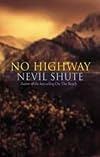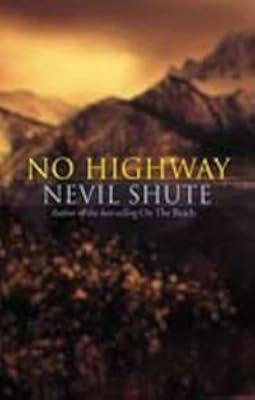
No Highway
by Nevil Shute
On This Page
Description
Fiction. Literature. Thriller. HTML: Theodore Honey is a shy, inconspicuous engineer whose eccentric interests are frowned upon in aviation circles. When a passenger plane crashes in Newfoundland under unexplained circumstances, Honey is determined to prove his unorthodox theory about what went wrong to his superiors, before more lives are lost. But while flying to the crash scene to investigate, Honey discovers to his horror that he is on board one of the defective planes and that he and show more his fellow passengers, including a friendly young stewardess and an aging movie actress, are in imminent peril. show lessTags
Recommendations












Member Reviews
Oh Nevil Shute, how are you so fascinating?
His books are always about these sort of greyish people who eventually triumph in the end because of their deep-down decency and competence.
There's usually a whole lot of technical details about airplanes.
And just when you're really getting into it, you get slapped in the face by attitudes of half a century ago.
And despite all this, they are addictive as all hell.
In this one, there's a genius engineer named Mr. Honey (not kidding) who is also a crackpot. He discovers a fatal flaw in some airplanes, and no one believes him except his boss who is neither a genius or a crackpot, but he is a decent guy.
So Mr Honey has to go on a crazy air journey halfway across the world, because that's what you show more do if you're a colorless shy decent genius in a Nevil Shute novel, and then of course some beautiful intelligent women fall in love with him (one of them is a movie star) and decide that the best use they could possibly make of their lives is to keep house for him and his daughter (his wife died tragically in the war) because being a genius apparently means that you have never heard of washing your floors.
Also he is the kindest bravest man who has ever existed but he mainly manifests this by blinking pathetically at ladies who then feel compelled to bring him Ovaltine. Plus he more or less ignores his daughter except when he is using her to experiment with some kind of Ouija Board technology.
Anyway, despite it being completely fucking ridiculous, I couldn't put it down. I don't know. show less
His books are always about these sort of greyish people who eventually triumph in the end because of their deep-down decency and competence.
There's usually a whole lot of technical details about airplanes.
And just when you're really getting into it, you get slapped in the face by attitudes of half a century ago.
And despite all this, they are addictive as all hell.
In this one, there's a genius engineer named Mr. Honey (not kidding) who is also a crackpot. He discovers a fatal flaw in some airplanes, and no one believes him except his boss who is neither a genius or a crackpot, but he is a decent guy.
So Mr Honey has to go on a crazy air journey halfway across the world, because that's what you show more do if you're a colorless shy decent genius in a Nevil Shute novel, and then of course some beautiful intelligent women fall in love with him (one of them is a movie star) and decide that the best use they could possibly make of their lives is to keep house for him and his daughter (his wife died tragically in the war) because being a genius apparently means that you have never heard of washing your floors.
Also he is the kindest bravest man who has ever existed but he mainly manifests this by blinking pathetically at ladies who then feel compelled to bring him Ovaltine. Plus he more or less ignores his daughter except when he is using her to experiment with some kind of Ouija Board technology.
Anyway, despite it being completely fucking ridiculous, I couldn't put it down. I don't know. show less
The Reindeer is the newest model of aircraft to ply the transatlantic route between the UK and Canada. It's fast, quiet and elegantly appointed. But there's a slight problem with it: the tailplane, which is of a unique design, may be subject to fatigue failure at only 1400 flying hours. Theodore Honey, the engineer whose research led to this hypothesis, is flying to Canada to figure out whether fatigue failure may have played a role in a previous plane crash, and then it turns out that his plane is also a Reindeer. Can the existence of this fatigue problem be found in time, and will Theodore arrive in Canada without mishap?
This is a delightfully nerdy book. Shute, as an aeronautical engineer, really knows his stuff, and his characters show more sound highly knowledgeable about the mechanics of metal fatigue and aircraft accident investigation. And yet even with all this information, the story remains tense and gripping as the reader waits to find out whether Theodore will be successful and whether his boss, Dr. Scott, will be able to keep the various authorities and interested parties on board long enough for his theory to be proven or disproven.
I did, however, roll my eyes extravagantly at the hero-worship of Theodore by two of the major women, a film star and the flight attendant on Theodore's plane. There are some grimace-inducing passages about the women thinking that they might not be clever enough to understand his work, but they want to support him in their own female domestic way, especially keeping his house clean and looking after his 12-year-old daughter, Elspeth, who is left somewhat to her own devices. I know this was written in the late 1940s, but it's awkward. Fortunately Dr. Scott's wife, Shirley, worked at the research firm before she married Dr. Scott (they met at the office), so there is at least one female character who doesn't think herself too dumb to understand men's work.
Overall, this is worth reading if you're interested in aircraft, accident investigation, or the basis of the 1951 movie starring Jimmy Stewart as Theodore Honey. show less
This is a delightfully nerdy book. Shute, as an aeronautical engineer, really knows his stuff, and his characters show more sound highly knowledgeable about the mechanics of metal fatigue and aircraft accident investigation. And yet even with all this information, the story remains tense and gripping as the reader waits to find out whether Theodore will be successful and whether his boss, Dr. Scott, will be able to keep the various authorities and interested parties on board long enough for his theory to be proven or disproven.
I did, however, roll my eyes extravagantly at the hero-worship of Theodore by two of the major women, a film star and the flight attendant on Theodore's plane. There are some grimace-inducing passages about the women thinking that they might not be clever enough to understand his work, but they want to support him in their own female domestic way, especially keeping his house clean and looking after his 12-year-old daughter, Elspeth, who is left somewhat to her own devices. I know this was written in the late 1940s, but it's awkward. Fortunately Dr. Scott's wife, Shirley, worked at the research firm before she married Dr. Scott (they met at the office), so there is at least one female character who doesn't think herself too dumb to understand men's work.
Overall, this is worth reading if you're interested in aircraft, accident investigation, or the basis of the 1951 movie starring Jimmy Stewart as Theodore Honey. show less
That's good - in a very Shute style. The investigation of technical matters relating to airplane safety - in this case, metal fatigue (very little understood at the time) leading to the tail of a particular type of aircraft literally falling off in the air - is the basis of the story; not a subject I know anything about, but I understood the matter probably as well as the narrator did (he says, multiple times, that he's not able to truly understand it but he trusts the researcher who does). Then the scientific facts (well, theories, at that point) run into personalities and politics and finances and on and on, and things get complicated. It's an odd story from several angles - there's at least two protagonists on the airplane side, and show more two more on the romance side (oh yeah, there's a romance. Or two, or one and a half...). And it's possibly the best depiction I've seen of the way work doesn't wait until you're done with one thing to present you with another! Fun story, well-written (of course), worth reading and likely worth rereading in a couple years. show less
I wasn't sure how to rate this. It's a curious mixture of the gripping and the absolutely mundane. The gripping part involves a search by a bunch of engineers to prove that the tail wing of a new passenger plane contains a latent design flaw (which admittedly doesn't sound that gripping, but in Nevil Shute's hands becomes so) while the mundane part concerns pretty much everything else, specifically a horrendous domestic drama involving a cast of insipid female characters straight out of a Cholmondley Warner sketch.
Honestly, I'm not sure why Shute thought this constituted the "bits that make it fun" as he more or less makes one of his characters say on the final page. I'm not even sure if it would've been particularly fun for his show more readers at the time. With the exception of the narrator's wife, it would be hard to call these characters anything other than vapidly drawn caricatures, a sort of wish fulfilment wife fancy for men of the 1940s, I suppose, loyal, sweet tempered, a bit dim but keen to learn all the domestic duties required of them. And ever so pretty. Etc.
Another thing which bothered me was that Shute frequently violated one of the principal rules of POV by narrating several chapters outside of the experience of the main character (the book is written in the first person). I'm not usually a massive stickler for things like that, but the fact that pretty much all these chapters involved the nonsense above made them seem especially pointless.
Luckily the main story is a belter, and Shute has an excellent way of conveying pretty technical engineering terms to the layman in a clear and concise manner. Had the book focussed purely on this aspect of the story and cut out all the fluff I'd probably be rating it a four. show less
Honestly, I'm not sure why Shute thought this constituted the "bits that make it fun" as he more or less makes one of his characters say on the final page. I'm not even sure if it would've been particularly fun for his show more readers at the time. With the exception of the narrator's wife, it would be hard to call these characters anything other than vapidly drawn caricatures, a sort of wish fulfilment wife fancy for men of the 1940s, I suppose, loyal, sweet tempered, a bit dim but keen to learn all the domestic duties required of them. And ever so pretty. Etc.
Another thing which bothered me was that Shute frequently violated one of the principal rules of POV by narrating several chapters outside of the experience of the main character (the book is written in the first person). I'm not usually a massive stickler for things like that, but the fact that pretty much all these chapters involved the nonsense above made them seem especially pointless.
Luckily the main story is a belter, and Shute has an excellent way of conveying pretty technical engineering terms to the layman in a clear and concise manner. Had the book focussed purely on this aspect of the story and cut out all the fluff I'd probably be rating it a four. show less
I wasn't sure how to rate this. It's a curious mixture of the gripping and the absolutely mundane. The gripping part involves a search by a bunch of engineers to prove that the tail wing of a new passenger plane contains a latent design flaw (which admittedly doesn't sound that gripping, but in Nevil Shute's hands becomes so) while the mundane part concerns pretty much everything else, specifically a horrendous domestic drama involving a cast of insipid female characters straight out of a Cholmondley Warner sketch.
Honestly, I'm not sure why Shute thought this constituted the "bits that make it fun" as he more or less makes one of his characters say on the final page. I'm not even sure if it would've been particularly fun for his show more readers at the time. With the exception of the narrator's wife, it would be hard to call these characters anything other than vapidly drawn caricatures, a sort of wish fulfilment wife fancy for men of the 1940s, I suppose, loyal, sweet tempered, a bit dim but keen to learn all the domestic duties required of them. And ever so pretty. Etc.
Another thing which bothered me was that Shute frequently violated one of the principal rules of POV by narrating several chapters outside of the experience of the main character (the book is written in the first person). I'm not usually a massive stickler for things like that, but the fact that pretty much all these chapters involved the nonsense above made them seem especially pointless.
Luckily the main story is a belter, and Shute has an excellent way of conveying pretty technical engineering terms to the layman in a clear and concise manner. Had the book focussed purely on this aspect of the story and cut out all the fluff I'd probably be rating it a four. show less
Honestly, I'm not sure why Shute thought this constituted the "bits that make it fun" as he more or less makes one of his characters say on the final page. I'm not even sure if it would've been particularly fun for his show more readers at the time. With the exception of the narrator's wife, it would be hard to call these characters anything other than vapidly drawn caricatures, a sort of wish fulfilment wife fancy for men of the 1940s, I suppose, loyal, sweet tempered, a bit dim but keen to learn all the domestic duties required of them. And ever so pretty. Etc.
Another thing which bothered me was that Shute frequently violated one of the principal rules of POV by narrating several chapters outside of the experience of the main character (the book is written in the first person). I'm not usually a massive stickler for things like that, but the fact that pretty much all these chapters involved the nonsense above made them seem especially pointless.
Luckily the main story is a belter, and Shute has an excellent way of conveying pretty technical engineering terms to the layman in a clear and concise manner. Had the book focussed purely on this aspect of the story and cut out all the fluff I'd probably be rating it a four. show less
I never thought I'd gobble up a 1948 book about flight engineering. But then, considering my history with Nevil Shute, I really shouldn't be surprised.
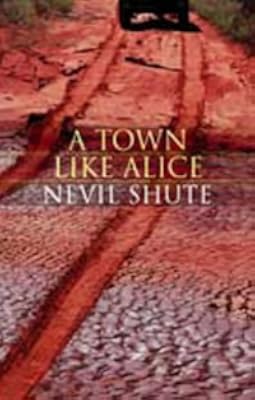
Nevil Shute was the author of the first 'grown up' book I ever read - A Town Like Alice when I was nine. My love for that book is eternal, and has been added by a love of On The Beach, but I haven't really been able to get into some of Shute's other books.
Until this one. It tells the story of Theodore Honey; a quiet, unsociable man, widowed during the second world war and trying to bring up a young daughter. He's quite brilliant - not only in the area of fatigue in planes (which is the focus of the book) - but also in 'stranger' areas, such as 'spirit reading'. When he is sent off from show more England to Canada to examine a wreckage of a Reindeer plane, he discovers that he is flying in a rather unsafe version of the same plane. So he decides to ground it. Dramatically.
Nevil Shute's books, although technical, are all about the characters. Honey is joined by a strong group - from his young daughter, to the pilot of the plane, to the young air hostess and aging actress who both foster quiet affection from the man. The story is told by Dr. Dennis Scott - Honey's boss - which is one of the techniques I love about Nevil Shute books.
Although this wasn't a thriller or action novel by any stretch of the imagination - I found myself holding my breath during important meetings, and at key moments. I stayed up way later than intended to get it finished. show less
Nevil Shute was the author of the first 'grown up' book I ever read - A Town Like Alice when I was nine. My love for that book is eternal, and has been added by a love of On The Beach, but I haven't really been able to get into some of Shute's other books.
Until this one. It tells the story of Theodore Honey; a quiet, unsociable man, widowed during the second world war and trying to bring up a young daughter. He's quite brilliant - not only in the area of fatigue in planes (which is the focus of the book) - but also in 'stranger' areas, such as 'spirit reading'. When he is sent off from show more England to Canada to examine a wreckage of a Reindeer plane, he discovers that he is flying in a rather unsafe version of the same plane. So he decides to ground it. Dramatically.
Nevil Shute's books, although technical, are all about the characters. Honey is joined by a strong group - from his young daughter, to the pilot of the plane, to the young air hostess and aging actress who both foster quiet affection from the man. The story is told by Dr. Dennis Scott - Honey's boss - which is one of the techniques I love about Nevil Shute books.
Although this wasn't a thriller or action novel by any stretch of the imagination - I found myself holding my breath during important meetings, and at key moments. I stayed up way later than intended to get it finished. show less
A lot of technical stuff about airplanes mixed with lots of human interest. Shute often writes about airplanes, and it's good knowing that he really knows about them.
BTW, Feminists should probably give this one a miss. In 1948 it seemed to make sense that a brilliant scientist needed a woman to keep his house clean and bring up his daughter properly.
BTW, Feminists should probably give this one a miss. In 1948 it seemed to make sense that a brilliant scientist needed a woman to keep his house clean and bring up his daughter properly.
Members
- Recently Added By
Lists

Anthony Burgess 99 Post War Novels
99 works; 7 members

Favorite Childhood Books
1,651 works; 519 members
Author Information

56+ Works 20,327 Members
Nevil Shute Norway was born in Ealing, London, England, on January, 17 1899. At the age of 11, Norway played truant from his first preparatory school in Hammersmith. After he was discovered, he was sent to the Dragon School, Oxford, and from there to Shrewsbury. He was on holiday in Dublin at the time of the Easter rising of 1916 and acted as an show more ambulance driver, winning a commendation for gallant conduct. He then entered the Royal Military Academy, intending to be commissioned into the Royal Flying Corps, but a bad stammer led to his being failed at his final medical examination and returned to civil life. The last few months of the war were spent on home service as a private in the Suffolk Regiment. In 1919, Norway went to Balliol College, Oxford, where he took a third class honors course in engineering science in 1922. During the vacations he worked, unpaid, as an aeronautical engineer, for the Aircraft Manufacturing Company at Hendon, and then for Geoffrey de Havilland's own firm, which he joined as an employee upon finishing at Oxford. He learned to fly and gained experience as a test observer. During the evenings he diligently wrote novels and short stories unperturbed by rejection slips from publishers. In 1924 Norway took the post of Chief Calculator to the Airship Guarantee Company, to work on the construction of the R100. In 1929 he became Deputy Chief Engineer under Barnes Wallis, and in the following year he flew to and from Canada in the R100. After the end of the airship project, jobs were hard to come by due to the depression so Shute started an aircraft manufacturing company, Airspeed Limited. This company was ultimately successful and built a large number of aircraft during the war. Shute remained joint managing director until 1938. When the business became too routine, he decided to get out of the rut and live by writing. The de Havillands, the first aviation job Shute had ever had, wound up buying Airspeed Ltd. He had by then enjoyed some success as a novelist and had sold the film rights of Lonely Road and Ruined City. At the outbreak of war in 1939, Norway joined the Royal Naval Volunteer Reserve as a Sub-Lieutenant in the Miscellaneous Weapons Department. Rising to Lieutenant Commander, he found experimenting with secret weapons a job after his own heart. But he found that his growing celebrity as a writer caused him to be in the Normandy landings on 6th June 1944, for the Ministry of Information, and to be sent to Burma as a correspondent in 1945. He entered Rangoon with the 15th Corps from Arakan. Soon after demobilisation in 1945 he emigrated to Australia and made his home in Langwarrin, Victoria. His output of novels, which began with Marazan (1926) continued to the end. Shute was one of the leading aeronautical engineers in Britain during the 30's and a fellow of the Royal Aeronautical Society. When he began writing in the 20's, he feared that a reputation as a writer of fiction might harm his engineering career. For this reason he published under his two Christian names, Nevil Shute and engineered under his "real" name, Nevil S. Norway. Nevil Shute Norway died in Melbourne on January, 12 1960. (Bowker Author Biography) show less
Awards and Honors
Distinctions
Notable Lists
Series
Belongs to Publisher Series
Pan Books (X224)
Work Relationships
Is contained in
Has the adaptation
Common Knowledge
- Canonical title
- No Highway
- Original title
- No Highway
- Original publication date
- 1948
- People/Characters
- Theodore Honey
- Important places
- Gander, Newfoundland and Labrador, Canada
- Related movies
- No Highway (1951 | IMDb)
- Epigraph
- … Therefore, go forth, companion: when you find
No highway more, no track, all being blind,
The way to go shall glimmer in the mind.
Though you have conquered Earth and charted Sea
And planne... (show all)d the courses of all Stars that be,
Adventure on, more wonders are in thee.
Adventure on, for from the littlest clue
Has come whatever worth man ever knew;
The next to lighten all men may be you...
JOHN MASEFIELD - First words
- When I was put in charge of the Structural Department of the Royal Aircraft Establishment at Farnborough, I was thirty-four years old.
- Last words
- (Click to show. Warning: May contain spoilers.)'It'ld be better than sitting worrying about the Assegai.'
- Original language
- English
Classifications
Statistics
- Members
- 649
- Popularity
- 44,788
- Reviews
- 21
- Rating
- (3.85)
- Languages
- 6 — Danish, Dutch, English, Italian, Norwegian (Bokmål), Swedish
- Media
- Paper, Audiobook, Ebook
- ISBNs
- 26
- ASINs
- 32