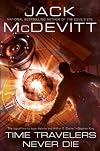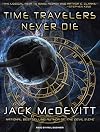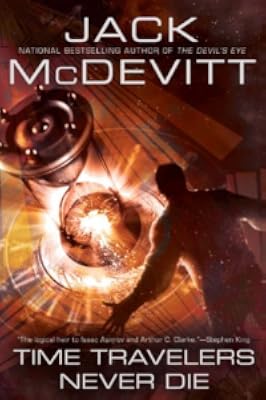
Time Travelers Never Die
by Jack McDevitt
On This Page
Description
When physicist Michael Shelborne mysteriously vanishes, his son Shel discovers that he had constructed a time travel device. Fearing his father may be stranded in time-or worse-Shel enlists Dave Dryden, a linguist, to accompany him on the rescue mission.Their journey through history takes them from the Enlightenment of Renaissance Italy through the American Wild West to the civil rights upheavals of the twentieth century. Along the way, they encounter a diverse cast of historical greats, show more sometimes in unexpected situations. Yet the elder Shelborne remains elusive.And then Shel violates his agreement with Dave not to visit the future. There he makes a devastating discovery that sends him fleeing back through the ages and changes his life forever. show lessTags
Recommendations




















Member Reviews
Jack McDevitt's work is clever. It addresses issues of paradox rather originally, as far as I've seen, and offers some insight into an eternal view of history.
However, the work is plagued by a number of errors that, I imagine, only experts could discover. His Greek transliteration is poor, writing iotai as Ys and upsila as Is, and ignoring rough breathings here or soft breathings there. His grasp of Greco-Roman culture, especially religion, is tenuous at best: Jupiter is the Roman king of the gods, a name which would not be applied in Alexandria (officially or otherwise) for at least seventy years after the visit by Shel and Dave in the story... and he certainly would not be associated with Hera, the Greek queen of the gods (whose Roman show more counterpart was, rather, Juno). Further, prayer in ancient culture, certainly not at the time of the Trojan War, never involved kneeling or bowing before the gods, and a classicist like the character Aspasia would have known that.
McDevitt's view of religion in general is remarkably one-sided, only offering a small potential that any good could come of it at all, and then only if religion were libertarian politically - a small group led by a single individual. By implication, any religion that suggested authority was authoritarian, corrupt, and damaging to society. His history of religion, too, has holes large enough to drive a Buick through.
I am not an expert in every historical era and political issue that McDevitt addresses in this ambitious work, but of those things I am knowledgeable about, McDevitt's attempts are sloppy at best and flatly ignorant at worst.
On top of all of that, McDevitt's - as I said earlier, rather original - approach to paradox hinges upon a significant flaw of reasoning: McDevitt indicates that any event which is KNOWN in history cannot be altered. By that measure, someone completely ignorant of history, or someone misled about the details of history, could travel to any time and do anything at all - including things that would be paradoxical for a more knowledgeable person.
My final complaint: the encounter with Socrates is notable, not because of its moving speeches or discussion, but because it is markedly absent from the problems that plague Shel and Dave throughout the book: no one knows exactly when Hamlet was first produced, or what exact date Luther posted the Ninety-Five Theses, but Dave can show up at Socrates' death with precise certainty? The death of a man some scholars believe never to have existed? It is surprising, at least.
This book had a great deal of potential as I went into reading it. It got my hopes up, that someone might have done a grand time-traveling adventure through history with precision alongside a riveting original tale. But the simple errors that riddled the book compelled me to read the last ten chapters in one sitting, just to get it over with. show less
However, the work is plagued by a number of errors that, I imagine, only experts could discover. His Greek transliteration is poor, writing iotai as Ys and upsila as Is, and ignoring rough breathings here or soft breathings there. His grasp of Greco-Roman culture, especially religion, is tenuous at best: Jupiter is the Roman king of the gods, a name which would not be applied in Alexandria (officially or otherwise) for at least seventy years after the visit by Shel and Dave in the story... and he certainly would not be associated with Hera, the Greek queen of the gods (whose Roman show more counterpart was, rather, Juno). Further, prayer in ancient culture, certainly not at the time of the Trojan War, never involved kneeling or bowing before the gods, and a classicist like the character Aspasia would have known that.
McDevitt's view of religion in general is remarkably one-sided, only offering a small potential that any good could come of it at all, and then only if religion were libertarian politically - a small group led by a single individual. By implication, any religion that suggested authority was authoritarian, corrupt, and damaging to society. His history of religion, too, has holes large enough to drive a Buick through.
I am not an expert in every historical era and political issue that McDevitt addresses in this ambitious work, but of those things I am knowledgeable about, McDevitt's attempts are sloppy at best and flatly ignorant at worst.
On top of all of that, McDevitt's - as I said earlier, rather original - approach to paradox hinges upon a significant flaw of reasoning: McDevitt indicates that any event which is KNOWN in history cannot be altered. By that measure, someone completely ignorant of history, or someone misled about the details of history, could travel to any time and do anything at all - including things that would be paradoxical for a more knowledgeable person.
My final complaint: the encounter with Socrates is notable, not because of its moving speeches or discussion, but because it is markedly absent from the problems that plague Shel and Dave throughout the book: no one knows exactly when Hamlet was first produced, or what exact date Luther posted the Ninety-Five Theses, but Dave can show up at Socrates' death with precise certainty? The death of a man some scholars believe never to have existed? It is surprising, at least.
This book had a great deal of potential as I went into reading it. It got my hopes up, that someone might have done a grand time-traveling adventure through history with precision alongside a riveting original tale. But the simple errors that riddled the book compelled me to read the last ten chapters in one sitting, just to get it over with. show less
This book falls squarely into one of my greatest areas of interest--time travel. I think perhaps I watched Back to the Future too many times growing up, but not nearly as often as I watched Indiana Jones. Though I don’t seek out stories with Indy, I seek out stories with time travel quite frequently. Many of my fantasies and daydreams involve time travel (okay Indiana Jones too): Where and when I would travel? Who I would meet? How would I affect a change on history? A great icebreaker is to ask what person/band from the past would you like to see perform live? The resulting answer can lead to hours of conversation. Trust me.
Actually, I started this book on audio in my car sometime last summer and didn’t like the reader, so I show more stopped after just one disc. A few months later my dad bought the book (though I hadn’t mentioned it to him) and I recently borrowed it from him after he had finished reading it. Before I had begun the book, we got into a conversation about time travel (which is normal for us) and he used an example from the book about the father’s assistant having a heart attack, which was Time/The Universe’s way of preventing her from creating a paradox.
I have this theory about time travel, in which paradoxes cannot exist because if a person goes back in time, whatever he does has already happened by the time he steps into his time machine (or uses whatever mechanism) to travel back in time. In other words, his actions in the past merely fulfil history; they cannot skew it. A great example of this is in the first Terminator movie: Kyle Reese’s best friend is John Connor and Connor sends Reese back in time to protect his mother before he is born. This has to happen. It could not be anyone other than Reese. Reese has to be the one to protect Sarah Connor because he has to conceive John Connor with her in the past. Had he not done so, John Connor would never have existed. Reese fulfilled history in Terminator by traveling back in time. Jack McDevitt appears to subscribe to a similar theory of time travel in this book, though the characters do not initially understand this paradox-preventing view of time travel.
Shel and Dave are the two main characters. Shel’s dad has disappeared and Shel soon learns that he has gotten lost somewhere (somewhen?) in time. So they set out looking for Shel’s dad using the device of his design. The device is small, looking like a Q-pod, which I assume is similar to an iPod. No bulky TARDIS or DeLorean for these guys. This makes it easier to hide their method of travel from the people they encounter on their travels, which proves very very handy on some occasions. (The encounter with Cesare Borgia comes to mind.)
At some point the characters start just having fun with it. They can travel anywhere at any time and they take advantage of this, usually together, but occasionally on their own. At one point they settle down in their seats at the Globe Theatre and chat with the fellow sitting next to them and the play starts. Hamlet. Opening night. I shut the book at this moment and emailed my dad. I was just so jealous of Shel and Dave that I had to stop reading for a bit. Daddy told me that he had a different reaction: he just got more and more eager, his mind racing to what he would do if he had access to such an extraordinary device. Of course, this is what I’ve been doing all my life, but I remained in wonder of the descriptions in this book. There’s a scene at the death of Socrates which actually brought a tear or two to my eyes. I read Plato’s dialogue on the matter in college but I guarantee you I was never so moved by it as I was by the same story here. (Which is slightly blasphemous, I admit.)
As should be obvious by now, I highly recommend this book. It’s not only clever, it’s very well written and just a plain old damn good book. Read it! show less
Actually, I started this book on audio in my car sometime last summer and didn’t like the reader, so I show more stopped after just one disc. A few months later my dad bought the book (though I hadn’t mentioned it to him) and I recently borrowed it from him after he had finished reading it. Before I had begun the book, we got into a conversation about time travel (which is normal for us) and he used an example from the book about the father’s assistant having a heart attack, which was Time/The Universe’s way of preventing her from creating a paradox.
I have this theory about time travel, in which paradoxes cannot exist because if a person goes back in time, whatever he does has already happened by the time he steps into his time machine (or uses whatever mechanism) to travel back in time. In other words, his actions in the past merely fulfil history; they cannot skew it. A great example of this is in the first Terminator movie: Kyle Reese’s best friend is John Connor and Connor sends Reese back in time to protect his mother before he is born. This has to happen. It could not be anyone other than Reese. Reese has to be the one to protect Sarah Connor because he has to conceive John Connor with her in the past. Had he not done so, John Connor would never have existed. Reese fulfilled history in Terminator by traveling back in time. Jack McDevitt appears to subscribe to a similar theory of time travel in this book, though the characters do not initially understand this paradox-preventing view of time travel.
Shel and Dave are the two main characters. Shel’s dad has disappeared and Shel soon learns that he has gotten lost somewhere (somewhen?) in time. So they set out looking for Shel’s dad using the device of his design. The device is small, looking like a Q-pod, which I assume is similar to an iPod. No bulky TARDIS or DeLorean for these guys. This makes it easier to hide their method of travel from the people they encounter on their travels, which proves very very handy on some occasions. (The encounter with Cesare Borgia comes to mind.)
At some point the characters start just having fun with it. They can travel anywhere at any time and they take advantage of this, usually together, but occasionally on their own. At one point they settle down in their seats at the Globe Theatre and chat with the fellow sitting next to them and the play starts. Hamlet. Opening night. I shut the book at this moment and emailed my dad. I was just so jealous of Shel and Dave that I had to stop reading for a bit. Daddy told me that he had a different reaction: he just got more and more eager, his mind racing to what he would do if he had access to such an extraordinary device. Of course, this is what I’ve been doing all my life, but I remained in wonder of the descriptions in this book. There’s a scene at the death of Socrates which actually brought a tear or two to my eyes. I read Plato’s dialogue on the matter in college but I guarantee you I was never so moved by it as I was by the same story here. (Which is slightly blasphemous, I admit.)
As should be obvious by now, I highly recommend this book. It’s not only clever, it’s very well written and just a plain old damn good book. Read it! show less
Time travel is a tricky subject. There are so many variations on the theme, with so many potential difficulties, that it can be challenging to present it in a truly believable way. Now, I'm the sort of reader who's willing to set nitpicky details aside if the story is engaging enough, which almost certainly plays into my feelings on this book.
'Time Travelers' tells the story of buddies Shel and Dave as they journey through the ages. At first on a quest to locate Shel's father, eventually it turns into an eon-spanning vacation of sorts, with stops around the world. It's quite fun joining them as they attend numerous historical events and visit with people like Aristotle and Voltaire. A few mind-bendy twists, the angles that time travel show more is so good at providing, occur later in the book, adding to the fun. McDevitt's writing style is, as always, warm and engaging, very reader-friendly. Its safe to say that, if not particularly intellectually stimulating, its a quick, easy and enjoyable read.
I suspect many of the time travel details would fall apart under close scrutiny. If you're sensitive to such things, I don't think this book will be your cup of tea. But if you're mostly just interested in a fun story about likeable individuals having fantastic experiences that the rest of us can only dream about, this book fills that niche neatly. show less
'Time Travelers' tells the story of buddies Shel and Dave as they journey through the ages. At first on a quest to locate Shel's father, eventually it turns into an eon-spanning vacation of sorts, with stops around the world. It's quite fun joining them as they attend numerous historical events and visit with people like Aristotle and Voltaire. A few mind-bendy twists, the angles that time travel show more is so good at providing, occur later in the book, adding to the fun. McDevitt's writing style is, as always, warm and engaging, very reader-friendly. Its safe to say that, if not particularly intellectually stimulating, its a quick, easy and enjoyable read.
I suspect many of the time travel details would fall apart under close scrutiny. If you're sensitive to such things, I don't think this book will be your cup of tea. But if you're mostly just interested in a fun story about likeable individuals having fantastic experiences that the rest of us can only dream about, this book fills that niche neatly. show less
Probably the most boring and/or idiotic time travel book ever written.
Dave and Shel are time travelling buddies... until Shel mysteriously dies/disappears. So then we're taken back in the story to how these two dudes end up time travelling. Shel has a physicist dad (Michael) goes missing. Shel investigates, and while investigating is lucky enough to have his father leave him time travelling devices that looks like iPods ... I mean "qPods"... Dad apparently disappeared doing the time travel thing and now we need to go find him. The first chunk of the novel is Shel enlisting his buddy Dave (who can speak multiple languages, and is therefore useful) to frat-party around the timeline "looking" for Shel's father. Then, with that mystery show more solved, they frat party around the time line some more. Oh but wait! We're back to Shel's death. So we do some time line kerfluffling with that for a bit. Stuff happens. The end.
I was so bored with this novel. Here's a book about TIME TRAVEL! Awesome! No, Dave and Shel just make a random list of shit they want to see, and they zap about the time line watching. No interesting information happens, no new "facts" come to light. McDevitt could have had fun, could have at least pulled some alternative theories into some of the things that happen, but he doesn't. Everything that we think might have conventionally happened did... just like we thought they did. It's like he was remembering bits from his high school world history book and just strung them together in some sort of weak-sauce story. The only interaction with history was a B-story subplot that's never really developed. I'm not even sure why it's in the book.
The time travel paradox was just weird. If something was known to the travellers to have happened, they could not change it. So if you knew that something happened, went back to change it, you have a heart attack. It's just not allowed ("Cardiac principle"... really). So then these numbskulls go Google anything they're trying to figure out (you know, like going to Google to see if it played out how they were hoping, which is stupid, because then they're STUCK with that timeline). Alternatively, I suppose that means that some ignoramus could go back in time and change anything. So, really, Shel could know something, have Dave go back in time and change it... but they never do that either. Something interesting could have happened, but apparently that might have not been allowed according to the physics in this book's universe, too.
These little iPod time travelling devices not only move one through time, but through space as well, so, say someone encounters a locked door, they can just set their time travelley dealio to 5 minutes ago, on the other side of the door and unlock it for themselves in the future. Yeehaw. And yet? Still no fun!
McDevitt gets a bunch of little things wrong (or at least, he got a lot of little things wrong about stuff I know more about, there is plenty of history I'm ignorant about and I'm sure he either got that perfect or didn't)... and he was inconsistent. Shel and Dave will zap themselves silly looking for something historical that's not nailed down and never catch it, but then zap themselves *perfectly* to another event that is also not known, too. It's just weird. Easy plot device, I suppose. It feels like cheating, here, though.
And we won't into how they are waltzing all over the past (from ancient Alexandria and forward) showing off their Blackberries Gooseberries and time travelling iPods qPods to every single person they meet. They even took freakin' pictures with everyone. W. T. F. So stupid. So damned stupid.
They never covered the distant past (dood, dinosaurs!!!) and they barely touched on the future. So again, I feel cheated with anything interesting.
The only smart thing either of them did was make some money by either playing the ponies (zapping to the future to discover the results) or going to the past to buy artwork before it's famous.
I have to say, I'm also surprised at the publication date of this novel. It felt old and dated. Maybe it's the lack of women as anything but relationship/sex material... maybe it's the frat boy attitude... I don't know, it's just felt a lot older than it is.
Big disappointment. It wasn't terrible, it was just dumb. show less
Dave and Shel are time travelling buddies... until Shel mysteriously dies/disappears. So then we're taken back in the story to how these two dudes end up time travelling. Shel has a physicist dad (Michael) goes missing. Shel investigates, and while investigating is lucky enough to have his father leave him time travelling devices that looks like iPods ... I mean "qPods"... Dad apparently disappeared doing the time travel thing and now we need to go find him. The first chunk of the novel is Shel enlisting his buddy Dave (who can speak multiple languages, and is therefore useful) to frat-party around the timeline "looking" for Shel's father. Then, with that mystery show more solved, they frat party around the time line some more. Oh but wait! We're back to Shel's death. So we do some time line kerfluffling with that for a bit. Stuff happens. The end.
I was so bored with this novel. Here's a book about TIME TRAVEL! Awesome! No, Dave and Shel just make a random list of shit they want to see, and they zap about the time line watching. No interesting information happens, no new "facts" come to light. McDevitt could have had fun, could have at least pulled some alternative theories into some of the things that happen, but he doesn't. Everything that we think might have conventionally happened did... just like we thought they did. It's like he was remembering bits from his high school world history book and just strung them together in some sort of weak-sauce story. The only interaction with history was a B-story subplot that's never really developed. I'm not even sure why it's in the book.
The time travel paradox was just weird. If something was known to the travellers to have happened, they could not change it. So if you knew that something happened, went back to change it, you have a heart attack. It's just not allowed ("Cardiac principle"... really). So then these numbskulls go Google anything they're trying to figure out (you know, like going to Google to see if it played out how they were hoping, which is stupid, because then they're STUCK with that timeline). Alternatively, I suppose that means that some ignoramus could go back in time and change anything. So, really, Shel could know something, have Dave go back in time and change it... but they never do that either. Something interesting could have happened, but apparently that might have not been allowed according to the physics in this book's universe, too.
These little iPod time travelling devices not only move one through time, but through space as well, so, say someone encounters a locked door, they can just set their time travelley dealio to 5 minutes ago, on the other side of the door and unlock it for themselves in the future. Yeehaw. And yet? Still no fun!
McDevitt gets a bunch of little things wrong (or at least, he got a lot of little things wrong about stuff I know more about, there is plenty of history I'm ignorant about and I'm sure he either got that perfect or didn't)... and he was inconsistent. Shel and Dave will zap themselves silly looking for something historical that's not nailed down and never catch it, but then zap themselves *perfectly* to another event that is also not known, too. It's just weird. Easy plot device, I suppose. It feels like cheating, here, though.
And we won't into how they are waltzing all over the past (from ancient Alexandria and forward) showing off their Blackberries Gooseberries and time travelling iPods qPods to every single person they meet. They even took freakin' pictures with everyone. W. T. F. So stupid. So damned stupid.
They never covered the distant past (dood, dinosaurs!!!) and they barely touched on the future. So again, I feel cheated with anything interesting.
The only smart thing either of them did was make some money by either playing the ponies (zapping to the future to discover the results) or going to the past to buy artwork before it's famous.
I have to say, I'm also surprised at the publication date of this novel. It felt old and dated. Maybe it's the lack of women as anything but relationship/sex material... maybe it's the frat boy attitude... I don't know, it's just felt a lot older than it is.
Big disappointment. It wasn't terrible, it was just dumb. show less
Probably the most boring and/or idiotic time travel book ever written.
Dave and Shel are time travelling buddies... until Shel mysteriously dies/disappears. So then we're taken back in the story to how these two dudes end up time travelling. Shel has a physicist dad (Michael) goes missing. Shel investigates, and while investigating is lucky enough to have his father leave him time travelling devices that looks like iPods ... I mean "qPods"... Dad apparently disappeared doing the time travel thing and now we need to go find him. The first chunk of the novel is Shel enlisting his buddy Dave (who can speak multiple languages, and is therefore useful) to frat-party around the timeline "looking" for Shel's father. Then, with that mystery show more solved, they frat party around the time line some more. Oh but wait! We're back to Shel's death. So we do some time line kerfluffling with that for a bit. Stuff happens. The end.
I was so bored with this novel. Here's a book about TIME TRAVEL! Awesome! No, Dave and Shel just make a random list of shit they want to see, and they zap about the time line watching. No interesting information happens, no new "facts" come to light. McDevitt could have had fun, could have at least pulled some alternative theories into some of the things that happen, but he doesn't. Everything that we think might have conventionally happened did... just like we thought they did. It's like he was remembering bits from his high school world history book and just strung them together in some sort of weak-sauce story. The only interaction with history was a B-story subplot that's never really developed. I'm not even sure why it's in the book.
The time travel paradox was just weird. If something was known to the travellers to have happened, they could not change it. So if you knew that something happened, went back to change it, you have a heart attack. It's just not allowed ("Cardiac principle"... really). So then these numbskulls go Google anything they're trying to figure out (you know, like going to Google to see if it played out how they were hoping, which is stupid, because then they're STUCK with that timeline). Alternatively, I suppose that means that some ignoramus could go back in time and change anything. So, really, Shel could know something, have Dave go back in time and change it... but they never do that either. Something interesting could have happened, but apparently that might have not been allowed according to the physics in this book's universe, too.
These little iPod time travelling devices not only move one through time, but through space as well, so, say someone encounters a locked door, they can just set their time travelley dealio to 5 minutes ago, on the other side of the door and unlock it for themselves in the future. Yeehaw. And yet? Still no fun!
McDevitt gets a bunch of little things wrong (or at least, he got a lot of little things wrong about stuff I know more about, there is plenty of history I'm ignorant about and I'm sure he either got that perfect or didn't)... and he was inconsistent. Shel and Dave will zap themselves silly looking for something historical that's not nailed down and never catch it, but then zap themselves *perfectly* to another event that is also not known, too. It's just weird. Easy plot device, I suppose. It feels like cheating, here, though.
And we won't into how they are waltzing all over the past (from ancient Alexandria and forward) showing off their Blackberries Gooseberries and time travelling iPods qPods to every single person they meet. They even took freakin' pictures with everyone. W. T. F. So stupid. So damned stupid.
They never covered the distant past (dood, dinosaurs!!!) and they barely touched on the future. So again, I feel cheated with anything interesting.
The only smart thing either of them did was make some money by either playing the ponies (zapping to the future to discover the results) or going to the past to buy artwork before it's famous.
I have to say, I'm also surprised at the publication date of this novel. It felt old and dated. Maybe it's the lack of women as anything but relationship/sex material... maybe it's the frat boy attitude... I don't know, it's just felt a lot older than it is.
Big disappointment. It wasn't terrible, it was just dumb. show less
Dave and Shel are time travelling buddies... until Shel mysteriously dies/disappears. So then we're taken back in the story to how these two dudes end up time travelling. Shel has a physicist dad (Michael) goes missing. Shel investigates, and while investigating is lucky enough to have his father leave him time travelling devices that looks like iPods ... I mean "qPods"... Dad apparently disappeared doing the time travel thing and now we need to go find him. The first chunk of the novel is Shel enlisting his buddy Dave (who can speak multiple languages, and is therefore useful) to frat-party around the timeline "looking" for Shel's father. Then, with that mystery show more solved, they frat party around the time line some more. Oh but wait! We're back to Shel's death. So we do some time line kerfluffling with that for a bit. Stuff happens. The end.
I was so bored with this novel. Here's a book about TIME TRAVEL! Awesome! No, Dave and Shel just make a random list of shit they want to see, and they zap about the time line watching. No interesting information happens, no new "facts" come to light. McDevitt could have had fun, could have at least pulled some alternative theories into some of the things that happen, but he doesn't. Everything that we think might have conventionally happened did... just like we thought they did. It's like he was remembering bits from his high school world history book and just strung them together in some sort of weak-sauce story. The only interaction with history was a B-story subplot that's never really developed. I'm not even sure why it's in the book.
The time travel paradox was just weird. If something was known to the travellers to have happened, they could not change it. So if you knew that something happened, went back to change it, you have a heart attack. It's just not allowed ("Cardiac principle"... really). So then these numbskulls go Google anything they're trying to figure out (you know, like going to Google to see if it played out how they were hoping, which is stupid, because then they're STUCK with that timeline). Alternatively, I suppose that means that some ignoramus could go back in time and change anything. So, really, Shel could know something, have Dave go back in time and change it... but they never do that either. Something interesting could have happened, but apparently that might have not been allowed according to the physics in this book's universe, too.
These little iPod time travelling devices not only move one through time, but through space as well, so, say someone encounters a locked door, they can just set their time travelley dealio to 5 minutes ago, on the other side of the door and unlock it for themselves in the future. Yeehaw. And yet? Still no fun!
McDevitt gets a bunch of little things wrong (or at least, he got a lot of little things wrong about stuff I know more about, there is plenty of history I'm ignorant about and I'm sure he either got that perfect or didn't)... and he was inconsistent. Shel and Dave will zap themselves silly looking for something historical that's not nailed down and never catch it, but then zap themselves *perfectly* to another event that is also not known, too. It's just weird. Easy plot device, I suppose. It feels like cheating, here, though.
And we won't into how they are waltzing all over the past (from ancient Alexandria and forward) showing off their Blackberries Gooseberries and time travelling iPods qPods to every single person they meet. They even took freakin' pictures with everyone. W. T. F. So stupid. So damned stupid.
They never covered the distant past (dood, dinosaurs!!!) and they barely touched on the future. So again, I feel cheated with anything interesting.
The only smart thing either of them did was make some money by either playing the ponies (zapping to the future to discover the results) or going to the past to buy artwork before it's famous.
I have to say, I'm also surprised at the publication date of this novel. It felt old and dated. Maybe it's the lack of women as anything but relationship/sex material... maybe it's the frat boy attitude... I don't know, it's just felt a lot older than it is.
Big disappointment. It wasn't terrible, it was just dumb. show less
Science fiction is a genre I’ve fall out with, not intentionally, it somehow just happened over the years. Lately I’ve wanted to get reacquainted and this was my first foray back into science fiction.
After Michael Shelbourne, a well-known physicist, goes missing, his son Shel finds out he developed and successfully used a time machine. Concerned his father may be stuck in another time without means to get home, he convinces his friend Dave Dryden, to help him search for his father.
The story was good enough but it felt sort of, well, it was a lot less complicated than I thought the story would be especially for a time travel story. His father goes missing and Shel, rightfully distraught, goes to find him and along the way there are show more several interesting adventures but it felt like there was no urgency to the story. Shel and Dave do land in a few messes which is expected when time traveling but they all too easily get out of it simply by setting one of the devices to go back and put together a rescue. Poof, they get out of trouble, no harm done. There is a time paradox that comes into play but neither Shel nor Dave seemed all that concerned about it so I wasn’t either. However, I wanted the whole time travel aspect to be more complicated but all of it started to feel a little vacationy to me --- the two take trips to party with Voltaire and watch plays in Ancient Greece and while it’s fun, there just doesn’t feel like there’s enough conflict.
This isn’t a negative review though. McDevitt is a fun writer and while this book wasn’t a total score for me, it made me wonder about some of his other books so I think I’ll be giving him another opportunity to impress me. show less
After Michael Shelbourne, a well-known physicist, goes missing, his son Shel finds out he developed and successfully used a time machine. Concerned his father may be stuck in another time without means to get home, he convinces his friend Dave Dryden, to help him search for his father.
The story was good enough but it felt sort of, well, it was a lot less complicated than I thought the story would be especially for a time travel story. His father goes missing and Shel, rightfully distraught, goes to find him and along the way there are show more several interesting adventures but it felt like there was no urgency to the story. Shel and Dave do land in a few messes which is expected when time traveling but they all too easily get out of it simply by setting one of the devices to go back and put together a rescue. Poof, they get out of trouble, no harm done. There is a time paradox that comes into play but neither Shel nor Dave seemed all that concerned about it so I wasn’t either. However, I wanted the whole time travel aspect to be more complicated but all of it started to feel a little vacationy to me --- the two take trips to party with Voltaire and watch plays in Ancient Greece and while it’s fun, there just doesn’t feel like there’s enough conflict.
This isn’t a negative review though. McDevitt is a fun writer and while this book wasn’t a total score for me, it made me wonder about some of his other books so I think I’ll be giving him another opportunity to impress me. show less
When I read the collection of McDevitt's short fiction a week ago one of my favorite stories in it was the original novella 'Time Travelers Never Die' which closed the book. At least two of the stories from that collection became novels. I figured what the heck, lets read the novel now while the story is fresh and I'll see what he does with it. Well, at first this is like one of those times where you loved the book and went to see the movie, and it wasn't bad, but why did they change that part and why was all of that stuck in and why did ... OK, you get the idea. In short, the novella was really good and twisty - 4 stars for sure. The novel, well it begins the same and pretty much ends the same but the story got changed. There were some show more additions I enjoyed, parts that were mentioned in passing were shown in more depth, backstory fleshed out, technology changes accounted for, much more time travel such as traveling in time to the civil rights movement and and the Selma march led by John Lewis ... we visit notable people in history, and baseball games. That wasn't in the 1996 novella version but was added to the 2009 novel. In fact a lot of extra time trips are added. Eventually I was drawn into this version of the mystery which puts a different spin on events. It was interesting, but I think it lacked the tight intrigue of the original story. Nevertheless I increasingly warmed to the expanded story as I read along.
So it was weird reading this - I knew how it was going to end (unless of course the author changed it) and the journey to get there was different, yet pretty good. In summary I liked the novella version a bit better. It kept the reader off balance and was a good tale. I can't tell how I'd react if I read the novel first. I think I'd love it. I'd recommend it to history fans who want a little science fiction. This is science fiction 'lite', a bit of fun. I would guess Dr. Who fans might love this. My one gripe is that I think the two main characters are pretty indistinguishable from each other much of the time.
Oh, the end. It does indeed get to that same place. But then a few more pages are tacked on to give us something to think about.
4 stars for the novella and the novel gets 3 1/2. show less
So it was weird reading this - I knew how it was going to end (unless of course the author changed it) and the journey to get there was different, yet pretty good. In summary I liked the novella version a bit better. It kept the reader off balance and was a good tale. I can't tell how I'd react if I read the novel first. I think I'd love it. I'd recommend it to history fans who want a little science fiction. This is science fiction 'lite', a bit of fun. I would guess Dr. Who fans might love this. My one gripe is that I think the two main characters are pretty indistinguishable from each other much of the time.
Oh, the end. It does indeed get to that same place. But then a few more pages are tacked on to give us something to think about.
4 stars for the novella and the novel gets 3 1/2. show less
Members
- Recently Added By
Published Reviews
ThingScore 75
Jack McDevitt's latest novel titled Time Travelers Never Die does not fall into the author's usual future space travel adventure. An expansion of his earlier short story which appeared in Asimov's under the same title, this novel gives the reader sneak peeks of amazing people, places and times in history - and probable future. But the heart of the tale is an examination of human behavior in show more the grasp of such technology.
Adrian "Shel" Shelborne is desperate to find his missing father, Michael Shelborne, M.A., PhD., and soon learns of secret time travel devises which belonged to his father. With close friend Dave Dryden, who conveniently yet necessarily happens to be a linguist - you can't go to strange lands without knowing the language, the two men search across time for the missing traveler. But given the vast expanse of time from the beginning of human existence to the immeasurable future, the difficulty of their task is appreciated.
Their journey opens up an endless world of possibilities, and this is where McDevitt inevitably draws in the reader by stimulating the same curiosity as the characters they've come to know. Like the heroes, one can't help but wonder where and when you would go. Would you be as adventurous as Shel and Dave? Would you witness, and in some cases participate in some of the most famous moments in history? Or would you merely hide in the shadows as a voyeur of time? Would you attempt to alter history if you could?
The usual time travel paradoxes of changing the past to alter the future are mentioned in this book, but that fear is usually squelched by the thrill of the ride. Trepidations aside, imagine the potential if one could know which stocks would soar, what team would prevail in the big game or what numbers would win the lottery. Or even more tantalizing, would you want to know your own fate? After all, time travelers are not immortal - right? This is the mystery in which McDevitt addresses with skilled speculation - and draws his title from.
Though Time Travelers Never Die does not fit the mold some are accustomed from Jack McDevitt, it may be one of his most thought provoking works in some time. One can wonder if Adrian Shelborne gets the same attention as some of McDevitt's other serialized characters such as Priscilla Hutchins or Alex Benedict. Only time will tell. show less
Adrian "Shel" Shelborne is desperate to find his missing father, Michael Shelborne, M.A., PhD., and soon learns of secret time travel devises which belonged to his father. With close friend Dave Dryden, who conveniently yet necessarily happens to be a linguist - you can't go to strange lands without knowing the language, the two men search across time for the missing traveler. But given the vast expanse of time from the beginning of human existence to the immeasurable future, the difficulty of their task is appreciated.
Their journey opens up an endless world of possibilities, and this is where McDevitt inevitably draws in the reader by stimulating the same curiosity as the characters they've come to know. Like the heroes, one can't help but wonder where and when you would go. Would you be as adventurous as Shel and Dave? Would you witness, and in some cases participate in some of the most famous moments in history? Or would you merely hide in the shadows as a voyeur of time? Would you attempt to alter history if you could?
The usual time travel paradoxes of changing the past to alter the future are mentioned in this book, but that fear is usually squelched by the thrill of the ride. Trepidations aside, imagine the potential if one could know which stocks would soar, what team would prevail in the big game or what numbers would win the lottery. Or even more tantalizing, would you want to know your own fate? After all, time travelers are not immortal - right? This is the mystery in which McDevitt addresses with skilled speculation - and draws his title from.
Though Time Travelers Never Die does not fit the mold some are accustomed from Jack McDevitt, it may be one of his most thought provoking works in some time. One can wonder if Adrian Shelborne gets the same attention as some of McDevitt's other serialized characters such as Priscilla Hutchins or Alex Benedict. Only time will tell. show less
added by PLReader
Lists

Best Time Travel Novels
165 works; 125 members
Author Information

131+ Works 20,954 Members
Jack McDevitt (born 1935) is an American science fiction author whose novels frequently deal with attempts to make contact with alien races, and with archaeology or xenoarchaeology. He attended La Salle University, where a short story of his won the annual Freshman Short Story Contest and was published in the school's literary magazine, Four show more Quarters. He received a Master's degree in literature from Wesleyan University in 1971. Before becoming a full-time author, he was an English teacher, naval officer, Philadelphia taxi driver, customs officer and motivational trainer. His first published story was The Emerson Effect in The Twilight Zone Magazine in 1981. Two years later, he published his first novel, The Hercules Text, which won the Philip K. Dick Special Award. He won the 2006 Nebula Award for Best Novel for Seeker, the UPC International Prize for his novella Ships in the Night in 1991, and the John W. Campbell Memorial Award for best SF novel for Omega in 2003. (Bowker Author Biography) show less
Some Editions
Series
Belongs to Publisher Series
Bastei Science Fiction-Special (24396)
Work Relationships
Is contained in
Common Knowledge
- Canonical title
- Time Travelers Never Die
- Original publication date
- 2009-11-03
- People/Characters
- Adrian Shelborne; Dave Dryden; Michael Dryden; Jerry Dryden
- Important places
- Philadelphia, Pennsylvania, USA; Arcetri, Italy; Selma, Alabama, USA; Library of Alexandria, Alexandria, Egypt
- Important events
- The Selma March
- Dedication
- For Barry Malzberg, for his encouragement
- First words
- They buried him on a gray morning, unseasonably cold, threatening rain.
- Last words
- (Click to show. Warning: May contain spoilers.)"Ari," she said, "I''m delighted to meet you."
- Blurbers
- Sawyer, Robert J.
Classifications
Statistics
- Members
- 665
- Popularity
- 43,559
- Reviews
- 34
- Rating
- (3.43)
- Languages
- English, German
- Media
- Paper, Audiobook, Ebook
- ISBNs
- 12
- ASINs
- 7