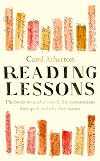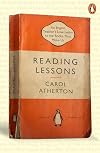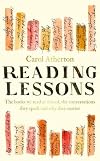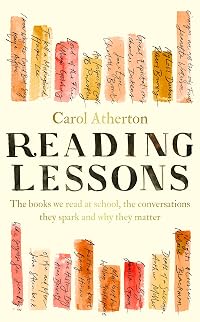
Reading Lessons: The Books We Read at School, the Conversations They Spark and Why They Matter
by Carol Atherton
On This Page
Description
How can a Victorian poem help teenagers understand YouTube misogyny? Can Jane Eyre encourage us to speak out? What can Lady Macbeth teach us about empathy? Should our expectations for our future be any greater than Pip's? And why is it so important to make space for these conversations in the first place? In a career spanning almost three decades, English teacher Carol Atherton has taught generations of students texts that will be familiar to many of us from our own schooldays. But while the show more staples of exam syllabuses and reading lists remain largely unchanged, their significance -- and their relevance -- evolves with each class, as it encounters them for the first time. Each chapter of Reading Lessons invites us to take a fresh look at these novels, plays and poems, revealing how they have shaped our beliefs, our values, and how we interact as a society. As she recalls her own development as a teacher, Atherton emphasizes the vital, undervalued role a teacher plays, illustrates how essential reading is for developing our empathy and makes a passionate case for the enduring power of literature. show lessTags
Recommendations







Member Reviews
A truly wonderful hybrid of insightful and accessible literary analysis, memoir, and passionate defence of the importance of literature and creativity.
Atherton has taught English in secondary schools in England for nearly 30 years, doing some of the same books many times, but eliciting different responses from every group of students.
In this, each theme is explored by a commonly-taught text, some of which she recalls studying when she was a student. I’d be fascinated to read an article, or even book, about how she picked these 15 texts and why she rejected others, though she does mention the politics of curriculum choice.
“We need books for different reasons. Sometimes we need them to offer us an escape… Sometimes we need them to show more stir us up and open our eyes to injustice. Sometimes we need them to comfort us and wrap us in their warmth. And sometimes we need then to put iron in our spines, to help us square our shoulders and face a world that is unbearably difficult.”
(From the chapter about I Know Why the Caged Bird Sings.)
Image: Cosying up with a book and hot drink, by a roaring fire (Source)
On power, gender and control: My Last Duchess by Robert Browning
Atherton’s first experience of teaching was aged 15, when she was told to discuss this narrative poem with a classmate in hospital. Back then, it was all about the Duke and why he might have wanted his wife dead, and whether he made it happen. Sometimes students argue any interpretation is valid, and that there are no wrong answers in English. She disagrees: there are many valid interpretations, but there are also ones she would argue are invalid.
Nowadays, she sees this poem as a good way to discuss gender politics, misogyny, coercive control, and Andrew Tate: important issues, especially in a boys’ school, but one that’s not explicitly in the timetable. The rhythm and metre, and its being rooted in real history, appeal too.
A few months ago, I’d not heard of this, but then I read Maggie O’Farrell’s historical novel inspired by the same circumstances that Browning writes of, The Marriage Portrait (my review HERE).
On social responsibility: An Inspector Calls by JB Priestley
Priestley's play is a rallying cry for social change and collective responsibility. She typically starts by outlining the life of the young woman who has died by suicide, and asking which event would have had the most impact, and hence, who is to blame?
It’s widely taught because it’s quite straightforward - and schools have lots of copies and teaching materials because it’s been taught for so long. But it’s also still relevant and hopeful.
Atherton wants to believe that books can change the world (and she repeatedly demonstrates how they can), but she notes the irony of teaching Dickens’ A Christmas Carol (my review HERE) exposing poverty and inequality, when school was raising money for a food bank: plus ça change, plus c'est la même chose.
On complexity: To Kill a Mockingbird by Harper Lee
Atherton grew up in a small town, with a sense of restlessness, and a fascination with ghost stories, which primed her to feel connected to Scout’s world, when she first read this, aged 15. She realised:
“Books weren’t just about stories. They could also be a space for allowing you to work out complicated moral problems, for reflecting on why people make the decisions they do and considering whether you’d do the same thing if you were in their shoes.”
She explores how our relationships with books - individually and collectively - change over time. Mockingbird is about justice versus inequality, in a racially divided town. Obviously, it uses language of the period, but it’s also criticised for its white-saviour narrative and that black viewpoints are largely ignored. She was teaching in Lincolnshire during the Brexit referendum: an area with a large population of migrant farm workers - and numerous posters for Vote Leave. She gets her students to tell the story from the perspectives of those who are marginalised in a story of their own oppression. My very short review is HERE.
On gaining a voice: Jane Eyre by Charlotte Brontë and Wide Sargasso Sea by Jean Rhys
This chapter contrasts how Jane Eyre (my review HERE) finds a voice, whereas Bertha has none - something Jean Rhys fixed by writing Wide Sargasso Sea (my review HERE). Whereas Bronte emphasises the differences between Jane and Bertha, Rhys shows similarities - and both books are perfused with birds, Jane famously proclaiming:
“I am no bird; and no net ensnares me: I am a free human being with an independent will.”
To find her voice, Brontë, had to disguise her gender, and the novel was criticised for its “masculine hardness” and “pervading tone of ungodly discontent”. As a teen, Atherton had to find her voice to study literature: her father favoured learning on the job and working one’s way up (as he had done). He wasn’t keen on the idea of university, let alone for a subject like English.
On not fitting in: Oranges Are Not the Only Fruit by Jeanette Winterson
Small towns can be safe and suffocating, but mainly the latter where you don’t fit in with regular people because of your strict religion, nor with your religious sect because you don’t believe - and then realise you’re gay. Forging an identity and finding one’s people are core experiences for most teens, whatever their background. Atherton quotes a key line of Winterson’s I’ve long loved:
“Literature isn’t a hiding place. It’s a finding place.”
See my reviews of Oranges HERE, and of the more recent and explicitly factual memoir, Why be Happy when you could be Normal? HERE.
Image: ”You want weapons? We're in a library! Books! The best weapons in the world!” The Doctor, in Doctor Who (Source)
On loyalty, empathy and social mobility: Great Expectations by Charles Dickens
Fiction can cultivate empathy by imagining other lives, and Atherton recalls the thrill of reading the excerpts aloud to a year 8 class (aged 12), and hearing their insights. She also relates to Pip’s precarious social status: when she went to Oxford, a studious working-class northerner, she was shocked at those who saw their place as a rightful stepping-stone, and had little urge to study. Class and imposter syndrome are still barriers to many. My very short review is HERE.
On learning: A Kestrel for a Knave by Barry Hines
Atherton’s son is her opposite in many ways: musical but not academic. But he is supported, unlike Billy Casper who adopts a falcon and teaches himself the ancient art of falconry via stolen books (he doesn’t have a library card). For years, this was taught to less-able students, partly on the assumption they would identify with the poverty and neglect. It’s hopeful, and shows beauty even in a derelict landscape, filled with waste:
“He performs the important task of making you look at the ordinary world around you through a different set of eyes.”
On seeing things differently: Noughts & Crosses by Malorie Blackman
Apparently, the books studied in English schools today are less diverse than in the 1970s. Atherton has taught more by authors called William than by people of colour. This is an exception, as are the poems of John Agard. It’s set in a post-slavery, but racially-segregated society, dominated by the invading people and their descendants. It’s a book that gets students thinking differently, while avoiding tokenism. Its intersectionality is the epitome of teachers sowing seeds, though not necessarily seeing the full harvest. This sounds like a better exploration than Bernardine Evaristo’s Blonde Roots, which I reviewed HERE.
On behaving badly: Lord of the Flies by William Golding
When Atherton was training to teach, the news was full of stories of feral kids, so classroom management was one of her biggest fears. In her second year of teaching, she was given the toughest class, and told to teach this. It’s about leadership as much as savagery, and she realised that although she influences her students, they also influence her, and that:
“The groups who are toughest to teach can also be the most important.”
I reviewed this HERE.
On secrets, lies and family histories: Coram Boy by Jamila Gavin
This is the only one I knew nothing about - other than Thomas Coram setting up a foundling hospital that is now a museum. Atherton’s own son is adopted, and throughout literature (as Winterson always reminds us), orphans, foundlings, and lost children are blank slates for stories, yet while the curriculum covers gender and ethnicity, adoption, the care system, and living with people you’re not biologically connected to are left out. This particular book is often taught as a precursor to Dickens, and like many of the others, class is another axis.
On relationships, longings and female desire: Of Mice and Men by John Steinbeck
Texts in schools usually focus more on marriage and maybe sex than the broader canvas of desire and other emotions. Not so with this, though it’s rarely taught now. Curley’s new young wife (a nameless everywoman) is loneliest of all, and some students victim-blame her. For Atherton, it recalls memories of secretly reading Judy Blume aged 13, and before that, discovering her older sister’s Jackie magazine and learning that getting a boyfriend was what being a teenage girl was all about. For her students, social media makes exploration and fumblings easier - and riskier.
On rising, like air: I Know Why the Caged Bird Sings by Maya Angelou
There’s bravery, resilience, hope, and a lot of trauma in this classic. Atherton discusses trigger warnings versus glimmers, saying this novel had lots of both. Because it can be such a viscerally painful read, she thinks it better placed on a reading list (with some warnings) than being a compulsory read in class.
On emptiness and desperation: Macbeth by William Shakespeare
I know Macbeth well: I studied it at school, can quote lines from it, and summon imagery of witches, damned spots, and a moving forest. I have seen many adaptations on stage and screen, one, only a few months ago. Nevertheless, Atherton sheds light into corners I’d overlooked. Obviously, it’s about ambition, power, corruption, paranoia, and evil, but she argues it’s also about babies - and the lack of (which she relates to her own infertility): Macduff was “untimely ripped” from his mother’s womb, Lady Macbeth has previously suckled a child, and other children are murdered.
Shakespeare proves his continued relevance by the ease with which his works are reimagined in different times and places. She gets students to describe Lady Macbeth’s social media profile and feed.
Image: David Tennant and Cush Jumbo in a recent NT production (Source)
On not being enough: Death of a Salesman by Arthur Miller
The later years of compulsory education inevitably focus on what to do next, so a play about an aging New Yorker whose life is a disappointment might seem irrelevant, but she’s found it fruitful and enjoyable. There’s a tragic inevitability to unpleasant Willy Loman’s journey, but tragedy needs an antagonist, and this play has many possible ones: the unfair expectations of the American Dream, his own pride, the lack of real meritocracy? For teens with important exams looming, and the pressures of social media, this is relatable stuff.
On the purpose of education: The History Boys by Alan Bennett
Is English literature a vital subject or a ‘Mickey Mouse’ degree? Some think it odd that Atherton has an Oxford PhD in the subject, but chooses to teach in mainstream state schools. This famous play (and then film), shows why it’s important and worthwhile, with insight into the English class system along the way. Atherton teaches it primarily as tragedy, rather than comedy, mainly because of Hector. The pleasure he gets from giving boys a lift on his scooter is mocked by the boys, but not condoned. They tolerate it because they value him as a teacher and they’re confident it will go no further. She also points out that the one pupil most likely to be harmed by it, the gay Posner, is the only one he never offers a lift to.
I’ve long loved the work of Alan Bennett (and the very different Arnold Bennett), including this play, which I reviewed HERE.
Get a copy!
Seriously, any lover of literature should read this and will be happily enriched by doing so. show less
Atherton has taught English in secondary schools in England for nearly 30 years, doing some of the same books many times, but eliciting different responses from every group of students.
In this, each theme is explored by a commonly-taught text, some of which she recalls studying when she was a student. I’d be fascinated to read an article, or even book, about how she picked these 15 texts and why she rejected others, though she does mention the politics of curriculum choice.
“We need books for different reasons. Sometimes we need them to offer us an escape… Sometimes we need them to show more stir us up and open our eyes to injustice. Sometimes we need them to comfort us and wrap us in their warmth. And sometimes we need then to put iron in our spines, to help us square our shoulders and face a world that is unbearably difficult.”
(From the chapter about I Know Why the Caged Bird Sings.)
Image: Cosying up with a book and hot drink, by a roaring fire (Source)
On power, gender and control: My Last Duchess by Robert Browning
Atherton’s first experience of teaching was aged 15, when she was told to discuss this narrative poem with a classmate in hospital. Back then, it was all about the Duke and why he might have wanted his wife dead, and whether he made it happen. Sometimes students argue any interpretation is valid, and that there are no wrong answers in English. She disagrees: there are many valid interpretations, but there are also ones she would argue are invalid.
Nowadays, she sees this poem as a good way to discuss gender politics, misogyny, coercive control, and Andrew Tate: important issues, especially in a boys’ school, but one that’s not explicitly in the timetable. The rhythm and metre, and its being rooted in real history, appeal too.
A few months ago, I’d not heard of this, but then I read Maggie O’Farrell’s historical novel inspired by the same circumstances that Browning writes of, The Marriage Portrait (my review HERE).
On social responsibility: An Inspector Calls by JB Priestley
Priestley's play is a rallying cry for social change and collective responsibility. She typically starts by outlining the life of the young woman who has died by suicide, and asking which event would have had the most impact, and hence, who is to blame?
It’s widely taught because it’s quite straightforward - and schools have lots of copies and teaching materials because it’s been taught for so long. But it’s also still relevant and hopeful.
Atherton wants to believe that books can change the world (and she repeatedly demonstrates how they can), but she notes the irony of teaching Dickens’ A Christmas Carol (my review HERE) exposing poverty and inequality, when school was raising money for a food bank: plus ça change, plus c'est la même chose.
On complexity: To Kill a Mockingbird by Harper Lee
Atherton grew up in a small town, with a sense of restlessness, and a fascination with ghost stories, which primed her to feel connected to Scout’s world, when she first read this, aged 15. She realised:
“Books weren’t just about stories. They could also be a space for allowing you to work out complicated moral problems, for reflecting on why people make the decisions they do and considering whether you’d do the same thing if you were in their shoes.”
She explores how our relationships with books - individually and collectively - change over time. Mockingbird is about justice versus inequality, in a racially divided town. Obviously, it uses language of the period, but it’s also criticised for its white-saviour narrative and that black viewpoints are largely ignored. She was teaching in Lincolnshire during the Brexit referendum: an area with a large population of migrant farm workers - and numerous posters for Vote Leave. She gets her students to tell the story from the perspectives of those who are marginalised in a story of their own oppression. My very short review is HERE.
On gaining a voice: Jane Eyre by Charlotte Brontë and Wide Sargasso Sea by Jean Rhys
This chapter contrasts how Jane Eyre (my review HERE) finds a voice, whereas Bertha has none - something Jean Rhys fixed by writing Wide Sargasso Sea (my review HERE). Whereas Bronte emphasises the differences between Jane and Bertha, Rhys shows similarities - and both books are perfused with birds, Jane famously proclaiming:
“I am no bird; and no net ensnares me: I am a free human being with an independent will.”
To find her voice, Brontë, had to disguise her gender, and the novel was criticised for its “masculine hardness” and “pervading tone of ungodly discontent”. As a teen, Atherton had to find her voice to study literature: her father favoured learning on the job and working one’s way up (as he had done). He wasn’t keen on the idea of university, let alone for a subject like English.
On not fitting in: Oranges Are Not the Only Fruit by Jeanette Winterson
Small towns can be safe and suffocating, but mainly the latter where you don’t fit in with regular people because of your strict religion, nor with your religious sect because you don’t believe - and then realise you’re gay. Forging an identity and finding one’s people are core experiences for most teens, whatever their background. Atherton quotes a key line of Winterson’s I’ve long loved:
“Literature isn’t a hiding place. It’s a finding place.”
See my reviews of Oranges HERE, and of the more recent and explicitly factual memoir, Why be Happy when you could be Normal? HERE.
Image: ”You want weapons? We're in a library! Books! The best weapons in the world!” The Doctor, in Doctor Who (Source)
On loyalty, empathy and social mobility: Great Expectations by Charles Dickens
Fiction can cultivate empathy by imagining other lives, and Atherton recalls the thrill of reading the excerpts aloud to a year 8 class (aged 12), and hearing their insights. She also relates to Pip’s precarious social status: when she went to Oxford, a studious working-class northerner, she was shocked at those who saw their place as a rightful stepping-stone, and had little urge to study. Class and imposter syndrome are still barriers to many. My very short review is HERE.
On learning: A Kestrel for a Knave by Barry Hines
Atherton’s son is her opposite in many ways: musical but not academic. But he is supported, unlike Billy Casper who adopts a falcon and teaches himself the ancient art of falconry via stolen books (he doesn’t have a library card). For years, this was taught to less-able students, partly on the assumption they would identify with the poverty and neglect. It’s hopeful, and shows beauty even in a derelict landscape, filled with waste:
“He performs the important task of making you look at the ordinary world around you through a different set of eyes.”
On seeing things differently: Noughts & Crosses by Malorie Blackman
Apparently, the books studied in English schools today are less diverse than in the 1970s. Atherton has taught more by authors called William than by people of colour. This is an exception, as are the poems of John Agard. It’s set in a post-slavery, but racially-segregated society, dominated by the invading people and their descendants. It’s a book that gets students thinking differently, while avoiding tokenism. Its intersectionality is the epitome of teachers sowing seeds, though not necessarily seeing the full harvest. This sounds like a better exploration than Bernardine Evaristo’s Blonde Roots, which I reviewed HERE.
On behaving badly: Lord of the Flies by William Golding
When Atherton was training to teach, the news was full of stories of feral kids, so classroom management was one of her biggest fears. In her second year of teaching, she was given the toughest class, and told to teach this. It’s about leadership as much as savagery, and she realised that although she influences her students, they also influence her, and that:
“The groups who are toughest to teach can also be the most important.”
I reviewed this HERE.
On secrets, lies and family histories: Coram Boy by Jamila Gavin
This is the only one I knew nothing about - other than Thomas Coram setting up a foundling hospital that is now a museum. Atherton’s own son is adopted, and throughout literature (as Winterson always reminds us), orphans, foundlings, and lost children are blank slates for stories, yet while the curriculum covers gender and ethnicity, adoption, the care system, and living with people you’re not biologically connected to are left out. This particular book is often taught as a precursor to Dickens, and like many of the others, class is another axis.
On relationships, longings and female desire: Of Mice and Men by John Steinbeck
Texts in schools usually focus more on marriage and maybe sex than the broader canvas of desire and other emotions. Not so with this, though it’s rarely taught now. Curley’s new young wife (a nameless everywoman) is loneliest of all, and some students victim-blame her. For Atherton, it recalls memories of secretly reading Judy Blume aged 13, and before that, discovering her older sister’s Jackie magazine and learning that getting a boyfriend was what being a teenage girl was all about. For her students, social media makes exploration and fumblings easier - and riskier.
On rising, like air: I Know Why the Caged Bird Sings by Maya Angelou
There’s bravery, resilience, hope, and a lot of trauma in this classic. Atherton discusses trigger warnings versus glimmers, saying this novel had lots of both. Because it can be such a viscerally painful read, she thinks it better placed on a reading list (with some warnings) than being a compulsory read in class.
On emptiness and desperation: Macbeth by William Shakespeare
I know Macbeth well: I studied it at school, can quote lines from it, and summon imagery of witches, damned spots, and a moving forest. I have seen many adaptations on stage and screen, one, only a few months ago. Nevertheless, Atherton sheds light into corners I’d overlooked. Obviously, it’s about ambition, power, corruption, paranoia, and evil, but she argues it’s also about babies - and the lack of (which she relates to her own infertility): Macduff was “untimely ripped” from his mother’s womb, Lady Macbeth has previously suckled a child, and other children are murdered.
Shakespeare proves his continued relevance by the ease with which his works are reimagined in different times and places. She gets students to describe Lady Macbeth’s social media profile and feed.
Image: David Tennant and Cush Jumbo in a recent NT production (Source)
On not being enough: Death of a Salesman by Arthur Miller
The later years of compulsory education inevitably focus on what to do next, so a play about an aging New Yorker whose life is a disappointment might seem irrelevant, but she’s found it fruitful and enjoyable. There’s a tragic inevitability to unpleasant Willy Loman’s journey, but tragedy needs an antagonist, and this play has many possible ones: the unfair expectations of the American Dream, his own pride, the lack of real meritocracy? For teens with important exams looming, and the pressures of social media, this is relatable stuff.
On the purpose of education: The History Boys by Alan Bennett
Is English literature a vital subject or a ‘Mickey Mouse’ degree? Some think it odd that Atherton has an Oxford PhD in the subject, but chooses to teach in mainstream state schools. This famous play (and then film), shows why it’s important and worthwhile, with insight into the English class system along the way. Atherton teaches it primarily as tragedy, rather than comedy, mainly because of Hector. The pleasure he gets from giving boys a lift on his scooter is mocked by the boys, but not condoned. They tolerate it because they value him as a teacher and they’re confident it will go no further. She also points out that the one pupil most likely to be harmed by it, the gay Posner, is the only one he never offers a lift to.
I’ve long loved the work of Alan Bennett (and the very different Arnold Bennett), including this play, which I reviewed HERE.
Get a copy!
Seriously, any lover of literature should read this and will be happily enriched by doing so. show less
Thanks to Netgalley and Penguin Group for letting me share my honest opinions of this eBook.
I liked the sentiment of this book more than the book itself. Reading Lessons: The Books We Read at School, the Conversations They Spark and Why They Matter is making a stand for literature. The 15 books chosen are suited for a school syllabus and diverse in the themes and issues they cover. The book discussion is mixed with Carol Atherton’s experience as a teacher in a variety of schools in England and some personal biography. What Atherton shares is relevant to the discussion, where sometimes I was not sure it was needed but appreciated its warm and friendly nature.
There is a lot here that I have taken away with me, and I wanted to like it show more more than I did. I enjoyed the first three chapters the most. Here, I came away with a lot of new and interesting information that made me think about those books differently. The remainder were enjoyable but it didn’t seem as complete as the first three, or maybe I was distracted by the book chapters that started with ‘on …. ‘, which didn’t make sense to me but I could see that they were more like prompts of what to expect in that chapter.
Regardless, there were several times I was wishing Atherton had been my school teacher, the teaching methods she shared made the books jump to life that would show the relevant of it to a young mind. show less
I liked the sentiment of this book more than the book itself. Reading Lessons: The Books We Read at School, the Conversations They Spark and Why They Matter is making a stand for literature. The 15 books chosen are suited for a school syllabus and diverse in the themes and issues they cover. The book discussion is mixed with Carol Atherton’s experience as a teacher in a variety of schools in England and some personal biography. What Atherton shares is relevant to the discussion, where sometimes I was not sure it was needed but appreciated its warm and friendly nature.
There is a lot here that I have taken away with me, and I wanted to like it show more more than I did. I enjoyed the first three chapters the most. Here, I came away with a lot of new and interesting information that made me think about those books differently. The remainder were enjoyable but it didn’t seem as complete as the first three, or maybe I was distracted by the book chapters that started with ‘on …. ‘, which didn’t make sense to me but I could see that they were more like prompts of what to expect in that chapter.
Regardless, there were several times I was wishing Atherton had been my school teacher, the teaching methods she shared made the books jump to life that would show the relevant of it to a young mind. show less
I love books about books and I enjoyed this one - even the chapters about texts I haven't read.
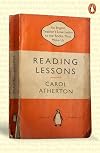
Good to see the Penguin book on the front cover, published by the Penguin books
Ratings
Members
- Recently Added By
Lists

Books Read in 2024
4,623 works; 124 members
Author Information
4 Works 73 Members
Some Editions
Awards and Honors
Awards
Distinctions
The Guardian Book of the Day (2024-04-17)
Common Knowledge
- Canonical title
- Reading Lessons: The Books We Read at School, the Conversations They Spark and Why They Matter
Classifications
- Genres
- Literature Studies and Criticism, Nonfiction, General Nonfiction, Biography & Memoir, Teen
- DDC/MDS
- 028.9 — Computer science, information & general works Library & information sciences Reading and use of other information media Character of reading in libraries
- LCC
- PR35 .A74 — Language and Literature English English Literature Literary history and criticism
- BISAC
Statistics
- Members
- 66
- Popularity
- 472,079
- Reviews
- 4
- Rating
- (4.53)
- Languages
- English
- Media
- Paper, Audiobook, Ebook
- ISBNs
- 4
- ASINs
- 2