
Robin Ince
Author of The Infinite Monkey Cage: How to Build a Universe
About the Author
Image credit: By Vera de Kok (Own work) [CC BY-SA 3.0 (https://creativecommons.org/licenses/by-sa/3.0)], via Wikimedia Commons
Series
Works by Robin Ince
Robin Ince's Bad Book Club: One Man's Quest to Uncover the Books That Taste Forgot (2011) 93 copies, 3 reviews
Associated Works
Tagged
Common Knowledge
- Birthdate
- 1969-02-20
- Gender
- male
- Nationality
- UK
- Associated Place (for map)
- UK
Members
Reviews
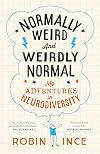
It is perhaps fitting that the co-host of the BBC's science program "The Infinite Monkey Cage" sometimes acts as if he's controlled by infinite monkeys.
After a lifetime of forgetful behavior and low mood, Robin Ince -- who is primarily a standup comedian -- was recently diagnosed with attention deficit/hyperactivity disorder (ADHD). As often happens in such cases, he found himself suddenly understanding much about his life -- and feeling much better about it. The diagnosis also set him on a show more journey of self-discovery.
This account somewhat surprised me; although a lot of it is autobiographical, we don't really learn much about Ince's own behaviors -- we don't even learn if he has the hyperactive or the inattentive type of ADHD. Indeed, the book spends almost as much time talking about autism as about ADHD, with occasional side looks at other forms of neurodivergence.
One may perhaps disagree with Ince's classifications here. I'm neurodivergent myself (autism, in my case), but I recognize a much broader universe of neurodivergence than Ince does -- e.g. bipolar disorder and schizophrenia are clearly part of it, whereas Ince confines himself to ADHD, autism, and learning disorders. That's not necessarily bad -- Ince's group do form a sort of cluster, since ADHD, autism, and learning disabilities have much higher comorbidities than, say, ADHD and schizophrenia, and they also call for many of the same supports. (And, believe me, as an autistic, I find it much easier to understand ADHD people than schizophrenics, who make me very uncomfortable even though their condition is not their fault!) But it's important to understand that when Ince refers to neurodiverse individuals, and the supports they need, he is referring to a specific subgroup of the non-neurotypical.
If one accepts that limitation, this is a pretty good book, with a lot of advice about how to cope, some useful facts, some good insight into people other than just Ince himself, and of course the not-so-occasional subversive joke. It wouldn't be the first book I'd consult on ADHD, either on the treatment of the condition or the culture of those who have it (which are very different things), but it stands high on books about understanding neurodiversity in general, especially in Britain but also beyond. show less
After a lifetime of forgetful behavior and low mood, Robin Ince -- who is primarily a standup comedian -- was recently diagnosed with attention deficit/hyperactivity disorder (ADHD). As often happens in such cases, he found himself suddenly understanding much about his life -- and feeling much better about it. The diagnosis also set him on a show more journey of self-discovery.
This account somewhat surprised me; although a lot of it is autobiographical, we don't really learn much about Ince's own behaviors -- we don't even learn if he has the hyperactive or the inattentive type of ADHD. Indeed, the book spends almost as much time talking about autism as about ADHD, with occasional side looks at other forms of neurodivergence.
One may perhaps disagree with Ince's classifications here. I'm neurodivergent myself (autism, in my case), but I recognize a much broader universe of neurodivergence than Ince does -- e.g. bipolar disorder and schizophrenia are clearly part of it, whereas Ince confines himself to ADHD, autism, and learning disorders. That's not necessarily bad -- Ince's group do form a sort of cluster, since ADHD, autism, and learning disabilities have much higher comorbidities than, say, ADHD and schizophrenia, and they also call for many of the same supports. (And, believe me, as an autistic, I find it much easier to understand ADHD people than schizophrenics, who make me very uncomfortable even though their condition is not their fault!) But it's important to understand that when Ince refers to neurodiverse individuals, and the supports they need, he is referring to a specific subgroup of the non-neurotypical.
If one accepts that limitation, this is a pretty good book, with a lot of advice about how to cope, some useful facts, some good insight into people other than just Ince himself, and of course the not-so-occasional subversive joke. It wouldn't be the first book I'd consult on ADHD, either on the treatment of the condition or the culture of those who have it (which are very different things), but it stands high on books about understanding neurodiversity in general, especially in Britain but also beyond. show less
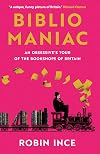
I chose Bibliomaniac with some trepidation, having yet to find a book about books that doesn’t revere long dead white men and assorted tedious classics, so I was pleased to discover Ince’s taste tends to be rather more eclectic, if not eccentric.
“I pick up a book by Houdini about psychic mediums; something about the quest for the Holy Grail; a Jungian guide to grotesques in literature; and Yukio Mishima’s The Sailor Who Fell from Grace with the Sea”
Bibliomaniac is not a reading show more guide though, it’s a travelogue of sorts that tells of Robin Ince’s post-CoVid lockdown adventure as he travels the length and breadth of Britain to speak at 111 independent bookstores in 100 days to promote his book, The Importance of Being Interested: Adventures in Scientific Curiosity.
Each chapter, prefaced with a sketched map that roughly shows a particular leg of his journey, is essentially a collection of anecdotes and observations told with thoughtfulness, humour, and enthusiasm. Ince writes of his travel experience (he relies mostly on public transport), his impression of the stores he visits, their owners and their patrons, and of course, the books he finds and adds to his collection. Ince also muses on his relationship to books and reading, and occasionally wanders off on idiosyncratic tangents.
“I think I love books more than I love reading. Their company means there is always the possibility of something to be discovered, waiting for me between the covers, which hasn't even entered my imagination yet. A small but pleasing change in my reality is waiting on every shelf.”
A book for booklovers by a booklover, Bibliomaniac is an entertaining read. show less
“I pick up a book by Houdini about psychic mediums; something about the quest for the Holy Grail; a Jungian guide to grotesques in literature; and Yukio Mishima’s The Sailor Who Fell from Grace with the Sea”
Bibliomaniac is not a reading show more guide though, it’s a travelogue of sorts that tells of Robin Ince’s post-CoVid lockdown adventure as he travels the length and breadth of Britain to speak at 111 independent bookstores in 100 days to promote his book, The Importance of Being Interested: Adventures in Scientific Curiosity.
Each chapter, prefaced with a sketched map that roughly shows a particular leg of his journey, is essentially a collection of anecdotes and observations told with thoughtfulness, humour, and enthusiasm. Ince writes of his travel experience (he relies mostly on public transport), his impression of the stores he visits, their owners and their patrons, and of course, the books he finds and adds to his collection. Ince also muses on his relationship to books and reading, and occasionally wanders off on idiosyncratic tangents.
“I think I love books more than I love reading. Their company means there is always the possibility of something to be discovered, waiting for me between the covers, which hasn't even entered my imagination yet. A small but pleasing change in my reality is waiting on every shelf.”
A book for booklovers by a booklover, Bibliomaniac is an entertaining read. show less
I picked up [b:Bibliomaniac|61293621|Bibliomaniac|Robin Ince|https://i.gr-assets.com/images/S/compressed.photo.goodreads.com/books/1655297576l/61293621._SY75_.jpg|96648007] off the library's new acquisitions shelf as I do enjoy a book-about-books. Ince writes candidly and very amusingly about his addiction to buying books and his 2021 tour of Britain's independent bookshops. His frequent jumps from anecdote to anecdote are somewhat explained by a mention in the introduction that he likely show more has ADHD. This style suits the topic, as it travels from bookshop to bookshop, as well as book to book. His frenetic tour via unreliable public transport and helpful lifts is just the sort of thing I enjoy reading about but would absolutely hate doing myself. I've only been to a couple of the bookshops on the tour, despite being fond of independent bookshops. In the introduction, Ince perceptively explains his obsession:
A lot of this is very familiar to me from my own experience. Books are my drugs too; I've always used reading to calm my mind and escape myself. I too read about hallucinogens with great interest but am far too anxious to take them. It seems to me that no-one would choose to read constantly if they liked the sound of their own thoughts! Yet, unlike Ince, I definitely love reading more than books. He accumulates books constantly, whereas I own fewer books than my friends and family. The majority of the books I read are borrowed from libraries or friends. My preference is to read a book, review it, then pass it on so someone else can enjoy it. The 110 books on my shelves are roughly half unread and half favourites worthy of re-reading. Much as I adore books, in excess they become clutter which I detest.
Anyway, Ince's love of books and joy in talking about them comes through strongly in [b:Bibliomaniac|61293621|Bibliomaniac|Robin Ince|https://i.gr-assets.com/images/S/compressed.photo.goodreads.com/books/1655297576l/61293621._SY75_.jpg|96648007]. He is a compelling and very funny writer, both about travel and books. I laughed out loud at anecdotes like this:
[b:Bibliomaniac|61293621|Bibliomaniac|Robin Ince|https://i.gr-assets.com/images/S/compressed.photo.goodreads.com/books/1655297576l/61293621._SY75_.jpg|96648007] gives the reader a joyful tour of Britain's independent bookshops, which seem to be weathering the pandemic quite well, as well as a tour of his book collection. Ince's interests are delightfully miscellaneous and his enthusiasm infectious. Anyone who loves books and/or reading will enjoy Ince's adventures and discover new bookshops to visit. show less
I think I love books more than I love reading. Their company means there is always the possibility of something to be discovered, waiting for me between the covers, which hasn't even entered my imagination yet. A small but pleasing change in my reality is waiting on every shelf.
I know that I have a tendency towards melancholy, social anxiety, and self-loathing, and books form a great part of my prescription medication. When I say that books are my drugs, I don't mean that in a throwaway manner; they really do calm me, they really do shut off some of the voices for a while.
They really do take me out of time.
Books are not merely my escape, but an opportunity to explore the world - my chance to get the voices from the page to drown the voices in my head; the place to live in other people's dreamscapes. I am too anxious for some of the hallucinogens that my confident friends experiment with, so my trips are fuelled by turning pages.
A lot of this is very familiar to me from my own experience. Books are my drugs too; I've always used reading to calm my mind and escape myself. I too read about hallucinogens with great interest but am far too anxious to take them. It seems to me that no-one would choose to read constantly if they liked the sound of their own thoughts! Yet, unlike Ince, I definitely love reading more than books. He accumulates books constantly, whereas I own fewer books than my friends and family. The majority of the books I read are borrowed from libraries or friends. My preference is to read a book, review it, then pass it on so someone else can enjoy it. The 110 books on my shelves are roughly half unread and half favourites worthy of re-reading. Much as I adore books, in excess they become clutter which I detest.
Anyway, Ince's love of books and joy in talking about them comes through strongly in [b:Bibliomaniac|61293621|Bibliomaniac|Robin Ince|https://i.gr-assets.com/images/S/compressed.photo.goodreads.com/books/1655297576l/61293621._SY75_.jpg|96648007]. He is a compelling and very funny writer, both about travel and books. I laughed out loud at anecdotes like this:
My favourite librarian story comes from Stoke Newington. A ninety-two-year-old book-lover whose eyesight meant she relied on talking books decided she should hear Fifty Shades of Grey. The librarian warned her it was a bit racy, but she was having none of it. Two weeks later, she rang the librarian: "Disc four is filthy." "I did warn you." "No, it's filthy, it looks like it's got jam or marmalade on it. It won't play at all."
[b:Bibliomaniac|61293621|Bibliomaniac|Robin Ince|https://i.gr-assets.com/images/S/compressed.photo.goodreads.com/books/1655297576l/61293621._SY75_.jpg|96648007] gives the reader a joyful tour of Britain's independent bookshops, which seem to be weathering the pandemic quite well, as well as a tour of his book collection. Ince's interests are delightfully miscellaneous and his enthusiasm infectious. Anyone who loves books and/or reading will enjoy Ince's adventures and discover new bookshops to visit. show less
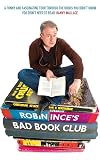
I picked this up on a whim after chortling my way through a segment about it on a TV Book Club episode ages ago, and happily my instinct was right - it was so much fun to read! Basically Robin Ince likes to pick up bad, weird and cheesy books in charity shops and jumble sales, and this is the result: a wander through the world of sheikhs and their mistresses, man-eating crabs, terrible poetry, testosterone-drenched thrillers, bizarre new age lifestyle guides, crap autobiographies and show more anything else that catches his fancy. He's got a very dry sense of humour and his affection for these 'bad books' has actually ADDED one or two titles to my wishlist! show less
Lists
Awards


You May Also Like


Associated Authors
Statistics
- Works
- 13
- Also by
- 3
- Members
- 709
- Popularity
- #35,751
- Rating
- 3.5
- Reviews
- 22
- ISBNs
- 40