
Martin Latham
Author of The Bookseller's Tale
About the Author
Written by Martin Latham, historian and bookseller, Kent's Strangest Tales is a fascinating treasure trove of the hilarious, the odd, and the baffling - an alternative travel guide to some of the county's best kept secrets that date back many thousands of years. Read on and discover the Kent nobody show more knows. show less
Works by Martin Latham
Tagged
Common Knowledge
- Gender
- male
- Occupations
- bookseller
- Nationality
- UK
- Associated Place (for map)
- UK
Members
Reviews
[The Bookseller's Tale]
I'm surprised there aren't more copies of this in the LT catalogue, it's such a booklover's book.
Accessible pen portraits of book collectors, libraries and even book smugglers, and an appendix suggesting further reading. The author has worked in British bookshops for decades. He includes his own experiences and contacts in the book. Several times he mentions ringing up (calling) librarians and booksellers directly. There's so much history, reflecting the author's wide show more ranging curiosity and interests. There's lots of humour, including the resignation letter of one librarian at the British Museum. It may be more than one hundred years old, but I suspect most readers will relate.
On the link between national libraries and collectors:
He's great on the idiosyncrasies of book collectors. Men dominate, but this potted biography of a Mexican scholar made me want to read more:
Recommended! show less
I'm surprised there aren't more copies of this in the LT catalogue, it's such a booklover's book.
Accessible pen portraits of book collectors, libraries and even book smugglers, and an appendix suggesting further reading. The author has worked in British bookshops for decades. He includes his own experiences and contacts in the book. Several times he mentions ringing up (calling) librarians and booksellers directly. There's so much history, reflecting the author's wide show more ranging curiosity and interests. There's lots of humour, including the resignation letter of one librarian at the British Museum. It may be more than one hundred years old, but I suspect most readers will relate.
On the link between national libraries and collectors:
(An) Aberystwyth doctor gave not only his books but £20,000 to establish the National Library of Wales. The Library of Congress was originally simply a resource for politicians, until [[Thomas Jefferson]]'s own collection became the foundation of a national library for the people. The millionaires Pierpont Morgan and Henry Huntington founded what are now free libraries of national importance in America. The Bibliothèque Nationale started as a private royal library. Polish National Library? Entirely the creation of two book-mad brothers. National Library of Italy? The Medici family's book collection. National Library of Germany? A visionary booksellers' project, foisted on to parliament amid the fervour of the 1848 revolution.
He's great on the idiosyncrasies of book collectors. Men dominate, but this potted biography of a Mexican scholar made me want to read more:
[[Juana Inés de la Cruz]] (1648-95). The illegitimate daughter of a largely absent father, she grew up on a peasant smallholding by a volcano with her four siblings, some of whom were step-siblings; details of her early life are hard to come by. Her grandfather loved books, and in his house she taught herself to read and write Latin before she was five. Greek followed soon afterwards and as an adolescent she learned Aztec: writing poems in that language gave her a private outlet. An Aztec linguist has claimed that, on the basis of these poems, 'she was very fluent in spoken Nahuatl [Aztec]'.
University in Mexico City was barred to her. ...As she openly admitted, aged twenty, she wanted 'no fixed occupation which might curtail my freedom to study'.
She shopped around the orders and....took her book collection into the convent....After a letter she wrote criticizing a Jesuit sermon was published, without her permission, she was formally admonished by the local bishop for her preoccupation with worldly affairs. Her response, the Reply to Sister Philotea, was a moving defence of the right to books and learning, and an early feminist manifesto. Reading, she argued, should be a habit shared among women as much as activities such as cooking tips and needlework techniques. And those activities need not exclude learning: 'we can perfectly well philosophize whilst cooking dinner'.
Recommended! show less

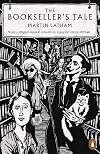
Martin Latham runs Waterstones in Canterbury and has been a bookseller for thirty-five years, making him the longest-serving Waterstones manager. The Bookseller’s Tale is an idiosyncratic memoir which draws upon Latham’s experiences amongst books, authors, book buyers and book lovers.
The blurb describes this book as “part cultural history, part literary love letter and part reluctant memoir”. It is, in fact, a work which is hard to pin down. It contains a lot of historical details show more on such bookish subjects as itinerant sellers and book pedlars, libraries through the ages, marginalia, female authors and readers and even booklice species. Yet, it does not feel like an academic book, and more like the author’s own whimsical romp through book history. While not exactly an autobiography (we learn much more about Latham the “bookseller” rather than Latham “the man”), the book is enriched with juicy personal anecdotes including the occasional gossipy name-dropping.
What shines throughout the book is a love for reading and – unsurprisingly for a “bookseller’s tale” – a love for physical books, as opposed to electronic books. I am not, personally, a purist in this regard, believing that it is ultimately the content of the book, rather than the medium, is more important. Not that you’d notice that, as I’m still an obsessive buyer of physical books and share the compulsion felt by some of the author’s customers to hug and smell a new book. I loved in particular Latham’s ode to comfort books. His observation that the most critically acclaimed “literary” books are not necessarily the ones that mean most to the general reader is an eye-opening one and a warning against adopting a patronising approach towards literary tastes.
The Bookseller's Tale feels like a night at the pub with your favourite book buddy and is just as enjoyable.
https://endsoftheword.blogspot.com/2020/09/the-booksellers-tale-by-martin-latham... show less
The blurb describes this book as “part cultural history, part literary love letter and part reluctant memoir”. It is, in fact, a work which is hard to pin down. It contains a lot of historical details show more on such bookish subjects as itinerant sellers and book pedlars, libraries through the ages, marginalia, female authors and readers and even booklice species. Yet, it does not feel like an academic book, and more like the author’s own whimsical romp through book history. While not exactly an autobiography (we learn much more about Latham the “bookseller” rather than Latham “the man”), the book is enriched with juicy personal anecdotes including the occasional gossipy name-dropping.
What shines throughout the book is a love for reading and – unsurprisingly for a “bookseller’s tale” – a love for physical books, as opposed to electronic books. I am not, personally, a purist in this regard, believing that it is ultimately the content of the book, rather than the medium, is more important. Not that you’d notice that, as I’m still an obsessive buyer of physical books and share the compulsion felt by some of the author’s customers to hug and smell a new book. I loved in particular Latham’s ode to comfort books. His observation that the most critically acclaimed “literary” books are not necessarily the ones that mean most to the general reader is an eye-opening one and a warning against adopting a patronising approach towards literary tastes.
The Bookseller's Tale feels like a night at the pub with your favourite book buddy and is just as enjoyable.
https://endsoftheword.blogspot.com/2020/09/the-booksellers-tale-by-martin-latham... show less
Martin Latham runs Waterstones in Canterbury and has been a bookseller for thirty-five years, making him the longest-serving Waterstones manager. The Bookseller’s Tale is an idiosyncratic memoir which draws upon Latham’s experiences amongst books, authors, book buyers and book lovers.
The blurb describes this book as “part cultural history, part literary love letter and part reluctant memoir”. It is, in fact, a work which is hard to pin down. It contains a lot of historical details show more on such bookish subjects as itinerant sellers and book pedlars, libraries through the ages, marginalia, female authors and readers and even booklice species. Yet, it does not feel like an academic book, and more like the author’s own whimsical romp through book history. While not exactly an autobiography (we learn much more about Latham the “bookseller” rather than Latham “the man”), the book is enriched with juicy personal anecdotes including the occasional gossipy name-dropping.
What shines throughout the book is a love for reading and – unsurprisingly for a “bookseller’s tale” – a love for physical books, as opposed to electronic books. I am not, personally, a purist in this regard, believing that it is ultimately the content of the book, rather than the medium, is more important. Not that you’d notice that, as I’m still an obsessive buyer of physical books and share the compulsion felt by some of the author’s customers to hug and smell a new book. I loved in particular Latham’s ode to comfort books. His observation that the most critically acclaimed “literary” books are not necessarily the ones that mean most to the general reader is an eye-opening one and a warning against adopting a patronising approach towards literary tastes.
The Bookseller's Tale feels like a night at the pub with your favourite book buddy and is just as enjoyable.
https://endsoftheword.blogspot.com/2020/09/the-booksellers-tale-by-martin-latham... show less
The blurb describes this book as “part cultural history, part literary love letter and part reluctant memoir”. It is, in fact, a work which is hard to pin down. It contains a lot of historical details show more on such bookish subjects as itinerant sellers and book pedlars, libraries through the ages, marginalia, female authors and readers and even booklice species. Yet, it does not feel like an academic book, and more like the author’s own whimsical romp through book history. While not exactly an autobiography (we learn much more about Latham the “bookseller” rather than Latham “the man”), the book is enriched with juicy personal anecdotes including the occasional gossipy name-dropping.
What shines throughout the book is a love for reading and – unsurprisingly for a “bookseller’s tale” – a love for physical books, as opposed to electronic books. I am not, personally, a purist in this regard, believing that it is ultimately the content of the book, rather than the medium, is more important. Not that you’d notice that, as I’m still an obsessive buyer of physical books and share the compulsion felt by some of the author’s customers to hug and smell a new book. I loved in particular Latham’s ode to comfort books. His observation that the most critically acclaimed “literary” books are not necessarily the ones that mean most to the general reader is an eye-opening one and a warning against adopting a patronising approach towards literary tastes.
The Bookseller's Tale feels like a night at the pub with your favourite book buddy and is just as enjoyable.
https://endsoftheword.blogspot.com/2020/09/the-booksellers-tale-by-martin-latham... show less
Martin Latham is the long-standing manager of Waterstones in Canterbury and is a man of many parts. A Bookseller’s Tale (Particular Books) is his love letter to bookshops, libraries, and all things de librorum. This is jam packed full of interesting facts, amusing anecdotes, and witty quotes. It is to be devoured or dipped into, depending on one’s taste and time and rewards both types of readers. A treat for book lovers, which I guess is most of us!
Lists
You May Also Like


Statistics
- Works
- 3
- Members
- 377
- Popularity
- #64,010
- Rating
- 4.0
- Reviews
- 10
- ISBNs
- 14
- Languages
- 4