
Catharine Arnold
Author of Necropolis: London and Its Dead
About the Author
Disambiguation Notice:
Catharine Arnold and Catherine Arnold are two different authors. Please do not combine them.
Series
Works by Catharine Arnold
The Sexual History of London: From Roman Londinium to the Swinging City---Lust, Vice, and Desire Across the Ages (2010) 408 copies, 16 reviews
Pandemic 1918: Eyewitness Accounts from the Greatest Medical Holocaust in Modern History (2018) 302 copies, 8 reviews
Tagged
Common Knowledge
- Other names
- ARNOLD, Catharine
- Birthdate
- 1960 (circa)
- Gender
- female
- Education
- University of Cambridge (Girton College)
- Occupations
- journalist
academic
historian - Nationality
- UK
- Disambiguation notice
- Catharine Arnold and Catherine Arnold are two different authors. Please do not combine them.
- Associated Place (for map)
- UK
Members
Reviews
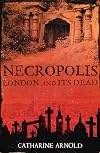
The first book I read for the Non Fiction November Reading Challenge this year is Necropolis - London and Its Dead by Catharine Arnold. The author tackles the fascinating history of London burials from pre-historic and medieval times to the present day.
According to the blurb:
"The city is one giant grave, filled with the remains of previous eras. The Houses of Parliament sit on the edge of a former plague pit, St Paul's is built over human remains; Underground tunnels were driven through show more forgotten catacombs, thick with bones."
I found the earliest history the least interesting. My fascination really begins as burial space in London and the surrounding areas became cramped and Londoners began to run out of places to bury their dead.
Arnold shines a light into the darkness of countless horrific practices in graveyards all over London. Remains were shoved into crevices within churches, often dug up and relocated to charnel houses or pits without notifying the families and bodysnatchers were a real concern. Some graveyards had significantly grown in height due to the placement of bodies on top of each other in layers that in some cases, the burial grounds were reaching the first floor windows of churches and neighbouring houses.
Many proposed the move away from inner city burials in churchyards and burial plots, and championed the establishment of new cemeteries in consecrated ground in the countryside. Arnold takes us through the movers and shakers across decades and centuries as this began to take form, including the key figures involved in designing these cemeteries.
Countless cemeteries and graveyards are mentioned here including the iconic - and my favourite - Highgate Cemetery, which provides a rich history for amateur sleuths and family historians. Many of the old graveyards scattered throughout London were soon forgotten together with the plague pits which had never been marked with gravestones or markers.
"As time passed, London has constructed houses, churches, streets, entire railway stations, over these mass graves, and it is only by chance that they come to light due to building excavations." Page 65
"In fact, the tunnel curves between Knightsbridge and South Kensington stations because it was impossible to drill through the mass of skeletal remains buried in Hyde Park." Page 2
I knew how devastating the Great Fire of London was in 1666, however it was shocking to read:
"Seventy per cent of its houses vanished into the flames. Thirteen thousand buildings, including eighty-nine churches, disappeared for ever." Page 68
After the fires and the razing of so many structures, new construction began and the dead were swiftly forgotten in favour of rebuilding London. Gravestones, rubble and in some cases human remains from the fires were used in the foundations of new buildings.
"Inevitably, the final remains of many Londoners went into the latest foundations of their great city." Page 172
I enjoy fiction set - or written - during the Victorian era with a particular interest in the rituals and etiquette surrounding death and mourning. Arnold gives the reader much to digest in Necropolis, with the introduction of the great Victorian cemeteries and the detailed mourning practices of the era.
The horses used in Victorian funerals to pull hearses and mourning coaches were:
"strong, handsome, blue-black animals, worth 50 [pounds] each, were imported from Holland and Belgium. Constantly in the public eye, they were always well groomed. A patch of grey would be painted out, a thinning mane or tail supplemented with hair from a deceased comrade. Mostly gentle and docile they were sturdy animals." Page 196
The introduction of cremation and society's changing attitudes towards it were interesting as were the impact of both world wars on the notion of grief and mourning. Although I could have done without the remarkable level of detail with regard to the individual cemeteries.
Necropolis - London and Its Dead by Catharine Arnold reads like an academic text and isn't for everyone. If you enjoy history, anthropology, urban development, changing attitudes to death and mourning or learning about the macabre, then this is for you. show less
According to the blurb:
"The city is one giant grave, filled with the remains of previous eras. The Houses of Parliament sit on the edge of a former plague pit, St Paul's is built over human remains; Underground tunnels were driven through show more forgotten catacombs, thick with bones."
I found the earliest history the least interesting. My fascination really begins as burial space in London and the surrounding areas became cramped and Londoners began to run out of places to bury their dead.
Arnold shines a light into the darkness of countless horrific practices in graveyards all over London. Remains were shoved into crevices within churches, often dug up and relocated to charnel houses or pits without notifying the families and bodysnatchers were a real concern. Some graveyards had significantly grown in height due to the placement of bodies on top of each other in layers that in some cases, the burial grounds were reaching the first floor windows of churches and neighbouring houses.
Many proposed the move away from inner city burials in churchyards and burial plots, and championed the establishment of new cemeteries in consecrated ground in the countryside. Arnold takes us through the movers and shakers across decades and centuries as this began to take form, including the key figures involved in designing these cemeteries.
Countless cemeteries and graveyards are mentioned here including the iconic - and my favourite - Highgate Cemetery, which provides a rich history for amateur sleuths and family historians. Many of the old graveyards scattered throughout London were soon forgotten together with the plague pits which had never been marked with gravestones or markers.
"As time passed, London has constructed houses, churches, streets, entire railway stations, over these mass graves, and it is only by chance that they come to light due to building excavations." Page 65
"In fact, the tunnel curves between Knightsbridge and South Kensington stations because it was impossible to drill through the mass of skeletal remains buried in Hyde Park." Page 2
I knew how devastating the Great Fire of London was in 1666, however it was shocking to read:
"Seventy per cent of its houses vanished into the flames. Thirteen thousand buildings, including eighty-nine churches, disappeared for ever." Page 68
After the fires and the razing of so many structures, new construction began and the dead were swiftly forgotten in favour of rebuilding London. Gravestones, rubble and in some cases human remains from the fires were used in the foundations of new buildings.
"Inevitably, the final remains of many Londoners went into the latest foundations of their great city." Page 172
I enjoy fiction set - or written - during the Victorian era with a particular interest in the rituals and etiquette surrounding death and mourning. Arnold gives the reader much to digest in Necropolis, with the introduction of the great Victorian cemeteries and the detailed mourning practices of the era.
The horses used in Victorian funerals to pull hearses and mourning coaches were:
"strong, handsome, blue-black animals, worth 50 [pounds] each, were imported from Holland and Belgium. Constantly in the public eye, they were always well groomed. A patch of grey would be painted out, a thinning mane or tail supplemented with hair from a deceased comrade. Mostly gentle and docile they were sturdy animals." Page 196
The introduction of cremation and society's changing attitudes towards it were interesting as were the impact of both world wars on the notion of grief and mourning. Although I could have done without the remarkable level of detail with regard to the individual cemeteries.
Necropolis - London and Its Dead by Catharine Arnold reads like an academic text and isn't for everyone. If you enjoy history, anthropology, urban development, changing attitudes to death and mourning or learning about the macabre, then this is for you. show less
Pandemic 1918: Eyewitness Accounts from the Greatest Medical Holocaust in Modern History by Catharine Arnold
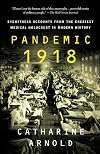
Absolutely fascinating, and that’s simply after reading the Prologue! Published on Aug 28, 2018, this is an eerie foretelling of past pandemic events, and those yet to come. Although Arnold could not predict the COVID19 pandemic of 2019-2020, the parallels the Spanish Lady, or flu, has with today’s COVID19 is uncanny. The prologue found me fascinated, and as I reach Chapter 1, I am hooked already.
The various stories take you across the globe as you get glimpses of those infected or those show more touched by the epidemic. Science of the day is interspersed and again, the parallels of the 1918 Flu and the 2020 Covid-19 outbreaks are amazing. A must-read.
*I received an arc from the publisher through NetGalley for an honest review show less
The various stories take you across the globe as you get glimpses of those infected or those show more touched by the epidemic. Science of the day is interspersed and again, the parallels of the 1918 Flu and the 2020 Covid-19 outbreaks are amazing. A must-read.
*I received an arc from the publisher through NetGalley for an honest review show less
Pandemic 1918: Eyewitness Accounts from the Greatest Medical Holocaust in Modern History by Catharine Arnold
Fascinating look at the course of the Spanish flu of 1918-19, or as it was anthromorphized in the press's cartoonish figure of the "Spanish lady", a female figure with a death's head, dressed in black flamenco-style dress and mantilla. The earliest mention of any widespread epidemic was made by Hippocrates in 412 BC and we have had epidemics and pandemics of different origins and symptoms ever since, including now. The author mentions theories as to its origin, from the possible to the show more conspiratorial, and much of the book is taken from the writings, letters, or memoirs of people who had either witnessed it in others or had recovered from it themselves. Katherine Anne Porter, the writer, who recovered, felt it was a turning point in her life. The world would probably be a different place if FDR or Mahatma Gandhi had not recovered from their severe bouts with the "Spanish lady". The book was very prescient concerning public health measures, which we are using today. No cure was found; the disease just burned itself out. Not until the 1990s was the genome found. Viruses were not even discovered until the 1930s. Health professionals' earlier thinking of a bacterial origin for the Spanish flu led them into blind alleys.
A little girls' jump rope skipping rhyme from that period:
"I had a little bird,
And its name was Enza.
I opened the window
And in-flew-enza." show less
A little girls' jump rope skipping rhyme from that period:
"I had a little bird,
And its name was Enza.
I opened the window
And in-flew-enza." show less
Arnold's "City of Sin", covering all the naughty things Londoners have gotten up to over the years, remains one of my favourite books. I thus hunted down a copy of "Necropolis" but sadly and belatedly realised that reading about the sexual hijinks of Londoners was always going to be much more interesting than reading about overcrowded cemeteries. Which is not to say that "Necropolis" is particularly dull, just that it suffers in comparison with "City of Sin", or for that matter Arnold's show more other histories of London, "Bedlam" London and its mad" and "Underworld London".
So, yes, this is a history of disposing of London's dead, with its squalid inner city cemeteries to the nineteenth century introduction of crematoriums (and who knew it was such a risky legal venture to cremate a body back then) to the latest, environmentally friendly ways to go. Still, give me the naked MPs of "City of Sin" any day. show less
So, yes, this is a history of disposing of London's dead, with its squalid inner city cemeteries to the nineteenth century introduction of crematoriums (and who knew it was such a risky legal venture to cremate a body back then) to the latest, environmentally friendly ways to go. Still, give me the naked MPs of "City of Sin" any day. show less
Lists
You May Also Like


Associated Authors
Statistics
- Works
- 9
- Members
- 2,149
- Popularity
- #11,968
- Rating
- 3.7
- Reviews
- 54
- ISBNs
- 45
- Languages
- 2
- Favorited
- 3
