On This Page
Description
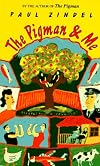
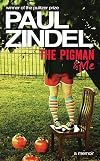
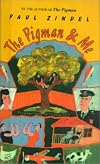
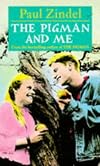
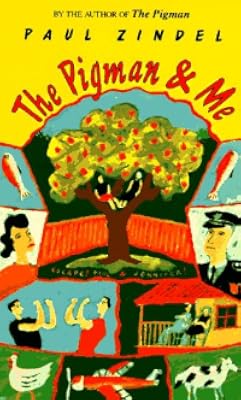
An account of Paul Zindel's teenage years on Staten Island, when his life was enriched by finding his own personal pigman, or mentor.Tags
Recommendations

















Member Reviews
Zindel's memoir of his adolescence is dark and sad and heartbreakingly well remembered. His mom was unstable and his life was unstable and he could have easily slipped through the cracks into obscurity and unhappiness. He met a man who changed everything for him, though, and this memoir has Nonno Frankie as its glowing heart. It would have been unbearably grim if not for him.
A well-written memoir, charmingly narrated but very sad.
A well-written memoir, charmingly narrated but very sad.
I loved this book !
When I was a teenager in the 70s I read all the Paul Zindel books that were available in my school library and the public library. I loved them then and I continue to love them now.
This book was written in a warm hearted way about his life growing up in Staten Island with his bitter, histrionic, man hating mother and older sister. The father left the family and married his girlfriend leaving the mother to figure out all sorts of unusual ways of keeping herself and the two kids out of the poorhouse, including breeding collies which never sold.
It tells a lot about Paul's own personal pigman, Nonno Frankie and the wonderful relationship they had who ultimately became the influence for his great book ' The Pigman '.
A
When I was a teenager in the 70s I read all the Paul Zindel books that were available in my school library and the public library. I loved them then and I continue to love them now.
This book was written in a warm hearted way about his life growing up in Staten Island with his bitter, histrionic, man hating mother and older sister. The father left the family and married his girlfriend leaving the mother to figure out all sorts of unusual ways of keeping herself and the two kids out of the poorhouse, including breeding collies which never sold.
It tells a lot about Paul's own personal pigman, Nonno Frankie and the wonderful relationship they had who ultimately became the influence for his great book ' The Pigman '.
A
autobiography
12.93
black humor abounds, and the whipcrack narration is replete with genuine teenage sarcasm. Rather than chronicle his entire life, the author has chosen to relates the events of one a single significant year in his early adolescence. After years of moving the family from one shabby apartment to the next, Zindel's unhappy and eccentric mother seemed ready to settle into the house she and Connie--another single mother--had bought. Just how much this promise of stability meant to Zindel is revealed by the intensity of the longing that lies just below his wisecracking tone. The very best part of the arrangement was the presence of Connie's father--Nonno Frankie. In his frequent visits to the Staten Island household, Nonno show more Frankie cooked sumptuous Italian feasts and dished out plenty of advice and support to the young Zindel. Readers familiar with the author's novels will not be surprised to learn that in Zindel's real life--as well as in his fiction--this happy situation is too good to last long. show less
12.93
black humor abounds, and the whipcrack narration is replete with genuine teenage sarcasm. Rather than chronicle his entire life, the author has chosen to relates the events of one a single significant year in his early adolescence. After years of moving the family from one shabby apartment to the next, Zindel's unhappy and eccentric mother seemed ready to settle into the house she and Connie--another single mother--had bought. Just how much this promise of stability meant to Zindel is revealed by the intensity of the longing that lies just below his wisecracking tone. The very best part of the arrangement was the presence of Connie's father--Nonno Frankie. In his frequent visits to the Staten Island household, Nonno show more Frankie cooked sumptuous Italian feasts and dished out plenty of advice and support to the young Zindel. Readers familiar with the author's novels will not be surprised to learn that in Zindel's real life--as well as in his fiction--this happy situation is too good to last long. show less
I took a day's leave to clean prior to house inspection, since weekends are devoted to study and it has to happen sometime. To make the work easier, I decided to try an audiobook and somehow I saw Paul Zindel's name on iTunes by accident. I read and enjoyed most of his books in high school, and I felt a sudden burst of nostalgia at the thought of learning more about the author, even though, strangely, I cannot remember the content of his books at all. Funnily enough, I never ended up needing to take that day's leave, but I still had to listen to the book!
At first I was reminded strongly of Bill Bryson's "The life and times of the thunderbolt kid". It has the same 1950s setting, and, on first appearances, the same fascination with the show more bizarre within the ordinary. The one problem I had with the Bryson book was that parts of it made me feel nauseous and I really didn't want to know that much about his toilet habits. So at first I was apprehensive, because I got the impression that this book was going to go the same way. But, beyond a few superficialities, it didn't.
The bizarre surface appearance hides deep sensitivity and insight, and a very warm and poignant outlook. It's almost as if he's dressing up "real" stuff in a form that he thinks teenagers will tolerate (or in a form that allows him to safely be sensitive without being sensitive!!). I still can't remember the novels, annoyingly, but I now see why I enjoyed them so much. This book is also a series of lessons on life, and I'm still fascinated by the insightful image he concludes with. This was a very happy accident indeed. show less
At first I was reminded strongly of Bill Bryson's "The life and times of the thunderbolt kid". It has the same 1950s setting, and, on first appearances, the same fascination with the show more bizarre within the ordinary. The one problem I had with the Bryson book was that parts of it made me feel nauseous and I really didn't want to know that much about his toilet habits. So at first I was apprehensive, because I got the impression that this book was going to go the same way. But, beyond a few superficialities, it didn't.
The bizarre surface appearance hides deep sensitivity and insight, and a very warm and poignant outlook. It's almost as if he's dressing up "real" stuff in a form that he thinks teenagers will tolerate (or in a form that allows him to safely be sensitive without being sensitive!!). I still can't remember the novels, annoyingly, but I now see why I enjoyed them so much. This book is also a series of lessons on life, and I'm still fascinated by the insightful image he concludes with. This was a very happy accident indeed. show less
Complicated relationships between damaged, quirky characters. I didn't really like it when I read it as a tween (too close in feel to A Catcher in the Rye, and not enough elves to keep my interest), but to the best of my recollection Zindel crafts a sensitive tale of people awkwardly connecting to each other.
A book with a classic feel. Had me hoping with the characters, laughing along qnd falling in love with Nonno Frankie from the moment he came on the scene
#2 - Title recommended by Richard Peck, on his "foundation titles of YA literature":
Zindel, P. (1993). The pigman & me. New York: Random House.
Richard Peck's questions regarding a "foundation title" are fascinating and certainly require higher order thinking skills in Paul Zindel's 1993 book, "The Pigman & Me". They are not fill-in-the-blank knowledge-based queries.
The two main characters, high schoolers John Conlan and Lorraine Jensen, both dealing with dysfunctional families, if they were switched would change the tone of the book completely. Their temperaments are almost polar opposites, yet they are attracted to one another and form a unique bond, most likely because their conflicts are similar. They are battling themselves and show more society, if they were placed in each other's family, the dynamics would change and the story would not evolve as it does.
The setting is general and undefined. It is in the city, with a high school, row homes, and a zoo nearby, and the story revolves around only three basic individuals: the two young protagonists and the protagonist, Mr. Angelo Pignati. They are essential to the story, along with a baboon, named "Bobo" by Mr. Pignati.
As a film director, I would definitely film it in black & white. It is a stark and depressing story that requires the focused attention of black and white. Color would distract the viewers from the intent of this tale. The plot does not require distraction but an intensity that is inherent in the imagery of B & W.
Regarding identification with the main character as the director, the difference would be striking and different. Unlike John, I do not consider myself to be an egotist, self-destructive, or judgmental. He functions as both antagonist and protagonist in the story. Without his faults, there is no story progression and the ultimate tragedy of the Pigman is not attained. It would be too difficult for me to associate any likeness with this character.
If I tried to mold the screenplay into a TV series, the problems in developing a series would be too daunting. There's just not enough material with these three main characters. Mr. Angelo Pignati's age and feeling of loneliness are difficult to expand upon; however, if the show were about the experiences of two high schoolers, an odd couple, in the urban environment, that might be workable.
As to having a similar experience described in "The Pigman and Me", it would be the destructive party at the end of the book. I have not been to such a party, but I have put myself into such a condition of my own body. One party, after my high school graduation, resulted in my getting sick and embarrassing myself.
The cover of the book, if redesiged by me, would include Mr. Pignati feeding a peanut to his baboon, Bobo, with John and Lorraine on either side of him. Encircling the main characters would be the outline of a pig.
Its title, "The Pigman and Me", is thoroughly appropriate for the meaning of this book. It describes the nickname of Mr. Pignati, whose love of figurine pigs and his name make "Pigman" a common-sense appellaton, and the use of an objective pronoun "Me" denotes the connection to both protagonists as each of them, writing alternating chapters, tell the story in first person.
Because of this personal storytelling and how the relationship with "Pigman" affects both John and Lorraine, told from two points of view, the reader gets a true overall sense of the effect this kindly and wise old man has on these teenagers. It is, in the end, a tragic learning experience that will, hopefully, educate these young people in the sorrows each person carries with him or herself. show less
Zindel, P. (1993). The pigman & me. New York: Random House.
Richard Peck's questions regarding a "foundation title" are fascinating and certainly require higher order thinking skills in Paul Zindel's 1993 book, "The Pigman & Me". They are not fill-in-the-blank knowledge-based queries.
The two main characters, high schoolers John Conlan and Lorraine Jensen, both dealing with dysfunctional families, if they were switched would change the tone of the book completely. Their temperaments are almost polar opposites, yet they are attracted to one another and form a unique bond, most likely because their conflicts are similar. They are battling themselves and show more society, if they were placed in each other's family, the dynamics would change and the story would not evolve as it does.
The setting is general and undefined. It is in the city, with a high school, row homes, and a zoo nearby, and the story revolves around only three basic individuals: the two young protagonists and the protagonist, Mr. Angelo Pignati. They are essential to the story, along with a baboon, named "Bobo" by Mr. Pignati.
As a film director, I would definitely film it in black & white. It is a stark and depressing story that requires the focused attention of black and white. Color would distract the viewers from the intent of this tale. The plot does not require distraction but an intensity that is inherent in the imagery of B & W.
Regarding identification with the main character as the director, the difference would be striking and different. Unlike John, I do not consider myself to be an egotist, self-destructive, or judgmental. He functions as both antagonist and protagonist in the story. Without his faults, there is no story progression and the ultimate tragedy of the Pigman is not attained. It would be too difficult for me to associate any likeness with this character.
If I tried to mold the screenplay into a TV series, the problems in developing a series would be too daunting. There's just not enough material with these three main characters. Mr. Angelo Pignati's age and feeling of loneliness are difficult to expand upon; however, if the show were about the experiences of two high schoolers, an odd couple, in the urban environment, that might be workable.
As to having a similar experience described in "The Pigman and Me", it would be the destructive party at the end of the book. I have not been to such a party, but I have put myself into such a condition of my own body. One party, after my high school graduation, resulted in my getting sick and embarrassing myself.
The cover of the book, if redesiged by me, would include Mr. Pignati feeding a peanut to his baboon, Bobo, with John and Lorraine on either side of him. Encircling the main characters would be the outline of a pig.
Its title, "The Pigman and Me", is thoroughly appropriate for the meaning of this book. It describes the nickname of Mr. Pignati, whose love of figurine pigs and his name make "Pigman" a common-sense appellaton, and the use of an objective pronoun "Me" denotes the connection to both protagonists as each of them, writing alternating chapters, tell the story in first person.
Because of this personal storytelling and how the relationship with "Pigman" affects both John and Lorraine, told from two points of view, the reader gets a true overall sense of the effect this kindly and wise old man has on these teenagers. It is, in the end, a tragic learning experience that will, hopefully, educate these young people in the sorrows each person carries with him or herself. show less
Members
- Recently Added By
Author Information

71+ Works 9,280 Members
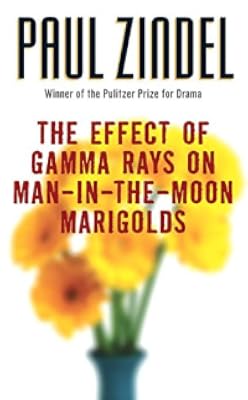
Paul Zindel Born on Staten Island, New York, Zindel was raised by a single mother who pursued a variety of odd and mostly unsuccessful jobs and took in terminally ill patients to supplement the family income. Due to her eccentricity and restlessness, the mother moved the family from one apartment to another, making it difficult for Zindel to form show more lasting friendships. As a consequence, the boy lived in the world of his imagination, developing interests in both science and writing. Zindel majored in chemistry at Wagner College on Staten Island, completing both bachelors and masters degrees. During this period he also took a creative-writing course offered by the playwright Edward Albee. After college he worked briefly as a technical writer for a chemical company and then discovered a more fulfilling vocation as a teacher of chemistry and physics at a Staten Island high school. It was during this period in the early 1960s that Zindel was able to develop his potential as a playwright by drawing on his own background as well as the experiences of his young students. The Effect of Gamma Rays on Man-in-the-Moon Marigolds premiered at the Alley Theater in Houston in 1965, was presented in a condensed version on television the following year, and finally opened off-Broadway at the Mercer-O'Casey Theater in 1970. Because of a fire in the theater, the play was moved, with a new cast, to the New Theater on Broadway, where it ran for a total of 819 performances. In addition to being enormously popular, Gamma Rays earned in 1970 an Obie Award as the best play of the season, the New York Drama Critics Circle Award as the best American play, and the Vernon Rice Drama Desk Award for most promising playwright. In 1971 the play was awarded the Pulitzer Prize in Drama. Gamma Rays is the story of an embittered, half-mad widow, Beatrice Hunsdorfer; her teenaged daughters, Ruth and Tillie; and Nanny, a decrepit old woman who boards with them. The family lives in chaos, with Beatrice dealing out petty vengeance to everyone. Nanny has been abandoned by her daughter. Ruth is wanton, untidy, and subject to seizures. Tillie, however, has become interested in science and enters her marigold experiment in the science fair; by exposing the marigold seeds to radiation, she shows that some produce normal plants, others produce mutations with beautiful double blooms, while still others die. The metaphor, of course, is that Tillie has emerged from her chaotic environment as a beautiful and whole person, a human "double bloom." Zindel's other plays include And Miss Reardon Drinks a Little (1971), The Secret Affairs of Mildred Wild(1973), Let Me Hear You Whisper (1973), and Ladies at the Alamo(1975). While these plays continue to show Zindel's skill in writing excellent roles for women, none of them have matched the critical and popular success of Gamma Rays. Since the late 1960s, Zindel has also written several novels for young adults. The Pigman (1968), which is about a lonely widower and two destructive teenagers, has sold more than 1 million copies. His other novels include My Darling, My Hamburger (1969), I Never Loved Your Mind (1970), Pardon Me, You're Stepping on My Eyeball (1976), Confessions of a Teenage Baboon (1977), and The Undertaker's Gone Bananas (1978). As in Gamma Rays, these works display not only a penchant for grotesque humor but an uncanny awareness of the problems of teenagers. Zindel's works, which also include several screenplays, explore the themes of loneliness, escapism, and eccentricity. His best works are humorous, perceptive, and warm; they present an affirmation of life emerging from desperate and grotesque circumstances. He is especially noted for his excellent women's roles, which has helped sustain him as a best-selling playwright for school and community groups. (Bowker Author Biography) show less
Awards and Honors
Awards
Distinctions
Series

Work Relationships
Is abridged in
Common Knowledge
- Canonical title
- The Pigman and Me
- Original publication date
- 1993
- Important places
- Staten Island, New York, New York, USA
- First words
- Attention any kids who may read this book!!! Eight hundred and fifty-three horrifying things had happened to be by the time I was a teenager.
- Last words
- (Click to show. Warning: May contain spoilers.)"Casey would waltz with the strawberry blonde," Mom started to sing, "and the band played on. He'd glide 'cross the floor with the girl he adored, and the band played on..."
Classifications
Statistics
- Members
- 308
- Popularity
- 104,153
- Reviews
- 8
- Rating
- (3.65)
- Languages
- English
- Media
- Paper, Audiobook, Ebook
- ISBNs
- 23
- ASINs
- 5