
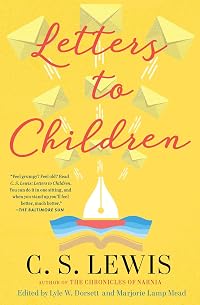
C. S. Lewis' Letters to Children
by C. S. Lewis
On This Page
Description
A collection of letters from the English author of the Narnia books to a variety of children.Tags
Recommendations








Member Reviews
Just a small sampling of Lewis’s extensive correspondence, this short collection is a glowing window into the heart of a man who’s robust adulthood flowed through an active connection with his childhood. Indeed, it seems to have been a matter of moral principle for Lewis that adulthood should remain comingled with childhood. To one child he writes, “I don’t think age matters so much as people think. Parts of me are still 12 and I think other parts were already 50 when I was 12.” And so, Lewis writes, honoring his young friends as the children that they are, and yet not speaking down to them as children. Lewis’s balance is remarkable, as he both humbles himself and unapologetically calls his readers higher. As the children show more send him countless gifts, pictures, and writings of their own, he both encourages them with praise and offers his honest critiques. He often asks the children to pray for him, most memorably when responding to Laurence, the nine-year-old boy who was afraid that he had grown to love Aslan more than Jesus. Lewis offers beautiful advice and encouragement, but ends by asking Laurence to pray, “and if Mr. Lewis has worried any other children by his books or done them any harm, then please forgive him and help him to never do it again.” Throughout his letters, Lewis offers many insights into his books, tips for writing, his opinions of other authors, and touching insights into his own personal life. In addition to the writings, the editors have added a short summary of Lewis’s own childhood, which also added depth to an understanding of the man and his work. show less
I have a rocky relationship with C.S. Lewis. The longer we are apart, the more he bothers me. I am sensibly buying a lot of C.S. Lewis’s books, so that I will be statistically more likely to read his stuff frequently, because in reality I love him an awful lot. And this book, his letters to children, mainly about his Narnia books, is exactly the reason (well, one of many) that I love him. He does not patronize, and it’s so easy to patronize a kid. He writes in a serious but good-natured way, and answers their questions very politely. Behold an excerpt:
Dear Lucy,
I am so glad that you like the Narnian stories and it was nice of you to write and tell me. I love E. Nesbit too and I think that I have learned a lot from her about how to show more write stories of this kind. Do you know Tolkien’s Lord of the Rings? I think you wd. like it. I am also bad at Maths and it is a continual nuisance to me – I get muddled over my change in shops. I hope you’ll have better luck and get over the difficulty! It makes life a lot easier.
It makes me, I think, more humble than proud to know that Aslan has allowed me to be the means of making Him more real to you. Because He could have used anyone – as He made a donkey preach a good sermon to Balaam.
Perhaps, in return, you will sometimes say a prayer for me?
With all good wishes,
Yours sincerely,
C.S. Lewis
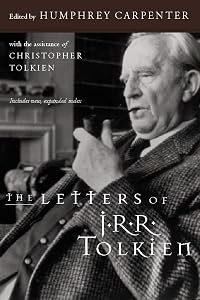
I have this book of letters that J.R.R. Tolkien wrote, and the editors of it have cleverly chosen a selection of letters relating to Lord of the Rings. I bought it one time when I was in California learning Chinese (not very successfully though I can still count quite high), and although I do not count myself among the die-hard Lord of the Rings fans in my family (didn’t even read it until the films came out – I know, I know), I was captivated by Tolkien’s letters about it. I wish someone would do a similar thing with C.S. Lewis and letters relating to his writing. Not just Narnia but all of his writing. How good would that be? show less
Dear Lucy,
I am so glad that you like the Narnian stories and it was nice of you to write and tell me. I love E. Nesbit too and I think that I have learned a lot from her about how to show more write stories of this kind. Do you know Tolkien’s Lord of the Rings? I think you wd. like it. I am also bad at Maths and it is a continual nuisance to me – I get muddled over my change in shops. I hope you’ll have better luck and get over the difficulty! It makes life a lot easier.
It makes me, I think, more humble than proud to know that Aslan has allowed me to be the means of making Him more real to you. Because He could have used anyone – as He made a donkey preach a good sermon to Balaam.
Perhaps, in return, you will sometimes say a prayer for me?
With all good wishes,
Yours sincerely,
C.S. Lewis
I have this book of letters that J.R.R. Tolkien wrote, and the editors of it have cleverly chosen a selection of letters relating to Lord of the Rings. I bought it one time when I was in California learning Chinese (not very successfully though I can still count quite high), and although I do not count myself among the die-hard Lord of the Rings fans in my family (didn’t even read it until the films came out – I know, I know), I was captivated by Tolkien’s letters about it. I wish someone would do a similar thing with C.S. Lewis and letters relating to his writing. Not just Narnia but all of his writing. How good would that be? show less
What a lovely and civilized little book. I find it charming that he would take the time to write back to all those adoring fans. And without e-mail, no less.
I especially liked finding out that the Author considered Susan Pevensie, whose liking for dating and wearing nylons caused her to be left out of Paradise at the end of "The Last Battle" to be simply a person who had wandered away from the True Path and might well re-find redemption later in her story. I think what happened to Susan frightened me much, much more than what happened to Bambi's mother, so I'm ever so glad to discover that her literary creator didn't really condemn her in a permanent way.
I figure poor old Susan needed comfort badly, what with her family dead in a train show more wreck. Maybe that helped her remember her time with Aslan. show less
I especially liked finding out that the Author considered Susan Pevensie, whose liking for dating and wearing nylons caused her to be left out of Paradise at the end of "The Last Battle" to be simply a person who had wandered away from the True Path and might well re-find redemption later in her story. I think what happened to Susan frightened me much, much more than what happened to Bambi's mother, so I'm ever so glad to discover that her literary creator didn't really condemn her in a permanent way.
I figure poor old Susan needed comfort badly, what with her family dead in a train show more wreck. Maybe that helped her remember her time with Aslan. show less
Very difficult to get a copy of this book but throughly glad I persevered and found a used copy. I always enjoy CS Lewis greatly and this little book had a very special quality about it and I found it immensely endearing. To hear both the voices of children and CS Lewis’ replies to them really shows so much about his personality and his faith.
Favorite quote
“A perfect man would never act from a sense of duty; he’d always want the right thing more than the wrong one. Duty is only a substitute for love (of God and of other people) like a crutch which is a substitute for a leg. Most of us need the crutch at times; but of course it is idiotic to use the crutch when our own legs (our own loves, tastes, habits etc.) can do the journey show more on their own!”
Highly recommend! show less
Favorite quote
“A perfect man would never act from a sense of duty; he’d always want the right thing more than the wrong one. Duty is only a substitute for love (of God and of other people) like a crutch which is a substitute for a leg. Most of us need the crutch at times; but of course it is idiotic to use the crutch when our own legs (our own loves, tastes, habits etc.) can do the journey show more on their own!”
Highly recommend! show less
A cute but ultimately dull little collection of letters from CS Lewis to kids, mainly those who knew him (like his god-daughter Sarah) or those who read Narnia. Was interesting to see the letters written to him as the series was being published. His letters discussing poetry and such with 'Joan' and a few others was nice, and his critiques of their works were both well done as an adult and caring as a friend. Ultimately though this collection is too small a sampling, and doesn't contain all that much to add to knowing CS "Jack" Lewis.
This was another of the books I read for my C. S. Lewis class. I did pick it because it was shorter and less intense than some of the others that we plowed through during our six weeks and dozen or so readings. The letters are charming and funny, and it is lovely to see how Lewis took the time to compose replies to so many of his young fans.
This is a delightful title. Lewis at his most authentic and unassuming as he addresses some of the vast mail he received from children around the globe. I could not put it down. I had read a few of his letters to children in an anthology before but this book is only letters to his younger fans, and Lewis is a pure pleasure to read.
A highly recommended read!
A highly recommended read!
Members
- Recently Added By
Lists

CCE 100 Great Books List
145 works; 8 members

Books Read in 2014
2,343 works; 89 members

Epistolary Non-Fiction (Letters and Correspondence)
99 works; 5 members

Books Read in 2021
5,361 works; 113 members
Author Information

528+ Works 522,965 Members
C. S. (Clive Staples) Lewis, "Jack" to his intimates, was born on November 29, 1898 in Belfast, Ireland. His mother died when he was 10 years old and his lawyer father allowed Lewis and his brother Warren extensive freedom. The pair were extremely close and they took full advantage of this freedom, learning on their own and frequently enjoying show more games of make-believe. These early activities led to Lewis's lifelong attraction to fantasy and mythology, often reflected in his writing. He enjoyed writing about, and reading, literature of the past, publishing such works as the award-winning The Allegory of Love (1936), about the period of history known as the Middle Ages. Although at one time Lewis considered himself an atheist, he soon became fascinated with religion. He is probably best known for his books for young adults, such as his Chronicles of Narnia series. This fantasy series, as well as such works as The Screwtape Letters (a collection of letters written by the devil), is typical of the author's interest in mixing religion and mythology, evident in both his fictional works and nonfiction articles. Lewis served with the Somerset Light Infantry in World War I; for nearly 30 years he served as Fellow and tutor of Magdalen College at Oxford University. Later, he became Professor of Medieval and Renaissance English at Cambridge University. C.S. Lewis married late in life, in 1957, and his wife, writer Joy Davidman, died of cancer in 1960. He remained at Cambridge until his death on November 22, 1963. (Bowker Author Biography) show less
Some Editions
Awards and Honors
Notable Lists
Series
Belongs to Publisher Series
Work Relationships
Is abridged in
Common Knowledge
- Canonical title
- C. S. Lewis' Letters to Children
- Original title
- C. S. Lewis Letters to Children
- Alternate titles
- Letters to children
- Original publication date
- 1985
- People/Characters
- C. S. Lewis; Warren Lewis; Albert Lewis; Flora Lewis
- Important places
- Archenland
- Dedication
- To Ryan Wayne Mead
- First words
- C. S. Lewis, a professor of English Language and Literature at Magdalen College, Oxford University, had published fifteen books by the time he wrote this letter in 1944.
My dear Sarah - Thank you very much for sending me the pictures of the Fairy Kind and Queen at tea (or is it breakfast?) in their place and all the cats (what a lot of cats they have! And a separate table for them. How sensib... (show all)le!). - Last words
- (Click to show. Warning: May contain spoilers.)With all best wishes to you and to them,
yours sincerely,
C. S. Lewis
(Click to show. Warning: May contain spoilers.)His sixty-fifth birthday would have been the following week. - Original language*
- Englisch
*Some information comes from Common Knowledge in other languages. Click "Edit" for more information.
Classifications
Statistics
- Members
- 1,081
- Popularity
- 23,591
- Reviews
- 8
- Rating
- (3.90)
- Languages
- 5 — Chinese, Dutch, English, German, Spanish
- Media
- Paper, Ebook
- ISBNs
- 16
- ASINs
- 5