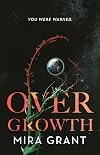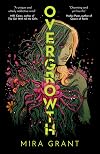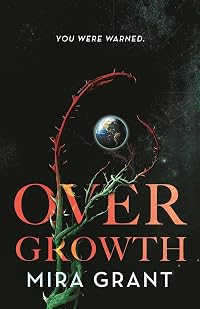
Overgrowth
by Mira Grant
There is 1 current discussion about this work.
On This Page
Description
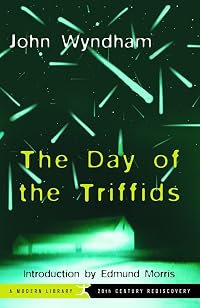
"Invasion of the Body Snatchers meets Day of the Triffids in this full-on body horror/alien invasion apocalypse. This is just a story. It can't hurt you anymore. Since she was three years old, Anastasia Miller has been telling anyone who would listen that she's an alien disguised as a human being, and that the armada that left her on Earth is coming for her. Since she was three years old, no one has believed her. Now, with an alien signal from the stars being broadcast around the world, show more humanity is finally starting to realize that it's already been warned, and it may be too late. The invasion is coming, Stasia's biological family is on the way to bring her home, and very few family reunions are willing to cross the gulf of space for just one misplaced child. What happens when you know what's coming, and just refuse to listen?"-- show lessTags
Recommendations




Member Reviews
Mira Grant is an auto-read author for me. For one thing, her novels are rare. She writes plenty of short stories and novellas, but full-length novels make up the minority of her work. That makes those times when she does publish something longer than 200 pages a treat. Then there is how well she writes horror. She doesn't set out to create a creepy tone or establish a suspenseful mood. Instead, her horror lies in the mundane. It's a simple approach but very effective.
OVERGROWTH is Ms. Grant's latest novel, and it hits all the right notes. The brilliance of the story lies with Stasia and her unique position as both hero and villain. As the hero of the story, we see the invasion unfold through her point of view. We are with her as she show more discovers her purpose, just as we are with her as her body begins to unveil its alien form. It is a metamorphosis that is equal parts awe-inspiring, unfathomable, and frightening because of what it means. Many an alien conspiracy theorist has put forth the idea that aliens are already among us, hiding in plain sight. This story is that conspiracy made very real.
The plot of aliens who have assimilated so well that they are essentially human creates innate tension and raises all sorts of questions. These questions run the gamut from what it means to be human to whether colonization is ever right to whether there is such a thing as being "right" when it comes to species evolution. OVERGROWTH would make for the best book club selection because it is a story that demands in-depth discussions.
I started OVERGROWTH expecting to read another fantastic horror novel from Ms. Grant. I finished OVERGROWTH with so many questions about life and identity, right and wrong, what it means to surrender, and a myriad of other things. I finished the book over a month ago and still ask these questions to myself. The horror is still there. OVERGROWTH includes plenty of gore and mutilation to satisfy the most basic horror fan, and Stasia morphing into her true form is not for the weak. But where it shines is in Ms. Grant's unique approach to aliens and the anthropological and sociological questions her characters raise. Even though it is still June as I type this, I rank OVERGROWTH as one of the best novels I have read for the year. show less
OVERGROWTH is Ms. Grant's latest novel, and it hits all the right notes. The brilliance of the story lies with Stasia and her unique position as both hero and villain. As the hero of the story, we see the invasion unfold through her point of view. We are with her as she show more discovers her purpose, just as we are with her as her body begins to unveil its alien form. It is a metamorphosis that is equal parts awe-inspiring, unfathomable, and frightening because of what it means. Many an alien conspiracy theorist has put forth the idea that aliens are already among us, hiding in plain sight. This story is that conspiracy made very real.
The plot of aliens who have assimilated so well that they are essentially human creates innate tension and raises all sorts of questions. These questions run the gamut from what it means to be human to whether colonization is ever right to whether there is such a thing as being "right" when it comes to species evolution. OVERGROWTH would make for the best book club selection because it is a story that demands in-depth discussions.
I started OVERGROWTH expecting to read another fantastic horror novel from Ms. Grant. I finished OVERGROWTH with so many questions about life and identity, right and wrong, what it means to surrender, and a myriad of other things. I finished the book over a month ago and still ask these questions to myself. The horror is still there. OVERGROWTH includes plenty of gore and mutilation to satisfy the most basic horror fan, and Stasia morphing into her true form is not for the weak. But where it shines is in Ms. Grant's unique approach to aliens and the anthropological and sociological questions her characters raise. Even though it is still June as I type this, I rank OVERGROWTH as one of the best novels I have read for the year. show less
I know this was my own fault, but I didn’t think I’d despise this book. In the past, I’ve enjoyed Grant’s story generation/plotting and come to hate her style. Here we have a failure of the first, and now I’m probably madder at myself than I am at Grant.
On style: This book could have been half the length and told the exact same story with every metaphor and concept intact. But it isn’t. Practically every other sentence is doubled, sometimes by using synonyms and sometimes by using pronouns and negations, often just by repetition. On and on, again and again. (See what I did there? Did you?) Among other things, this style makes every character sound exactly the same despite supposed variation in their personalities and show more backgrounds.
On story: Plotwise, it’s Little Shop of Horrors x Invasion of the Body Snatchers: As a small plant, our Audrey consumed a small child and took her place. And insisted ever since that she was the vanguard of an alien invasion, as do all the other alien plants (heh) around the world, despite being physically indistinguishable from the humans they replaced. But she actually is! Spoiler-ish discussion: Whether this is supposed to be a critique of human indifference to others’ suffering or not, it reads like the satisfied musings of a genocidaire, and even if Grant were a subtle enough writer to pull off satire, the worldbuilding would make that fail.
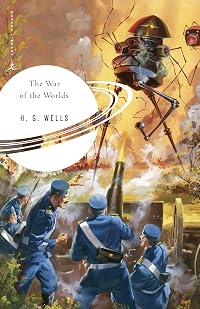
There are framing quotes from Wells’ War of the Worlds, including where Wells suggests that, having happily slaughtered people who were different from them, humans could hardly be surprised that Martians would treat them similarly. And Stasia, our protagonist, ends up mad at the humans for not wanting to be drained of their blood. Except some of them aren’t drained—turns out the conversion process can also occur for mature humans, some who chose it and some who (apparently) are chosen because of their political status, who retain their memories, so yay, Stasia doesn’t have to lose the human love of her life, who instead will subsist on the blood of the unlucky drained—that is, the billions of other humans. (I don’t see how the resource math works otherwise, and it sure sounded like the result in each prior invasion was “a couple hundred body-snatched versions of the originals survive.” I also can’t decide whether the fact that the plants apparently drink the blood of multiple alien worlds’ varied species is (1) a failure of basic science or (2) a claim that evolution here was directed by the plants to spec. I also set aside whether the blood has to be sapient—the plants apparently gained sapience when they drank the blood of animal aliens who arrived on the plant planet, and they seem to enjoy sapient blood best of all—setting up schemes designed to involve planets with native sapience rather than ones without it—but then there’s a scene where they happily chow down on cattle.) Stasia is blithely confident that this process will preserve the “best” of humanity, like a good colonizer.
But Stasia was also changed by the invaders’ pollen, becoming more bonded to them—biologically compelled to speciesism, compared to her earlier identification with humans. She endorses the abusers’ logic: humans forced the aliens to eat them by being mad and scared when they showed up to eat the humans. But hey, her betrayal of humanity was probably biologically based rather than the result of persuasion, because that is an awesome message to be putting out right now. (Mostly, I think this is just incoherent.)
At one point, the aliens say that if anyone had ever believed the plant children who insisted they were the vanguard of an invasion and told them not to come, they would have held off. Maybe we’re supposed to read this as obvious nonsense, but: If that’s so, there’s no clue in the text; Grant might at least have used a quote describing how Spanish conquistadors would read out announcements in Spanish and then hold that native peoples were bound thereby. If that’s not so, then this really is just sadism: The children were biologically compelled to announce that they were a vanguard, but not physically different (at the time). Nor were the children aware of anything else, so when asked for details they could not respond “the invasion will be genocide by blood-drinking plant,” which might at least have drawn further concern. Indeed, we’re told that some people did in fact believe the children’s claims, but apparently none of them ever used the magic words “please don’t eat us.” I feel like Grant’s view of the book is “Isn’t it wild to write a book from the alien invader’s perspective?” and mine is “Why would I want to read a book about the inside of a genocidaire’s head and all the excuses they give for why someone else’s suffering doesn’t count? I could just read history if I wanted that!” show less
On style: This book could have been half the length and told the exact same story with every metaphor and concept intact. But it isn’t. Practically every other sentence is doubled, sometimes by using synonyms and sometimes by using pronouns and negations, often just by repetition. On and on, again and again. (See what I did there? Did you?) Among other things, this style makes every character sound exactly the same despite supposed variation in their personalities and show more backgrounds.
On story: Plotwise, it’s Little Shop of Horrors x Invasion of the Body Snatchers: As a small plant, our Audrey consumed a small child and took her place. And insisted ever since that she was the vanguard of an alien invasion, as do all the other alien plants (heh) around the world, despite being physically indistinguishable from the humans they replaced. But she actually is! Spoiler-ish discussion: Whether this is supposed to be a critique of human indifference to others’ suffering or not, it reads like the satisfied musings of a genocidaire, and even if Grant were a subtle enough writer to pull off satire, the worldbuilding would make that fail.
There are framing quotes from Wells’ War of the Worlds, including where Wells suggests that, having happily slaughtered people who were different from them, humans could hardly be surprised that Martians would treat them similarly. And Stasia, our protagonist, ends up mad at the humans for not wanting to be drained of their blood. Except some of them aren’t drained—turns out the conversion process can also occur for mature humans, some who chose it and some who (apparently) are chosen because of their political status, who retain their memories, so yay, Stasia doesn’t have to lose the human love of her life, who instead will subsist on the blood of the unlucky drained—that is, the billions of other humans. (I don’t see how the resource math works otherwise, and it sure sounded like the result in each prior invasion was “a couple hundred body-snatched versions of the originals survive.” I also can’t decide whether the fact that the plants apparently drink the blood of multiple alien worlds’ varied species is (1) a failure of basic science or (2) a claim that evolution here was directed by the plants to spec. I also set aside whether the blood has to be sapient—the plants apparently gained sapience when they drank the blood of animal aliens who arrived on the plant planet, and they seem to enjoy sapient blood best of all—setting up schemes designed to involve planets with native sapience rather than ones without it—but then there’s a scene where they happily chow down on cattle.) Stasia is blithely confident that this process will preserve the “best” of humanity, like a good colonizer.
But Stasia was also changed by the invaders’ pollen, becoming more bonded to them—biologically compelled to speciesism, compared to her earlier identification with humans. She endorses the abusers’ logic: humans forced the aliens to eat them by being mad and scared when they showed up to eat the humans. But hey, her betrayal of humanity was probably biologically based rather than the result of persuasion, because that is an awesome message to be putting out right now. (Mostly, I think this is just incoherent.)
At one point, the aliens say that if anyone had ever believed the plant children who insisted they were the vanguard of an invasion and told them not to come, they would have held off. Maybe we’re supposed to read this as obvious nonsense, but: If that’s so, there’s no clue in the text; Grant might at least have used a quote describing how Spanish conquistadors would read out announcements in Spanish and then hold that native peoples were bound thereby. If that’s not so, then this really is just sadism: The children were biologically compelled to announce that they were a vanguard, but not physically different (at the time). Nor were the children aware of anything else, so when asked for details they could not respond “the invasion will be genocide by blood-drinking plant,” which might at least have drawn further concern. Indeed, we’re told that some people did in fact believe the children’s claims, but apparently none of them ever used the magic words “please don’t eat us.” I feel like Grant’s view of the book is “Isn’t it wild to write a book from the alien invader’s perspective?” and mine is “Why would I want to read a book about the inside of a genocidaire’s head and all the excuses they give for why someone else’s suffering doesn’t count? I could just read history if I wanted that!” show less
Anastasia Miller is an alien. Her people are on their way to Earth even now, to invade and conquer. This is no secret though; in fact, it’s the first thing she tells anyone she meets, like it’s a compulsion. Hi, I’m an alien, my people are coming to take over the planet. Nice to meet you.
No one believes her until they begin picking up the signals from the arriving armada.
I love Mira Grant and I love sci-fi/horror. Body horror! Man eating plants! Give it here!
And to Overgrowth’s credit, the first few chapters are enthralling. Talk about getting hooked immediately, it was wonderful and tragic and terrible and I was onboard. But the rest of the book never quite lived up to the opening. I think it’s mostly the characters and show more their actions/reactions. In a way it felt like a YA book, even though it’s definitely not meant to; our main character is a 35 year old introvert. I liked the individual characters well enough, but they often responded to situations in a way that had me scratching my head. If you have a plan to infiltrate and betray an alien cohort to save humanity, and they’ve already shown they have no compunctions about murdering people, would YOU tell them the details right to their face? I mean sure, you get some cute and snappy dialogue, but… why wouldn’t they just go “Cool, thanks for letting me know you’re a threat” and immediately eliminate you?
Those details kept pulling me out of the story. Combined with a pace that started snappy and then slowed way down, it didn’t quite gel for me.
Aside from that, it’s still a story about found family, outcasts finding their place, identity, colonization, and a whole host of interesting themes that may draw you in. If you like things like Little Shop of Horrors and Invasion of the Body Snatchers, it’s worth taking a look to see what you think. And while a YA feel may be a turn off for me, it might be EXACTLY the thing for you.
Overgrowth is coming out on May 6, so be on the lookout. Thank you NetGalley and Tor Nightfire for the opportunity to read this ARC! All opinions are my own. show less
No one believes her until they begin picking up the signals from the arriving armada.
I love Mira Grant and I love sci-fi/horror. Body horror! Man eating plants! Give it here!
And to Overgrowth’s credit, the first few chapters are enthralling. Talk about getting hooked immediately, it was wonderful and tragic and terrible and I was onboard. But the rest of the book never quite lived up to the opening. I think it’s mostly the characters and show more their actions/reactions. In a way it felt like a YA book, even though it’s definitely not meant to; our main character is a 35 year old introvert. I liked the individual characters well enough, but they often responded to situations in a way that had me scratching my head. If you have a plan to infiltrate and betray an alien cohort to save humanity, and they’ve already shown they have no compunctions about murdering people, would YOU tell them the details right to their face? I mean sure, you get some cute and snappy dialogue, but… why wouldn’t they just go “Cool, thanks for letting me know you’re a threat” and immediately eliminate you?
Those details kept pulling me out of the story. Combined with a pace that started snappy and then slowed way down, it didn’t quite gel for me.
Aside from that, it’s still a story about found family, outcasts finding their place, identity, colonization, and a whole host of interesting themes that may draw you in. If you like things like Little Shop of Horrors and Invasion of the Body Snatchers, it’s worth taking a look to see what you think. And while a YA feel may be a turn off for me, it might be EXACTLY the thing for you.
Overgrowth is coming out on May 6, so be on the lookout. Thank you NetGalley and Tor Nightfire for the opportunity to read this ARC! All opinions are my own. show less
V, except this time we are for some reason rooting for the body-snatching spore-spewing aliens.
Despite the blurb promising eldritch horror, this is relationship-focused YA sci-fi, which is fine if a bit misleading.
My biggest misgivings (aside from the endless repetitions, unlikable characters, shaky plot, and uneven pacing) come back to the mismatch between the positive pro-immigration trans-rights DEI messaging and the assimilating Borg-like colonizing rapacious genocidal aliens that we are asked to accept. It's like advocating for BLM with a Willie Horton poster.
Despite the blurb promising eldritch horror, this is relationship-focused YA sci-fi, which is fine if a bit misleading.
My biggest misgivings (aside from the endless repetitions, unlikable characters, shaky plot, and uneven pacing) come back to the mismatch between the positive pro-immigration trans-rights DEI messaging and the assimilating Borg-like colonizing rapacious genocidal aliens that we are asked to accept. It's like advocating for BLM with a Willie Horton poster.
I haven't read any of the marketed comps for this book, but I will say I don't think this was horror, much more almost campy sci-fi. the tone is very similar to the wayward children stories, which made the main character feel a bit younger than I think she was meant to be. I really enjoyed this though, the idea of planting aliens amongst us who constantly say they're aliens and then we get mad at them for us not believing it. hilarious and on brand for us.
Big yikes!! The aliens are coming and they are carnivorous plants and maybe eating all of humanity bc they can’t just pause for a second and not try to kill anything they are confused by, is the right side?? I mean, looking at the state of the world right now… feels like maybe a big bush fire do over might help?
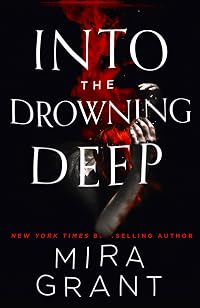
Mira Grant is such a solid and reliable author for me so far. This didn’t hit me the way my fav by her (into the drowning deep) did, but it was really good.
Mira Grant is such a solid and reliable author for me so far. This didn’t hit me the way my fav by her (into the drowning deep) did, but it was really good.
I have some complicated feelings regarding this book. While I enjoyed the story, there was a ton of repetition in plot and narration, the later of which could be grating at times. Even as Stasia was changing, her internal dialogue became more and more predictable. The author was so concerned that the reader wouldn't understand the allegories and metaphors that everything had to be spelled out in excruciating detail.
Members
- Recently Added By
Lists

Horror (Owned TBR)
60 works; 1 member
Talk Discussions
Current Discussions
Author Information

420+ Works 66,097 Members
Common Knowledge
- Original title
- Overgrowth
- Original publication date
- 2025-05-06
- People/Characters
- Anastasia Miller
- Epigraph
- Yet across the gulf of space, minds that are to our minds as ours are to those of the beasts that perish, intellects vast and cool and unsympathetic, regarded this earth with envious eyes …
—H. G. Wells, The War... (show all) of the Worlds
Sometimes I wonder if pollution isn't humanity's way of denying how hard it is to build a wall against the stars.
—Stasia Miller - Dedication
- For Merav.
I told you so. - First words
- This is a story.
- Last words
- (Click to show. Warning: May contain spoilers.)I can't wait.
- Publisher's editor
- Harris, Lee
Classifications
Statistics
- Members
- 315
- Popularity
- 101,594
- Reviews
- 8
- Rating
- (3.12)
- Languages
- English
- Media
- Paper, Audiobook, Ebook
- ISBNs
- 8
- ASINs
- 3