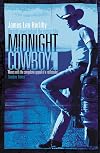
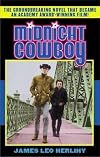
Midnight Cowboy
by James Leo Herlihy
On This Page
Description
The basis for the Oscar-winning buddy film. "There is no questioning the rampant power achieved through shriveling, shattering scenes" (Kirkus Reviews). Midnight Cowboy is considered by many to be one of the best American novels published since World War II. The main story centers around Joe Buck, a naive but eager and ambitious young Texan, who decides to leave his dead-end job in search of a grand and glamorous life he believes he will find in New York City. But the city turns out to be show more a much more difficult place to negotiate than Joe could ever have imagined. He soon finds himself and his dreams compromised. Buck's fall from innocence and his relationship with the crippled street hustler Ratso Rizzo form the novel's emotional nucleus. This unlikely pairing of Ratso and Joe Buck is perhaps one of the most complex portraits of friendship in contemporary literature. The focus on male friendship follows a strong path cut by Twain's Huck and Jim, Melville's Ishmael and Queequeg, Fitzgerald's Nick Carraway and Jay Gatsby, and Kerouac's Sal Paradise and Dean Moriarty. Midnight Cowboy takes a well-deserved place among a group of distinguished American novels that write--often with unnerving candor--about those who live on the fringe of society. "Leaves the world of innocence that is muddied by sex for a world that is innocent in the midst of sex, with a protagonist who is a sexual entrepreneur." --The New York Review of Books show lessTags
Recommendations














Member Reviews
A surprisingly layered novel that, I suspect, marks a sort of turning point in American fiction. In a sense, it's a novel of its time. Joe Buck drops acid at a party full of downtown New York types, and you can see the Summer of Love on the horizon. Joe Buck's relationship with Rico "Ratso" Rizzo is complex, ambiguous, but it's undeniably homoerotic. And while I wouldn't say that "Midnight Cowboy gets author out-and-explicit, the author admits that gay sex really does happen at some points throughout this novel. This novel's main character is described as undeniably beautiful, and Herhily encourages us to admire him.
In this sense, the book might be described as a milestone of queer literature, but, honestly, I was amazed at how much show more importance the author placed on sex of all sorts throughout the novel. "Midnight Cowboy" is awash in sex of all kinds. He describes Joe Buck's encounter with a girl who's astonishingly free with her favors, Joe's attempts to become a New York gigolo, and even his grandmother's endless dalliances with wealthy older gentlemen. It fits quite well into that short, turbulent in the late sixties in which sex went from being a largely taboo subject in mainstream American life to being something that everyone wanted to and talk and read about. It's a long way from Norman Mailer's "The Naked and the Dead", with all its missing four-letter words, to Jacqueline Susan's "Valley of the Dolls." While I've rather disliked some products of this era, such as "Naked Came the Stranger" and"Candy", Herhily sets himself apart here employing a writing style that's both wonderfully exacting and decidedly old fashioned, an effective counterpoint to the rather risqué material that he deals with. Whether you come away thinking that "Midnight Cowboy" is a good book will likely depend on your own literary tastes, but there's no doubt that Herhily can put together a sentence and a plot. The material he deals with might be called salacious, but it's far from trash.
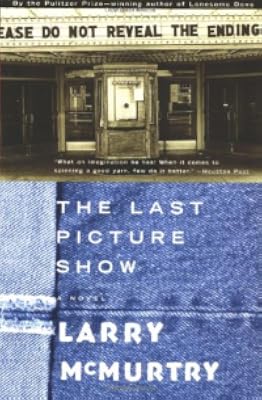
The other thing that surprised me about "Midnight Cowboy" is that it's a genuinely searching take on a particularly American loneliness: it reminded me more than once of Larry McMurtry's "The Last Picture Show." Joe Buck, our hero, isn't so much inexperienced as almost unbelievably vacuous, having been either ignored by his family and grandmother, having left school, and having been raised, almost literally, by a television set. Confident in his looks but utterly lacking in any sort of direction or inner life, he seems, at some points, an avatar modern loneliness: anomie, American style. In other words, Joe Buck is plumb lonesome. For much of the book, you can feel the wind just blow through him, and, despite the fact that he's prone to shallow behavior, I imagine that he will evoke pity in many readers. And I also suspect that some readers may find this a bit frustrating and spend the book trying to figure out when Joe is finally going to catch on. Many more will probably feel bad for him as he stumbles from mistake to mistake without seeming to learn very much. But by the time that the book nears its ending, which will come as a surprise to few readers, Joe seems to have developed the beginnings of a personality and the foundation for a set of values, something that would have seemed unimaginable at the beginning of the novel. Recommended to those interested in queer lit, sixties-era reads, and solid writing. show less
In this sense, the book might be described as a milestone of queer literature, but, honestly, I was amazed at how much show more importance the author placed on sex of all sorts throughout the novel. "Midnight Cowboy" is awash in sex of all kinds. He describes Joe Buck's encounter with a girl who's astonishingly free with her favors, Joe's attempts to become a New York gigolo, and even his grandmother's endless dalliances with wealthy older gentlemen. It fits quite well into that short, turbulent in the late sixties in which sex went from being a largely taboo subject in mainstream American life to being something that everyone wanted to and talk and read about. It's a long way from Norman Mailer's "The Naked and the Dead", with all its missing four-letter words, to Jacqueline Susan's "Valley of the Dolls." While I've rather disliked some products of this era, such as "Naked Came the Stranger" and"Candy", Herhily sets himself apart here employing a writing style that's both wonderfully exacting and decidedly old fashioned, an effective counterpoint to the rather risqué material that he deals with. Whether you come away thinking that "Midnight Cowboy" is a good book will likely depend on your own literary tastes, but there's no doubt that Herhily can put together a sentence and a plot. The material he deals with might be called salacious, but it's far from trash.
The other thing that surprised me about "Midnight Cowboy" is that it's a genuinely searching take on a particularly American loneliness: it reminded me more than once of Larry McMurtry's "The Last Picture Show." Joe Buck, our hero, isn't so much inexperienced as almost unbelievably vacuous, having been either ignored by his family and grandmother, having left school, and having been raised, almost literally, by a television set. Confident in his looks but utterly lacking in any sort of direction or inner life, he seems, at some points, an avatar modern loneliness: anomie, American style. In other words, Joe Buck is plumb lonesome. For much of the book, you can feel the wind just blow through him, and, despite the fact that he's prone to shallow behavior, I imagine that he will evoke pity in many readers. And I also suspect that some readers may find this a bit frustrating and spend the book trying to figure out when Joe is finally going to catch on. Many more will probably feel bad for him as he stumbles from mistake to mistake without seeming to learn very much. But by the time that the book nears its ending, which will come as a surprise to few readers, Joe seems to have developed the beginnings of a personality and the foundation for a set of values, something that would have seemed unimaginable at the beginning of the novel. Recommended to those interested in queer lit, sixties-era reads, and solid writing. show less
https://nwhyte.livejournal.com/3355108.html
It's a rare case where it's actually rather difficult to decide which is better between the book and the film (which sticks closely to the last two-thirds of the book). The book does give us a lot more details of Joe's early life (mostly in fact in New Mexico rather than Texas) and takes us deeper inside his head. The descriptions are vivid and somewhat unssettling. On the other hand, that tight-third narrative gives us a more restricted view of events than the camera can do, and the fact is that Joe is not all that interesting or nice a person to spend time with. It's a memorable (and short) read all the same.
It's a rare case where it's actually rather difficult to decide which is better between the book and the film (which sticks closely to the last two-thirds of the book). The book does give us a lot more details of Joe's early life (mostly in fact in New Mexico rather than Texas) and takes us deeper inside his head. The descriptions are vivid and somewhat unssettling. On the other hand, that tight-third narrative gives us a more restricted view of events than the camera can do, and the fact is that Joe is not all that interesting or nice a person to spend time with. It's a memorable (and short) read all the same.
The novel is different than the well-known movie in many important respects and very much worth reading on its own merits.
Unlike the movie, Herlihy begins the story in Texas and devotes nearly the first half of the book to Joe Buck's life there. This background gives more clarity and detail to Buck's character and his decision to move to New York. And makes his failure as a gigolo (to put it kindly) both more ironic and tragic.
In Herlihy's telling the other main character, Ratso Rizzo, is better developed -- and ambiguous. The friendship between Rizzo and Buck in the novel has a complexity and poignancy the movie doesn't capture. All this makes the end of the story, which I won't reveal on the chance it isn't familiar, even more memorable.
Unlike the movie, Herlihy begins the story in Texas and devotes nearly the first half of the book to Joe Buck's life there. This background gives more clarity and detail to Buck's character and his decision to move to New York. And makes his failure as a gigolo (to put it kindly) both more ironic and tragic.
In Herlihy's telling the other main character, Ratso Rizzo, is better developed -- and ambiguous. The friendship between Rizzo and Buck in the novel has a complexity and poignancy the movie doesn't capture. All this makes the end of the story, which I won't reveal on the chance it isn't familiar, even more memorable.
In the movie, Joe Buck comes off as just an arrogant hayseed who has no brains. In the book, there's more to Joe than just that. Joe is a man whose life has been touched by many people who seem to really take no notice of him. They're not mean people, just don't know any better except to be self-centered. So Joe grows into a man who himself knows no other way, and yet is taken aback when people take advantage of him. There's a sweet innocence about Joe which keeps our interest until the very end, despite the rigors of his life, both in Texas and New York City.
The movie takes up when Joe boards the bus in Houston headed for NYC to be a cowboy hustler, because someone told him most hustlers were gay, and there were no cowboys.
Rico "Ratso" show more Rizzo bursts the last of Joe's optimistic outlook by hustling him out of his last bits of money. When they encounter each other again, Joe is determined to teach Ratso a lesson with his fist. But something in Joe gets a good look at Ratso's physical deformity and watches others bully him and begins to show fumbling compassion to the man who doesn't have cowboy good looks to work with.
Here's where a lot of people might write something about this "unlikely friendship." But I don't think their friendship is unlikely at all. People find each other for reasons we can't understand, and Joe and Ratso found each other because they need the other.
Living in squalor in an abandoned building, grubbing every day for food and coin absolutely changes them. These are odd people trying to shift for themselves in a world which didn't bother to teach them anything. They live on survival instincts, which often include Ratso pimping Joe out for sexual favors in dirty allies. Theirs is not a pretty life.
As Ratso's illness progresses, Joe realizes not only are they true friends, but that he likes taking care of this odd little hustler. Ratso and Joe are the only two people who have paid attention to the other and taken the other into consideration. It starts as a matter of survival and turns into deep abiding friendship. show less
The movie takes up when Joe boards the bus in Houston headed for NYC to be a cowboy hustler, because someone told him most hustlers were gay, and there were no cowboys.
Rico "Ratso" show more Rizzo bursts the last of Joe's optimistic outlook by hustling him out of his last bits of money. When they encounter each other again, Joe is determined to teach Ratso a lesson with his fist. But something in Joe gets a good look at Ratso's physical deformity and watches others bully him and begins to show fumbling compassion to the man who doesn't have cowboy good looks to work with.
Here's where a lot of people might write something about this "unlikely friendship." But I don't think their friendship is unlikely at all. People find each other for reasons we can't understand, and Joe and Ratso found each other because they need the other.
Living in squalor in an abandoned building, grubbing every day for food and coin absolutely changes them. These are odd people trying to shift for themselves in a world which didn't bother to teach them anything. They live on survival instincts, which often include Ratso pimping Joe out for sexual favors in dirty allies. Theirs is not a pretty life.
As Ratso's illness progresses, Joe realizes not only are they true friends, but that he likes taking care of this odd little hustler. Ratso and Joe are the only two people who have paid attention to the other and taken the other into consideration. It starts as a matter of survival and turns into deep abiding friendship. show less
Midnight Cowboy is a tale about survival amidst loss, loneliness and a lack of guidance. Herlihy's underrated classic sends us on a bizarre and slightly homoerotic journey with a simpleton, Joe Buck, who is full of insight, although he's completely oblivious to this trait. Along the way Joe befriends a crippled street-kid named Rico ‘Ratso’ Rizzo, and together they form an endearing duo that depend on each other the way only two strangers without a soul in the world to care for them, can. The message is touching, the text gripping, and Herlihy’s writing so enjoyable that he makes a simple bus ride seem exhilarating.
Check out more of my reviews at BookSnakeReviews
Check out more of my reviews at BookSnakeReviews
Midnight Cowboy is a tale about survival amidst loss, loneliness and a lack of guidance. Herlihy's underrated classic sends us on a bizarre and slightly homoerotic journey with a simpleton, Joe Buck, who is full of insight, although he's completely oblivious to this trait. Along the way Joe befriends a crippled street-kid named Rico ‘Ratso’ Rizzo, and together they form an endearing duo that depend on each other the way only two strangers without a soul in the world to care for them, can. The message is touching, the text gripping, and Herlihy’s writing so enjoyable that he makes a simple bus ride seem exhilarating.
www.booksnakereviews.blogspot.com
www.booksnakereviews.blogspot.com
I happened to be reading a book about iconic movies and up popped "Midnight Cowboy" the 1969 mega-hit that broke a lot of ground in the industry. It peaked my curiosity enough to want to read the actual novel and see how closely it followed the film. The novel I found absorbing and Helihy's style an enjoyable and captivating read. I was surprised that the book was covered rather well in detail in the movie itself. The only difference was the movie skipped much if the detail of Joe Buck's early life and time before heading to New York. Also it changed a few of those details. The remainder however followed true to form of the novel. Herlihy relays the exploits of Joe Buck and Rico "Ratso" Rizzo, the alienation and loneliness that life can show more present for many in society and those whose lives are played out on the streets in a very indifferent world. A worthwhile read for anyone wanting to explore this realm. show less
Members
- Recently Added By
Lists

Read the book and saw the movie
1,170 works; 195 members

Books Set in New York City
127 works; 21 members

Books Read in 2021
5,361 works; 114 members
Author Information

13+ Works 1,101 Members
Some Editions
Awards and Honors
Awards
Work Relationships
Has the adaptation
Common Knowledge
- Canonical title
- Midnight Cowboy
- Original publication date
- 1965
- People/Characters
- Joe Buck; Enrico "Ratso" Rizzo
- Important places
- New York, New York, USA; Albuquerque, New Mexico, USA
- Related movies
- Midnight Cowboy (1969 | IMDb)
- Epigraph
- "There's no Beatitude for the lonesome. The Book don't say they are blessed." — MR. O'DANIEL
- Dedication
- for Dick Duane
- First words
- In his new boots, Joe Buck was six-foot-one and life was different. As he walked out of that store in Houston something snapped in the whole bottom half of him: A kind of power he never even knew was there had been released i... (show all)n his pelvis and he was able to feel the world through it.
- Last words
- (Click to show. Warning: May contain spoilers.)Because of course he was scared now, scared to death.
- Original language
- English
Classifications
Statistics
- Members
- 622
- Popularity
- 46,965
- Reviews
- 9
- Rating
- (3.85)
- Languages
- 11 — Danish, Dutch, English, Finnish, French, German, Italian, Polish, Portuguese, Slovenian, Spanish
- Media
- Paper, Audiobook, Ebook
- ISBNs
- 36
- UPCs
- 1
- ASINs
- 33