
Larry Duplechan
Author of Blackbird
About the Author
Image credit: http://www.larry-d.com/
Series
Works by Larry Duplechan
Associated Works
The Letter Q: Queer Writers' Notes to their Younger Selves (2012) — Contributor — 297 copies, 5 reviews
Black Like Us: A Century of Lesbian, Gay, and Bisexual African American Fiction (2002) — Contributor — 127 copies, 1 review
Calling the Wind: Twentieth Century African-American Short Stories (1992) — Contributor — 114 copies
Freedom in This Village: Twenty-Five Years of Black Gay Men's Writing (2005) — Contributor — 91 copies, 2 reviews
Tagged
Common Knowledge
- Canonical name
- Duplechan, Larry
- Birthdate
- 1956-12-30
- Gender
- male
- Occupations
- musician
author
editor - Nationality
- USA
- Places of residence
- Los Angeles, California, USA
- Associated Place (for map)
- California, USA
Members
Reviews

Blackbird fills to the brim with compassion, understanding, authenticity and insightful perceptions. Its storyline tells of a young man's coming of age and coming to face the reality of his sexual orientation against the backdrop of an environment where judgments of others supersedes any understanding or acceptance of others.
This book's many sub-themes each feel accurate and believable: the story and fate of the teenage couple who've 'made a baby,' the teachers who fail at teaching, the show more racism the hurts target and victim both, the homophobia that condemns the hater and the hated, the church that fails at Christianity and the many parents who have failed at truly parenting their children.
The book has many sad stories within it. Teenage suicide, teenage pregnancy, racial divide and others.
While the main theme of the book deals with a young man coming to terms with his own sexuality, a frightful experience for all teenagers, straight or gay, the sub-theme that stuck me most dealt with how religion becomes a tool and excuse for hatred, judgment, condemnation and stupidity strong enough to allow parents to disavow their own children. In fact, the book's most insightful and stinging prose deals with this use of religious belief to justify personal judgment, "I just couldn't believe that the God who made me what I am could be any more displeased with me for not being heterosexual than for not being tall."
It is not God who is displeased, it is the people who pretend to speak for his authority.Meister Eckhardt summed it up thusly: "God does not love you because of who you are, but because of who He is."
I believe the author intended a tale not about racism or homophobia, but about the impacts of judgments, hatreds, prejudices and sanctimonious self-righteousness, the excuses used to justify these reprehensible behaviors (chiefly religion), and the extent to which they harm.
It is a powerful, insightful book. It is a must read by all readers, not because its theme is homosexuality, but because it is humanity; humanity at its best, and humanity at its worst. show less
This book's many sub-themes each feel accurate and believable: the story and fate of the teenage couple who've 'made a baby,' the teachers who fail at teaching, the show more racism the hurts target and victim both, the homophobia that condemns the hater and the hated, the church that fails at Christianity and the many parents who have failed at truly parenting their children.
The book has many sad stories within it. Teenage suicide, teenage pregnancy, racial divide and others.
While the main theme of the book deals with a young man coming to terms with his own sexuality, a frightful experience for all teenagers, straight or gay, the sub-theme that stuck me most dealt with how religion becomes a tool and excuse for hatred, judgment, condemnation and stupidity strong enough to allow parents to disavow their own children. In fact, the book's most insightful and stinging prose deals with this use of religious belief to justify personal judgment, "I just couldn't believe that the God who made me what I am could be any more displeased with me for not being heterosexual than for not being tall."
It is not God who is displeased, it is the people who pretend to speak for his authority.Meister Eckhardt summed it up thusly: "God does not love you because of who you are, but because of who He is."
I believe the author intended a tale not about racism or homophobia, but about the impacts of judgments, hatreds, prejudices and sanctimonious self-righteousness, the excuses used to justify these reprehensible behaviors (chiefly religion), and the extent to which they harm.
It is a powerful, insightful book. It is a must read by all readers, not because its theme is homosexuality, but because it is humanity; humanity at its best, and humanity at its worst. show less
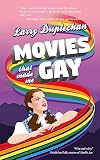
This is a dive into the movies Larry Duplechan liked or didn't and why. Most feature LGBQT+ actors. Being a fan of the Golden Age of Hollywood pictures, I had to read this to see what his take was on movies. While I've seen most of the old black and white movies he talks about, I haven't seen them all. I also got a list of newer movies to watch. I will not be watching too many of his Halloween selections since I am not into horror movies. But I did like hearing what he thought of these show more movies from the classics (Wizard of Oz) to today's movies (Bros). I loved his snarkiness and tongue-in-cheek. I also appreciated that he looked at the original movie and any remakes of it. I absolutely agree with him on Footlight Parade (one of my favorites.) I will also have to check out the ones I haven't seen to see if I agree with him on them.
A perfect read for movie buffs. show less
A perfect read for movie buffs. show less
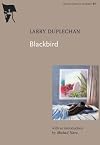
Johnnie Ray Rousseau is a gay black teenager in the 70's. He is finishing high school looking to head off to college to spread his wings. He is closeted. His best friend is Efrem. Cherie is trying to get him to be her boyfriend, so he has to tell her why he says no. He lusts after Todd who loves Leslie and Skipper who loves Kathleen. He knows he cannot be in the school play because of his race but that does not stop him from dreaming of being the lead. He then gets involved in theater with show more college kids where he meets Marshall who becomes his first lover. High school gets messy for his friends then him when he's outed. What will he do? Will he spread his wings or return to the closet?
I enjoyed this story. It is so realistic of high school. I knew every one of these people. I felt bad for many of them. Todd and Leslie have the saddest story. Johnnie Ray is not believed by the cops about Todd, and he feels guilt but also realizes he did what he could. I felt bad for Efrem when he has troubles at home but was glad about his ending. I hated the youth pastor who outed Johnnie Ray but laughed when they went for the exorcism. Johnnie Ray felt the same as I did. I loved how he ended it. These really were a cast of characters with Johnnie Ray providing insight to it all.
I look forward to reading Mr. Duplechen's other books. I was pulled into Johnnie Ray's world and loved it. show less
I enjoyed this story. It is so realistic of high school. I knew every one of these people. I felt bad for many of them. Todd and Leslie have the saddest story. Johnnie Ray is not believed by the cops about Todd, and he feels guilt but also realizes he did what he could. I felt bad for Efrem when he has troubles at home but was glad about his ending. I hated the youth pastor who outed Johnnie Ray but laughed when they went for the exorcism. Johnnie Ray felt the same as I did. I loved how he ended it. These really were a cast of characters with Johnnie Ray providing insight to it all.
I look forward to reading Mr. Duplechen's other books. I was pulled into Johnnie Ray's world and loved it. show less
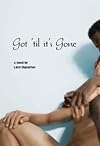
Duplechan’s ability to write fast and funny entertainments has not diminished in the fifteen years since Johnnie Ray’s last appearance. He keeps the novel moving right along with a light and humorous touch. References to music, pop and gay culture (and porn) appear on almost every page. Opening the book randomly one finds Duplechan shouting out to Judy Garland (and Gene Kelly’s ass) in Summer Stock, the Beatles, The Matrix, and bukkake. Johnnie has set his cell phone to shout ‘Flava show more Flav!’ to announce his mother’s calls. And the music of Joni Mitchell weaves itself into and out of the pages ofGot ‘Til It’s Gonehovers over Jonnie Ray like his own private guardian angel.
http://www.lambdaliterary.org/reviews/fiction/01/25/got-til-its-gone-by-larry-du... show less
http://www.lambdaliterary.org/reviews/fiction/01/25/got-til-its-gone-by-larry-du... show less
Awards

You May Also Like


Associated Authors
Statistics
- Works
- 8
- Also by
- 13
- Members
- 483
- Popularity
- #51,117
- Rating
- 3.6
- Reviews
- 14
- ISBNs
- 23
- Languages
- 1
