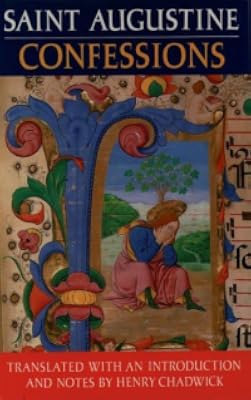
Confessions (Oxford World's Classics)
by Saint Augustine
On This Page
Description
In this new translation the brilliant and impassioned descriptions of Augustine's colorful early life are conveyed to the English reader with accuracy and art. Augustine tells of his wrestlings to master his sexual drive, his rare ascent from a humble Algerian farm to the edge of the corridors of high power at the imperial court of Milan, and his renunciation of secular ambition and marriage as he recovered the faith that his mother had taught him. It was in a Milan garden that Augustine show more finally achieved the act of will to Christian conversion, which he compared to a lazy man in bed finally deciding it is time to get up and face the day. - Back cover. show lessTags
Recommendations



Member Reviews
Oh Augustine, lingering in my periphery since I was a teenager. I almost bought your confessions when I was seventeen, it was there at the used bookstore in Toronto, but I think I went for Waugh instead. Augustine, looming large in my religious minor and illuminating the corners of my literary major. I always knew it was wrong not to read you and suffered in not having read you sooner. I thought that to read you would be toil and penance, that your Confessions would be uphill work worthwhile only in order to have one more trump card in my hand to lay down when boys in bars think they know more than they do. Augustine, my Augustine, who let me believe that you would be anything but pleasure?
In all honesty, when I started reading this show more book I couldn't stop talking about it to everyone around me. It must have been terrible. "HAVE YOU READ AUGUSTINE'S CONFESSIONS? IT'S SO GOOD! SO GOOD!" I keep doing this, this year. Picking up books that I have had on my radar since my teenage infancy and expecting them to be Hard Work but Good For Me. It's the most masochistic reading program ever. And then I get to them, and I find they are actually so good. People talk about the Confessions and War and Peace but they only ever talk about them being Important. Why don't they ever talk about them being Lovely? Why don't they ever talk about loving these books as books and not as seminal texts of the whatever period?
In this case I was bowled over by the prose, beautiful in this translation but with continual mentions that it's so much better in Latin, so much more full of rhymes and wordplay and euphony. Especially in the first half, both style and content seem so modern, even if most people aren't coming out of Manichaeism or trying to insist to their congregation that plays are probably Very Bad. I don't want to give the book back, which is a point I think the library would disagree with me on, meaning that I'm now earnestly developing a list of books that I've read from libraries and need to own, sooner rather than later. show less
In all honesty, when I started reading this show more book I couldn't stop talking about it to everyone around me. It must have been terrible. "HAVE YOU READ AUGUSTINE'S CONFESSIONS? IT'S SO GOOD! SO GOOD!" I keep doing this, this year. Picking up books that I have had on my radar since my teenage infancy and expecting them to be Hard Work but Good For Me. It's the most masochistic reading program ever. And then I get to them, and I find they are actually so good. People talk about the Confessions and War and Peace but they only ever talk about them being Important. Why don't they ever talk about them being Lovely? Why don't they ever talk about loving these books as books and not as seminal texts of the whatever period?
In this case I was bowled over by the prose, beautiful in this translation but with continual mentions that it's so much better in Latin, so much more full of rhymes and wordplay and euphony. Especially in the first half, both style and content seem so modern, even if most people aren't coming out of Manichaeism or trying to insist to their congregation that plays are probably Very Bad. I don't want to give the book back, which is a point I think the library would disagree with me on, meaning that I'm now earnestly developing a list of books that I've read from libraries and need to own, sooner rather than later. show less
"Never to have been born would be the best for mortal kind." "But," add the philosophers of the Fliegende Blätter, "that scarcely happens to one in 100,000." — The Joke and its Relation to the Unconscious
On Humor and the Elegiac
Augustine's earnestness is cached in such great reserves that, while it continues to produce one of the longest-running series of tragic pornographies, there still remains an unclaimed portion to be siphoned for the purposes of humor. The author himself is recognizing the humor in his adolescent prayer, "make me chaste, but not yet," (164) which is the aspiration for a personal change belied by an earnest wish for its indefinite deferral. Kierekegaard's phrase from The Sickness Unto Death is apropos, "The show more lower nature's power lies in stretching things out." (94) (The uncouth reader will recall that Kierkegaard intends this in the temporal sense, and not in the anatomical sense.) We already recognize this Augustinian resolution as one that will always remain in abeyance. Freud, in his Joke and Unconscious, is calling such a movement an "unmasking," in which a self-betrayal occurs by the intrusion of an earnest feeling into a dissembling effort. (In Freud's example, the marriage broker says, "why are you whispering such things, she's deaf as well.") In the same category as this, meaning that they make us smile in the same way, are later moments in Confessions where Augustine, more clever in strategies of dissembling, is foreclosing the inappropriate earnest feeling, leaving a trace in the form of a remarkable omission. Augustine relates the following episode of his conversion to which he also attributes the complete cessation of licentiousness: "[I] read the first passage on which my eyes lit: ‘Not in riots and drunken parties, not in eroticism and indecencies, not in strife and rivalry, but put on the Lord Jesus Christ and make no provision for the flesh in its lusts’ (Rom. 13: 13–14). At once, with the last words of this sentence, all the shadows of doubt were dispelled. [...] The effect of your converting me to yourself was that I did not now seek a wife and had no ambition for success in this world." (171) The Saint is very much amusing us when he implies the sempiternal cure for his prurient feelings occurs with the reading of two lines of scripture, yet earnest as he is, he won't say it flat out either (since it would be false), and instead (prematurely) concludes the chapter. (One wonders if the continuation of Confessions past this point would bear significant similarities to Murnane's A Lifetime on Clouds (with respect to the problem of onanism). Perhaps I have judged that work of Murnane's too harshly . . .)
Freud's analysis of physical comedy is remarkably limited to the mortification of brides-to-be, women in labor, and the physical movement of clowns (this is characteristic for him), and for this reason is unable to comment on Augustine's "mortification of the flesh," which, despite conformity to convention, remains potentially open to further amusement. When Augustine earnestly complains, "how vile I was, covered in sores and ulcers [and toothache ...] and I looked and was appalled, (164) he is presenting the setup for a future "displacement joke" in which the ostensible object of disgust becomes humorous because displaced into pleasure. (The specimen joke is, "how much would it take for me to fellate someone, well I wouldn't pay more than $100.") Historical interest in the aesthetic value of bad teeth is long-standing. The Visuddhimagga is more explicit than Augustine in its description of this object of revulsion:
As the elder was on his way for alms, a certain daughter in law of a clan saw him on the road, and being low-minded, she laughed a loud laugh. [Wondering] “What is that?” the elder looked up and finding in the bones of her teeth the perception of foulness (ugliness), he reached Arahantship. Hence it was said:One wonders how much interest in this edifying discourse really derives from the monkish desire not to be made the butt of a woman's joke. It's notable that "the bones of the teeth" are an acceptable image for the kasiṇa (meditation subject) on foulness, in contrast with the foot, which, despite being routinely stained black with dirt (in a population going barefoot all the time), never serves as meditation subject in these exempla. This is perhaps due to a known short-circuit from disgust into sensual pleasure in those monks for whom the foot is functioning as a Lacanian object petit a, so to speak. Though it may be the case that no one has ever been arroused by the bad/painful tooth, the counterexample is not difficult to picture. If we put any credence in the (possibly apocryphal) phrase from Thomas de Quincey, "A quarter of all human suffering is toothache," then one must imagine our tooth-fetishist happily deriving a quarter of life's pleasures from the same source. Augustine's instantaneous remission of tooth pain via prayer occurs as if the tooth were knocked out by divine providence. I wonder about the similarity between this event and those dreams of loose teeth that Freud is interpreting for us as symbolizing fears of castration, and the coincidence between this and Augustine's prior carnal renunciations. (It might be noted that another merit of the edentulous oral cavity, after toothache cure, is analepsis against the gnashing of teeth.)“He saw the bones that were her teeth,
And kept in mind his first perception;
And standing on that very spot
The elder became an Arahant.”
But her husband, who was going after her, saw the elder and asked, “Venerable sir, did you by any chance see a woman?” The elder told him:“Whether it was a man or woman
That went by I noticed not,
But only that on this high road
There goes a group of bones."(23)
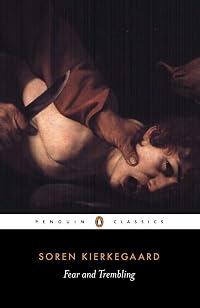
Kierkegaard is frequently remarking the humorous aspect of the earnest soldier who has gone so far as to die for his cause, the importance of which, upon further inspection, he appears to be confused about. "A lover has made a mistake, he saw his fiancee by lamplight and thought she had dark hair, but, on closer inspection she is blonde - but her sister, she is the ideal! This they think is a theme for poetry," (Fear and Trembling, 111) Notwithstanding that this is, in fact, an excellent subject for poetry, or at least opera bouffe, we understand that hair color is immaterial with respect to the teleology of love. So when Augustine is embroiled in the metaphysical problem, i.e. the nature and experience of temporality, and is using his strongest vociferations toward solving such a puzzle, he is also being humorous from the perspective of eternity, "My mind is on fire to solve this very intricate enigma. Do not shut the door, Lord my God. Good Father, through Christ I beg you, do not shut the door on my longing to understand these things which are both familiar and obscure." (250). We are reminded of the door in Kafka's Trial, with the additional corroboration that Augustine's approach from Platonic divisions into past/present/future is categorically doomed from the start. He will never understand this riddle. (But we are reading Kafka's fable with Agamben's idiosyncratic spin from Homer Sacer, so we recognize that the closure of the door is also the condition of the possibility for it to be opened and entered, and with the further parallel that since the door has shut for Augustine, he can get around it in Eternity.) The nature of short-time, as Augustine understands it, also has the potential to be quite funny from the perspective of the infinitessimal present. The Visuddhimagga takes this to its end on the subject of devotion:
"When a bhikkhu develops mindfulness of death thus, ‘Oh, let me live a night and day that I may attend to the Blessed One’s teaching, surely much could be done by me,' — these are called bhikkhus who dwell in negligence and slackly develop mindfulness of death for the destruction of cankers.It's humorous — in the pathetic sense — that one whose posterity is in eternity might pray for the persistence of one's lifespan for the duration of a single breath, yet it seems appropriate to refrain from laughter since, in reality, it appears this short-time is all one can hope to possess.
“And, bhikkhus, when a bhikkhu develops mindfulness of death thus, ‘Oh, let me live as long as it takes to breathe in and breathe out, that I may attend to the Blessed One’s teaching, surely much could be done by me’—these are called bhikkhus who dwell in diligence and keenly develop mindfulness of death for the destruction of cankers. So short in fact is the extent of life." (291)
Northrup Frye notes that the defining feature of the elegiac is the earnestness which does not permit irony (nor humor). Most reviewers are hurrying into this mood and are therefore neglecting the laughs we have been having with Augustine (not necessarily at his expense) up to this point. The elegy for Monica remains touching. Augustine joins the ranks of Handke (A Sorrow Beyond Dreams), Ernaux (I Remain In Darkness), de Beauvoir (A Very Easy Death), among other Nobel nominees writing generally excellent memoir about the death of the author's mother, though he, unfortunately, remains ineligible for posthumous nomination. Augustine is further distinguished from these later efforts by the elision of any description of the physical body, which strikes us as distinctly pre-modern. How often are we disparaging modern biography writers as "doing hagiography," so that it's finally a relief to read a self-admitted one in the flesh and therefore with fewer misgivings. Monica, in her ambivalence toward burial, "bury my body anywhere you like," (189) strikes us as hyper-modern such that she remains in the room with us today. Susan Sontag and others were commenting in the late 20th century on the cemetery as a kind of model-suburb complete with mortgage and manicured lawn. The 20th century was the century of the suburb, but the 21st century is the century of cremation. In the absence of other descriptors, we can very easily imagine Monica speaking of her Relics in the words of Alice Goodman's libretto:
"This is prophetic! I foresee a time will come whenI think that unlikely, yet "love believes all things, and is never deceived." (Works of Love, SK) show less
luxury dissolves into the atmosphere like a perfume," — Nixon In China
There's a double meaning to the word "confession" in this work: confessing to himself concerning his conversion to a new life and new religion, and confessing to God about his sinful past. It starts being grounded in his personal affairs and life experiences, with each subsequent chapter getting more introspective and abstract until the last three chapters, which are entirely a meditation on the nature of God and His world.
I really appreciated the first half of the book, especially when he's reminiscing on memories of his friends, his relationships, his tutors, and especially his mother. However, when he starts getting introspective or goes on a lengthy monologue to God, it can either be enlightening or REALLY boring. And with the last show more three chapters it felt more like the latter as it can be hard to grasp what he's getting at. It helps to be scripturally literate, which I'm not as a nonbeliever.
Whether you are of his faith or not, I think you will get something out of the Confessions because of how immediately personable he is on the page, which makes this book a real oddity in Latin literature as a "modern" island from an otherwise antiquated world. show less
I really appreciated the first half of the book, especially when he's reminiscing on memories of his friends, his relationships, his tutors, and especially his mother. However, when he starts getting introspective or goes on a lengthy monologue to God, it can either be enlightening or REALLY boring. And with the last show more three chapters it felt more like the latter as it can be hard to grasp what he's getting at. It helps to be scripturally literate, which I'm not as a nonbeliever.
Whether you are of his faith or not, I think you will get something out of the Confessions because of how immediately personable he is on the page, which makes this book a real oddity in Latin literature as a "modern" island from an otherwise antiquated world. show less
This book is very dear to me. I read "Confessions" in a very difficult personal time and quickly became overwhelmed by Augustines sincerity, intellect, and love for The Immutable Light. Augustine presents us with a very interesting time period in as where Christianity and Roman Paganism lie in juxtaposition. Besides Augustine's personal confessions, I enjoyed his examination of Genesis and his hefty discourse on time, or perhaps I should say the lack of the past and future. Rather than prattle on in the present, which has become past, I will urge you, reader, to introduce yourself to an author you most assuredly will hold very close to your heart.
I tried to read this with my book group six years ago, and gave up somewhere around book four. This year it came up in our homeschool curriculum, and I'm a firm believer in reading what I assign my kids to read (both on principle and because it is hard to discuss a book you haven't read). That said...
I am very glad I gave Augustine a second try, and I will likely reread Confessions at some point. Preferably when I have time to read it in smaller sections to allow more time to digest and reflect on what I've read. Yes, he's wordy— but his words are timeless, and still appropriate for us sinners following in his footsteps nearly two millennia later.
I am very glad I gave Augustine a second try, and I will likely reread Confessions at some point. Preferably when I have time to read it in smaller sections to allow more time to digest and reflect on what I've read. Yes, he's wordy— but his words are timeless, and still appropriate for us sinners following in his footsteps nearly two millennia later.
Agostinho é afinal de contas um fundamentalista religioso e seu livro segue a retórica que um fundamentalista religioso deve seguir, mesmo que ele esteja também falando sobre a importância de ter uma visada filosófica sobre o texto religioso e lutando por uma postura filosófica dentro da nascente teologia. As boas passagens, fora o papo confessional, como se Deus, se existisse, não tivesse ouvido ou atento, ou como se confissar a Deus não fosse um expediente de convencimento demasiado humano, são realmente as famosas sobre a memória e o tempo, nos livros x e xi. Dali, temos o que seria referenciado como uma concepção linear do tempo, cuja linhagem daria na teoria retensional do tempo. Eu recomendaria a leitura dessas partes show more aos interessados, como de interesse histórico (**). show less
St. Augustine's Confessions is never really that far away from me. I keep it close by like some people do the Bible. My copy has become very careworn, but is still in one piece.
The writing is so so beautiful and open and sincere, emotionally raw (especially when it comes to St. Augustine lamenting his sins) and often surprisingly comforting. The Oxford World's Classic edition is particularly wonderful to own!
The writing is so so beautiful and open and sincere, emotionally raw (especially when it comes to St. Augustine lamenting his sins) and often surprisingly comforting. The Oxford World's Classic edition is particularly wonderful to own!
Members
- Recently Added By
Lists

100 Books to Read in a Lifetime (That Are Older Than 200 Years)
415 works; 175 members

Church Times 100 Best Christian Books
106 works; 26 members

The Telegraph's 110 Best Books: The Perfect Library
101 works; 18 members

Newsweek's Top 100 Books: The Meta-List
100 works; 18 members

501 Must-Read Books
529 works; 72 members

Best Autobiographies and Memoirs
370 works; 67 members

Best Biographies, Autobiographies and Memoirs
465 works; 160 members
Philip Ward's Lifetime Reading Plan
592 works; 22 members

Non-Fiction Worth Reading
1,015 works; 261 members

Christianity Books You've Read
179 works; 19 members

Harold Bloom - The Western Canon: A. The Theocratic Age
97 works; 13 members
25 Books Every Christian Should Read
27 works; 4 members
Trinity Norman Recommended Christian Readings
170 works; 5 members

Top Five Books of 2022
736 works; 272 members

Wayland Preaching Class
31 works; 2 members

Top Five Books of 2014
1,064 works; 398 members

Saints and Blesseds
74 works; 4 members

The Well-Educated Mind Reading Challenge
75 works; 7 members

Biografías eminentes
24 works; 1 member

Africa
109 works; 8 members

Filosofía - Clásicos
217 works; 1 member

Well-Educated Mind
150 works; 3 members

Greatest Books, allegedly
484 works; 9 members

Philosophy, Politics and Economics
61 works; 1 member

Mustich's 1000 Books to Read Before You Die: A Life Changing List
1,001 works; 19 members

Western Canon
206 works; 2 members

Recommended Reading : 600 Classics Reviewed, Editors of Salem Press, 2015
634 works; 6 members

scav
54 works; 2 members

Books Read in 2021
5,361 works; 114 members
New Lifetime Reading Plan by Fadiman and Major
225 works; 5 members

Book Titles Mentioned In Newberry Medal And Honor Books
884 works; 3 members

covers with paintings / paintings as covers .
37 works; 1 member

readingList
38 works; 1 member

The Well-Educated Mind, Susan Wise Bauer, 2016
179 works; 3 members

Christian Classics (Old and Modern)
53 works; 3 members
Out of Copyright
244 works; 14 members
How to Read a Book's Recommended Reading List
309 works; 10 members
Folio Society
831 works; 53 members
Favourite Books
1,819 works; 316 members
Truly old classics
63 works; 6 members

Western World's Greatest Books - Project Gutenberg
295 works; 15 members

2016 Book Club Choices
52 works; 7 members

100 Most Recommended Works
100 works; 11 members

Leseliste
21 works; 1 member
KIB Non-Fiction Book Cloud
41 works; 1 member

Shaykh Hamza's Book Recommendations
439 works; 3 members

Books available on Open Library
171 works; 4 members

Literary Works Read in College
316 works; 15 members

1964 College Preparatory Reading List
202 works; 8 members
Five star books
1,767 works; 110 members

Tom's Bookstore
346 works; 2 members

Books Set in Rome
98 works; 2 members

Unread books
1,063 works; 87 members
Author Information

1,929+ Works 57,801 Members
Saint Augustine was born to a Catholic mother and a pagan father on November 13, 354, at Thagaste, near Algiers. He studied Latin literature and later taught rhetoric in Rome and Milan. He originally joined the Manicheans, a religious sect, but grew unhappy with some of their philosophies. After his conversion to Christianity and his baptism in show more 387, Augustine developed his own approach to philosophy and theology, accommodating a variety of methods and different perspectives. He believed that the grace of Christ was indispensable to human freedom, and he framed the concepts of original sin and just war. His thoughts greatly influenced the medieval worldview. One of Augustine's major goals was a single, unified church. He was ordained a priest in 391 and appointed Bishop of Hippo, in Roman Africa, in 396. Augustine was one of the most prolific Latin authors in terms of surviving works, and the list of his works consists of more than one hundred separate titles. His writings and arguments with other sects include the Donatists and the Pelagians. On the Trinity, The City of God, and On Nature and Grace are some of his important writings. Confessions, which is considered his masterpiece, is an autobiographical work that recounts his restless youth and details the spiritual experiences that led him to Christianity. Many of Augustine's ideas, such as those concerning sin and predestination, became integral to the doctrines of the Roman Catholic Church. In the Catholic Church he is a saint and pre-eminent Doctor of the Church, and the patron of the Augustinians. He is the patron saint of brewers, printers, and theologians. Augustine died on August 28, 430. (Bowker Author Biography) show less
All Editions
Work Relationships
Is an abridged version of
Common Knowledge
- Canonical title
- Confessions (Oxford World's Classics) (Oxford World's Classics)
Classifications
Statistics
- Members
- 2,764
- Popularity
- 6,649
- Reviews
- 24
- Rating
- (3.86)
- Languages
- English
- Media
- Paper, Audiobook, Ebook
- ISBNs
- 6
- ASINs
- 11