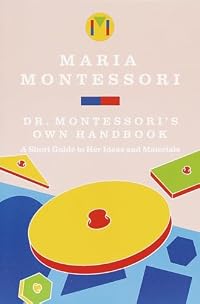
Dr. Montessori's Own Handbook
by Maria Montessori
On This Page
Description
Dr. Maria Montessori's remarkable guide to early childhood development and education explains the philosophy of her method and features illustrated examples of her renowned techniques and exercises. First published in 1914, Dr. Montessori's Own Handbook is an illustrated guide to Maria Montessori's alternative approach to education. The Italian physician's method abandons traditional elements of classroom-based learning, such as tests, and focuses on encouraging the individual child's show more natural interests and abilities. Following countless requests from teachers and parents alike, Montessori created this volume featuring a wealth of information on teaching and nurturing children as they develop. With a focus on children between the ages of three and six, this volume includes various activities, exercises, and ideas for classroom materials that can easily be obtained at home. This volume's contents features: - The Method - Motor Education - Sensory Education - Language and Knowledge of the World - Freedom - Writing - The Reading of Music - Arithmetic - Moral Factors. show lessTags
Recommendations










Member Reviews
Additional Contributors: Genevieve Tarlton Alexander; William E. Amos; E Paul Benoit; Gertrude R. Justison; Neil D. Koppenhaver; Paul Lewis; Elizabeth Jane Oliveria; Jo Ann Reddit; George L. Stevens.
Ratings
Members
- Recently Added By
Author Information

187 Works 3,384 Members
Maria Montessori, an Italian educator who was the first woman doctor granted a degree in Italy, has been well known in the field of childhood education since the early 1900s. Dissatisfied with the educational methods of her time, she developed her own theories in systematic fashion. The Montessori Method, as it became known, allows each child to show more develop at his or her own pace through the manipulation of materials. The teacher's role is to provide the materials and then act as a supervisor and a guide. This and other concepts of hers have had considerable influence on modern education. Montessori first worked with retarded children, then classified as "untrainable," most of whom she succeeded in teaching to read and write. She established a number of Houses of Children in Italy devoted to providing new opportunities for underprivileged children. Recent U.S. efforts in this direction have led to a strong revival of interest in her work, and Montessori's methods also have been expanded to children beyond the preschool years. (Bowker Author Biography) show less
Some Editions
Series
Belongs to Publisher Series
Classifications
Statistics
- Members
- 284
- Popularity
- 112,622
- Reviews
- 3
- Rating
- (3.96)
- Languages
- Chinese, English
- Media
- Paper, Audiobook, Ebook
- ISBNs
- 47
- ASINs
- 19