
On This Page
Description
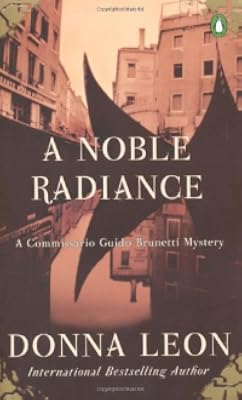
Commissario Brunetti delves into the shadows of a Venetian family's past in this "gripping intellectual mystery" in the New York Times–bestselling series (Publishers Weekly).In A Noble Radiance, a new landowner is summoned urgently to his house not far from Venice when workmen accidentally unearth a macabre grave. The human corpse is badly decomposed, but a ring found nearby proves to be a clue that reopens an infamous case of kidnapping involving one of Venice's most aristocratic show more families. Only Commissario Brunetti can unravel the clues and find his way into both the hearts of patrician Venice and that of a family grieving for their abducted son.
"Goes a long way to confirming Donna Leon's claim to have taken literary possession of Venice . . . A Noble Radiance gives the reader a delightful foretaste of the summer holidays to come, but it also offers much more than that." —The Independent on Sunday
"The marvel of this book is that almost every detail on every page forms part of a succession of clues, planted with exquisite precision, to unraveling the mystery." —The Sunday Times
"Brunetti emerges as an intelligent, somewhat world-weary individual who believes in his cause if not the system itself. In short, he's the ideal protagonist for this culturally rich mystery." —Publishers Weekly
"In her detective novels with Commissario Brunetti, Donna Leon can paralyze the reader with a joyful suspense, lost in the environs of Venice and hopelessly in love with her central character and his wife." —Mail on Sunday. show less
Tags
Recommendations




























Member Reviews
This installment is the first cold case in the series - a young man who was abducted a few years ago is finally found - dead and buried almost at the same time he disappeared. His family is pretty prominent so both the past crime and the discovery become significant, with all the politicians (including Patta) trying to either cover up things or find a solution that does not embarrass anyone. Brunetti, ignoring all that, decides to find the actual truth and reopens old wounds and secrets that probably should have stayed buried. The end makes one wonder if the whole investigation was worth it - we do learn what happened (and so do everyone else) but it makes one wish that we never did - in a somewhat calm book, the actual truth is more show more horrifying than it would have been elsewhere. show less
Commissario Guido Brunetti is back. This time he takes on a case of a kidnapping turned murder.
What was once an abandoned field is now the final resting place of a young man buried in a shallow grave. Although badly decomposed investigators can see he was killed with a bullet to the back of the head. The crest ring found with the body suggests it is the only son of a wealthy Venetian count. This son, Robert Lorenzoni, had been kidnapped under suspicious circumstances two years prior and was never heard from again. Dental records confirm that the body is Count Lorenzoni's only son, sending the family reeling with grief.
Confessional: I was a little disappointed with this one. I figured out who did it and why pretty early on. There was a show more final twist that should have been a shock but really wasn't. The best part about A Noble Radiance was learning more about Brunetti's home life. The scene where he must suffer his daughter's salty cooking is hilarious. I could see that in a movie. I also enjoyed his intimidating dinner date with his father-in-law (also a count) who inadvertently helps Guido solve the mystery. show less
What was once an abandoned field is now the final resting place of a young man buried in a shallow grave. Although badly decomposed investigators can see he was killed with a bullet to the back of the head. The crest ring found with the body suggests it is the only son of a wealthy Venetian count. This son, Robert Lorenzoni, had been kidnapped under suspicious circumstances two years prior and was never heard from again. Dental records confirm that the body is Count Lorenzoni's only son, sending the family reeling with grief.
Confessional: I was a little disappointed with this one. I figured out who did it and why pretty early on. There was a show more final twist that should have been a shock but really wasn't. The best part about A Noble Radiance was learning more about Brunetti's home life. The scene where he must suffer his daughter's salty cooking is hilarious. I could see that in a movie. I also enjoyed his intimidating dinner date with his father-in-law (also a count) who inadvertently helps Guido solve the mystery. show less
#i in the Commissario Brunetti series This one is a little different than the others. In it we find Brunetti trying to solve a cold case of-the death of a 22-year-old young man, the son of an aristocrat. Why were Roberto’s remains found in a far-off field? How did they get there? As Brunetti digs he finds himself knocking heads with the Italian aristocracy, a place he doesn’t feel comfortable with, in spite of his wife’s ties through her family. The pursuit gets darker and darker and Brunetti knows that it will not end well. Still he must proceed. The book moves at a slow pace with Brunetti getting closer and closer to the root of the problem. As much as he hates it, he knows that it will not end satisfactorily, but still he digs show more until the inevitable happens. I like the series mostly for Brunetti and his wonderful family. I keep reading it because I love to see the true Brunetti emerge. I understand this man, and I understand his demons. I recognize them as some of my own.
. show less
. show less
This is the first, and only, Brunetti mystery I have read, so I am missing a lot of character and milieu backstory.
I didn't much care for him, to be frank, although the mystery itself was well plotted and presented. The clues were subtle but telling, and I was nudged in the direction of the solution without being hit over the head, which is always satisfying.
To be fair, I will copy the note from my sister, who gave me the book and is a fan:
"I don't know if I've ever told you about Donna Leon. If not, I've been neglecting my sisterly duty! Leon is one of my favorite mystery writers for all kinds of reasons, among them her very appealing main character, policeman Guido Brunetti; his wife, Paola, who's an English professor and loves Henry show more James; and an assortment of other entertaining characters. I also enjoy the Venice setting. Most of all, I like the moral ambiguity that's often a factor in the stories. A Noble Radiance is a good example of Leon's books (though I wish Paola had a bigger role - she's so delightful). Leon is quite popular, and has been writing this series since 1992,usually publishing one every year, so there are plenty of books to enjoy if you'ld like to read some more."
Sis and I have a lot of literary likes in common, but I don't care for Henry James at all (she was an English professor at one point), nor am I partial to morally ambiguous characters unless they reach some resolution (Brunetti doesn't; he just ponders).
We DO both like Dick Francis, Agatha Christie, and Dorothy Sayers, so there are some points for reference.
One example of Brunetti's ambiguity is that he has a gap in his ethical foundation.
p. 86 (remembering his instructions as a schoolboy to examine his conscience):
"There were, the priest explained, sins of omission and sins of comission, but even then Brunetti had found it difficult to distinguish between the two. Now that he was a man, the distinction was even more difficult to grasp."
One thing that isn't ambiguous (to me) occurs in a conversation between Brunetti and one of the possible suspects, where he states the current Italian situation (not new) involving corrupt government officials and venal citizens, and remarks on the decline of religious belief among the public, to explain why he is pursuing a very "cold case" that might have no meaning other than to obtain some closure over the events that resulted in the victim's death.
p. 92: "If divine justice won't take care of private crime any more, then it's imprtant that it be seen to, by someone."
How he proceeds to do that "seeing to" does involve some ethically questionable actions, however.
Other notable excerpts:
p 86: "Years of experience warned him that he was assuming the boy's deah without final proof; the same years told him that final proof was unnecessary here. Intuition would suffice."
p. 125: A conversation between Guido and Paola about capital punishment (for and against) that presents good arguments fairly on both sides.
p.170 Leon delivers a homily on class snobbery via Paola chastising Guido for laughing at the dull policeman transforned by love): "Just because we're smarter than people doesn't mean our emotions are any finer....They just can't dress their emotions up in pretty words the way we do." show less
I didn't much care for him, to be frank, although the mystery itself was well plotted and presented. The clues were subtle but telling, and I was nudged in the direction of the solution without being hit over the head, which is always satisfying.
To be fair, I will copy the note from my sister, who gave me the book and is a fan:
"I don't know if I've ever told you about Donna Leon. If not, I've been neglecting my sisterly duty! Leon is one of my favorite mystery writers for all kinds of reasons, among them her very appealing main character, policeman Guido Brunetti; his wife, Paola, who's an English professor and loves Henry show more James; and an assortment of other entertaining characters. I also enjoy the Venice setting. Most of all, I like the moral ambiguity that's often a factor in the stories. A Noble Radiance is a good example of Leon's books (though I wish Paola had a bigger role - she's so delightful). Leon is quite popular, and has been writing this series since 1992,usually publishing one every year, so there are plenty of books to enjoy if you'ld like to read some more."
Sis and I have a lot of literary likes in common, but I don't care for Henry James at all (she was an English professor at one point), nor am I partial to morally ambiguous characters unless they reach some resolution (Brunetti doesn't; he just ponders).
We DO both like Dick Francis, Agatha Christie, and Dorothy Sayers, so there are some points for reference.
One example of Brunetti's ambiguity is that he has a gap in his ethical foundation.
p. 86 (remembering his instructions as a schoolboy to examine his conscience):
"There were, the priest explained, sins of omission and sins of comission, but even then Brunetti had found it difficult to distinguish between the two. Now that he was a man, the distinction was even more difficult to grasp."
One thing that isn't ambiguous (to me) occurs in a conversation between Brunetti and one of the possible suspects, where he states the current Italian situation (not new) involving corrupt government officials and venal citizens, and remarks on the decline of religious belief among the public, to explain why he is pursuing a very "cold case" that might have no meaning other than to obtain some closure over the events that resulted in the victim's death.
p. 92: "If divine justice won't take care of private crime any more, then it's imprtant that it be seen to, by someone."
How he proceeds to do that "seeing to" does involve some ethically questionable actions, however.
Other notable excerpts:
p 86: "Years of experience warned him that he was assuming the boy's deah without final proof; the same years told him that final proof was unnecessary here. Intuition would suffice."
p. 125: A conversation between Guido and Paola about capital punishment (for and against) that presents good arguments fairly on both sides.
p.170 Leon delivers a homily on class snobbery via Paola chastising Guido for laughing at the dull policeman transforned by love): "Just because we're smarter than people doesn't mean our emotions are any finer....They just can't dress their emotions up in pretty words the way we do." show less
Lassitude, headache and general malaise
Through her redoubtable hero Commissario Brunetti, Donna Leon unwittingly makes an interesting observation about A Noble Radiance itself: "...what he'd already heard so often he was beginning to feel the same symptoms: lassitude, headache and general malaise".
She may not have intended it, but in this sentence she invites comparison with the plotting and exposition in this book, which is so ponderous and repetitive you'll be experiencing lassitude and general malaise - if you haven't vigorously tossed the book aside altogether - very quickly. Your patience, if you have not, will be scantily rewarded: before half way nothing much nothing happens other than the repeated establishment of the same plot show more outline. After half way little does, and what there is in the way of action is ill-paced, improbable and ridiculous.
And to solve the crime (or does he really care about the crime? Leon overtly ponders whether this is what really drives her hero, something a more skilled writer would have allowed her readers to do) we have our hero Brunetti, a modern and thoughtful detective who reads Cicero in idle moments, but whose commanding officer hates him for reasons of which we are not appraised (other than the dictats of the Police Procedural Idiom). Good grief.
I think Donna Leon aspires to literariness, but doesn't get within a banjo swing of a cow's behind of it in this reviewer's humble opinion.
There are writers who write movingly, intellectually and chillingly about Italy - Peter Robb, even Thomas Harris, in passages - but Leon manages to make it all sound humdrum, and in the end there's not much to differentiate this book from countless other gumshoe detective stories other than the attraction of exotic and literary italian intrigue. The fact that it fails at that task is more than faintly damning. show less
Through her redoubtable hero Commissario Brunetti, Donna Leon unwittingly makes an interesting observation about A Noble Radiance itself: "...what he'd already heard so often he was beginning to feel the same symptoms: lassitude, headache and general malaise".
She may not have intended it, but in this sentence she invites comparison with the plotting and exposition in this book, which is so ponderous and repetitive you'll be experiencing lassitude and general malaise - if you haven't vigorously tossed the book aside altogether - very quickly. Your patience, if you have not, will be scantily rewarded: before half way nothing much nothing happens other than the repeated establishment of the same plot show more outline. After half way little does, and what there is in the way of action is ill-paced, improbable and ridiculous.
And to solve the crime (or does he really care about the crime? Leon overtly ponders whether this is what really drives her hero, something a more skilled writer would have allowed her readers to do) we have our hero Brunetti, a modern and thoughtful detective who reads Cicero in idle moments, but whose commanding officer hates him for reasons of which we are not appraised (other than the dictats of the Police Procedural Idiom). Good grief.
I think Donna Leon aspires to literariness, but doesn't get within a banjo swing of a cow's behind of it in this reviewer's humble opinion.
There are writers who write movingly, intellectually and chillingly about Italy - Peter Robb, even Thomas Harris, in passages - but Leon manages to make it all sound humdrum, and in the end there's not much to differentiate this book from countless other gumshoe detective stories other than the attraction of exotic and literary italian intrigue. The fact that it fails at that task is more than faintly damning. show less
Human remains are unearthed in a field near the mountains. Although the location is well outside of Venice, Commissario Guido Brunetti ends up with the case when it appears to be the remains of the kidnapped son of a Venetian noble. Brunetti did not work on the kidnapping case, and as he looks into the files he notices some irregularities that weren’t pursued by the investigators of the kidnapping.
This is not the best book in the series. It seemed like Brunetti’s investigation was just beginning when the solution was revealed. People, places, and things were introduced early in the novel and then dropped, never to be seen or heard from again. In a tightly written mystery, everything should serve a purpose, even if it’s a false show more lead or red herring. Anything less seems underdeveloped. show less
This is not the best book in the series. It seemed like Brunetti’s investigation was just beginning when the solution was revealed. People, places, and things were introduced early in the novel and then dropped, never to be seen or heard from again. In a tightly written mystery, everything should serve a purpose, even if it’s a false show more lead or red herring. Anything less seems underdeveloped. show less
A great series, set in Venice. When a body is unearthed Brunelli reopens a cold kidnap case. Had me guessing till the end. And I love the detective’s moral compass, trying to do right in a corrupt world, quietly supported by his caring family.
Members
- Recently Added By
Lists

Donna Leon
23 works; 5 members

Stories set in Venice The City Of Canals
14 works; 2 members

Italian Murder Mysteries
21 works; 2 members

Books Read in 2019
4,052 works; 108 members
Author Information

64+ Works 46,161 Members
Donna Leon was born on September 29, 1942 in Montclair, New Jersey. She taught English literature in England, Switzerland, Iran, China, Italy and Saudi Arabia. She is the author of a Commissario Guido Brunetti Mystery series. Friends in High Places, a novel from the series, won the Crime Writers Association Macallan Silver Dagger for Fiction in show more 2000. German Television has produced 16 Commissario Brunetti mysteries for broadcast. She was a crime reviewer for the Sunday Times. She has written the libretto for a comic opera and has set up her own opera company, Il Complesso Barocco. Her titles Jewels of Pardise, The Golden Egg, By Its Cover, Falling in Love and The Waters of Eternal Youth made The New York Times Bestseller List. (Bowker Author Biography) show less
Some Editions
Series

Belongs to Publisher Series
detebe (23260)
Work Relationships
Is contained in
Donna Leon 10 Books Collection Pack Set RRP: £79.9 (Blood from a Stone, Uniform Justice, A Sea of Troubles, Fatal Remedies, A Noble Radiance, Friends in High Places, Doctored Evidence, Death in a Strange Country, Wilful Behaviour, Death at La Fenice) by Donna Leon
Common Knowledge
- Canonical title
- A Noble Radiance
- Original title
- A Noble Radiance
- Original publication date
- 1998
- People/Characters
- Commissario Guido Brunetti; Roberto Lorenzoni
- Important places
- Venice, Veneto, Italy
- Related movies*
- Nobiltà (2002)
- Epigraph
- La nobiltà ha dipinta negli occhi l'onestà
The nobility has honesty painted in its eyes
Don Giovanni
Mozart - Dedication
- Per Biba e La Bianca
- First words
- There was nothing much to notice about the field, a hundred-metre square of dry grass below a small village in the foothills of the Dolomites.
- Quotations*
- La nobiltà ha dipinta negli occhi l'onestà
Bij de adel staat eer in de ogen geschreven
Don Giovanni, Mozart - Last words
- (Click to show. Warning: May contain spoilers.)'Jesus Christ, you're Brunetti's wife.'
- Publisher's editor*
- Oorspronkelijke uitgever Heinemann; Diogenes Verlag AG, Zürich
- Original language*
- Engels
*Some information comes from Common Knowledge in other languages. Click "Edit" for more information.
Classifications
Statistics
- Members
- 1,867
- Popularity
- 11,510
- Reviews
- 59
- Rating
- (3.70)
- Languages
- 14 — Catalan, Dutch, English, Estonian, Finnish, French, German, Hungarian, Norwegian (Bokmål), Portuguese, Russian, Croatian, Spanish, Swedish
- Media
- Paper, Audiobook, Ebook
- ISBNs
- 61
- ASINs
- 19