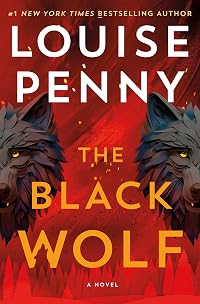
On This Page
Description
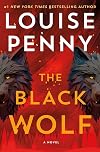
The 20th mystery in the #1 New York Times-bestselling Armand Gamache series.Somewhere out there, in the darkness, a black wolf is feeding.
Several weeks ago, Chief Inspector Armand Gamache of the Sûreté du Québec and his team uncovered and stopped a domestic terrorist attack in Montréal, arresting the person behind it. A man they called the Black Wolf.
But their relief is short-lived. In a sickening turn of events, Gamache has realized that plot, as horrific as it was, was just the show more beginning. Perhaps even a deliberate misdirection. One he fell into. Something deeper and darker, more damaging, is planned. Did he in fact arrest the Black Wolf, or are they still out there? Armand is appalled to think his mistake has allowed their conspiracy to grow, to gather supporters. To spread lies, manufacture enemies, and feed hatred and division.
Still recovering from wounds received in stopping the first attack, Armand is confined to the village of Three Pines, leading a covert investigation from there. He must be careful not to let the Black Wolf know he has recognized his mistake. In a quiet church basement, he and his senior agents Beauvoir and Lacoste, pore over what little evidence they have. Two notebooks. A few mysterious numbers on a tattered map of Québec. And a phrase repeated by the person they had called the Grey Wolf. A warning...
In a dry and parched land where there is no water.
Gamache and his small team of supporters realize that for the Black Wolf to have gotten this far, they must have powerful allies, in law enforcement, in industry, in organized crime, in the halls of government.
From the apparent peace of his little village, Gamache finds himself playing a lethal game of cat and mouse with an invisible foe who is gathering forces and preparing to strike.
. show less
Tags
Recommendations













Member Reviews
Summary: Having arrested the “Black Wolf” trying to poison Montreal, Gamache realizes this was but a prelude to a greater threat.
If you read The Grey Wolf, you knew this book was coming. And if you did not, stop right here. That book gives the background for this, and this review gives details that will spoil the end of the Grey Wolf.
Gamache and his team have barely stopped an attempt to poison Montreal’s water supply as part of a power grab. The supposed mastermind, Marcus Lauzon, the Deputy Prime Minister, is now in solitary confinement. But Gamache, recovering at home, having lost his hearing due to a gun discharge meant to kill him, is beginning to doubt that the threat has been removed. They just may have been diverted off show more the trail of something bigger.
Not knowing who to trust, he has brought his closest associates, Beauvoir and LaCoste to Three Pines. Quietly, they have been studying the notebooks and a map left by slain biologist, Charles Langlois. But most of his notations are cryptic, and a laptop that may offer the key is still missing.
Another clue is equally puzzling. The Grey Wolf had given them this warning:
In a dry and parched land, where there is no water.
What that means, they have no clue. Canada has an abundance of water.
Slowly they piece together clues that convince them something bigger is going on. Woven into it are forest fires, atmospheric conditions, secret war plans and a treasonous international collaboration.
But back to Gamache’s doubts as to the identity of the Black Wolf. Is it Jeanne Caron, the popular current Prime Minister, a mob boss, or someone else? Or could it even be Lauzon? Penny tantalizes us with this throughout the book.
Like The Madness of Crowds, the book has surprised many readers with its prescience as to current events. In light of this, Penny includes an author note at the beginning of the book that she submitted the book to her publisher in September 2024, predating events that followed the U.S. presidential election in 2024. Most striking are her references to Canada as a “fifty-first state.”
It’s also striking that two meetings occur at the Haskell Free Library and Opera House, which straddles the US/Canada border. A black taped line runs through the middle of the building denoting the border. It has been a unique place where Canadians and Americans mix without checkpoints. Until this year. Now Canadians can’t enter the grand entrance on the US side without going through border control. An emergency exit on the Canada side serves as a temporary entrance.
Beyond details like this Penny explores our brave new social media world and its capacity for misinformation and deep fakes where interviews and videos can be doctored to say the opposite of what they were meant to reveal. In addition, Penny explores the international implications of climate-related events including fires, smoke pollution, and water shortages.
Like many of Penny’s books, this one has a hair-raising finish, one that stretched plausibility for me at points. However, one of the most interesting plot elements is that there is a point at which Gamache intentionally misleads Beauvoir. One senses that something shifts in their relationship. Plot material for a future book?
However, her larger scenario didn’t stretch plausibility. It was bleak and scarily realistic for me. It was only relieved by the beautifully ordinary life of Three Pines with an eccentric poet and her goose Rosa, and all the people who gather at the Bistro for exquisitely good food. Perhaps that is a parable of how we must live in our time. That is, we enjoy the good, true, and beautiful of the given day, thankful for and praying for the Gamaches that stand between us and annihilation. show less
If you read The Grey Wolf, you knew this book was coming. And if you did not, stop right here. That book gives the background for this, and this review gives details that will spoil the end of the Grey Wolf.
Gamache and his team have barely stopped an attempt to poison Montreal’s water supply as part of a power grab. The supposed mastermind, Marcus Lauzon, the Deputy Prime Minister, is now in solitary confinement. But Gamache, recovering at home, having lost his hearing due to a gun discharge meant to kill him, is beginning to doubt that the threat has been removed. They just may have been diverted off show more the trail of something bigger.
Not knowing who to trust, he has brought his closest associates, Beauvoir and LaCoste to Three Pines. Quietly, they have been studying the notebooks and a map left by slain biologist, Charles Langlois. But most of his notations are cryptic, and a laptop that may offer the key is still missing.
Another clue is equally puzzling. The Grey Wolf had given them this warning:
In a dry and parched land, where there is no water.
What that means, they have no clue. Canada has an abundance of water.
Slowly they piece together clues that convince them something bigger is going on. Woven into it are forest fires, atmospheric conditions, secret war plans and a treasonous international collaboration.
But back to Gamache’s doubts as to the identity of the Black Wolf. Is it Jeanne Caron, the popular current Prime Minister, a mob boss, or someone else? Or could it even be Lauzon? Penny tantalizes us with this throughout the book.
Like The Madness of Crowds, the book has surprised many readers with its prescience as to current events. In light of this, Penny includes an author note at the beginning of the book that she submitted the book to her publisher in September 2024, predating events that followed the U.S. presidential election in 2024. Most striking are her references to Canada as a “fifty-first state.”
It’s also striking that two meetings occur at the Haskell Free Library and Opera House, which straddles the US/Canada border. A black taped line runs through the middle of the building denoting the border. It has been a unique place where Canadians and Americans mix without checkpoints. Until this year. Now Canadians can’t enter the grand entrance on the US side without going through border control. An emergency exit on the Canada side serves as a temporary entrance.
Beyond details like this Penny explores our brave new social media world and its capacity for misinformation and deep fakes where interviews and videos can be doctored to say the opposite of what they were meant to reveal. In addition, Penny explores the international implications of climate-related events including fires, smoke pollution, and water shortages.
Like many of Penny’s books, this one has a hair-raising finish, one that stretched plausibility for me at points. However, one of the most interesting plot elements is that there is a point at which Gamache intentionally misleads Beauvoir. One senses that something shifts in their relationship. Plot material for a future book?
However, her larger scenario didn’t stretch plausibility. It was bleak and scarily realistic for me. It was only relieved by the beautifully ordinary life of Three Pines with an eccentric poet and her goose Rosa, and all the people who gather at the Bistro for exquisitely good food. Perhaps that is a parable of how we must live in our time. That is, we enjoy the good, true, and beautiful of the given day, thankful for and praying for the Gamaches that stand between us and annihilation. show less
After Chief Inspector Armand Gamache has foiled a very serious conspiracy that would have resulted in mass deaths and panic everywhere, he hopes to be able to heal at home in Three Pines, but he soon realizes that the plot he thwarted was only the beginning, not the end of the conspiracy. And what is coming next makes the previous events seem like child’s play. He must somehow find his way through the layers of deception to reach the truth, but who can he trust? And what will it all cost…. This is an absolutely terrifying book because the main storyline being presented is very plausible, especially given the current US Administration. As ever, Ms. Penny’s tale is very tightly woven and tense, with the reader being compelled to show more barrel through because we just have to know What Happens Next! All that is done brilliantly, but I want to focus on a couple of smaller (well, less dramatic) aspects of the book. First, there’s the sheer poetry of Ms. Penny’s writing, for example noting twilight in this way: “The light that was draining from the sky seemed to be absorbed into the homes and businesses around the village green.” Beautiful. And also the humanity infused in all of her characters, even though she cannot spend much time with them given the confines of this particular story. For example, the end of Chapter 36 is devoted to describing Clara’s solo art show which consists of portraits of Three Pines villagers, so beautifully written that it brought tears to my eyes. I’ve loved Ms. Penny’s books since the beginning, and this one is indeed a triumph. One cannot simply start with this book, however; although I’d suggest starting at the beginning (“Still Life”), I realize that it would take a great deal of time to get to this 20th entry chronologically. “The Black Wolf” is actually the second half of the story begun with “The Grey Wolf,” and at minimum that book must be read before this one. Extremely highly recommended. show less
In "The Black Wolf," Chief Inspector Armand Gamache of the Sûreté du Quebéc launches a complex investigation along with his senior agents, Jean-Guy Beauvoir and Isabelle Lacoste. In addition, Gamache brings in an environmental biologist and an experienced journalist to help him thwart a dangerous conspiracy. The problem is that the Chief Inspector does not know the exact nature of the plot nor the identity of the person responsible for developing and implementing it. Much of the book is spent frantically looking for answers in order to avert a disaster that could cost countless lives.
Louise Penny has gained a loyal following for creating the peaceful, scenic, and warm community of Three Pines, where Armand lives with his beloved show more wife, and enjoys interacting with his quirky but goodhearted friends and neighbors. This novel's main focus is not on Three Pines. Rather, it centers on the ravages of climate change, the widespread presence of political corruption at the highest levels of government, and the power of social media to spread lies and sow panic. This thriller might have been more entertaining had Penny crafted her story more lucidly and realistically. As it stands, "The Black Wolf" has too many characters (we do not know for quite a while whom to trust), and is bogged down by a dense plot that incorporates cryptic maps and perplexing computer files, violent confrontations that do not ring true, and a confusing finale.
We admire Armand Gamache, an iconic figure who is intelligent, sensitive, and humane. He is a devoted family man and dedicated member of law enforcement who has repeatedly risked his life in the line of duty. The men and women of Three Pines whom we have come to know over many years make brief but welcome appearances. Overall, however, "The Black Wolf" is a talky, gloomy, and sluggishly-paced tale about the reprehensible acts of depraved individuals who are willing to wreak havoc in order to enrich themselves and acquire enormous power. show less
Louise Penny has gained a loyal following for creating the peaceful, scenic, and warm community of Three Pines, where Armand lives with his beloved show more wife, and enjoys interacting with his quirky but goodhearted friends and neighbors. This novel's main focus is not on Three Pines. Rather, it centers on the ravages of climate change, the widespread presence of political corruption at the highest levels of government, and the power of social media to spread lies and sow panic. This thriller might have been more entertaining had Penny crafted her story more lucidly and realistically. As it stands, "The Black Wolf" has too many characters (we do not know for quite a while whom to trust), and is bogged down by a dense plot that incorporates cryptic maps and perplexing computer files, violent confrontations that do not ring true, and a confusing finale.
We admire Armand Gamache, an iconic figure who is intelligent, sensitive, and humane. He is a devoted family man and dedicated member of law enforcement who has repeatedly risked his life in the line of duty. The men and women of Three Pines whom we have come to know over many years make brief but welcome appearances. Overall, however, "The Black Wolf" is a talky, gloomy, and sluggishly-paced tale about the reprehensible acts of depraved individuals who are willing to wreak havoc in order to enrich themselves and acquire enormous power. show less
In this complex and intriguing mystery, Gamache must decide who to trust and who to trick. “The Black Wolf” is the completion of the story that began in the previous book, “The Grey Wolf.” Louise Penny has gotten rather political in this duality, and I get distinct feeling that she is somewhat anti-USA. Too much of the book reiterates past experiences which slows down the forward motion of the story. I much prefer the past stories that take place in Three Pines, with the characters I have come to know and appreciate. No matter where Gamache is, or what he is doing, he is an excellent character. But I do hope that in the next story he realizes that there is no place like home, and that is, for him, Three Pines. Perhaps I would show more have liked this story better if I had read the print version rather than listening to the audio. Narrator Jean Brassard has a distinct Quebecois accent which I’m sure is much appreciated by Canadians, but to my American ears, it was difficult to understand many of the characters’ names and the places they visited. show less
Well I’m glad that’s over. This was just plain painful to listen to. Somewhere out there in the ether are people who will read this book and be able to make sense of it. Unfortunately, I’m not one of them. I was confused to begin with, and thought it would get better, but instead the book got more unbelievable and more murky. I know that reading is supposed to expand a reader’s imagination, and it has always done that for me, but, I’m sorry, not this book. Where in this modern and terrifying world will the fate the entire planet be in the hands of a single Chief Inspector from Quebec, Canada? Yes. individual people can make significant changes to the world order, and we see that over and over again in the news, but, show more unfortunately no one Saviour can come and rescue us all from certain doom. I realize that this is a fiction book, but it is supposed to be a crime novel, not science fiction. I started the book with some trepidation after reading The Grey Wolf last year, but finally decided that I should finish the storyline. Ms. Penny is a good writer and she captured my interest at the beginning of the book with a compromised Gamache healing from the wounds he received in the previous book. But then, as it went on, the plot and the characters became more and more unbelievable and far-fetched. I started with a possible three star review, but by 50% of the way through I was down to two stars, and that absolutely incredible and interminable ending brought it down to one star, and that is where my review will stay. No, I will not be reading anymore Gamache books. Give me a straight-forward crime novel that is firmly planted on planet earth like The Lynley series, or the Cormoran Strike series. or the Dave Robicheaux series, or any of the series that my favourite authors write. That list of favourites is long in my case, so I’m grateful to have more books to read in each of them. show less
Continuing where The Grey Wolf left off, Penny does an excellent job reminding readers of events in the previous book when they need to know them, rather than in an info-dump at the beginning. The intricate plot is engaging and unnervingly prescient. Once again, most of the beloved characters have to take a back seat to a secret that seems determined to remain just out of Gamache's reach. Surprisingly, some of the most entertaining character moments are between old and new. While I miss the simpler days of a quiet murder in Three Pines, Penny's writing chops are evident in this complex mystery/thriller.
Although this does not rise to a favorite of the series for me, I still found much to appreciate in the 2025 installment to the Armand Gamache series. Penny explores apocalyptic possibilities as she gives credence to the disastrous results of climate change if ignored. As the mystery plays out, there is espionage, political intrigue, greed, corruption and a central question of “who do you trust?” As always, Penny has given us much to think about in the main storyline along with the hidden gems of her observations. I particularly appreciated the theme which was carried throughout… just before something happens. The pivotal moment of “before” is intriguing to consider as we examine life events.
Members
- Recently Added By
Lists

LoanStars | Adult List: October 2025
10 works; 1 member

Wikidata Absent Works
50 works; 1 member

Globe and Mail | Canadian Fiction: January 24, 2026
10 works; 1 member

Globe and Mail | Canadian Fiction: January 17, 2026
10 works; 1 member
Globe and Mail | Canadian Fiction: January 10, 2026
10 works; 1 member

Globe and Mail | Canadian Fiction: Year End, 2025
10 works; 1 member
Globe and Mail | Canadian Fiction: December 27, 2025
10 works; 1 member
Globe and Mail | Canadian Fiction: December 20, 2025
10 works; 1 member

Top Five Books of 2025
954 works; 303 members
Globe and Mail | Canadian Fiction: November 8, 2025
10 works; 1 member
Globe and Mail | Canadian Fiction: December 13, 2025
10 works; 1 member
Globe and Mail | Canadian Fiction: December 6, 2025
10 works; 1 member
Globe and Mail | Canadian Fiction: November 29, 2025
10 works; 1 member

Books Read in 2025
4,091 works; 97 members
Globe and Mail | Canadian Fiction: November 22, 2025
10 works; 1 member
Globe and Mail | Canadian Fiction: November 15, 2025
10 works; 1 member

Globe and Mail | Canadian Fiction: March 21, 2026
10 works; 1 member
Author Information

40+ Works 63,381 Members
Louise Penny was born in Toronto, Canada in 1958. She earned a Bachelor of Applied Arts (Radio and Television) from Ryerson Polytechnical Institute (now Ryerson University) in 1979. Before she turned to writing mystery novels in 2004, she was a journalist and radio host for the Canadian Broadcasting Corporation in various cities across Canada for show more 25 years. She writes the Chief Inspector Gamache Novel series. She has won numerous awards including the New Blood Dagger, Arthur Ellis, Barry, Anthony, and Dilys awards for Still Life and the 2007 Agatha Award for Best Novel for A Fatal Grace. Louise's title, The Long Way Home, made the Hot Mystery Title's List for Summer 2014. Her titles The Nature of the Beast made The New York Times best seller list in 2015 and A Great Reckoning made The New York Times best seller list in 2016. (Bowker Author Biography) show less
Some Editions
Awards and Honors
Awards
Distinctions
Series

Common Knowledge
- Canonical title
- The Black Wolf
- Original title
- The Black Wolf
- Original publication date
- 2025-10
- People/Characters*
- Armand Gamache (Chief Inspector der Mordkommission der Sû | reté | du Qué | bec); Jean Guy Beauvoir (Stellvertreter, Sû | reté | du Qué | bec); Isabelle Lacoste (Stellvertreterin, Sû | reté | du Qué | bec); Charles Langlois (Biologe); Joseph "Joe" Moretti (Mafiaboss von Montré | al); Evelyn Tardiff (Chief Inspector der Abteilung zur Bekä | mpfung des organisierten Verbrechens der Sû | ré | te du Qué | bec) (show all 23); Yvette Nichol (Assistentin von E. Tardiff); James Woodford (kanadischer Premierminister); Marcus Lauzon (ehem. kanadischer Vizepremierminister); Jeanne Caron (ehem. Assistentin von M. Lauzon); Frederick Castonguay (Assistent von J. Caron); O'Rourke (Prä | sidentin der USA); Albert "Bert" Whitehead (Generalstabschef der Streitkrä | fte der Vereinigten Staaten); Sherry Caufield (Chefin des britischen Nachrichtendienstes); Margaux Chalifoux (Geschä | ftsfü | hrerin von Action Qué | bec Bleu); Shona Dorion (Journalistin); Vivienne LaPierre (Biologin); Reine-Marie Gamache (Ehefrau von Armand, Archivarin); Clara Morrow (Kü | nstlerin in Three Pines); Myrna Landers (Buchhä | ndlerin in Three Pines); Ruth Zardo (Dichterin in Three Pines); Gabri Dubeau (Bistrobesitzer in Three Pines); Olivier Brulé (Bistrobesitzer in Three Pines)
- Important places*
- Quebec, Canada; Montreal, Quebec, Canada; Three Pines, Québec, Canada; Haskell Free Library & Opera House, Derby Line, Vt. USA/Stanstead, QC Canada; Washington, D.C., USA
- Dedication
- Für Andy Martin, meinen langjährigen Verleger
und, wichtiger noch, langjährigen Freund.
Danke, dass du den Berg mit mir erklommen hast. - First words
- We have a problem.
- Quotations*
- Lauzon war bei Weitem nicht der erste Politiker, der die Zügel der Macht um den Hals der Bevölkerung legte. (S. 48)
Jedes Volk, das sich unter der Knute eines Tyrannen wiederfand, musste sich fragen, wie es begonnen hatte und warum es das Unheil nicht hatte kommen sehen. Ab welchen Punkt es noch hätte verhindert werden können. (S. 310/31... (show all)1)
Warum nicht einfach aufgeben? Wäre es so schlimm der einundfünfzigste Bundesstat der USA zu sein? (S. 313) - Original language
- English
*Some information comes from Common Knowledge in other languages. Click "Edit" for more information.
Classifications
Statistics
- Members
- 736
- Popularity
- 38,393
- Reviews
- 32
- Rating
- (3.79)
- Languages
- English, French, German
- Media
- Paper, Audiobook, Ebook
- ISBNs
- 15
- ASINs
- 6