On This Page
Description
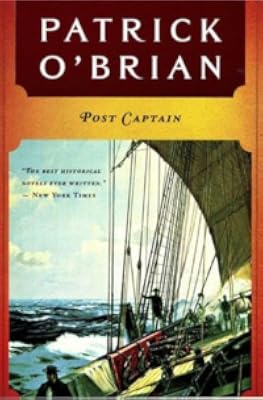
"We've beat them before and we'll beat them again."In 1803, Napoleon smashes the Peace of Amiens, going to war once again. This is doubly alarming news for Captain Jack Aubrey, who is taking refuge in France from his creditors. He is interned but soon escapes from his French debtor's prison, fleeing across the French countryside to lead a ship into battle. After managing to avert a possible mutiny, he pursues his quarry straight into the mouth of a French-held harbor. Stephen Maturin's show more struggles, with himself as much as with a proud and intelligent woman, are woven into Aubrey's, straining their friendship at times to the breaking point.
The high-seas excitement continues in this second installment of Patrick O'Brian's highly acclaimed series.
. show less
Tags
Recommendations



















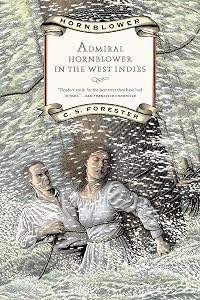
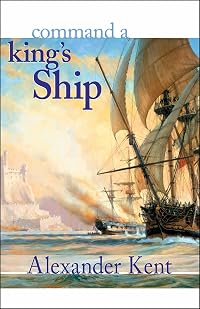
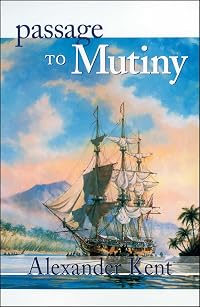
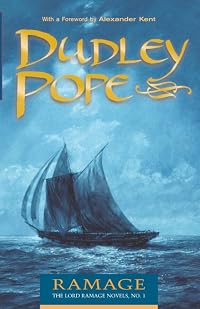

Member Recommendations


TadAD Not the same plot, not a naval story, not part of a series but, nonetheless, I find something similar about them.
12
Member Reviews
For me, there is no better summer reading than the Aubrey/Maturin series of Age of Sail adventures from Patrick O'Brian. Mix equal parts Jane Austen and geeked out historical descriptions of sailing, life in the English Navy during the Napoleonic wars on land and at sea all in O'Brian's enviable prose and you get broadsides of narrative firing off every 2 minutes.
Seriously, if you've never considered reading these do yourself a favor and give them a try. The stories are entertaining, the characters are as engaging as any in literature, and did I mention O'Brian's writing? The books are often undersold as adventures at sea but don't let the entertaining stories throw you, these books are indelibly crafted and very worth your time.
Seriously, if you've never considered reading these do yourself a favor and give them a try. The stories are entertaining, the characters are as engaging as any in literature, and did I mention O'Brian's writing? The books are often undersold as adventures at sea but don't let the entertaining stories throw you, these books are indelibly crafted and very worth your time.
This is the most 'Jane Austen-like' of the Aubrey/Maturin novels, perhaps on purpose. Much of it takes place ashore, and as much of it concerns young ladies' prospects as concerns Napoleonic battles. Most importantly, it takes the two fully-realized characters introduced in 'Master & Commander' and builds a grand world around them.
The book is long - 'prodigiously long, sir!' - but is no less wonderful for it. The ridiculous adventure of Captain Jack in the bear-skin, the introduction of the fiery Dianna Villiers, the secretive wisdom and eccentricity of Stephen Maturin; every episode is a delight, every battle a thrill, every conversation intriguing. The world of Napoleonic England - and especially of His Majesty's Royal Navy - is real show more authentic to the last detail. This book is the prime example of historical fiction. You will be transported.
Do not be sad when you have finished it. There are 18 more stories, of equal and even better quality, and by the time you finish them all you will be ready to start again. show less
The book is long - 'prodigiously long, sir!' - but is no less wonderful for it. The ridiculous adventure of Captain Jack in the bear-skin, the introduction of the fiery Dianna Villiers, the secretive wisdom and eccentricity of Stephen Maturin; every episode is a delight, every battle a thrill, every conversation intriguing. The world of Napoleonic England - and especially of His Majesty's Royal Navy - is real show more authentic to the last detail. This book is the prime example of historical fiction. You will be transported.
Do not be sad when you have finished it. There are 18 more stories, of equal and even better quality, and by the time you finish them all you will be ready to start again. show less
There is a point in this book where Stephen Maturin goes back and secretly enters the empty house that Diana Villers had been staying in, but was no longer. The writing as he quietly moves from room to room, observing and remembering and experiencing different emotions...It is just incredibly good. I really had no idea what a writer O'Brian was, that I would be reading literature instead of just sea tales. I already am starting to feel sad that this series will be over after only 20 books, and I haven't started number three yet!
Post Captain see Aubrey and Maturin ashore, enjoying the interlude of the Peace of Amiens and chasing after local eligible women Sophie Williams and Diane Villiers, when tragedy strikes. Jack's perfidious prize agent disappears with all his money, and Jack finds himself in debt to the tune of 11,000 pounds, and liable to be arrested at any time.
The two escape to France, and are there when the Peace of Amiens ends and it's back to war, lovely profitable war! Fortunately, Aubrey is hanging out with the French captains who captured the Sophie in the first book, and since they're such bros they give him warning. Maturin leads Jack across France disguised as a dancing bear (wait what?), and he gets a new ship, the experimental and show more unseaworthy Polychrest, and his career is back on track.
There's one naval action of note, but most of this book is concerned with courting, debt, political games, and the tightening and near breaking of the friendship of our leads while pursuing women. Putting Hos Before Bros, as the saying goes, only leads to tragedy. Still having fun, still dadly as hell. show less
The two escape to France, and are there when the Peace of Amiens ends and it's back to war, lovely profitable war! Fortunately, Aubrey is hanging out with the French captains who captured the Sophie in the first book, and since they're such bros they give him warning. Maturin leads Jack across France disguised as a dancing bear (wait what?), and he gets a new ship, the experimental and show more unseaworthy Polychrest, and his career is back on track.
There's one naval action of note, but most of this book is concerned with courting, debt, political games, and the tightening and near breaking of the friendship of our leads while pursuing women. Putting Hos Before Bros, as the saying goes, only leads to tragedy. Still having fun, still dadly as hell. show less
Many have described this book as a Jane Austen wannabe with much of it being a country side romance. I’d say this description is fair but that doesn’t make the story any less gripping. All the interpersonal conflicts and character dynamics are great and the plot goes to a lot of unexpected places. I’m writing this review quite sometime after reading but there is a battle in this book that is seared into my memory because it is so intense and engaging.
A steady-going follow-up to Master and Commander, Post Captain does not yet provoke the devotion that the Aubrey-Maturin series is said to induce in its readers. The nautical terminology is less bewildering – or perhaps I'm just used to it – but the book does not advance much from the promise of the first instalment.
I wrote in my review of Master and Commander that it was an investment that had not yet – but surely would – pay dividends, but Post Captain, ironically, begins with Captain Jack Aubrey fleeing a debt. His finances are in disarray, a promotion has been denied him, and he must away to sea on whatever can float. A great start, surely?
Unfortunately not, for the first half of the novel becomes mired on land, in a sort of show more Jane Austen-esque soap opera that sees Aubrey and his ship's doctor, Stephen Maturin, in some long-winded social courtship with two eligible young ladies. It's tolerable stuff, in its way – Post Captain is well-written from first to last – but it's not why we're here.
Naval adventure is why we're here – that, and the complementary friendship between Aubrey and Maturin – and, fortunately, the book begins to provide this in doses. Author Patrick O'Brian has an unparalleled ability to evoke the ins-and-outs of naval warfare (tacking in to the right wind, and all that other stuff) without sacrificing pace or tension, and every moment Post Captain is at sea is refreshing. In these parts, the novel is thrilling in its action, engaging in its conversation and astute in its characterisation. That this further shows the land-based scenes for their lubberliness (a bitter duel between Aubrey and Maturin is abandoned without further mention, while there is also an embarrassing sequence about one hundred pages in where Aubrey evades capture in France by disguising himself as a bear) is by the by. When O'Brian engages the enemy more closely, we can hardly wait to follow him in. show less
I wrote in my review of Master and Commander that it was an investment that had not yet – but surely would – pay dividends, but Post Captain, ironically, begins with Captain Jack Aubrey fleeing a debt. His finances are in disarray, a promotion has been denied him, and he must away to sea on whatever can float. A great start, surely?
Unfortunately not, for the first half of the novel becomes mired on land, in a sort of show more Jane Austen-esque soap opera that sees Aubrey and his ship's doctor, Stephen Maturin, in some long-winded social courtship with two eligible young ladies. It's tolerable stuff, in its way – Post Captain is well-written from first to last – but it's not why we're here.
Naval adventure is why we're here – that, and the complementary friendship between Aubrey and Maturin – and, fortunately, the book begins to provide this in doses. Author Patrick O'Brian has an unparalleled ability to evoke the ins-and-outs of naval warfare (tacking in to the right wind, and all that other stuff) without sacrificing pace or tension, and every moment Post Captain is at sea is refreshing. In these parts, the novel is thrilling in its action, engaging in its conversation and astute in its characterisation. That this further shows the land-based scenes for their lubberliness (a bitter duel between Aubrey and Maturin is abandoned without further mention, while there is also an embarrassing sequence about one hundred pages in where Aubrey evades capture in France by disguising himself as a bear) is by the by. When O'Brian engages the enemy more closely, we can hardly wait to follow him in. show less
I’ll offer a single review of the late Patrick O’Brian’s twenty Aubrey/Maturin novels. I’ve never read another series of novels so consistently excellent. These sweeping yet personally engaging stories of the British Royal Navy of the early 19th Century are about war, espionage, exploration, politics, treason, science, medicine, great and ordinary men and women, friendship, morality . . . the grand themes of yesterday, today, and tomorrow. I’ve read the entire series four times. My Christmas present to myself this year was to replace the few remaining paperbacks in my collection with hardbacks, and once they arrive I’ll start reading the series again, in order. Every time I re-read these books I discover they’re not only show more as good as I remembered, they’re better. show less
Members
- Recently Added By
Lists

Folio Society
831 works; 48 members

Form line of battle - Best historical naval fiction
15 works; 2 members

A Good Read (Radio 4)
221 works; 1 member

Books Read in 2016
4,666 works; 197 members

Huxley's reading log 2017
45 works; 1 member

Books Read in 2018
4,360 works; 110 members

Mamet's Ear
6 works; 1 member

Books We Couldn't Put Down
443 works; 197 members
Favourite Books
1,819 works; 308 members
Author Information

154+ Works 76,974 Members
Patrick O'Brian is the author of twenty volumes in the highly respected Aubrey/Maturin series of novels. (Publisher Provided) Patrick O'Brien was born in Ireland in 1914. His education included the Sorbonne. O'Brian has produced a variety of works, including biographies of Picasso and Sir Joseph Banks and translations of the novels and memoirs of show more Simone de Beauvoir, but he is best known for the creation of an unlikely pair of Napoleonic War-era heroes in the Aubrey-Maturin Series. British naval officer Jack Aubrey and Irish scholar and physician Stephen Maturin have been featured in more than a novels published in Great Britain (five of which have also appeared in America). He died on January 2, 2000. (Bowker Author Biography) show less
Some Editions
Series

Belongs to Publisher Series
Work Relationships
Common Knowledge
- Canonical title*
- Aan lagerwal
- Original title
- Post Captain
- Original publication date
- 1972
- People/Characters
- Jack Aubrey; Stephen Maturin; Sophia Williams (later Aubrey); Mrs. Williams; Diana Villiers; Tom Pullings (Lieutenant) (show all 17); William Babbington; Preserved Killick; Barrett Bonden; Richard Canning; Harte (Admiral); Christy-Palliere (Captain); Adam Scriven; Lord Keith; Lady Keith / Queeney Thrale; Lord Melville; Lord Joseph
- Important places
- English Channel; London, England, UK; Toulon, Var, Provence-Alpes-Côte d'Azur, France; Bay of Biscay
- Important events
- Peace of Amiens (1802-1803); Age of Sail; Napoleonic Wars
- Epigraph
- [None]
- Dedication
- For Mary, with love
- First words
- At first dawn the swathes of rain drifting eastwards across the Channel parted long enough to show that the chase had altered course.
- Quotations
- 'As for mutinies in general,' said Stephen, 'I am all in favour of 'em. You take men from their homes or their chosen professions, you confine them in insalubrious conditions upon a wholly inadequate diet, you subject them to... (show all) the tyranny of bosun's mates, you expose them to unimagined perils; what is more, you defraud them of their meagre food, pay and allowances -- everything but this sacred rum of yours. Had I been at Spithead, I should certainly have joined the mutineers. Indeed, I am astonished at their moderation.'
'Pray, Stephen, do not speak like this, nattering about the service; it makes me so very low. I know things are not perfect, but I cannot reform the world and run a man-of-war. In any case, be candid, and think of the Sophie -- think of any happy ship.'
'There are such things, sure; but they depend upon the whim, the digestion and the virtue of one or two men, and that is iniquitous. I am opposed to authority, that egg of misery and oppression; I am opposed to it largely for what it does to those who exercise it.'
'I cannot tell you what a relief it is,' he said, bending to see whether the Amethyst's forestaysail were drawing, 'to be at sea. It is so clear and simple. I do not mean just escaping from the bums; I mean all the com... (show all)plications of life on shore. I do not think I am well suited to the land.' [Aubrey]
This morning, when I was walking beside the coach as it laboured up Ports Down Hill and I came to the top, with all Portsmouth harbour suddenly spread below me, and Gosport, Spithead and perhaps half the Channel Fleet glitter... (show all)ing there - a powerful squadron moving out past Haslar in line ahead, all studdingsails abroad - I felt a longing for the sea. It has a great cleanliness. There are moments when everything on land seems to me tortuous, dark and squalid; though to be sure, squalor is not lacking aboard a man-of-war. [Maturin's diary]
A foolish German had said that man thought in words. It was totally false; a pernicious doctrine; the thought flashed into being in a hundred simultaneous forms, with a thousand associations, and the speaking mind selected on... (show all)e, forming it grossly into the inadequate symbols of words, inadequate because common to disparate situations - admitted to be inadequate for vast regions of expression, since for them there were the parallel languages of music and painting. Words were not called for in many or indeed most forms of thought: Mozart certainly thought in terms of music. He himself at this moment was thinking in terms of scent. [Maturin musing in an opera box]
[Before an impending gun exercise:] Mrs Miller had been desired to step down into the hold, with a midshipman bearing a handful of cushions to show her the way: asked if she minded a bang, had replied, ’Oh no, I love it.’ - Last words
- (Click to show. Warning: May contain spoilers.)‘Sophie,’ said Stephen. ‘God bless her.’
- Publisher's editor
- Lawrence, Starling
- Blurbers
- Renault, Mary; Symons, Julian
- Original language
- English
*Some information comes from Common Knowledge in other languages. Click "Edit" for more information.
Classifications
Statistics
- Members
- 5,282
- Popularity
- 2,570
- Reviews
- 75
- Rating
- (4.10)
- Languages
- 12 — Catalan, Czech, Danish, Dutch, English, Finnish, French, German, Italian, Norwegian (Bokmål), Spanish, Portuguese (Portugal)
- Media
- Paper, Audiobook, Ebook
- ISBNs
- 86
- ASINs
- 49