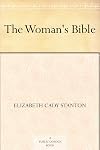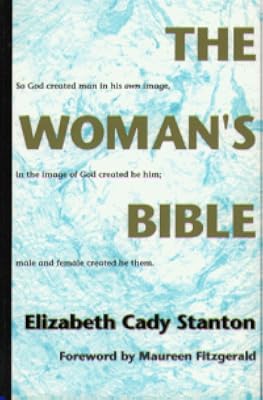
The Woman's Bible
by Elizabeth Cady Stanton
On This Page
Description
The Woman's Bible is a two-part book, published in 1895 and 1898 to challenge the traditional position of religious orthodoxy that woman should be subservient to man. By producing the book, Stanton wished to promote a radical liberating theology, one that stressed self-development. The Woman's Bible attracted a great deal of controversy and antagonism at its introduction.Tags
Recommendations


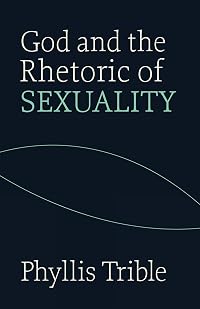

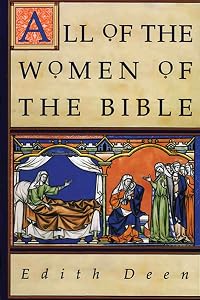

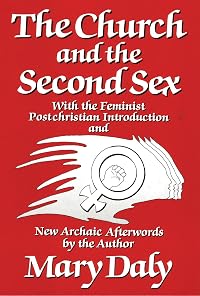
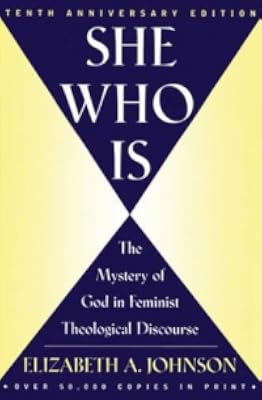







Member Recommendations

lhungsbe My go-to version of the Bible. No additions or deletions. Easy to read.
20
Member Reviews
Published in the late nineteenth century, THE WOMEN'S BIBLE was an unbelievably progressive book for its time, and is still progressive for modern times. Abrahamic religious denominations often purport patriarchal values, and base those principles on their religious texts. In this work, Elizabeth Cady Stanton presents a critical, radical feminist critique of the books of the Christian Bible. She was knowledgeable in Greek, and in history, and was able to offer viewpoints and rationale that were considered too far-reaching for most suffragettes and other supporters of women's rights.
Her goal was that, through reading and considering THE WOMAN'S BIBLE, females would not again allow an external source to dictate the ways in which they show more lived. Women's lives are as equally valid, valuable, and necessary as those of men. Absolute equality was innate, and the enforced inferiority of religions on the female congregation were false.
At almost 500 pages, the text is a bit of a slog to get through, but it is worth the effort. The author does not suggest that women should divorce themselves from religious beliefs and practices, only that women should understand that most of the dogma and patriarchal traditions were not part of the religions as they were initially conceived. It was through men's adaptation of the religious texts, through translation and teaching, skewed towards a male-dominated scheme. But it doesn't have to be this way. show less
Her goal was that, through reading and considering THE WOMAN'S BIBLE, females would not again allow an external source to dictate the ways in which they show more lived. Women's lives are as equally valid, valuable, and necessary as those of men. Absolute equality was innate, and the enforced inferiority of religions on the female congregation were false.
At almost 500 pages, the text is a bit of a slog to get through, but it is worth the effort. The author does not suggest that women should divorce themselves from religious beliefs and practices, only that women should understand that most of the dogma and patriarchal traditions were not part of the religions as they were initially conceived. It was through men's adaptation of the religious texts, through translation and teaching, skewed towards a male-dominated scheme. But it doesn't have to be this way. show less
Published in the late nineteenth century, THE WOMEN'S BIBLE was an unbelievably progressive book for its time, and is still progressive for modern times. Abrahamic religious denominations often purport patriarchal values, and base those principles on their religious texts. In this work, Elizabeth Cady Stanton presents a critical, radical feminist critique of the books of the Christian Bible. She was knowledgeable in Greek, and in history, and was able to offer viewpoints and rationale that were considered too far-reaching for most suffragettes and other supporters of women's rights.
Her goal was that, through reading and considering THE WOMAN'S BIBLE, females would not again allow an external source to dictate the ways in which they show more lived. Women's lives are as equally valid, valuable, and necessary as those of men. Absolute equality was innate, and the enforced inferiority of religions on the female congregation were false.
At almost 500 pages, the text is a bit of a slog to get through, but it is worth the effort. The author does not suggest that women should divorce themselves from religious beliefs and practices, only that women should understand that most of the dogma and patriarchal traditions were not part of the religions as they were initially conceived. It was through men's adaptation of the religious texts, through translation and teaching, skewed towards a male-dominated scheme. But it doesn't have to be this way. show less
Her goal was that, through reading and considering THE WOMAN'S BIBLE, females would not again allow an external source to dictate the ways in which they show more lived. Women's lives are as equally valid, valuable, and necessary as those of men. Absolute equality was innate, and the enforced inferiority of religions on the female congregation were false.
At almost 500 pages, the text is a bit of a slog to get through, but it is worth the effort. The author does not suggest that women should divorce themselves from religious beliefs and practices, only that women should understand that most of the dogma and patriarchal traditions were not part of the religions as they were initially conceived. It was through men's adaptation of the religious texts, through translation and teaching, skewed towards a male-dominated scheme. But it doesn't have to be this way. show less
A look at the women of the Bible and their stories, by a group of women in the early 20th century. The stories they select are interesting, and ones that are often paid little attention to, and the commentary is lively. The book is somewhat dated, and many of the commentary actually demonstrate a high level of moralizing that is only slightly less puritanical than the Christian writers of the day. This is a good reminder that many of the women who were working for women's suffage actually wanted the vote so they could vote for restrictive laws based on a version of morality that had become the accepted version of the day, based on little more than personal distaste for "loose women", "obscenity", and the demon rum. The book is easy to show more read, and it's fun to look through the commentary that puts another spin on the stories. It reminds you of women in the Bible that weren't as popular as the ones we hear about all the time, and puts into perspective the inherent sexism that oozes from the book so many people swear by, but have never actually read. Recommended highest for those that wll never be willing to read it. show less
The Woman's Bible delivers inspiring and enlightening commentary related to the control and secondary roles of women in the Old Testament.
The author offers contrasts of the original Hebrew versions opposed to the license that translators took to create distortions in words and meaning.
Sequence is a bit choppy and Abraham needed more insight into his willingness to kill his son instead of himself.
The author offers contrasts of the original Hebrew versions opposed to the license that translators took to create distortions in words and meaning.
Sequence is a bit choppy and Abraham needed more insight into his willingness to kill his son instead of himself.
Stanton and committee take verses in the bible, old and new testaments, that directly refer to women. Greek and Hebrew scholars are responsible for translation from the original work, others are historians and will put their talents to use there, and the last of the committee will be "commentators".
This is a reissue, with new introduction, of The Woman's Bible, the annotated one-tenth of the Christian Bible that deals with women, originally published by the women's Revising Committee and copyright Elizabeth Cady Stanton in 1895. The editors used the first and third editions of the book as their source. The book has two parts: the first discusses the Pentateuch and the second the books of Kings, Judges, the prophets, and the apostles.
This is a reissue, with new introduction, of The Woman's Bible, the annotated one-tenth of the Christian Bible that deals with women, originally published by the women's Revising Committee and copyright Elizabeth Cady Stanton in 1895... The book has two parts: the first discusses the Pentateuch and the second the books of Kings, Judges, the prophets, and the apostles.
flag monado | Mar 24, 2013 |
flag monado | Mar 24, 2013 |
Members
- Recently Added By
Lists

Atheism, humanism, freethought, &c. — Best nonfiction books in favour of
167 works; 14 members

Books in the Bibliography of Freethinkers by Susan Jacoby
155 works; 1 member
Author Information

51+ Works 1,012 Members
Series
Belongs to Publisher Series
Common Knowledge
- Original title
- The Woman's Bible
- Original publication date
- 1895
- Quotations
- The canon and civil law; church and state; priests and legislators; all political parties and religious denominations have alike taught that woman was made after man, of man, and for man, an inferior being, subject to man. Cr... (show all)eeds, codes, Scriptures and statutes, are all based on this idea. The fashions, forms, ceremonies and customs of society, church ordinances and discipline all grow out of this idea.
Classifications
- Genres
- Nonfiction, Religion & Spirituality, General Nonfiction, Sexuality and Gender Studies, History
- DDC/MDS
- 220.8 — Religion The Bible The Bible Nonreligious subjects treated in Bible
- LCC
- BS575 .S68 — Philosophy, Psychology and Religion The Bible The Bible Works about the Bible Men, women, and children of the Bible
- BISAC
Statistics
- Members
- 565
- Popularity
- 52,248
- Reviews
- 7
- Rating
- (3.64)
- Languages
- English
- Media
- Paper, Ebook
- ISBNs
- 35
- UPCs
- 1
- ASINs
- 13