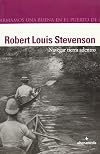
An Inland Voyage
by Robert Louis Stevenson
On This Page
Description
Robert Louis Stevenson's 1878 travelogue, An Inland Voyage, details his canoeing trip through France and Belgium in 1876. Pioneering new ground in outdoor literature, this was Stevenson's first book. He had decided to become free from his parent's financial support so that he might freely pursue the woman he loved; to support himself he wrote travelogues, most notably An Inland Voyage, Travels with a Donkey in the Cévennes and The Silverado Squatters. Stevenson undertook the journey with show more his friend, Sir Walter Grindlay Simpson, at a time when such outdoor travel for leisure was considered unusual and it resulted in this romantic and original work that still inspires travelers today.. show less
Tags
Recommendations





















Member Reviews
I am so struck by the ideas expressed here about his approach to travel and his humourous insights into human nature that I want to keep this book always with me. Stevenson seems to embody all of the wonderful traits of the heroes of Treasure Island and Kidnapped as they would be as grown men, including a self-deprecating awareness of his own flaws. The descriptions of nature and the minor incidents of the trip make rural France vivid to the imagination. There is much here worth revisiting again and again. It has had an effect on me beyond all anticipation.
The model for endless subsequent cruising memoirs, but still worth going back to for the freshness and liveliness of RLS's prose. He was a relatively early adopter of the late-Victorian touring canoe craze inspired by MacGregor, and on this trip through Belgian and French rivers he and his travelling companion (quaintly only identified in the text by the name of his boat, the Cigarette) were something of a novelty for the people they encountered, so there's a feeling of exploration even though they are rather close to home. Occasionally he allows himself to be a bit too patronising about working-class French people, but most of the time it's very agreeable to read.
This was the first book published by RLS - he had earlier writings printed in magazine, but this was his first book.
I read this after reading Travels With a Donkey which was his next work to be published. Both are "travel literature" and both relate the story of rough travels in France - a little like an early backpacker experience - where the discomfort and inconvenience is a necessary part of the story to later told.
I found this work to be less polished than Travels with a Donkey, and when I found it was the earlier piece, I was able to retrospectively see the L-plates on the author. He seems to be trying too hard to impress. But by the second half of the book, I found the writing flowed better, contained more interesting insights, show more and was generally more pleasing.
A good read, particularly in relation to observing the development of the author.
Read Nov 2015. show less
I read this after reading Travels With a Donkey which was his next work to be published. Both are "travel literature" and both relate the story of rough travels in France - a little like an early backpacker experience - where the discomfort and inconvenience is a necessary part of the story to later told.
I found this work to be less polished than Travels with a Donkey, and when I found it was the earlier piece, I was able to retrospectively see the L-plates on the author. He seems to be trying too hard to impress. But by the second half of the book, I found the writing flowed better, contained more interesting insights, show more and was generally more pleasing.
A good read, particularly in relation to observing the development of the author.
Read Nov 2015. show less
Stevenson and a friend travel along the French canals and rivers in canoes for "leisure". Outdoor travel for leisure was unusual for the time and they were often mistaken for traveling salesman, but the novelty of their canoes would occasion entire villages to come out and wave along the river banks. Very well written, Stevenson was a true Romantic. Like many of his works, this one is fairly unique, nothing else he wrote since is quite like it in style or tone. It paints a delightful atmosphere of Europe in a more innocent time with its quirky inn keepers, traveling entertainers and puppeteers, old men who had never left their villages, ramshackle military units parading around with drums and swords, gypsy families who lived on canal show more barges. show less
https://nwhyte.livejournal.com/3485824.html
Stevenson's first non-fiction book, a voyage by canoe through Belgium and France in 1878 with a Scottish baronet friend. It's interesting to look at the route between Antwerp and (more or less) Paris by water rather than by the more familiar road or rail. There are some nice moments of local colour. But this isn't Three Men in a Boat, and the ending is rather abrupt.
Stevenson's first non-fiction book, a voyage by canoe through Belgium and France in 1878 with a Scottish baronet friend. It's interesting to look at the route between Antwerp and (more or less) Paris by water rather than by the more familiar road or rail. There are some nice moments of local colour. But this isn't Three Men in a Boat, and the ending is rather abrupt.
Dnf. Didn’t appreciate all the Librivox narrators.
I concur with nwhyte's review of Oct 7th, 2020.
Members
- Recently Added By
Lists

Adventure Travel & Exploration In Europe
18 works; 3 members
Author Information

2,802+ Works 139,375 Members
Novelist, poet, and essayist Robert Louis Stevenson was born in Edinburgh, Scotland. A sickly child, Stevenson was an invalid for part of his childhood and remained in ill health throughout his life. He began studying engineering at Edinburgh University but soon switched to law. His true inclination, however, was for writing. For several years show more after completing his studies, Stevenson traveled on the Continent, gathering ideas for his writing. His Inland Voyage (1878) and Travels with a Donkey (1878) describe some of his experiences there. A variety of essays and short stories followed, most of which were published in magazines. It was with the publication of Treasure Island in 1883, however, that Stevenson achieved wide recognition and fame. This was followed by his most successful adventure story, Kidnapped, which appeared in 1886. With stories such as Treasure Island and Kidnapped, Stevenson revived Daniel Defoe's novel of romantic adventure, adding to it psychological analysis. While these stories and others, such as David Balfour and The Master of Ballantrae (1889), are stories of adventure, they are at the same time fine studies of character. The Master of Ballantrae, in particular, is a study of evil character, and this study is taken even further in The Strange Case of Dr. Jekyll and Mr. Hyde (1886). In 1887 Stevenson and his wife, Fanny, went to the United States, first to the health spas of Saranac Lake, New York, and then on to the West Coast. From there they set out for the South Seas in 1889. Except for one trip to Sidney, Australia, Stevenson spent the remainder of his life on the island of Samoa with his devoted wife and stepson. While there he wrote The Wrecker (1892), Island Nights Entertainments (1893), and Catriona (1893), a sequel to Kidnapped. He also worked on St. Ives and The Weir of Hermiston, which many consider to be his masterpiece. He died suddenly of apoplexy, leaving both of these works unfinished. Both were published posthumously; St. Ives was completed by Sir Arthur Quiller-Couch, and The Weir of Hermiston was published unfinished. Stevenson was buried on Samoa, an island he had come to love very much. Although Stevenson's novels are perhaps more accomplished, his short stories are also vivid and memorable. All show his power of invention, his command of the macabre and the eerie, and the psychological depth of his characterization. (Bowker Author Biography) show less
Some Editions
Series
Belongs to Publisher Series
Work Relationships
Common Knowledge
- Canonical title
- An Inland Voyage
- Original title
- An Inland Voyage
- Important places
- Antwerp, Antwerp, Belgium
Classifications
- Genres
- Travel, Nonfiction
- DDC/MDS
- 914.4040812 — History & geography Geography & travel Geography of and travel in Europe France and Monaco subdivisions and modified standard subdivisions Travel; guidebooks
- LCC
- PR5488 .I6 — Language and Literature English English Literature 19th century , 1770/1800-1890/1900
- BISAC
Statistics
- Members
- 190
- Popularity
- 172,221
- Reviews
- 8
- Rating
- (3.81)
- Languages
- 8 — Dutch, English, French, German, Italian, Spanish, Swedish, Yiddish
- Media
- Paper, Ebook
- ISBNs
- 50
- ASINs
- 17