On This Page
Description
Follows The Book of Lost Tales, parts 1 & 2, and precedes The Shaping of Middle-earth.Tags
Recommendations







Member Reviews
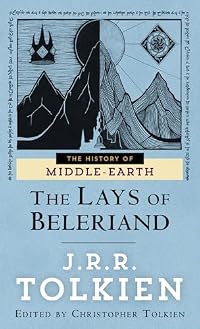
The lays are… lays! They’re written as long poems. For some reason, I was not expecting that. I also wasn't expecting it to be so pleasant to read; I usually hate poetry. It reminds me of a fanfic drabble: every word chosen carefully, lots of rich details but nothing extraneous. Maybe when I have the house to myself I will read them aloud. (I did, and it was amazing.)
"The Lay of Leithian" is the familiar story of Beren and Lúthien. The rhyming couplets are perfect for this story; I prefer it over all the other prose versions. It also has a lot more detail. "The Lay of the Children of Húrin" is in alliterative verse, and I enjoyed it, although maybe not as much. I don’t know a lot about poetry, but alliterative verse was a much show more better choice than rhyming couplets, since it’s a much darker story.
Favorites:Lúthien faces down Morgoth. She is brilliant as always, but it’s the characterization of Morgoth himself that gets to me: you can feel his hatred of the Valar, how convincing he can be, and how twisted his view of the world.
Least favorites: None of it is finished! Luckily we know how the stories end, but I would love to read them all the way through in verse. show less
"The Lay of Leithian" is the familiar story of Beren and Lúthien. The rhyming couplets are perfect for this story; I prefer it over all the other prose versions. It also has a lot more detail. "The Lay of the Children of Húrin" is in alliterative verse, and I enjoyed it, although maybe not as much. I don’t know a lot about poetry, but alliterative verse was a much show more better choice than rhyming couplets, since it’s a much darker story.
Favorites:
Least favorites: None of it is finished! Luckily we know how the stories end, but I would love to read them all the way through in verse. show less
http://nwhyte.livejournal.com/1693204.html
This is the third volume of the History of Middle Earth; it contains two unfinished poems tackling the two key narratives of the Silmarillion. The first, a version of the tale of Turin told in alliterative blank verse, did not really appeal to me, and while I can see why Tolkien, with his background, wanted to give it a try, it's not very surprising that the effort did not come off. The Lay of Leithian, however, is a different matter - telling the story of Beren and Luthien in rhyming couplets of iambic tetrameter, it has a tremendous energy that Tolkien never quite managed in the prose versions of the story, despite its strong personal significance for him. Also I had forgotten, or had never show more realised, just how kickass a heroine Luthien actually is. The couplets are occasionally a little unpolished, but Christopher Tolkien reproduces a mock source-critical analysis by none other than C.S. Lewis suggesting that the least good bits are obvious interpolations by later scribes. J.R.R. Tolkien then revised the poem in line with Lewis' suggestions, but typically started expanding it from the middle again and never got around to finishing it.
Years later, it was part of the disorganised bundle of papers submitted to Unwin as material for a potential sequel to The Hobbit. Unwin's reader, who clearly had not been given much background, found the poem indigestible and urged instead an expansion of the prose summary of the rest of The Silmarillion. Tolkien wasn't up for this at that point, and wrote The Lord of the Rings instead. And thus was history made. show less
This is the third volume of the History of Middle Earth; it contains two unfinished poems tackling the two key narratives of the Silmarillion. The first, a version of the tale of Turin told in alliterative blank verse, did not really appeal to me, and while I can see why Tolkien, with his background, wanted to give it a try, it's not very surprising that the effort did not come off. The Lay of Leithian, however, is a different matter - telling the story of Beren and Luthien in rhyming couplets of iambic tetrameter, it has a tremendous energy that Tolkien never quite managed in the prose versions of the story, despite its strong personal significance for him. Also I had forgotten, or had never show more realised, just how kickass a heroine Luthien actually is. The couplets are occasionally a little unpolished, but Christopher Tolkien reproduces a mock source-critical analysis by none other than C.S. Lewis suggesting that the least good bits are obvious interpolations by later scribes. J.R.R. Tolkien then revised the poem in line with Lewis' suggestions, but typically started expanding it from the middle again and never got around to finishing it.
Years later, it was part of the disorganised bundle of papers submitted to Unwin as material for a potential sequel to The Hobbit. Unwin's reader, who clearly had not been given much background, found the poem indigestible and urged instead an expansion of the prose summary of the rest of The Silmarillion. Tolkien wasn't up for this at that point, and wrote The Lord of the Rings instead. And thus was history made. show less
A combination of a study of the craft of writing and the poetic origins of Tolkien's massive world of Middle Earth. Two of these poem groups have since been published as standalone novels, thus reaching a wider audience.
This book is divided into 3 chapters, "The Lay of the Children of Hurin," "Poems Early Abandoned," and "The Lay of Leithian." Each chapter contains the poem sequences that Tolkien first wrote in all their Edda-esque glory. There are characters who take shape and include details that Tolkien uses in later writings even when the name, such as Orgof, Turin's tormenter in the halls of Thingol, do not survive the world-building. And then there are elements, such as the friendship between Turin Turambar and Beleg the Bowman, show more that are created in this poem and continue into the published [Silmarillion].
In "The Lay of Leithian," the longest section, Tolkien started in the summer of 1925 and finished later in 1931. It is the earliest telling of the love between Beren and Luthien, Beren's life story, and the forces that drove them to seek the Silmaril from Morgoth's crown. Also included at the end of this poem are C.S. Lewis' notes on the copy Tolkien gave him for review, and Christopher Tolkien's commentary on what Tolkien did (and did not) change once he received his friends notes.
Throughout each section are Christopher Tolkien's notes on names, commentary, and comparison of later emendations to the original. And he also includes the correspondence between Tolkien and the publishers of Allen & Unwin, and the mis-communication that resulted in the heroic poems as well as "Silmarillion" being turned down for publication, when, in fact, Unwin's reader never read the pages Tolkien provided for "Silmarillion" despite naming this work in his review. show less
This book is divided into 3 chapters, "The Lay of the Children of Hurin," "Poems Early Abandoned," and "The Lay of Leithian." Each chapter contains the poem sequences that Tolkien first wrote in all their Edda-esque glory. There are characters who take shape and include details that Tolkien uses in later writings even when the name, such as Orgof, Turin's tormenter in the halls of Thingol, do not survive the world-building. And then there are elements, such as the friendship between Turin Turambar and Beleg the Bowman, show more that are created in this poem and continue into the published [Silmarillion].
In "The Lay of Leithian," the longest section, Tolkien started in the summer of 1925 and finished later in 1931. It is the earliest telling of the love between Beren and Luthien, Beren's life story, and the forces that drove them to seek the Silmaril from Morgoth's crown. Also included at the end of this poem are C.S. Lewis' notes on the copy Tolkien gave him for review, and Christopher Tolkien's commentary on what Tolkien did (and did not) change once he received his friends notes.
Throughout each section are Christopher Tolkien's notes on names, commentary, and comparison of later emendations to the original. And he also includes the correspondence between Tolkien and the publishers of Allen & Unwin, and the mis-communication that resulted in the heroic poems as well as "Silmarillion" being turned down for publication, when, in fact, Unwin's reader never read the pages Tolkien provided for "Silmarillion" despite naming this work in his review. show less
Terceiro volume de A História da Terra-média, série editada por Christopher Tolkien que oferece uma visão detalhada da genialidade e do processo criativo em evolução de J.R.R. Tolkien.
Este livro oferece uma visão privilegiada da criação da mitologia da Terra-média por meio da composição poética de Tolkien. O livro contém os longos poemas heroicos A Balada dos Filhos de Húrin, que narra a trágica saga de Túrin Turambar, e A Balada de Leithian, principal fonte do conto Beren e Lúthien apresentado em O Silmarillion. Também são contém três poemas aliterativos inacabados: A Fuga dos Noldoli, A Balada de Eärendel e A Balada da Queda de Gondolin. A edição conta com comentários sobre a evolução da história dos Dias show more Antigos e a crítica feita por C.S Lewis de A Balada de Leithian. show less
Este livro oferece uma visão privilegiada da criação da mitologia da Terra-média por meio da composição poética de Tolkien. O livro contém os longos poemas heroicos A Balada dos Filhos de Húrin, que narra a trágica saga de Túrin Turambar, e A Balada de Leithian, principal fonte do conto Beren e Lúthien apresentado em O Silmarillion. Também são contém três poemas aliterativos inacabados: A Fuga dos Noldoli, A Balada de Eärendel e A Balada da Queda de Gondolin. A edição conta com comentários sobre a evolução da história dos Dias show more Antigos e a crítica feita por C.S Lewis de A Balada de Leithian. show less
I wonder whether Tolkien would have published materials dealing with the First Age in his lifetime, if he hadn't tried to write epics on the period? Still, they're not half bad epics, and C.S. Lewis' fictional German professors commenting on /The Lay of Leithien/ are not to be missed.
Authorship of this book, essentially a commentary on the evolution of a long poem by JRR Tolkien, with extensive analytical sections by his son Christopher is therefore tricky. The poems, the sad, sad tale of Turin, and the many versions of Beren and Luthien, are chopped up and dissected by the young heir. Sometimes readable for middling sections is the best I can say, here.
The best love story/poem/epic of all time is enclosed in these pages. Do not miss it. Please skip Christopher Tolkien's dry editorial comments. It will kill the mood, trust me.
Members
- Recently Added By
Lists

LOTR wishlist
9 works; 1 member

Unread books
1,063 works; 83 members

Books Read in 2014
2,342 works; 86 members
Author Information

590+ Works 510,805 Members
A writer of fantasies, Tolkien, a professor of language and literature at Oxford University, was always intrigued by early English and the imaginative use of language. In his greatest story, the trilogy The Lord of the Rings (1954--56), Tolkien invented a language with vocabulary, grammar, syntax, even poetry of its own. Though readers have show more created various possible allegorical interpretations, Tolkien has said: "It is not about anything but itself. (Certainly it has no allegorical intentions, general, particular or topical, moral, religious or political.)" In The Adventures of Tom Bombadil (1962), Tolkien tells the story of the "master of wood, water, and hill," a jolly teller of tales and singer of songs, one of the multitude of characters in his romance, saga, epic, or fairy tales about his country of the Hobbits. Tolkien was also a formidable medieval scholar, as evidenced by his work, Beowulf: The Monster and the Critics (1936) and his edition of Anciene Wisse: English Text of the Anciene Riwle. Among his works published posthumously, are The Legend of Sigurd and Gudrún and The Fall of Arthur, which was edited by his son, Christopher. In 2013, his title, TheHobbit (Movie Tie-In) made The New York Times Best Seller List. (Bowker Author Biography) show less
All Editions
Some Editions
Series

Work Relationships
Is contained in
Common Knowledge
- Canonical title
- The Lays of Beleriand
- Original title
- The Lays of Beleriand
- Original publication date
- 1985-08-22
- People/Characters
- Túrin Turambar; Beleg; Aegnor
- Important places
- Middle-earth; Beleriand
- Related movies
- The Lord of the Rings: The Rings of Power (2022 | IMDb)
- First words
- Lo! the golden dragon of the God of Hell,
the gloom of the woods of the world now gone,
the woes of Men, and weeping of Elves
fading faintly down forest pathways,
is now to tell, and the name most tearful
of NÃ... (show all)niel the sorrowful, and the name most sad
of Thalion's son Túrin o'erthrown by fate. - Original language
- English
- Canonical DDC/MDS
- 823.087661
Classifications
- Genres
- Fantasy, Fiction and Literature
- DDC/MDS
- 823.087661 — Literature & rhetoric English & Old English literatures English fiction By type Genre fiction Adventure fiction Speculative fiction Fantasy fiction High fantasy
- LCC
- PR6039 .O32 .L3 — Language and Literature English English Literature 1900-1960
- BISAC
Statistics
- Members
- 2,888
- Popularity
- 6,197
- Reviews
- 13
- Rating
- (3.87)
- Languages
- 7 — English, French, German, Hungarian, Italian, Polish, Spanish
- Media
- Paper, Ebook
- ISBNs
- 26
- UPCs
- 3
- ASINs
- 13