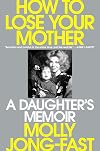
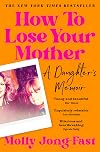
How to Lose Your Mother: A Daughter's Memoir
by Molly Jong-Fast
On This Page
Description
Instant New York Times Bestseller“With propulsive humor and perspective on her annus horribilis, Jong-Fast achieves the memoir’s transformative work of alchemy, arming us all with lines so good you won’t just want to underline them, you will want to cut them out to share.” —The Washington Post
“This raw, intimate memoir is a stunning portrait of difficult relationships and how we survive them.” —People
“Molly Jong-Fast’s memoir is mesmerizing, intimate, wise, show more unputdownable, crazily honest, heartbreaking, funny, illuminating—beautiful and painful at the same time, just like real life.” —Anne Lamott
From the political writer and podcaster, a ferociously honest and disarmingly funny memoir about her elusive mother’s encroaching dementia and a reckoning with her complicated childhood
Molly Jong-Fast is the only child of a famous woman, writer Erica Jong, whose sensational book Fear of Flying launched her into second-wave feminist stardom. She grew up yearning for a connection with her dreamy, glamorous, just out of reach mother, who always seemed to be heading somewhere that wasn’t with Molly. When, in 2023, Erica was diagnosed with dementia just as Molly’s husband discovered he had a rare cancer, Jong-Fast was catapulted into a transformative year.
How to Lose Your Mother is a compulsively readable memoir about an intense mother–daughter relationship, a sometimes chaotic upbringing with a fame-hungry parent, and the upheavals that challenge our hard-won adulthood. A pitch-perfect balance of acceptance and rage, humor and heart, How to Lose Your Mother tells a universal story of loss alongside a singular story of a literary life. This is a memoir that will stand alongside the classics of the genre. show less
Tags
Recommendations




Member Reviews
I'm currently in therapy dealing with my own issues developed from a lifetime of coping with a narcissistic, mentally unfit, neglectful, locally "famous" widely-beloved mother who is now declining into dementia. Aside from the plethora of world-travelling famous family, friends, and acquaintances, this is my life. The buildup is slow and gradual, and on occasion I found myself laughing aloud at a snippet of (unintentional?) humor but also gasping at the bold, brutal things that adult children of narcissists so often think in our hearts but hardly ever say aloud, because who would believe us? There are repetitive ruminations, rehashing of a topic again and again, because this is the reality. We second-guess everything, we play and replay show more scenarios in our heads trying to figure things out. Guilt, shame, anger, uncertainty, reassurance, futile arguments and attempts to be understood, seen, listened to. And to lose it all, again, to dementia, to know you'll never get that resolution. It's awful, and no one will understand but another who has lived this kind of life. I'm recommending this one for my therapist to read. Thank you, Molly Jong-Fast, for baring your soul and I wish you peace. show less
The guiltiest of guilty pleasures.
When I was 12, I found a copy of Erica Jong's [b:Fear of Flying|9654|Fear of Flying|Erica Jong|https://i.gr-assets.com/images/S/compressed.photo.goodreads.com/books/1388190180l/9654._SY75_.jpg|2164933] in my mother's dresser drawer. My very prudish, disapproving mother, I should add. I was fascinated, horrified and yes titillated by Jong's thinly veiled autobiographical novel, in which a young married woman goes looking for a "zipless fuck." That term would barely raise an eyebrow these days, but in 1973 it was scandalous to think that nice upper class white women wanted raunchy, purely physical sex. Flying was a blockbuster bestseller, and Jong appeared on TV and magazine covers as the spokesperson show more for "modern feminism," whatever that meant at the time. Jong's subsequent novels, all heavily autobiographical, failed to reach similar heights, although she continued publishing into the 21st century (including 2015's [b:Fear of Dying|23848189|Fear of Dying|Erica Jong|https://i.gr-assets.com/images/S/compressed.photo.goodreads.com/books/1422904826l/23848189._SX50_.jpg|45955129], lol).
All of this is prologue to the fact that Jong's only child, Molly Jong-Fast, has written a juicy nepo-baby memoir (insert Jon-Stewart-eating-popcorn meme here). The book focuses primarily on one excruciating year in which Molly's mother was diagnosed with dementia, her stepfather died of Parkinson's disease, and her husband was diagnosed with pancreatic cancer. Interspersed among Jong-Fast's details of her annus horribilis are memories of growing up with a narcissistic, alcoholic mother. Erica Jong's fictional stand-in loved to emphasize the beautiful bond with her daughter "Megan," while the real Erica left Molly with nannies so she could chase after the next man who was going to save her. There were isolated moments of closeness - Erica taking Molly on extravagant shopping trips or staying up late watching TV and eating ice cream, but those just made it more confusing for the daughter.
Jong-Fast briefly describes her own history of addiction, which climaxed in her insisting that she needed to go to rehab and Erica accusing her of being "overly dramatic." But the book's focus is on the grief, anger, and schadenfreude of seeing her fame-hungry mother reduced to a shadow of her former self: unbathed, incontinent, and only occasionally able to recognize her own kid. Jong-Fast is not a particularly skilled writer, but the events she recalls are so striking that the unembellished language does just fine. As the daughter of a (once) famous author and the granddaughter of another (Howard Fast, well-known author of primarily historical novels) there are plenty of opportunities for literary name dropping, and Molly doesn't disappoint (Joan Didion! [a:Taffy Brodesser-Akner|7235807|Taffy Brodesser-Akner|https://images.gr-assets.com/authors/1712266073p2/7235807.jpg]! [a:Ken Follett|3447|Ken Follett|https://images.gr-assets.com/authors/1604049089p2/3447.jpg]!)
As of the book's publication date, Erica Jong is still alive. This is real life, so there is no closure , no moment when Erica understands and apologizes for her failures as a mother. There is some belated acceptance that Erica did the best she could with the tools she had (alcoholism ran in her family, including her mother).
What did I get out of the book? A glimpse into the life of the rich, white, and privileged, and a shameful amount of glee at seeing a supreme narcissist suffering the worst possible fate - being ignored and forgotten. My mother was also a narcissist (although not a drinker), so it's possible that I have some Issues with that specific personality disorder. YMMV if you use "mid-century modern" to refer to anything built in 1973.
N.B. Manny Rayner's killer Goodreads parody/review of Fear of Flying made my day. show less
When I was 12, I found a copy of Erica Jong's [b:Fear of Flying|9654|Fear of Flying|Erica Jong|https://i.gr-assets.com/images/S/compressed.photo.goodreads.com/books/1388190180l/9654._SY75_.jpg|2164933] in my mother's dresser drawer. My very prudish, disapproving mother, I should add. I was fascinated, horrified and yes titillated by Jong's thinly veiled autobiographical novel, in which a young married woman goes looking for a "zipless fuck." That term would barely raise an eyebrow these days, but in 1973 it was scandalous to think that nice upper class white women wanted raunchy, purely physical sex. Flying was a blockbuster bestseller, and Jong appeared on TV and magazine covers as the spokesperson show more for "modern feminism," whatever that meant at the time. Jong's subsequent novels, all heavily autobiographical, failed to reach similar heights, although she continued publishing into the 21st century (including 2015's [b:Fear of Dying|23848189|Fear of Dying|Erica Jong|https://i.gr-assets.com/images/S/compressed.photo.goodreads.com/books/1422904826l/23848189._SX50_.jpg|45955129], lol).
All of this is prologue to the fact that Jong's only child, Molly Jong-Fast, has written a juicy nepo-baby memoir (insert Jon-Stewart-eating-popcorn meme here). The book focuses primarily on one excruciating year in which Molly's mother was diagnosed with dementia, her stepfather died of Parkinson's disease, and her husband was diagnosed with pancreatic cancer. Interspersed among Jong-Fast's details of her annus horribilis are memories of growing up with a narcissistic, alcoholic mother. Erica Jong's fictional stand-in loved to emphasize the beautiful bond with her daughter "Megan," while the real Erica left Molly with nannies so she could chase after the next man who was going to save her. There were isolated moments of closeness - Erica taking Molly on extravagant shopping trips or staying up late watching TV and eating ice cream, but those just made it more confusing for the daughter.
Jong-Fast briefly describes her own history of addiction, which climaxed in her insisting that she needed to go to rehab and Erica accusing her of being "overly dramatic." But the book's focus is on the grief, anger, and schadenfreude of seeing her fame-hungry mother reduced to a shadow of her former self: unbathed, incontinent, and only occasionally able to recognize her own kid. Jong-Fast is not a particularly skilled writer, but the events she recalls are so striking that the unembellished language does just fine. As the daughter of a (once) famous author and the granddaughter of another (Howard Fast, well-known author of primarily historical novels) there are plenty of opportunities for literary name dropping, and Molly doesn't disappoint (Joan Didion! [a:Taffy Brodesser-Akner|7235807|Taffy Brodesser-Akner|https://images.gr-assets.com/authors/1712266073p2/7235807.jpg]! [a:Ken Follett|3447|Ken Follett|https://images.gr-assets.com/authors/1604049089p2/3447.jpg]!)
As of the book's publication date, Erica Jong is still alive. This is real life, so there is no closure , no moment when Erica understands and apologizes for her failures as a mother. There is some belated acceptance that Erica did the best she could with the tools she had (alcoholism ran in her family, including her mother).
What did I get out of the book? A glimpse into the life of the rich, white, and privileged, and a shameful amount of glee at seeing a supreme narcissist suffering the worst possible fate - being ignored and forgotten. My mother was also a narcissist (although not a drinker), so it's possible that I have some Issues with that specific personality disorder. YMMV if you use "mid-century modern" to refer to anything built in 1973.
N.B. Manny Rayner's killer Goodreads parody/review of Fear of Flying made my day. show less
This memoir is an incredibly sad account of Molly Jong-Fast's dysfunctional relationship with her mother, Erica Jong, whose novel, "Fear of Flying," made her a household name. Molly is an only child who desperately craved her mother's love and attention. Unfortunately, Erica married multiple times, had affairs, and was an alcoholic who made inappropriate comments in in public. Molly drank and did drugs as a teenager, but she voluntary entered rehab and became sober at nineteen. She still attends AA meetings and has sought therapeutic help in an attempt to achieve some peace of mind. She is grateful to have a devoted husband and three children who mean the world to her.
In "How to Lose Your Mother," Jong-Fast discusses Erica Jong's show more self-absorption and out-of-control behavior. Jong, whose success opened many door for her, traveled frequently and left Molly with a nanny for extended periods. Years later, it is heartbreaking when Molly realizes that her aging mother and stepfather can no longer care for themselves. She must decide whether it is feasible for them to remain in their own home.
One wonders if Ms. Jong-Fast wrote this book as a catharsis to exorcise her inner demons. Reading about her angst—Molly had the additional challenges of being born with dyslexia and coping with an eating disorder—is wrenching. Observing her abject misery, bitterness, and longing for what might have been leaves us dismayed. "How to Lose Your Mother" demonstrates what most of us already know—that certain individuals are not equipped to be parents. They do their offspring no favors when they fail to give them the encouragement, support, and affection they need in order to become happy and confident adults. show less
In "How to Lose Your Mother," Jong-Fast discusses Erica Jong's show more self-absorption and out-of-control behavior. Jong, whose success opened many door for her, traveled frequently and left Molly with a nanny for extended periods. Years later, it is heartbreaking when Molly realizes that her aging mother and stepfather can no longer care for themselves. She must decide whether it is feasible for them to remain in their own home.
One wonders if Ms. Jong-Fast wrote this book as a catharsis to exorcise her inner demons. Reading about her angst—Molly had the additional challenges of being born with dyslexia and coping with an eating disorder—is wrenching. Observing her abject misery, bitterness, and longing for what might have been leaves us dismayed. "How to Lose Your Mother" demonstrates what most of us already know—that certain individuals are not equipped to be parents. They do their offspring no favors when they fail to give them the encouragement, support, and affection they need in order to become happy and confident adults. show less
I like Molly's political commentary a lot, but I've always thought there was something a little bit "0ff" about her. This memoir about her relationship with her mother, the once very famous writer Erica Jong, goes quite a ways towards explaining Molly. I am old enough to remember Erica Jong in her heyday, the 1970's - '80s. Since she seemed "important" at the time, I read one of her books. It was terrible. Just as if it had been written by a self-absorbed, (and I guess alcoholic) narcissist who considers it essential to her identity to be sexually desireable at all times. Not much room there to provide a safe and loving environment for a child. Molly was raised by her nanny. Molly yearned for attention from her glamourous mom, but got show more essentially none. Her dad (long divorced from Erica) told Molly that when she was little, they tried to get her mom to spend just one hour a day with her but Erica could not do it. The most she could manage was 30 minutes. And she was drunk all the time. Years on it becomes undeniable that Erica has dementia, and it falls to Molly to become the parent and care for her mom. The story of the terrible year in which Molly must place her mom and stepdad into assisted living and also cope with her husband's diagnosis of pancreatic cancer, was for me impossible not to sympathize with. It was, as they say, a lot. show less
The year Molly writes about brings her life into focus as she looks backward at her childhood and where she is now. She is SO hard on herself!! How could she possibly believe she was a bad daughter with so many examples of how her mother just had so little idea about how to BE a mother. Molly really tells us everything..... which makes it a very compelling, page turner of a memoir. Molly writes right to the reader, and refers to that, so she at least had an audience in her head as she wrote about all of these experiences. Wonderful to see her so much on TV now...especially knowing how many of those past experiences were in the midst of so many problems in her life, that continue now.
Author Erica Jong (b. 1942) wrote Fear of Flying and a number of other steamy novels aimed at the 1970s Cosmo set. Her extravagant, filterless persona made her a media fixture as well. Yet, as the years passed, Jong’s severe alcoholism caught up with her, then she developed dementia. As of this writing, Jong is reportedly still alive, but in a much diminished mental state.
Molly Jong-Fast (b. 1978) is Erica Jong’s only child. She describes her mother as a narcissistic, neglectful parent who seemed constitutionally unable to give her daughter the time and attention she craved. Jong-Fast tries to understand her mother’s behind-the-scenes indifference, despite Jong’s gushy, public declarations of love, but none of Jong-Fast’s show more hypotheses, such as her mother’s dysfunctional upbringing, tendency toward dissociation, and familial predisposition to alcoholism, seem to cover it.
This memoir could have done more than just describe unfit parenting, the corrupting influence of fame, or the perils of a lifetime of heavy drinking, but Jong-Fast’s narrative does not yield many insights. The author doesn’t understand her mother any better at the end of the book than she did at the beginning, and she does not attempt to place her mother’s life and times into a broader context. Significantly, Jong-Fast admits that she has never read her mother’s books.
Despite Jong-Fast’s career as a pundit and journalist, her narrative voice sounds like it stopped developing back in high school. “Weird” is her favorite adjective and she uses it repeatedly.
All in all, this book is an average entry in the growing category of “nepo baby” autobiographies. show less
Molly Jong-Fast (b. 1978) is Erica Jong’s only child. She describes her mother as a narcissistic, neglectful parent who seemed constitutionally unable to give her daughter the time and attention she craved. Jong-Fast tries to understand her mother’s behind-the-scenes indifference, despite Jong’s gushy, public declarations of love, but none of Jong-Fast’s show more hypotheses, such as her mother’s dysfunctional upbringing, tendency toward dissociation, and familial predisposition to alcoholism, seem to cover it.
This memoir could have done more than just describe unfit parenting, the corrupting influence of fame, or the perils of a lifetime of heavy drinking, but Jong-Fast’s narrative does not yield many insights. The author doesn’t understand her mother any better at the end of the book than she did at the beginning, and she does not attempt to place her mother’s life and times into a broader context. Significantly, Jong-Fast admits that she has never read her mother’s books.
Despite Jong-Fast’s career as a pundit and journalist, her narrative voice sounds like it stopped developing back in high school. “Weird” is her favorite adjective and she uses it repeatedly.
All in all, this book is an average entry in the growing category of “nepo baby” autobiographies. show less
Depressing on every level without a single redeeming person or action. I don't know who the audience is for this memoir, which seems like a whole lot of poor-poor-pitiful-me with celebrities sprinkled in. I feel sorry for Molly and her difficult circumstances, but "I love my mom more than anyone" "I hate my mom more than anyone" just did not work for me.
Members
- Recently Added By
Lists

Non-fiction
55 works; 1 member

Netgalley Reads
458 works; 3 members
Author Information

5+ Works 372 Members
Molly Jong-Fast is the twenty-two-year-old daughter of Erica Jong & Jonathan Fast. Her essays & articles have appeared in "Mademoiselle", "Marie-Claire", "The Forward", & "Mode". She lives in New York City with her cocker spaniel, Godzuki. (Bowker Author Biography)
Awards and Honors
Common Knowledge
- Canonical title
- How to Lose Your Mother: A Daughter's Memoir
- Original title
- How to Lose Your Mother: A Daughter's Memoir
- Original publication date
- 2025
- People/Characters
- Erica Jong; Molly Jong-Fast; Ken Burrows; Matt
- Epigraph
- Celebrity is a mask that eats into the face.
—JOHN UPDIKE
I'd like to thank my terrible childhood and the Academy, in that order.
—ROBERT DOWNEY JR.
I should note that the only advantage for a child in having an alcoholic parent is that you acquire, prematurely, quite a bit of valuable data.
—GORE VIDAL - Dedication
- To my mother, who created me and I love more than anything, and my husband, who saved me from myself.
- First words
- I am the only child of a once-famous woman.
- Quotations
- Everyone ended up in her novels ... Anyone who knew her knew that everything that happened went right into the books. Names were changed to make everything a little more pretentious, but some things were almost reported verba... (show all)tim ... But the one thing that always happened was that she was the hero, always and forever.
It was a kind of gaslighting by proxy, like Munchausen syndrome, but somehow much, much stupider.
She was a terrible mother, ergo I shouldn't have to be a good daughter. But of course I was wracked by guilt. I wasn't a good daughter; she wasn't a good mother, but we were not even. We would never be even. There was no way ... (show all)to get even.
How can you lose something you never had?
What happens to the tears you never cry? Do they get reabsorbed into you, or do they linger? Do those uncried tears continue to travel around your body, all pain, all sadness?
I was born to privilege, born on third base, but desperate to strike out and go home. - Last words
- (Click to show. Warning: May contain spoilers.)We entered the new year as the adults we had to be.
- Blurbers
- Gottlieb, Lori; Messud, Claire; Lamott, Anne; Lawson, Nigella
Classifications
Statistics
- Members
- 162
- Popularity
- 201,491
- Reviews
- 10
- Rating
- (3.69)
- Languages
- English
- Media
- Paper, Audiobook, Ebook
- ISBNs
- 9
- ASINs
- 3