
David Small (1) (1945–)
Author of Imogene's Antlers
For other authors named David Small, see the disambiguation page.
About the Author
David Small was born on February 12, 1945, in Detroit, Michigan. He studied art and English at Wayne State University, and went on to complete graduate studies in art at Yale. After receiving his MFA degree, he taught drawing and printmaking at the State University of New York, Fredonia College, show more Kalamazoo College, and the University of Michigan. He also created editorial cartoons for publications such as the New Yorker, the New York Times, and the Wall Street Journal. In the 1980s, he lost his teaching job due to cutbacks. It was then that he committed himself to combining his loves of writing and art. His first picture book, Eulalie and the Hopping Head, was published in 1981. He earned a 1997 Caldecott Honor and The Christopher Medal for The Gardener, written by his wife, Sarah Stewart. In 2001, he received the Caldecott Medal for his artwork in So, You Want To Be President? by Judith St. George. His editorial drawings regularly appear in publications such as The New York Times, The New Yorker, GQ, and The Washington Post. (Bowker Author Biography) show less
Works by David Small
Imogene's Antler's 1 copy
Associated Works
There's a Girl in My Hammerlock — Illustrator — 1 copy
Tagged
Common Knowledge
- Birthdate
- 1945-02-12
- Gender
- male
- Education
- Wayne State University (BA)
Yale University (MFA) - Occupations
- illustrator
art instructor
children's book author - Agent
- Paulson Communications
HG Literary Agency - Relationships
- Stewart, Sarah (wife)
- Nationality
- USA
- Birthplace
- Detroit, Michigan, USA
- Places of residence
- Detroit, Michigan, USA
Mendon, Michigan, USA - Associated Place (for map)
- Michigan, USA
Members
Reviews

"On Thursday, when Imogene woke up, she found she had grown antlers. Getting dressed was difficult, and going through a door now took some thinking..." And so begins this delightfully comic picture-book masterpiece from David Small, first published in 1985, and featured in that classic children's television program, Reading Rainbow. Imogene navigates her house and her day, meeting each new challenge created by her unusual appendages with aplomb, and enjoying some of the unexpected benefits - show more like being a walking bird-feeder! - that they provide. When Friday comes, the antlers have disappeared... but a new surprise is in store!
I have loved Imogene's Antlers from the day I first picked it up, while working in the children's section of a bookstore as a young woman (somehow I missed it, as a little girl), and always get a kick out of the dry, understated humor of David Small's narrative and artwork. The image in which Imogene gets caught on the chandelier, after sliding down the bannisters, is just hilarious! Rereading it today on my morning commute, I shared it with a new mother, who (naturally) found it adorable, but also commented: "Imogene has lots of servants!" Which is quite true, and something I'd not noticed before. But while some of the details of setting and character here are rather old-fashioned - Imogene's mother is constantly fainting, the doctor makes house-calls, the concerned family call in a milliner(!) - the end-result feels fresh and contemporary, for all that. Highly recommended to anyone who enjoys a little bit of absurdist humor in their picture-book! show less
I have loved Imogene's Antlers from the day I first picked it up, while working in the children's section of a bookstore as a young woman (somehow I missed it, as a little girl), and always get a kick out of the dry, understated humor of David Small's narrative and artwork. The image in which Imogene gets caught on the chandelier, after sliding down the bannisters, is just hilarious! Rereading it today on my morning commute, I shared it with a new mother, who (naturally) found it adorable, but also commented: "Imogene has lots of servants!" Which is quite true, and something I'd not noticed before. But while some of the details of setting and character here are rather old-fashioned - Imogene's mother is constantly fainting, the doctor makes house-calls, the concerned family call in a milliner(!) - the end-result feels fresh and contemporary, for all that. Highly recommended to anyone who enjoys a little bit of absurdist humor in their picture-book! show less
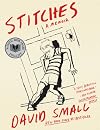
I'd never read a graphic novel before, and would likely not have read this one if it hadn't been selected by my book club. It completely shattered my (incorrect) belief that graphic novels (or graphic books more generally: this one is a memoir) are aimed at children. As far from the comic books of my youth as I can imagine, "Stitches" is the horrific, true tale of David Small's loveless upbringing by an angry, cold mother, and a powerless, seemingly absent father. At the age of 14, Small show more undergoes throat surgery for cancer, which he is not told he has, and he is left with only one vocal void, and thus without a voice. He survives, and eventually is taken on by a therapist who helps him recover from his physical and psychological trauma, and whom Small, a long time fan of Alice in Wonderland, depicts as the White Rabbit.
Small was always an artist, drawing even as a very young child, as a way of coping with his awful environment, and he grew up to become an illustrator of children's books--and of this graphic memoir. The terribly painful emotions he recounts here might just not have been bearable, either for him or for the reader, if they'd been expressed in words instead of pictures. show less
Small was always an artist, drawing even as a very young child, as a way of coping with his awful environment, and he grew up to become an illustrator of children's books--and of this graphic memoir. The terribly painful emotions he recounts here might just not have been bearable, either for him or for the reader, if they'd been expressed in words instead of pictures. show less
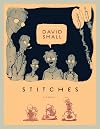
So I've been spending a lot of time at my local library lately, taking advantage of the free wifi while Jefferson is in preschool. In the process, I've done more than a few laps around the new acquisitions shelves. Few of the books on those shelves tempted me (probably a good thing, considering my history of library fines), but this one did. So when one day I found myself in Mecosta for the afternoon without my laptop, I went straight to this book.
Despite the immense size of Stitches, it's a show more blazingly quick read, even for a graphic novel. Partially this is due to Small's style -- heavy on scenery and light on text. Partially it's because Small's family life is just that kind of train wreck that you can't take your eyes away from. I turned each page wondering how people could treat each other this way.
The true miracle of Stitches is, that despite a childhood that would give Small every right to bitterness, every excuse and reason to be a miserable human being and terror of a parent himself, ultimately Small shows insight and compassion for all the characters portrayed, himself included. And while he documents a pattern of abuse and neglect, there is also evidence that each generation did what they could, with what resources and grace they had at hand, to not perpetuate that violence. Even those still miserable and doling out misery were doing what they could to hold back what they could. At least in Small's generous reckoning.
Not that this is what I saw when I first put the book down. In that first moment, collaborating with a recent discussion I'd had about people perpetuating cycles of abuse and continuing it with their own children -- I was overcome by the darkness of it all. But distance gave perspective, and I think thanks to this book, I can now appreciate that even the man who was the subject of our discussion -- surely in his own mind is not abusing his daughter. In his own mind, he must be holding so much back from the abuse inflicted on him. And with grace, and with the resources given by her mother and stepfather, perhaps his daughter will finally be able to step free, and raise her children in a home without abuse.
Maybe there is more hope for this poor, broken human race than just these acts of abuse themselves would suggest. show less
Despite the immense size of Stitches, it's a show more blazingly quick read, even for a graphic novel. Partially this is due to Small's style -- heavy on scenery and light on text. Partially it's because Small's family life is just that kind of train wreck that you can't take your eyes away from. I turned each page wondering how people could treat each other this way.
The true miracle of Stitches is, that despite a childhood that would give Small every right to bitterness, every excuse and reason to be a miserable human being and terror of a parent himself, ultimately Small shows insight and compassion for all the characters portrayed, himself included. And while he documents a pattern of abuse and neglect, there is also evidence that each generation did what they could, with what resources and grace they had at hand, to not perpetuate that violence. Even those still miserable and doling out misery were doing what they could to hold back what they could. At least in Small's generous reckoning.
Not that this is what I saw when I first put the book down. In that first moment, collaborating with a recent discussion I'd had about people perpetuating cycles of abuse and continuing it with their own children -- I was overcome by the darkness of it all. But distance gave perspective, and I think thanks to this book, I can now appreciate that even the man who was the subject of our discussion -- surely in his own mind is not abusing his daughter. In his own mind, he must be holding so much back from the abuse inflicted on him. And with grace, and with the resources given by her mother and stepfather, perhaps his daughter will finally be able to step free, and raise her children in a home without abuse.
Maybe there is more hope for this poor, broken human race than just these acts of abuse themselves would suggest. show less
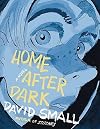
I really liked Stitches, so I've been looking forward to Small's follow-up. I intended to read just the first chapter or two in bed before turning in for the night but ended up losing over an hour of sleep as I powered through the whole damn thing. The book is thick, but Small uses a decompressed style of storytelling that keeps the pages turning and the reader immersed.
A coming of age story, Home After Dark follows Russell as his parents divorce and his messed up father drags him from Ohio show more to California in what appears to be the 1950s. Overwhelmed by the apathy, bullying, racism, and homophobia of the community around him, Russell makes the mistakes typical for his age and this genre. Indeed, Small is not breaking new ground here with his story, but the way he tells it through images and words is simply mesmerizing. show less
A coming of age story, Home After Dark follows Russell as his parents divorce and his messed up father drags him from Ohio show more to California in what appears to be the 1950s. Overwhelmed by the apathy, bullying, racism, and homophobia of the community around him, Russell makes the mistakes typical for his age and this genre. Indeed, Small is not breaking new ground here with his story, but the way he tells it through images and words is simply mesmerizing. show less
Lists
Reading Rainbow (1)
to get (1)
Awards


You May Also Like


Associated Authors
Statistics
- Works
- 17
- Also by
- 16
- Members
- 6,193
- Popularity
- #3,966
- Rating
- 4.1
- Reviews
- 311
- ISBNs
- 136
- Languages
- 9
- Favorited
- 2