
On This Page
Description
The Sharers of Shora are a nation of women on a distant moon in the far future. They are pacifists, they are highly advanced in biological sciences, and they reproduce by parthenogenesis-because there are no males. Conflict erupts when a militaristic neighboring civilization decides to develop their ocean world and sends in an army. A groundbreaking work both of feminist science fiction and of world-building hard science fiction, A Door into Ocean is the novel that made Joan Slonczewski's show more reputation as an important science-fiction writer. show lessTags
Recommendations














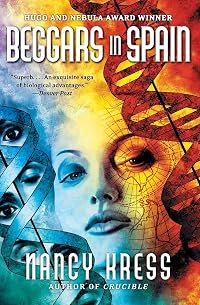
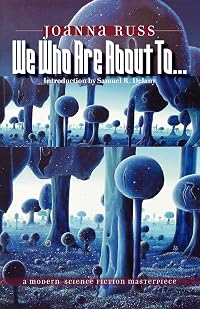



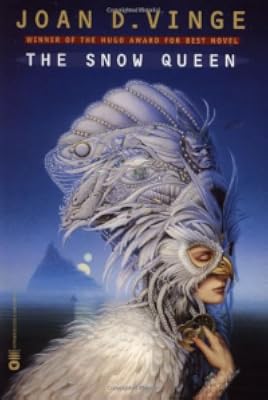










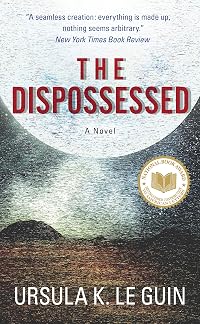












Member Recommendations


yarmando Science fiction devoted to cultures of ocean-dwelling people.
Member Reviews
A Door into Ocean is a new all time favorite book that I wish I’d read sooner! I’d say this is the sort of science fiction that falls into a “The Left Hand of Darkness” category, and would appeal to fans of Ursula K. Le Guin in general.
A Door into Ocean is a feminist utopia set on a water-covered planet that comes into contact and conflict with a colonizing power.
This book is incredible in so many ways. Through a slowly unfolding philosophical storyline, we encounter an alien society that is well thought out and feels realistic. Slonczewski presents the reader with moral dilemmas that are actually dilemmas with no easy “right” answers. There is so much emotional payoff as you get closer to the ending (many tears were shed on show more my part). Because Slonczewski’s area of expertise is microbiology, they’re able to create this immersive scifi world that actually feels like it could exist. I truly felt like I had LIVED this book by the time I got to the end.
This is one of those books that I think everyone should read, but I especially recommend A Door into Ocean to:
- readers who want to be fully immersed in an alien culture
- fans of slow contemplative scifi
- readers hungry for a story about non-violent resistance
After I was done reading, I stumbled across a link the author has on their website that explains their thought process in creating A Door into Ocean! But don’t click on the link until you finish the book because there are spoilers galore. Putting the link here for ease of access, as it’s a little hard to find: https://biology.kenyon.edu/slonc/books/adoor_art/adoor_study.htm show less
A Door into Ocean is a feminist utopia set on a water-covered planet that comes into contact and conflict with a colonizing power.
This book is incredible in so many ways. Through a slowly unfolding philosophical storyline, we encounter an alien society that is well thought out and feels realistic. Slonczewski presents the reader with moral dilemmas that are actually dilemmas with no easy “right” answers. There is so much emotional payoff as you get closer to the ending (many tears were shed on show more my part). Because Slonczewski’s area of expertise is microbiology, they’re able to create this immersive scifi world that actually feels like it could exist. I truly felt like I had LIVED this book by the time I got to the end.
This is one of those books that I think everyone should read, but I especially recommend A Door into Ocean to:
- readers who want to be fully immersed in an alien culture
- fans of slow contemplative scifi
- readers hungry for a story about non-violent resistance
After I was done reading, I stumbled across a link the author has on their website that explains their thought process in creating A Door into Ocean! But don’t click on the link until you finish the book because there are spoilers galore. Putting the link here for ease of access, as it’s a little hard to find: https://biology.kenyon.edu/slonc/books/adoor_art/adoor_study.htm show less
I can't remember who recommended [b:A Door Into Ocean|121606|A Door Into Ocean (Elysium Cycle, #1)|Joan Slonczewski|https://i.gr-assets.com/images/S/compressed.photo.goodreads.com/books/1312029708l/121606._SY75_.jpg|2640708] to me, but I thank them as it proved very rewarding. The narrative takes a while to get going and is never very fast-paced. The emphasis is on cultural and environmental worldbuilding, as people from a planet, Valedon, and its moon, Shora, meet and try to determine whether each other are human. Valedon seemingly has an early Modern-type economy and is peopled by beings who apparently look like us. It is ruled by a distant authoritarian empire, although there are competing military factions beneath. Shora by show more constrast is entirely covered in ocean and its people are all women, with physical adaptions for swimming that could have evolved or be deliberate genetic manipulation. They are called Sharers and live in a decentralised direct democracy, or perhaps anarchist, society that entirely rejects violence. Their economy is essentially permaculture, involving careful management of the balance of the oceanic ecosystem.
At first the interactions between these two very different worlds only involve a few individuals, which gives the worldbuilding space to unfold before the main plot begins. The narrative subsequently turns into a fascinating, moving, and vivid examination of non-violent resistance to colonialism. A military force from Valedon attempts to occupy Shora and force the Sharers to join their empire, which is helmed by the unsubtly-titled Patriarch. Throughout the book there is a great deal of dialogue and Sharer discussions of how to deal with the occupation are among the most thought-provoking. The same question is repeatedly asked in different ways: can it be morally right to counter dehumanisation with dehumanisation? [b:A Door Into Ocean|121606|A Door Into Ocean (Elysium Cycle, #1)|Joan Slonczewski|https://i.gr-assets.com/images/S/compressed.photo.goodreads.com/books/1312029708l/121606._SY75_.jpg|2640708] does not pretend that this there is a simple answer to this, but instead builds a picture of a social structure that resists dehumanising anyone even under extraordinary pressure.
The carefully constructed society and culture of the Sharers is an outstanding example of utopian writing and the plot explores its resilience. Yet the narrative also demonstrates that the Sharers aren't unique, as people from Valedon go to Shora and react to life there in wildly different ways. It defied my expectations by not focusing much on gender. Despite the Patriarch Planet vs Woman Moon theme, gender roles aren't discussed very much. I think this was a good call, as it would have undermined the tone of nuanced humanism to generalise men = evil and women = good. Once I got into it, I found [b:A Door Into Ocean|121606|A Door Into Ocean (Elysium Cycle, #1)|Joan Slonczewski|https://i.gr-assets.com/images/S/compressed.photo.goodreads.com/books/1312029708l/121606._SY75_.jpg|2640708] to be that rare thing: an engaging and hopeful piece of utopian writing that does not ignore authoritarianism and cruelty. show less
At first the interactions between these two very different worlds only involve a few individuals, which gives the worldbuilding space to unfold before the main plot begins. The narrative subsequently turns into a fascinating, moving, and vivid examination of non-violent resistance to colonialism. A military force from Valedon attempts to occupy Shora and force the Sharers to join their empire, which is helmed by the unsubtly-titled Patriarch. Throughout the book there is a great deal of dialogue and Sharer discussions of how to deal with the occupation are among the most thought-provoking. The same question is repeatedly asked in different ways: can it be morally right to counter dehumanisation with dehumanisation? [b:A Door Into Ocean|121606|A Door Into Ocean (Elysium Cycle, #1)|Joan Slonczewski|https://i.gr-assets.com/images/S/compressed.photo.goodreads.com/books/1312029708l/121606._SY75_.jpg|2640708] does not pretend that this there is a simple answer to this, but instead builds a picture of a social structure that resists dehumanising anyone even under extraordinary pressure.
The carefully constructed society and culture of the Sharers is an outstanding example of utopian writing and the plot explores its resilience. Yet the narrative also demonstrates that the Sharers aren't unique, as people from Valedon go to Shora and react to life there in wildly different ways. It defied my expectations by not focusing much on gender. Despite the Patriarch Planet vs Woman Moon theme, gender roles aren't discussed very much. I think this was a good call, as it would have undermined the tone of nuanced humanism to generalise men = evil and women = good. Once I got into it, I found [b:A Door Into Ocean|121606|A Door Into Ocean (Elysium Cycle, #1)|Joan Slonczewski|https://i.gr-assets.com/images/S/compressed.photo.goodreads.com/books/1312029708l/121606._SY75_.jpg|2640708] to be that rare thing: an engaging and hopeful piece of utopian writing that does not ignore authoritarianism and cruelty. show less
I was fairly blown away by the world-building and detailed societies Slonczewski came up with in this book. Having never read her before, A Door Into Ocean was a pleasant surprise. This is top-notch anthropological SF with the characters driving the plot forward. If you like Le Guin's Hainish books, (especially The Dispossessed), Vinge's Snow Queen books, or Russell's Rakhat duology, (The Sparrow/Children of God), then this book should be right up your street. I'll be looking to add the other volumes in this loosely connected series to my library soon.
I'm done, and I'm ambivalent about Ocean, except that the world itself, the concept, Shora, is terrific. Characters were about average for SF, a bit subordinate to both the setting and the demands of the narrative. However, to my utter astonishment I liked the second half better than the first in that I was engaged in the effort S. was making to show the various ways a group of people can exert the force of passive resistance. The confrontations betw. Merwen, the Shoran and Realgar, the General are maybe the best 'character' pieces. The notion that killing others is born out of fear, is hardly a new one, but is well explored in the way this conflict is set-up, I think.
As a writer, I think S. spent the first 1/2 of the novel 'finding' show more the story -- and it would have been a good idea to rewrite the first part of the book a bit differently because the way it is set up now is misleading -- pacifism conflated with the yin/female/passive principle. But there are exciting questions embedded in any assumptions to do with the nature of pacifism -- about the kind of 'energy' it requires to achieve.
So the novel ends with the military of the 'Stone Planet' withdrawing but the General in charge, Realgar, has lost the command, and as far as I could understand, the plan is to blow Shora up, more or less ASAP...... I'm a little red-faced to admit that I am a bit curious. I'm going to give it a three actually, for succeeding in engaging me way more than I would have ever thought possible. I want to see too, if my theory that the S. found 'the story' is correct and that the next book is more sure. It's a *** for the weak start, but I wouldn't want to discourage any SF reader from trying it. show less
As a writer, I think S. spent the first 1/2 of the novel 'finding' show more the story -- and it would have been a good idea to rewrite the first part of the book a bit differently because the way it is set up now is misleading -- pacifism conflated with the yin/female/passive principle. But there are exciting questions embedded in any assumptions to do with the nature of pacifism -- about the kind of 'energy' it requires to achieve.
So the novel ends with the military of the 'Stone Planet' withdrawing but the General in charge, Realgar, has lost the command, and as far as I could understand, the plan is to blow Shora up, more or less ASAP...... I'm a little red-faced to admit that I am a bit curious. I'm going to give it a three actually, for succeeding in engaging me way more than I would have ever thought possible. I want to see too, if my theory that the S. found 'the story' is correct and that the next book is more sure. It's a *** for the weak start, but I wouldn't want to discourage any SF reader from trying it. show less
Shora is a world without land. The humans who colonized it chose to reshape themselves, instead of terraforming the planet. Sharers, as the descendents of the colonists call themselves, strive to live in balance with each other and their world. Although they have incredibly advanced biological science, they try to change as little as possible about the natural ecology of Shora, even though it means losing friends and loved ones to vast monsters that roam the ocean. Their highest goal is to strengthen the ecological and social web that ties each creature to another. But they share their solar system with Valedon, a feudal, warlike world. And Valedon wants to expand its hold. Can the pacifists of Shora find a way to understand, and be show more understood by, their invaders?
I've seen other reviews that decry this book as gender-essentialist lesbian separatism, and I have to disagree. The Sharers are all female, and they are, as a group, very wise. But the book doesn't seem to present being wise as the natural extention of being an all-female society. The original colonists created a society that prizes consensus and pacifism, and those are the priorities they passed on to their descendents. There are many Sharers who are not wise in the least, who are hot-headed, blood-thirsty, or narrow-minded. The Valedon soldiers are male and female, and their chief torturer is a woman. And it's not like men are left out of the book--a male Valedon first learns from a wise (male) seer, then becomes a Sharer. We spend a large portion of the book inside his head, and much of the latter half inside another man's.
I really enjoyed reading the Sharers' struggles. They're incredibly inspirational, and I loved their society (even though I'd hate to live on their world). They refuse to do anything that might harm the Valedons (prefering civil disobedience), but the Valedons only value strength. It's fascinating conflict, but the resolution felt like a cop-out:the Valedons accidentally become convinced that the Sharers have created a time-bomb plague, that could wipe out the Valedons if ever the Sharers are wiped out themselves, and so they decide to leave the Sharers in peace. That aside, the societies Slonczewski create are engrossingly unique, and the conflict between them made me very tense and anxious. show less
I've seen other reviews that decry this book as gender-essentialist lesbian separatism, and I have to disagree. The Sharers are all female, and they are, as a group, very wise. But the book doesn't seem to present being wise as the natural extention of being an all-female society. The original colonists created a society that prizes consensus and pacifism, and those are the priorities they passed on to their descendents. There are many Sharers who are not wise in the least, who are hot-headed, blood-thirsty, or narrow-minded. The Valedon soldiers are male and female, and their chief torturer is a woman. And it's not like men are left out of the book--a male Valedon first learns from a wise (male) seer, then becomes a Sharer. We spend a large portion of the book inside his head, and much of the latter half inside another man's.
I really enjoyed reading the Sharers' struggles. They're incredibly inspirational, and I loved their society (even though I'd hate to live on their world). They refuse to do anything that might harm the Valedons (prefering civil disobedience), but the Valedons only value strength. It's fascinating conflict, but the resolution felt like a cop-out:
It's just my luck that I seem to be reading Slonczewski's Elysium cycle backwards. A Door into Ocean is the first, and most explicitly political of the four novels, focusing on non-violent action and culture.
Like most novels using this theme, *A Door into Ocean* focuses on the contrast between two cultures, with representative characters engaged in the process of discovery and conflict. The Sharers of Shora are a woman-only culture that have engineered their genes, environment, and culture into an ecological balance. Their language has no constructs for the subject-object distinction, lacking obvious ways to express power-over relationships like order and obey.
In contrast, the world of Valedon is militaristic, industrial, and show more plutocratic. Although nominally united under a single government, individual city-states engage in wars of dominance and occupation for control of resources. Behind both is the mysterious Patriarch of Torr, who has recently risen to unite far-flung colonies of the lost Primes under a religious rule that dictates the development of technology.
Much of the action comes from the efforts of the various protagonists to understand each other. Both Valans and Sharers see each other as dangerously inhuman. In an attempt to resolve this conflict, Merwin the Sharer adopts the young man, Spinel of Valedon. It's through Spinel's eyes that we see the contrast of both cultures.
The conflict leads to a war of occupation with the Valans ordered to bring the Sharers under the rule of Torr. Ultimately, this becomes more of a moral conflict than a military one. Both sides have the technological capability to engage in complete destruction of the other, a fact that leads to a MAD stalemate of competing threats that only complicates the fear. The Sharers choose to resist through increasingly desperate and suicidal acts of non-violence. While the Valan leader becomes increasingly entrenched in a pyrrhic effort to break the will of what he doesn't understand.
The conclusion is perhaps realistic in failing to offer a general solution for the problems introduced. Problems of coexistence between two radically different cultures can't be solved overnight. (In fact, they're conflicts that continue in the background through the 1,200 years of the Elysium Cycle.) Although Slonczeski's sympathies appear to be firmly with the Sharers, she avoids romanticizing them and describes their own unique flaws.
Overall I found it to be a compelling and enjoyable read. Slonczewski credibly introduces the biotechnology of the ocean world of Shora without too much technobabble. The characterization of world through its inhabitants is credible and compelling. show less
Like most novels using this theme, *A Door into Ocean* focuses on the contrast between two cultures, with representative characters engaged in the process of discovery and conflict. The Sharers of Shora are a woman-only culture that have engineered their genes, environment, and culture into an ecological balance. Their language has no constructs for the subject-object distinction, lacking obvious ways to express power-over relationships like order and obey.
In contrast, the world of Valedon is militaristic, industrial, and show more plutocratic. Although nominally united under a single government, individual city-states engage in wars of dominance and occupation for control of resources. Behind both is the mysterious Patriarch of Torr, who has recently risen to unite far-flung colonies of the lost Primes under a religious rule that dictates the development of technology.
Much of the action comes from the efforts of the various protagonists to understand each other. Both Valans and Sharers see each other as dangerously inhuman. In an attempt to resolve this conflict, Merwin the Sharer adopts the young man, Spinel of Valedon. It's through Spinel's eyes that we see the contrast of both cultures.
The conflict leads to a war of occupation with the Valans ordered to bring the Sharers under the rule of Torr. Ultimately, this becomes more of a moral conflict than a military one. Both sides have the technological capability to engage in complete destruction of the other, a fact that leads to a MAD stalemate of competing threats that only complicates the fear. The Sharers choose to resist through increasingly desperate and suicidal acts of non-violence. While the Valan leader becomes increasingly entrenched in a pyrrhic effort to break the will of what he doesn't understand.
The conclusion is perhaps realistic in failing to offer a general solution for the problems introduced. Problems of coexistence between two radically different cultures can't be solved overnight. (In fact, they're conflicts that continue in the background through the 1,200 years of the Elysium Cycle.) Although Slonczeski's sympathies appear to be firmly with the Sharers, she avoids romanticizing them and describes their own unique flaws.
Overall I found it to be a compelling and enjoyable read. Slonczewski credibly introduces the biotechnology of the ocean world of Shora without too much technobabble. The characterization of world through its inhabitants is credible and compelling. show less
Solid but annoying. The cover blurb reference to Dune is not unreasonable. This is sort of a water world version, with a culture clash between outsiders and those who have adapted to oceanic environment. Though much is made of the author's scientific background, surprisingly few info-dumps occur explaining the ecosystems.
The annoying part is the heavy handed natives good, warrior patriarchy bad. I kept waiting for some nuance or depth to appear in the handling of the two sides, but it never came.
Recommended but it wasn't a breakout book for me.
The annoying part is the heavy handed natives good, warrior patriarchy bad. I kept waiting for some nuance or depth to appear in the handling of the two sides, but it never came.
Recommended but it wasn't a breakout book for me.
Members
- Recently Added By
Published Reviews
ThingScore 75
A Door Into Ocean... starts so slowly that many readers may not get past the 40 leisurely pages of Part One. This would be a mistake. By the time the conflict she introduces so obliquely in Part One has moved to center stage, you not only know the antagonists intimately, you care passionately about the outcome.
added by Shortride
Lists

Favorite Science Fiction by Women Authors
737 works; 202 members

Best Feminist Science Fiction
188 works; 35 members
Recommended Speculative Fiction by Women and People of Color
298 works; 45 members

Top Five Books of 2022
736 works; 272 members

Exploration of alternative economical systems
40 works; 3 members

Broderick and Di Filippo's Science Fiction: The 101 Best Novels 1985-2010
103 works; 7 members

GraceCollection TBR/To Buy List
106 works; 1 member

Book Worlds We'd Like To Visit
322 works; 158 members
Talk Discussions
Past Discussions
"Door Into Ocean" group discussion in Group Reads - Sci-Fi (September 2011)
A Door Into Ocean in Someone explain it to me... (May 2009)
Author Information

Some Editions
Awards and Honors
Series

Belongs to Publisher Series
Common Knowledge
- Canonical title
- A Door Into Ocean
- Original publication date
- 1986
- First words
- Merwen reached over the boat rail, but her hand froze above the weathered pier.
- Last words
- (Click to show. Warning: May contain spoilers.)He plowed outward, fast as he could swim, his head lifting every few minutes to spot the speck of Lystra in the distance, where a friendly fanwing dipped and soared overhead like a hand beckoning, Come, lovesharer, come home.
- Blurbers
- Benford, Gregory
Classifications
Statistics
- Members
- 996
- Popularity
- 26,302
- Reviews
- 23
- Rating
- (3.97)
- Languages
- English, Hungarian, Italian
- Media
- Paper, Audiobook, Ebook
- ISBNs
- 19
- ASINs
- 15