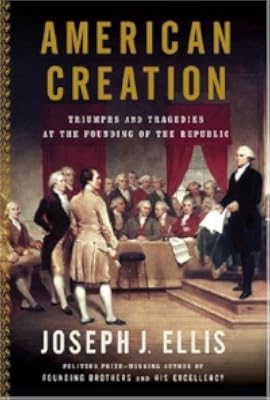
American Creation: Triumphs and Tragedies at the Founding of the Republic
by Joseph J. Ellis
On This Page
Description
An ironic examination of the founding years of our country. Historian Ellis guides us through the decisive issues of the nation's founding, and illuminates the emerging philosophies, shifting alliances, and personal and political foibles of our now iconic leaders. He explains how the idea of a strong federal government, championed by Washington, was eventually embraced by the American people, the majority of whom had to be won over. And he details the emergence of the two-party system--then show more a political novelty--which today stands as the founders' most enduring legacy. But Ellis is equally incisive about their failures, making clear how their inability to abolish slavery and to reach a just settlement with the Native Americans has played an equally important role in shaping our national character. Ellis strips the mythic veneer of the revolutionary generation to reveal men possessed of both brilliance and blindness.--From publisher description. show lessTags
Recommendations








Member Reviews
As one who is thoroughly fed up with our current political paralysis and small-minded partisanship, I have often wished our politicos shared a common passion for greatness as did the revolutionary generation. This book certainly dispels that notion.
In Founding Brothers Ellis focused on their deep bonds. In American Creation he looks through the opposite lens, describing their competitions and jealousies. In the process he reveals history and stories that will be new to many.
The revolutionaries are commonly faulted for not addressing the two biggest issues which even they recognized would surely put a blot on their legacy and the nation. Most agreed on the need to end slavery and develop a fair accommodation with the American Indian. show more Despite their agreement on the moral imperatives, however, they failed to avoid sacrificing them to pragmatic decisions as they went about creating the new nation state. This was a failure and in both instances led to exactly where they predicted, civil war and contentious expansion across the continent. Having said all that, it is hard to see how they could have solved the rubric successfully.
Ellis does a good job of giving us the backstories as to why that is the case. From Jefferson’s wager that Napoleon’s plan to occupy New Orleans would never come to fruition, to his and Washington’s belief that demography would in time accomplish what the fledgling nation could not in securing its future through expansion. The book is rich in these stories, bringing to light seldom heard of characters. The courting of Creek Nation chief McGillivray who (almost) always put the security of his nation first; how a slave leader prophesied the defeat of Napoleon’s army when it tried to subdue French slave colonies in the Caribbean, thus thwarting the plan to occupy New Orleans and leading to the Louisiana Purchase; the designs and strategies of France and Spain to leave America with a sliver of the east coast as they contested for the continent and its promise, and a host of other stories.
The stories the author highlights, including the Federalist / Republican divide, the irony of Jefferson's grand exercise of executive power in executing the Louisiana Purchase, and the tension between what the founders believed to be right and the compromises they made are instructive and illustrative of today's quandary. Nothing much has changed, so it seems, other than the time and issue of the moment. Politics is still politics, as they say.
As far as history telling goes this is a good read, but it does not equal Founding Brothers. In that volume Ellis simply told the story, in Creation there is an undertone of opinion and aloofness that does not serve well. But, it will be an enjoyable journey for the casual fan of history who wants to refresh his or her appreciation for the beginnings of the American story. show less
In Founding Brothers Ellis focused on their deep bonds. In American Creation he looks through the opposite lens, describing their competitions and jealousies. In the process he reveals history and stories that will be new to many.
The revolutionaries are commonly faulted for not addressing the two biggest issues which even they recognized would surely put a blot on their legacy and the nation. Most agreed on the need to end slavery and develop a fair accommodation with the American Indian. show more Despite their agreement on the moral imperatives, however, they failed to avoid sacrificing them to pragmatic decisions as they went about creating the new nation state. This was a failure and in both instances led to exactly where they predicted, civil war and contentious expansion across the continent. Having said all that, it is hard to see how they could have solved the rubric successfully.
Ellis does a good job of giving us the backstories as to why that is the case. From Jefferson’s wager that Napoleon’s plan to occupy New Orleans would never come to fruition, to his and Washington’s belief that demography would in time accomplish what the fledgling nation could not in securing its future through expansion. The book is rich in these stories, bringing to light seldom heard of characters. The courting of Creek Nation chief McGillivray who (almost) always put the security of his nation first; how a slave leader prophesied the defeat of Napoleon’s army when it tried to subdue French slave colonies in the Caribbean, thus thwarting the plan to occupy New Orleans and leading to the Louisiana Purchase; the designs and strategies of France and Spain to leave America with a sliver of the east coast as they contested for the continent and its promise, and a host of other stories.
The stories the author highlights, including the Federalist / Republican divide, the irony of Jefferson's grand exercise of executive power in executing the Louisiana Purchase, and the tension between what the founders believed to be right and the compromises they made are instructive and illustrative of today's quandary. Nothing much has changed, so it seems, other than the time and issue of the moment. Politics is still politics, as they say.
As far as history telling goes this is a good read, but it does not equal Founding Brothers. In that volume Ellis simply told the story, in Creation there is an undertone of opinion and aloofness that does not serve well. But, it will be an enjoyable journey for the casual fan of history who wants to refresh his or her appreciation for the beginnings of the American story. show less
In this little gem of a book, Joseph J. Ellis argues that one venerable interpretation of the founding of the United States, namely that it was a clash between “democracy” and “aristocracy,” is flawed. None of the Founders, even Jefferson, regarded democracy as a goal. All of the Founders were what we would call “elitists.” In fact, the term “democracy” was considered an epithet. The core question was rather how to create a viable nation-state. The clash was between those who favored a wholly sovereign national government (the Federalists like Washington and John Adams) and those who wanted to preserve state sovereignty over all domestic issues (the Republicans, led by Thomas Jefferson).
Ellis asserts that the founding show more generation was very successful in at least five respects, but woefully inadequate in at least two. First the good news: the Founders (1) waged the first successful war for colonial independence in the modern era; (2) established the first nation-sized republic; (3) created a wholly secular state, with genuine freedom of religion; (4) rejected Aristotle’s concept that sovereignty had to reside in a single place; and (5) created political parties as institutionalized channels for ongoing debate. The bad news was that they failed miserably (1) in handling Native Americans and (2) in dealing with the institution of slavery.
Rather than tackling the entire founding era (which Ellis defines as 1775-1803), Ellis describes only a few distinct and seminal “events,” almost like short stories, to illustrate themes that run through the entire period. In a chapter entitled “The Year,” we see how the revolution was more of an evolution, in which the nature of the opposition changed from a group of King George’s loyal subjects who just didn’t want to be taxed, to a group of increasingly audacious statesmen who desired complete independence. In another chapter, Ellis explores how Washington perforce changed strategy from direct military confrontation to modified guerrilla warfare, using America’s extensive space to avoid pitched battles where possible and to wear down his British adversaries.
Ellis does an impressive job of analyzing the debate about the adoption of the Constitution and the abandonment of the Articles of Confederation. The struggle lay in determining the relative power of the new federal government vis-à-vis the states. Ellis describes the resolution of the issue as “The Great Compromise,” which “essentially declared the theoretical question of state versus federal sovereignty politically unresolvable except by a split-the-difference structure that neither camp found satisfactory. The only workable solution was to leave the sovereignty question unclear.”
With victory over the British came the thorny problem of how to deal with the many Native Americans who lived between the Appalachians and the Mississippi River. Despite the somewhat good intentions of George Washington and John Adams, the government was never able to adopt a satisfactory strategy or negotiate an equitable treaty with the various tribes. Instead, the inexorable pressures of a rapidly increasing white population and desire for cheap western land resulted in the driving of the tribes from their historic homes and the near extinction of them as a people.
Ellis’s treatment of the Louisiana Purchase is particularly well wrought. Napoleon Bonaparte was frustrated in his efforts to prevent Haiti from winning its independence from France. Moreover, his troops both in Haiti and on the mainland were being decimated by yellow fever and malaria. Napoleon's disgust with the whole enterprise presented the young American government with an opportunity to double the size of its realm at a very low price. In fact, the purchase could be financed entirely with the sale of land in the new territory to eager American buyers. The problem for then President Thomas Jefferson was that the Constitution did not specifically authorize the president (or anyone else) to take such dramatic measures. Jefferson had based his entire political career on limiting the power of the federal government. In the event, Jefferson ignored his Republican scruples because he just could not pass up the opportunity to increase the size of the republic. Ellis says, “…there was no getting around the blatant fact that it was a violation of his political creed, in effect a sin.” But, as Ellis added, “…without the capacity to enlarge presidential power toward monarchial levels of authority, it is difficult to understand how republican government could effectively respond to any genuine crisis.”
While there were numerous positive results of the Louisiana Purchase, it sealed the doom of Indians east of the Mississippi by providing a place where Eastern tribes could be relocated. [Many died during the forced relocations, or shared the fate of the tribes in the West by being annihilated or placed in reservations on the land the whites didn’t want, i.e., the most economically unviable.]
Another theme that resonates through the book is the attitude of many of the Founders to the institution of slavery. Many followed Jefferson’s “Virginia Compromise,” by simply ignoring the issue, as if the mere discussion of it amounted to a form of treason. Most of the Founders thought the problem was insolvable (at least while they were alive; the idea of emancipation evoked the unsavory prospect giving up their own slaves!). Very few of them could imagine a bi-racial society. Even most of the most liberal thought the solution would require the relocation of blacks to another country, either in Liberia or the Caribbean. Ellis shows how the Louisiana Purchase exacerbated this problem by adding a large new territory where there was no agreement about the reach of slavery.
Evaluation: This book does not add much to what was already known about the Founding period or the Founding Fathers, but it does present it in a well-organized and very readable style. I highly recommend this intelligent and perceptive analysis of the Founding Era as an addition to your Early American History library.
(JAB) show less
Ellis asserts that the founding show more generation was very successful in at least five respects, but woefully inadequate in at least two. First the good news: the Founders (1) waged the first successful war for colonial independence in the modern era; (2) established the first nation-sized republic; (3) created a wholly secular state, with genuine freedom of religion; (4) rejected Aristotle’s concept that sovereignty had to reside in a single place; and (5) created political parties as institutionalized channels for ongoing debate. The bad news was that they failed miserably (1) in handling Native Americans and (2) in dealing with the institution of slavery.
Rather than tackling the entire founding era (which Ellis defines as 1775-1803), Ellis describes only a few distinct and seminal “events,” almost like short stories, to illustrate themes that run through the entire period. In a chapter entitled “The Year,” we see how the revolution was more of an evolution, in which the nature of the opposition changed from a group of King George’s loyal subjects who just didn’t want to be taxed, to a group of increasingly audacious statesmen who desired complete independence. In another chapter, Ellis explores how Washington perforce changed strategy from direct military confrontation to modified guerrilla warfare, using America’s extensive space to avoid pitched battles where possible and to wear down his British adversaries.
Ellis does an impressive job of analyzing the debate about the adoption of the Constitution and the abandonment of the Articles of Confederation. The struggle lay in determining the relative power of the new federal government vis-à-vis the states. Ellis describes the resolution of the issue as “The Great Compromise,” which “essentially declared the theoretical question of state versus federal sovereignty politically unresolvable except by a split-the-difference structure that neither camp found satisfactory. The only workable solution was to leave the sovereignty question unclear.”
With victory over the British came the thorny problem of how to deal with the many Native Americans who lived between the Appalachians and the Mississippi River. Despite the somewhat good intentions of George Washington and John Adams, the government was never able to adopt a satisfactory strategy or negotiate an equitable treaty with the various tribes. Instead, the inexorable pressures of a rapidly increasing white population and desire for cheap western land resulted in the driving of the tribes from their historic homes and the near extinction of them as a people.
Ellis’s treatment of the Louisiana Purchase is particularly well wrought. Napoleon Bonaparte was frustrated in his efforts to prevent Haiti from winning its independence from France. Moreover, his troops both in Haiti and on the mainland were being decimated by yellow fever and malaria. Napoleon's disgust with the whole enterprise presented the young American government with an opportunity to double the size of its realm at a very low price. In fact, the purchase could be financed entirely with the sale of land in the new territory to eager American buyers. The problem for then President Thomas Jefferson was that the Constitution did not specifically authorize the president (or anyone else) to take such dramatic measures. Jefferson had based his entire political career on limiting the power of the federal government. In the event, Jefferson ignored his Republican scruples because he just could not pass up the opportunity to increase the size of the republic. Ellis says, “…there was no getting around the blatant fact that it was a violation of his political creed, in effect a sin.” But, as Ellis added, “…without the capacity to enlarge presidential power toward monarchial levels of authority, it is difficult to understand how republican government could effectively respond to any genuine crisis.”
While there were numerous positive results of the Louisiana Purchase, it sealed the doom of Indians east of the Mississippi by providing a place where Eastern tribes could be relocated. [Many died during the forced relocations, or shared the fate of the tribes in the West by being annihilated or placed in reservations on the land the whites didn’t want, i.e., the most economically unviable.]
Another theme that resonates through the book is the attitude of many of the Founders to the institution of slavery. Many followed Jefferson’s “Virginia Compromise,” by simply ignoring the issue, as if the mere discussion of it amounted to a form of treason. Most of the Founders thought the problem was insolvable (at least while they were alive; the idea of emancipation evoked the unsavory prospect giving up their own slaves!). Very few of them could imagine a bi-racial society. Even most of the most liberal thought the solution would require the relocation of blacks to another country, either in Liberia or the Caribbean. Ellis shows how the Louisiana Purchase exacerbated this problem by adding a large new territory where there was no agreement about the reach of slavery.
Evaluation: This book does not add much to what was already known about the Founding period or the Founding Fathers, but it does present it in a well-organized and very readable style. I highly recommend this intelligent and perceptive analysis of the Founding Era as an addition to your Early American History library.
(JAB) show less
Joesph Ellis asks an interesting question to begin [the American Creation], how did a group of otherwise unremarkable men of a largely unremarkable colonial outpost forge a republican nation-state that has thrived and fulfilled many of its Founders unrealized ideals?
From the start the Founders faced long odds to create a government from a handful of untried concepts. First there was the matter of winning a war with the most powerful empire on the planet. Then there was the formation of a government that is to represent the people and their special interests. Our advantages were few. The passion of the men and women and space were what we had and a willingness to give their lives for something they big then themselves. Most historians show more emphasize the importance of the Enlightenment and the burgeoning idea of the individual as way of explaining this very unique period of political creativity. Ellis certainly acknowledges that the Enlightenment, but argues that an equally important factor was the immediate circumstances that surrounded the crucial decisions of the early nation. To answer his own question, Ellis makes the case that the Founders abilities to compromise and improvise to achieve their common goals and incidentally build a legacy that still inspires the masses today. According to Ellis the 1st 20 years of America's history was not the great debate that older history books would have us believe. Instead those early days were full of frantic improvisation, constant reconfiguration of plans, and groups of Founders conspiring with and against each other to create an imperfect republic that is as much a process for governing a nation as it is a structure. A combination of events pushing our early nation to a brink of disaster and a willingness of a group of remarkably ordinary men to see past what divides them, to what unites them; to create an ongoing, never ending conversation. A conversation about the realm of the federal and state governments, the role of the judiciary branch, and finally how best to represent that every shifting temperament that is known as the “people”. A conversation that makes Founders of every generation. A conversation that both divides and unities us as a people. This was the greatest gift the Founders left for future generations to mold a government to best fit their circumstances.
What was created was a triumph of human imagination; it was also a monumental failure. The founders failed to dissolve slavery. They failed to come to a fair and equable deal with the Native Americans. They failed to grant the rights they so cherished to their wives and daughters. It was left to future generations of men and women to solve the inadequacies and inequalities of the Founders. We would fight a bloody civil war to wash our nation of the terrible stain of human bondage. Only to cause the suffering a segment of our own people nearly a century of Jim Crow before they achieved legal equality. Native American tribes would be devastated and their lives turned upside down, we still haven't accounted for those ills. Women would have to fight for their rights and liberties. Labor unrest and a bias towards immigrants are nothing new to us. Our past is full of the kind of ugliness that most would like to overlook and its clear our work to achieve that elusive goal of a more prefect union still isn't done. In the face of all our problems for the republic to continue to last for as long as it has, is a testament to the genius of conversation started in the late 1790s. I can't recommend Joesph Ellis' [the American Creation] enough. show less
From the start the Founders faced long odds to create a government from a handful of untried concepts. First there was the matter of winning a war with the most powerful empire on the planet. Then there was the formation of a government that is to represent the people and their special interests. Our advantages were few. The passion of the men and women and space were what we had and a willingness to give their lives for something they big then themselves. Most historians show more emphasize the importance of the Enlightenment and the burgeoning idea of the individual as way of explaining this very unique period of political creativity. Ellis certainly acknowledges that the Enlightenment, but argues that an equally important factor was the immediate circumstances that surrounded the crucial decisions of the early nation. To answer his own question, Ellis makes the case that the Founders abilities to compromise and improvise to achieve their common goals and incidentally build a legacy that still inspires the masses today. According to Ellis the 1st 20 years of America's history was not the great debate that older history books would have us believe. Instead those early days were full of frantic improvisation, constant reconfiguration of plans, and groups of Founders conspiring with and against each other to create an imperfect republic that is as much a process for governing a nation as it is a structure. A combination of events pushing our early nation to a brink of disaster and a willingness of a group of remarkably ordinary men to see past what divides them, to what unites them; to create an ongoing, never ending conversation. A conversation about the realm of the federal and state governments, the role of the judiciary branch, and finally how best to represent that every shifting temperament that is known as the “people”. A conversation that makes Founders of every generation. A conversation that both divides and unities us as a people. This was the greatest gift the Founders left for future generations to mold a government to best fit their circumstances.
What was created was a triumph of human imagination; it was also a monumental failure. The founders failed to dissolve slavery. They failed to come to a fair and equable deal with the Native Americans. They failed to grant the rights they so cherished to their wives and daughters. It was left to future generations of men and women to solve the inadequacies and inequalities of the Founders. We would fight a bloody civil war to wash our nation of the terrible stain of human bondage. Only to cause the suffering a segment of our own people nearly a century of Jim Crow before they achieved legal equality. Native American tribes would be devastated and their lives turned upside down, we still haven't accounted for those ills. Women would have to fight for their rights and liberties. Labor unrest and a bias towards immigrants are nothing new to us. Our past is full of the kind of ugliness that most would like to overlook and its clear our work to achieve that elusive goal of a more prefect union still isn't done. In the face of all our problems for the republic to continue to last for as long as it has, is a testament to the genius of conversation started in the late 1790s. I can't recommend Joesph Ellis' [the American Creation] enough. show less
If we were able to provide our children with history materials in this vein, we would have far less to worry about in terms of capturing their interest. Ellis weaves flat out great stories that are riveting and hard-hitting. We benefit both from what he refers to as hindsight or conterfactual history while still enjoying the sense of uncertainty faced by the players in these narratives as they are pummeled by events that often come at them quickly and unexpectedly. The future is opaque. They respond with sometimes more, sometimes less, and sometimes no foresight as to the ultimate consequences of their decisions. So history comes alive, not a clear track through space time about what was, but more an existential groping for the many show more actors toward what they hope they are achieving and what actually comes into being. Tragedy and triumph become intertwined, competing effects of often a single act or decision.
I went back and looked at the chapter names trying to chose a couple of favorites, but they all taught me a lot; they were all exciting. I have a much better sense of Washington, Madison, and particularly, Jefferson as well as having met some truly interesting players like Creek chief Alexander McGillivray, Robert Livingston, and Secretary of War Henry Knox, a man who acted on his revolutionary convictions and tried to frame a fair and enlightened policy toward native Americans that was doomed by both demographics and many less enlightened souls. show less
I went back and looked at the chapter names trying to chose a couple of favorites, but they all taught me a lot; they were all exciting. I have a much better sense of Washington, Madison, and particularly, Jefferson as well as having met some truly interesting players like Creek chief Alexander McGillivray, Robert Livingston, and Secretary of War Henry Knox, a man who acted on his revolutionary convictions and tried to frame a fair and enlightened policy toward native Americans that was doomed by both demographics and many less enlightened souls. show less
Ellis explores in depth six topics around the founding of US, such as the handling of Indians, the Purchase, the creation of two parties, and slavery. Interesting perspective on topics long since stereotyped in school and our culture. The true stories are much more interesting. Well written, though a bit repetitive in some areas.
Ellis fashions an imminently readable and refreshing perspective on the American founding from 1775 to 1803. Despite having read several recent books including 1776 and biographies of John Adams and Benjamin Franklin, I found much new information in this book.
For example, the discussion of the pivotal role that Madison played in the behind-the scenes maneuvering for the constitution (pro-Federalist) and then his complete reversal to become a co-leader with Jefferson of the anti-Federalist group.
Ellis's treatment of the first diplomatic treaty negotiations with Alexander McGillivray leader of the Creek Indian nation provides a very interesting account of a little known episode in our early history
In summary, Ellis's premise that the show more failings of this creation period to adequately address slavery and the future of American Indians (east of the Mississippi) set the stage for the future failures of government is very compellingly presented. show less
For example, the discussion of the pivotal role that Madison played in the behind-the scenes maneuvering for the constitution (pro-Federalist) and then his complete reversal to become a co-leader with Jefferson of the anti-Federalist group.
Ellis's treatment of the first diplomatic treaty negotiations with Alexander McGillivray leader of the Creek Indian nation provides a very interesting account of a little known episode in our early history
In summary, Ellis's premise that the show more failings of this creation period to adequately address slavery and the future of American Indians (east of the Mississippi) set the stage for the future failures of government is very compellingly presented. show less
Having read biographies of Washington, Jefferson, Adams and Hamilton and Vidal’s quasi-fictional work on Burr, in addition to other works by McCollough on the revolutionary era, I was far from impressed by the beginnings of this work by Joseph Ellis. You can only rehash the same history from every conceivable angle before the story grows stale.
Fortunately, however, only the first third of this audiobook dealt with the period of 1775-1782. Thereafter, the story turns to the often neglected period after 1782, in which the fledgling republic, struggling under the inadequate Articles of Confederation is dragged, sometimes kicking and screaming, into the Constitutional era. Ellis chooses to make James Madison the hero of this story show more (perhaps electing not to challenge some of the outstanding biographers of other luminaries). Certainly, Madison is a worthy subject, though arguably no more influential than Hamilton or Jefferson.
After dealing quite well and extensively with the creation and adoption of the Constitution, Ellis moves on to the very worthwhile history of the fledgling Republic’s troublesome dealings with the various Indian tribes located between the Mississippi River and the Atlantic colonies. Another period of history not frequently dealt with, but well worth the effort and well covered by Ellis.
Finally, Ellis turns to the Presidency of Thomas Jefferson, focusing on the Louisiana Purchase, what he considers the final definitive act in the founding of the American republic. There is some excellent analysis concerning the hypocrisy displayed by Jefferson, not just over the issue of slavery, but the stunning acts of federal power wielded by the face of Republicanism.
As stated above, the first third of the story is a familiar rehash of the Revolutionary War period; nothing much new to offer. Thereafter, however, Ellis takes on the succeeding twenty years, a time in which the fledgling republic was very fragile, held together almost exclusively by the reputation and will of one man, George Washington. With Washington’s exit, the rise of party politics led to repeated clashes between advocates of state’s and personal rights (republicanism) and advocates of power concentrated at the federal level (federalism). This fascinating interplay and the analysis provided by Ellis make this a worthy investment of your time. show less
Fortunately, however, only the first third of this audiobook dealt with the period of 1775-1782. Thereafter, the story turns to the often neglected period after 1782, in which the fledgling republic, struggling under the inadequate Articles of Confederation is dragged, sometimes kicking and screaming, into the Constitutional era. Ellis chooses to make James Madison the hero of this story show more (perhaps electing not to challenge some of the outstanding biographers of other luminaries). Certainly, Madison is a worthy subject, though arguably no more influential than Hamilton or Jefferson.
After dealing quite well and extensively with the creation and adoption of the Constitution, Ellis moves on to the very worthwhile history of the fledgling Republic’s troublesome dealings with the various Indian tribes located between the Mississippi River and the Atlantic colonies. Another period of history not frequently dealt with, but well worth the effort and well covered by Ellis.
Finally, Ellis turns to the Presidency of Thomas Jefferson, focusing on the Louisiana Purchase, what he considers the final definitive act in the founding of the American republic. There is some excellent analysis concerning the hypocrisy displayed by Jefferson, not just over the issue of slavery, but the stunning acts of federal power wielded by the face of Republicanism.
As stated above, the first third of the story is a familiar rehash of the Revolutionary War period; nothing much new to offer. Thereafter, however, Ellis takes on the succeeding twenty years, a time in which the fledgling republic was very fragile, held together almost exclusively by the reputation and will of one man, George Washington. With Washington’s exit, the rise of party politics led to repeated clashes between advocates of state’s and personal rights (republicanism) and advocates of power concentrated at the federal level (federalism). This fascinating interplay and the analysis provided by Ellis make this a worthy investment of your time. show less
Members
- Recently Added By
Published Reviews
added by Shortride
Lists

Best U.S. History Books (1754-1828)
363 works; 18 members

Books Read in 2015
3,299 works; 129 members
Author Information

20+ Works 21,332 Members
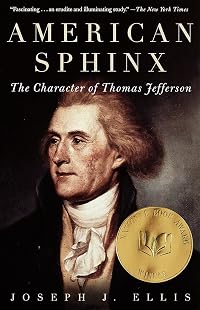
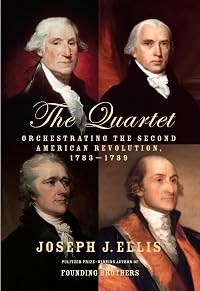
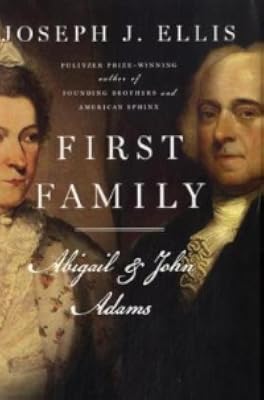
Joseph J. Ellis was born in Washington, D.C. on July 18, 1943. He received a B.A. from the College of William and Mary in 1965 and a M.A., M.Phil., and Ph.D. from Yale University. He was an instructor in the department of American studies at Yale University from 1968 to 1969 and an assistant professor in the department of history and social show more studies at the U.S. Military Academy at West Point from 1969 to 1972. He began his career at Mount Holyoke College as assistant professor in the department of history in 1972 and was made professor in 1979. Ellis was dean of the faculty at Mount Holyoke from 1980 to 1990. He retired from his position as the Ford Foundation Professor of History at Mount Holyoke College. He is the author of numerous books including After the Revolution: Profiles of Early American Culture, His Excellency: George Washington, American Creation: Triumphs and Tragedies at the Founding of the Republic, First Family: Abigail and John Adams, Revolutionary Summer: The Birth of American Independence, and The Quartet: Orchestrating the Second American Revolution, 1783-1789. He has received the National Book Award in Nonfiction for American Sphinx in 1997 and the Pulitzer Prize for History for Founding Brothers: The Revolutionary Generation in 2001. (Bowker Author Biography) show less
Awards and Honors
Common Knowledge
- Original publication date
- 2007
- People/Characters
- George Washington; John Adams; Thomas Jefferson; Nathanael Greene; Alexander Hamilton; Henry Knox (show all 7); James Madison
- Important places
- USA; Pennsylvania, USA; Philadelphia, Pennsylvania, USA; Valley Forge, Pennsylvania, USA
- Important events
- American Revolution (1775 | 1783); Battles of Lexington and Concord (1775-04-19); Louisiana Purchase (1803)
- Dedication
- To Alexander
- First words
- Chapter One: The Year
If permitted the historical license to stretch the definition of a year, then the fifteenth months between the shots fired at Lexington and Concord in April 1775 and the adoption of the Declaration of... (show all) Independence in July 1776 can justifiably claim to be both the most consequential and strangest year in American history. - Quotations
- “American republic began with physical and economic asset as well as a rich intellectual legacy of enlightened ideas.”
The recent surge is the emphasis on flawed greatness, the coexistence of intellectual depth and personal shallowness, the role of contingency and sheer accident rather than divine providence. The founding has at least become ... (show all)the topic in an adult conversation rather than a juvenile melodrama populated only by heroes or villains. - Last words
- (Click to show. Warning: May contain spoilers.)But the design of the political foundation was ingenious in its combination of stability and agility, most especially its prudent placement of an expanding liberal mandate at the start that left room, up ahead, for an Abraham Lincoln and a Martin Luther King to join the list of founders. In that sense, perhaps the most creative act of the founding era was to make time as well as space an indispensable ally, in effect extending the founding moment everlastingly into the future.
- Original language
- English
Classifications
Statistics
- Members
- 1,916
- Popularity
- 11,114
- Reviews
- 31
- Rating
- (3.94)
- Languages
- English
- Media
- Paper, Audiobook, Ebook
- ISBNs
- 13
- ASINs
- 9