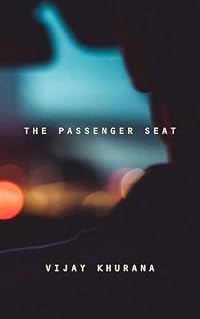
The Passenger Seat
by Vijay Khurana
On This Page
Description
A searing examination of male friendship and the broader social implications of masculinity in an age of toxic loneliness Two teenagers leave their small town on a vaguely charted road trip through the northern wilderness, with little more than canned food, second-hand camping gear, and the rifle they buy for reasons neither can articulate. The more they handle the gun, and the farther they get from their parents and peers, girlfriends and online gaming, the less their actions-and the games, show more literal and metaphorical, they play-are bound by the usual constraints. When one decides to harass a young couple they meet on the highway, the encounter leads them down a road from which there's no coming back. A searing examination of male friendship and masculinity in an age of toxic loneliness, "The Passenger Seat" introduces Vijay Khurana as an extraordinary new voice. show lessTags
Recommendations



























Member Reviews
Two teenage boys on the cusp of adulthood become friends and decide to go on a road trip. One talks about going to the arctic and never returning, the other thinks it's just talk and they'll drive and camp out and be back before school starts. But one has a nihilistic outlook and the other follows where he leads, which turns a few days's lark into a tragic and deadly journey.
This is an uncomfortable read and it's meant to be so. It's about how these boys, and later a pair of men, fail to move beyond posturing and dominance into the kind of connection that might lead to real friendship and how lonely it is. There's a lot to think about with this book, but the author handles the violence with an assured touch that makes the events hit show more with force, while not reveling in the the boys's actions. show less
This is an uncomfortable read and it's meant to be so. It's about how these boys, and later a pair of men, fail to move beyond posturing and dominance into the kind of connection that might lead to real friendship and how lonely it is. There's a lot to think about with this book, but the author handles the violence with an assured touch that makes the events hit show more with force, while not reveling in the the boys's actions. show less
Shortlisted for the 2022 the Fitzcarraldo/New Directions/Giramondo Novel Prize, The Passenger Seat is a remarkable first novel by Australian-born author Vijay Khurana, based in Berlin and London. I knew very early in the book that it was going to explore the crude, violent story of two adolescent males, and I suspected that it was going to be like Brendan Cowell's How It Feels (2010), which I thought was a most unpleasant book. I was prepared to give up on The Passenger Seat promptly if so. But it is nothing like that at all. It is a skilful, sophisticated depiction of troubling aspects of contemporary masculinity, which I found unputdownable.
In an interview at Liminal, Khurana was asked about 'toxic masculinity', and had this to say:
Yes.
Adam and Teddy set off on a road trip north from small-town Canada. They don't have any plans, because 'you can't fail if you have no plans', and their motivation is simply dissatisfaction with their lives. Adam lives with his depressed single-parent father, and Teddy comes from a family fractured by infidelity where 'the only reason they haven't split up is because they'd have to talk to each other'. School is irrelevant and boring, and they objectify girls and speak in foul and boastfully untruthful ways about their attempts at relationships. Both of them play a video game called Patriot, which is notorious for its racism, sexism and violence.
From the outset, the reader questions which of these two is 'in the passenger seat' and which is the 'driver' of events. The narration alternates between both perspectives, with very occasional contributions from an omniscient narrator. Despite the friendship bond which impels this impulsive journey, they are deeply competitive...
To read the rest of my review please visit https://anzlitlovers.com/2025/09/08/the-passenger-seat-2025-by-vijay-khurana/ show less
In an interview at Liminal, Khurana was asked about 'toxic masculinity', and had this to say:
show more
I
was interested in the way men often create or adopt narratives that may seem comforting but end up being harmful to themselves and people around them—especially when those narratives encourage them to think of themselves as tragic heroes and victims of injustice. It can happen in the context of ideology, and Adam in The Passenger Seat consumes things of that sort, including a book that is somewhere between self-help and a guide to manipulating people. But I think it goes beyond media and ideology.
The second part of the novel focuses on a character, Ron, who was only briefly mentioned in the first part. He has a tangential relationship to Teddy and Adam, and tells himself that he is a victim of their actions in a very specific way. But as the book draws to a close, we’re invited to question that narrative. I think there’s a similarity between Ron’s kind of narrativisation and the political narratives that Adam is buying into.
The question of there being a crisis in masculinity is also interesting to me. It’s so hard to argue against that being the case, but at the same time, ‘crisis in masculinity’ is inevitably a kind of short-hand, a simple label for a complex, intersectional and often ambiguous issue, and that’s something I was writing against with this novel. I think we need to keep hold of the complexity and the ambiguity, which is why I think fiction is a useful place to go to explore issues like this.
Yes.
Adam and Teddy set off on a road trip north from small-town Canada. They don't have any plans, because 'you can't fail if you have no plans', and their motivation is simply dissatisfaction with their lives. Adam lives with his depressed single-parent father, and Teddy comes from a family fractured by infidelity where 'the only reason they haven't split up is because they'd have to talk to each other'. School is irrelevant and boring, and they objectify girls and speak in foul and boastfully untruthful ways about their attempts at relationships. Both of them play a video game called Patriot, which is notorious for its racism, sexism and violence.
From the outset, the reader questions which of these two is 'in the passenger seat' and which is the 'driver' of events. The narration alternates between both perspectives, with very occasional contributions from an omniscient narrator. Despite the friendship bond which impels this impulsive journey, they are deeply competitive...
To read the rest of my review please visit https://anzlitlovers.com/2025/09/08/the-passenger-seat-2025-by-vijay-khurana/ show less
An uncomfortable yet compelling read about what happens when teenage friends Adam and Teddy embark on a road trip. Although they appear to be friends, they have different outlooks on life and the purpose of their trip.
Adam’s intent is to never return while Teddy is under the impression that they are going to blow off some steam and return home.
Once they decide to take a gun with them, the trip takes a horrible turn that will change their lives.
Adam’s intent is to never return while Teddy is under the impression that they are going to blow off some steam and return home.
Once they decide to take a gun with them, the trip takes a horrible turn that will change their lives.
The words and sentences of this book are well written, but it feels more like an exploration of an idea than it does a complete story. I get why the author switches perspectives, but I almost think it would have been more effective if we'd stayed in one character's head for longer. There are also a couple of continuity issues, and there are new characters introduced near the end, and I can't quite figure out why.
I don't know. It was very gripping to start out. But I never really felt that motivations were clear. It got a little monotonous, just like the northern Canada terrain they were covering. I also thought the ending epilogue was very bad and a serious letdown.
Ratings
Members
- Recently Added By
Lists

2026 Tournament of Books Longlist
70 works; 2 members

2026 Tournament of Books
18 works; 4 members
Author Information
5 Works 57 Members
Some Editions
Awards and Honors
Common Knowledge
- Original publication date
- 2025
- Epigraph
- This desire could be a form of anger
Kathy Acker
When two men say hello on the street, one of them loses
Norman Mailer (apocryphal)
Classifications
Statistics
- Members
- 51
- Popularity
- 590,956
- Reviews
- 6
- Rating
- (3.43)
- Languages
- English
- Media
- Paper, Ebook
- ISBNs
- 7
- ASINs
- 1