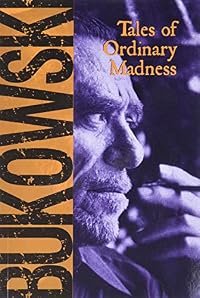
Tales of Ordinary Madness
by Charles Bukowski
On This Page
Description
With Bukowski, the votes are still coming in. There seems to be no middle ground-people seem either to love him or hate him. Tales of his own life and doings are as wild and weird as the very stories he writes. In a sense, Bukowski was a legend in his time . . . a madman, a recluse, a lover . . . tender, vicious . . . never the same . . . these are exceptional stories that come pounding out of his violent and depraved life . . . horrible and holy, you cannot read them and ever come away the show more same again. show lessTags
Recommendations






Member Reviews
This had what the column collections (Notes of a Dirty Old Man & More Notes of a Dirty Old Man: The Uncollected Columns) did not; finished, polished stories. What there seemed like a springboard is here realized. The collection goes everywhere from poetry to fiction, Buk slice of life moments and his staple lecherous drunken rambles - but it's all in the delivery and the pacing, what makes a good one is all about rhythm. Bukowski seems to loathe (among many, many things) the beatniks, and it's probably insulting to make the comparison, but they aimed for the real and raw through a pulsating drum of language, and Bukowski (occasionally) succeeds at exactly that.
As I gently move into my own midlife, I have renewed interest in this curmudgeon. I get the irritation of the "pest" and see Hank's points on decriminalizing marijuana and LSD. The anti-social nature resonates with me:
“let’s go to a movie!”
“let’s go boating!”
“let’s get laid!”
“screw all that stuff,” I always say, “just let me sit here.”
so people no longer ask. they just get me in a car and then I can be surprised with whatever special dullness awaits.
...½ of the stuff is broken and pushing the buttons is futile. ...
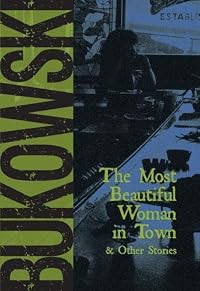
At this rate I'm just getting Bukowski books based on how good the title is. Tales of Ordinary Madness is a better title than The Most Beautiful Woman In Town and Notes Of A Dirty Old Man. Most of these stories revolve around Charles Bukowski himself. From the sounds of it they were all written before he invented the character of Henry Chinaski, whose first appearance is perhaps Post Office.
Bukowski is, simply put, a hell of a writer, and this book along with The Most Beautiful Woman In Town are culled from the first collection of short stories Bukowski ever put out. I think before this he wasn't as recognized for his short stories and it took Lawrence Ferlinghetti and City Lights Publishing to recognize his acumen. Perhaps there had show more been too much crap as Bukowski was refuted to have had to develop his craft over a long period of time and most likely over a great number of duds.
I have not personally historically liked Bukowski's short stories from what I've read. The books that he wrote that were mixtures of poetry and short stories were nearly always a wash and the dedicated short story books simply never were as compelling as the bonafide novels (except Pulp). Bukowski here puts opinions literary and otherwise on display with as much freedom as he wants to and perhaps the biggest hat trick is that he actually makes one care. If this were the opinion of someone feckless it would get old damn quick, but that's not all that's here. There's also humor, fantasies, and flights delerium. In fact some of these short stories rank amongst the best writing Bukoswki ever did. show less
Bukowski is, simply put, a hell of a writer, and this book along with The Most Beautiful Woman In Town are culled from the first collection of short stories Bukowski ever put out. I think before this he wasn't as recognized for his short stories and it took Lawrence Ferlinghetti and City Lights Publishing to recognize his acumen. Perhaps there had show more been too much crap as Bukowski was refuted to have had to develop his craft over a long period of time and most likely over a great number of duds.
I have not personally historically liked Bukowski's short stories from what I've read. The books that he wrote that were mixtures of poetry and short stories were nearly always a wash and the dedicated short story books simply never were as compelling as the bonafide novels (except Pulp). Bukowski here puts opinions literary and otherwise on display with as much freedom as he wants to and perhaps the biggest hat trick is that he actually makes one care. If this were the opinion of someone feckless it would get old damn quick, but that's not all that's here. There's also humor, fantasies, and flights delerium. In fact some of these short stories rank amongst the best writing Bukoswki ever did. show less
Exceptional stories that come pounding out of Bukowski's violent and depraved life. Horrible and holy, you cannot read them and ever come away the same again.This collection of stories was once part of the 1972 City Lights classic, Erections, Ejaculations, Exhibitions and General Tales of Ordinary Madness. That book was later split into two volumes and republished: The Most Beautiful Woman in Town and, this book, Tales of Ordinary Madness.With Bukowski, the votes are still coming in. There seems to be no middle ground—people seem either to love him or hate him. Tales of his own life and doings are as wild and weird as the very stories he writes. In a sense, Bukowski was a legend in his time, a madman, a recluse, a lover; tender, show more vicious; never the same."Bukowski … a professional disturber of the peace … laureate of Los Angeles netherworld [writes with] crazy romantic insistence that losers are less phony than winners, and with an angry compassion for the lost."—Jack Kroll, Newsweek"Bukowski’s works are extraordinarily vivid and often bitterly funny observations of people living on the very edge of oblivion. His poetry, in all its glorious simplicity, was accessible the way poetry seldom is a testament to his genius."—Nick Burton, PIF Magazine show less
Rambling lunacy indispersed with moments of lucidity, Bukowski steps between crazy imaginings or retelling of other's stories to his own observations on life at the fringe of American culture. I returned to Bukowski after many years of not reading him, it was in my teens that I read his poetry which in turn inspired me to write as his free-form and at times slapdash method appealed to my brain which was overflowing with thoughts I couldn't get out. Tales of Ordinary Madness continues with that method but in parts veers into the conventional prose writing style. At the start of the book, the first few anecdotes, Bukowski annotates his writing style, talking directly to the reader, as the anecdotes continue he begins to distance himself show more from the text and deepens the narrative by focussing on the characters, stories and culture of his time. He references other writers, contemporary and past. He reflects on the poetry scene of the time, and its writers. Indispersed with imagery that is less intended to shock than to rather wake the reader up, or give them a jolt. Or perhaps Bukowski got bored and amused himself with a lurid thought put to paper for its own sake, or he was writing with his beer goggles on. Whatever the reasoning, Bukowski toys with the reader, he invents and rants, making Tales of Ordinary Madness a veritable porridge of ideas and observations cut with the daily muck of life by the gutter. show less
I've read a lot of Bukowski's books over the last few years and appreciated all of them. Some I've even enjoyed. But Tales of Ordinary Madness was, unfortunately, a bit of a chore for me to read. Bukowski's always been crude, but usually he juxtaposes this with a raw humanity and uncompromising anti-social commentary: this is where his art is to be found. I did not find this to be the case in Ordinary Madness, at least to a sufficient extent, with many of the stories being excessively and needlessly crude. Scenes in which Bukowski defecates, or pops a boil, or has a rape fantasy add nothing to the stories, many of which seem to be devoted to cataloguing such depravities rather than providing or supporting any underlying artistic meaning show more or merit.
That said, his talent does shine through intermittently, with most of the stories having at least a few lines that make you think or nod your head. One or two of the short stories even manage to maintain this talent uncorrupted for the duration: I particularly liked 'Goodbye Watson' and 'A Dollar and 20 Cents', whilst 'Night Streets of Madness' has a good imagined conversation between Bukowski and Ernest Hemingway, which is an interesting story-within-a-story. So there are some little nuggets of gold here – they're just buried amongst the mud and the shit. Bukowski, at his best, is like a drug, so I'll just look back on reading this as a bad trip. Hey, it happens. show less
That said, his talent does shine through intermittently, with most of the stories having at least a few lines that make you think or nod your head. One or two of the short stories even manage to maintain this talent uncorrupted for the duration: I particularly liked 'Goodbye Watson' and 'A Dollar and 20 Cents', whilst 'Night Streets of Madness' has a good imagined conversation between Bukowski and Ernest Hemingway, which is an interesting story-within-a-story. So there are some little nuggets of gold here – they're just buried amongst the mud and the shit. Bukowski, at his best, is like a drug, so I'll just look back on reading this as a bad trip. Hey, it happens. show less
A tightly edited collection of thirty-four Bukowski stories from the 1960s to 1980s. Profane, hilarious, self-indulgent, gritty, poignant. His characters live in Los Angeles, “in broken-down courts, attics, garages or slept on the floors of temporary friends.”
They drink, screw, write, get fired from menial jobs, haunt the track, and try to exist. As Bukowski puts it, “sometimes a man must fight so hard for life that he doesn’t have time to live it.”
Each story is strong; many explosive, violent and vicious. They have the ring of low-down truth, whether they are or not.
They drink, screw, write, get fired from menial jobs, haunt the track, and try to exist. As Bukowski puts it, “sometimes a man must fight so hard for life that he doesn’t have time to live it.”
Each story is strong; many explosive, violent and vicious. They have the ring of low-down truth, whether they are or not.
Members
- Recently Added By
Published Reviews
35 livres cultes à lire au moins une fois dans sa vie
Quels sont les romans qu'il faut avoir lu absolument ? Un livre culte qui transcende, fait réfléchir, frissonner, rire ou pleurer… La littérature est indéniablement créatrice d’émotions. Si vous êtes adeptes des classiques, ces titres devraient vous plaire.
De temps en temps, il n'y a vraiment rien de mieux que de se poser devant show more un bon bouquin, et d'oublier un instant le monde réel. Mais si vous êtes une grosse lectrice ou un gros lecteur, et que vous avez épuisé le stock de votre bibliothèque personnelle, laissez-vous tenter par ces quelques classiques de la littérature. show less
Quels sont les romans qu'il faut avoir lu absolument ? Un livre culte qui transcende, fait réfléchir, frissonner, rire ou pleurer… La littérature est indéniablement créatrice d’émotions. Si vous êtes adeptes des classiques, ces titres devraient vous plaire.
De temps en temps, il n'y a vraiment rien de mieux que de se poser devant show more un bon bouquin, et d'oublier un instant le monde réel. Mais si vous êtes une grosse lectrice ou un gros lecteur, et que vous avez épuisé le stock de votre bibliothèque personnelle, laissez-vous tenter par ces quelques classiques de la littérature. show less
added by Joop-le-philosophe
Lists

Books featuring alcoholics
103 works; 17 members

Books Read in 2020
4,379 works; 124 members
Author Information

544+ Works 52,755 Members
Charles Bukowski was born in Andernach, Germany, on August 16, 1920. He came to the United States with his parents when he was three years old and spent his early years in poverty. As a young man he was a transient, doing odd jobs. He lived most of his live in boarding houses in the Los Angeles area. He attended Los Angeles City College briefly. show more He worked for the United States Postal Service for about ten years. Bukowski was at home with street people and his work contains a brutal realism and graphic imagery. He began publishing short stories in the mid-1940s. Starting with Flower, Fist and Bestial Wail in 1959, he produced poetry collections almost once a year. His following had grown by the time his collection of poetry about down-and-outers titled It Catches My Heart in Its Hands appeared in 1963. His short story collections include Dirty Old Man and Ejaculations, Exhibitions and General Tales of Ordinary Madness. His novels, with an autobiographical character called Henry Chinaski, include Post Office and Factotum. Bukowski wrote the screenplay for the 1987 motion picture Barfly. He later wrote about the filming of Barfly in his novel, Hollywood. Bukowski died in San Pedro, California, on March 9, 1994. (Bowker Author Biography) show less
Some Editions
Awards and Honors
Awards
Series
Belongs to Publisher Series
Work Relationships
Common Knowledge
- Canonical title*
- Contes de la folie ordinaire
- Original title
- Erections, Ejaculations, Exhibitions and General Tales of Ordinary Madness
- Original publication date
- 1983
- People/Characters
- Henry Chianski; Charles Bukowski
- Important places
- Los Angeles, California, USA; San Francisco, California, USA; New York, New York, USA
- Related movies
- Storie di ordinaria follia (1981 | IMDb)
- First words
- Duke had this daughter, Lala, they named her, she was 4.
- Quotations
- Writing chooses you, you don't choose it.
You can steal my women but don't play with my whiskey.
I don't like drugstores, I don't like campus cafeterias, I don't like Shetland ponies and I don't like Disney land and I don't like motorcycle policemen and i don't like yogurt and I don't like the Beatles and Charley Chaplin... (show all) and I don't like windowshades and that big blob of manic-depressive hair that falls over Bobby Kennedy's forehead. . . . jesus, jesus, I turned to the prof. — this guy's been printing me for ten years, hundreds of poems, and HE DOESN'T EVEN KNOW WHO I AM!
if you legalize pot the u.s. will be a little more comfortable, but not much better, a long as the courts and the jails and the laws are there, they are going to be used. - Last words
- (Click to show. Warning: May contain spoilers.)I must truly be mad.
- Publisher's editor
- Ferlinghetti, Lawrence; Peters, Nancy J.
- Blurbers
- Kroll, Jack
- Disambiguation notice
- Do NOT combine with Erections, Ejaculations, Exhibitions, and General Tales of Ordinary Madness please.
Erections, Ejaculations, Exhibitions, and General Tales of Ordinary Madness was the original incarna... (show all)tion of a work that was later published as two separate books: The Most Beautiful Woman in Town and Tales of Ordinary Madness. The book Tales of Ordinary Madness only contains the second half of the original, while The Most Beautiful Woman in Town contains the first.
*Some information comes from Common Knowledge in other languages. Click "Edit" for more information.
Classifications
Statistics
- Members
- 2,117
- Popularity
- 9,641
- Reviews
- 18
- Rating
- (3.85)
- Languages
- 11 — Catalan, Dutch, English, Finnish, French, Japanese, Polish, Portuguese, Romanian, Russian, Turkish
- Media
- Paper, Audiobook, Ebook
- ISBNs
- 29
- ASINs
- 14