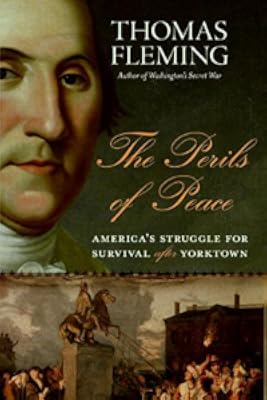
The Perils of Peace: America's Struggle for Survival After Yorktown
by Thomas J. Fleming
On This Page
Description
"Riveting and suspenseful... This is history the way we all wish it could be written--and experienced." -- Richard Smith, author of Patriarch: George Washington and the New American NationOn October 19, 1781, Great Britain's best army surrendered to General George Washington at Yorktown. But the future of the 13 former colonies was far from clear. A 13,000 man British army still occupied New York City, and another 13,000 regulars and armed loyalists were scattered from Canada to Savannah, show more Georgia. Meanwhile, Congress had declined to a mere 24 members, and the national treasury was empty. The American army had not been paid for years and was on the brink of mutiny.In Europe, America's only ally, France, teetered on the verge of bankruptcy and was soon reeling from a disastrous naval defeat in the Caribbean. A stubborn George III dismissed Yorktown as a minor defeat and refused to yield an acre of "my dominions" in America. In Paris, Ambassador Benjamin Franklin confronted violent hostility to France among his fellow members of the American peace delegation.Thomas Fleming moves elegantly between the key players in this drama and shows that the outcome we take for granted was far from certain. With fresh research and masterful storytelling, Fleming breathes new life into this tumultuous but little known period in America's history. show lessTags
Recommendations


Member Reviews
On October 19, 1781, Lord Cornwallis and his entire 13,000 man army surrendered at Yorktown to George Washington's Continental Army and its French allies led by Comte de Rochambeau. Most people in the new United States thought that the war was now over. Thomas Fleming's "The Perils of Peace" tells the story of just how wrong they were.
It took another 2 full years of negotiation and haggling to convince George III and the British to sign the Treaty of Versailles ending the war. The last British soldiers did not leave New York until early 1784!
Fleming's tale is well told, almost like an historical novel in its pace and denoument. It contains numerous fascinating factoids and vignettes: Alexander Hamilton leading a bayonet charge in the show more early phase of the Yorktown battle; thousands of black soldiers seeking refuge with the British in Charlestown (of whom about 1000 were relocated to Nova Scotia); Congress promising, but failing to pay Washington's officers one half of their salaries for life; the officers on the verge of mutiny; the chicanery and pettiness of Robert E. Lee's forefathers; Ben Franklin's skill as a negotiator and his bitter rivalry with John Adams; the complicated in-fighting among the members of the British cabinet, just to name a few.
As in just about every other serious book written in the past 100 years on the subject, Washington comes across as quite wise and heroic. Robert Morris as Superintendent of Finance performs miracles of finance and illusion (of solvency) to somehow pay for the war. Edmund Burke and Charles James Fox engineer a palace coup of sorts to replace Lord North with a government that finally convinces George III to acknowledge independence. The King, it seems, thought that the Americans were setting a very bad precedent for Ireland.
In high school, we were taught that it took a long time to negotiate the peace treaty because "communications were slow." Yes, but in addition, the respective bargaining power of the parties kept changing as the Continental army dissolved, the English vanquished the same French fleet that had beaten them at Yorktown, the Irish question was temporarily solved, and the British eastern army experienced major successes in India.
Fleming does an excellent job of tying many various strands of the complex tale together. One quibble is that he does not do a good job of quantifying the monetary amounts in a proper modern perspective. For example, how reasonable were the officers' demands that they be paid one half their war time salaries for life? Would that have made them rich men, or would it just have been a nice fillip to help them earn a decent living? How big were the national debts of the various countries in terms of their cost per person?
I rate the book excellent in all other respects--thanks for showing some of John Adams's less savory characteristics--but since its scope is quite limited, I hesitate to award it 5 stars. Nevertheless, I warmly recommended it to be read.
(JAB) show less
It took another 2 full years of negotiation and haggling to convince George III and the British to sign the Treaty of Versailles ending the war. The last British soldiers did not leave New York until early 1784!
Fleming's tale is well told, almost like an historical novel in its pace and denoument. It contains numerous fascinating factoids and vignettes: Alexander Hamilton leading a bayonet charge in the show more early phase of the Yorktown battle; thousands of black soldiers seeking refuge with the British in Charlestown (of whom about 1000 were relocated to Nova Scotia); Congress promising, but failing to pay Washington's officers one half of their salaries for life; the officers on the verge of mutiny; the chicanery and pettiness of Robert E. Lee's forefathers; Ben Franklin's skill as a negotiator and his bitter rivalry with John Adams; the complicated in-fighting among the members of the British cabinet, just to name a few.
As in just about every other serious book written in the past 100 years on the subject, Washington comes across as quite wise and heroic. Robert Morris as Superintendent of Finance performs miracles of finance and illusion (of solvency) to somehow pay for the war. Edmund Burke and Charles James Fox engineer a palace coup of sorts to replace Lord North with a government that finally convinces George III to acknowledge independence. The King, it seems, thought that the Americans were setting a very bad precedent for Ireland.
In high school, we were taught that it took a long time to negotiate the peace treaty because "communications were slow." Yes, but in addition, the respective bargaining power of the parties kept changing as the Continental army dissolved, the English vanquished the same French fleet that had beaten them at Yorktown, the Irish question was temporarily solved, and the British eastern army experienced major successes in India.
Fleming does an excellent job of tying many various strands of the complex tale together. One quibble is that he does not do a good job of quantifying the monetary amounts in a proper modern perspective. For example, how reasonable were the officers' demands that they be paid one half their war time salaries for life? Would that have made them rich men, or would it just have been a nice fillip to help them earn a decent living? How big were the national debts of the various countries in terms of their cost per person?
I rate the book excellent in all other respects--thanks for showing some of John Adams's less savory characteristics--but since its scope is quite limited, I hesitate to award it 5 stars. Nevertheless, I warmly recommended it to be read.
(JAB) show less
The story of a period usually skipped over in the history books is here told as a thrilling political pageturner. Rather than a smooth progress from Yorktown to the Treaty of Paris, the American patriots faced bankruptcy, diplomatic intrigue and incipient mutiny. Franklin's eagerness to negotiate a separate peace was unseemly, the states refused to raise money for Congress to pay its debts, the Continental Army was dismissed unpaid except with paper, and Congress was forced by angry soldiers to flee to Princeton. Although the new nation held together for the time being, the book shows that the divisions between Federalists and Republicans were sown even before the end of the war: between a continentally minded faction in favor of show more federal finance and power, and a states' rights "True Whig" faction that feared the former were aiming at raising a new, grasping national elite. The common soldiery were unimpressed with the new political class their exertions had raised up, and the independent USA embarked on its internationally recognized career in a spirit of suspicion and dissension. show less
Thomas Fleming writes historical narratives with a grace and erudition that reminds the reader of why he became a lover of history in the first place. This is the fifth book by Fleming I've completed and he did not disappoint with "The Perils of Peace". The scope covers the period between the British surrender at Yorktown, the "end of the war", and the final departure of British forces from New York City following the conclusion of the several treaties between Britain and the US and her allies.
I never appreciated just what a close run thing independence was even after the surrender of Cornwallis. The lag in communications between Europe and the US prevented George III and his ministers from realizing just how desperate were the affairs show more of Congress, the states and the American army. Nor had I previously realized just how fractious was the relationship among the commissioners appointed by Congress to negotiate the peace treaty, Franklin, Adams and Jay.
It was a little sobering to realize just how bankrupt the country's finances were and how frequently Franklin was forced to go begging hat in hand to the French for millions of livres to keep the US treasury afloat and the army in the field. It is not unlikely that Louis XVI might have kept his throne and his head if not for the financial risks incurred by France in connection with her support of the Americans.
Finally, one comes away from "The Perils of Peace" and "Washington's Secret War" with a humbling appreciation for just how great a man and patriot the country was blessed with as commander-in-chief in George Washington. show less
I never appreciated just what a close run thing independence was even after the surrender of Cornwallis. The lag in communications between Europe and the US prevented George III and his ministers from realizing just how desperate were the affairs show more of Congress, the states and the American army. Nor had I previously realized just how fractious was the relationship among the commissioners appointed by Congress to negotiate the peace treaty, Franklin, Adams and Jay.
It was a little sobering to realize just how bankrupt the country's finances were and how frequently Franklin was forced to go begging hat in hand to the French for millions of livres to keep the US treasury afloat and the army in the field. It is not unlikely that Louis XVI might have kept his throne and his head if not for the financial risks incurred by France in connection with her support of the Americans.
Finally, one comes away from "The Perils of Peace" and "Washington's Secret War" with a humbling appreciation for just how great a man and patriot the country was blessed with as commander-in-chief in George Washington. show less
When most folks think about Yorktown (if they think about it at all; or even know what it signifies), they think it signals the end of the American Revolution. Thomas Fleming's "The Perils of Peace" illustrates the mighty struggles various political and military characters dealt with both in America and England, France, and elsewhere after October 1781. For two years, ambassadors, congressmen, Lords, MPs, generals, and soldiers struggled with when and how (or if) peace would come.
Parts of this book were a bit of a slog due to Fleming's rather academic writing style as well as my unfamiliarity of some of England's lesser players and parliamentary processes. It does cover the two-year period quite well and explains the many issues and show more problems associated with finding peace that's acceptable to all players at the end of a world war (for that's what the American Revolution turned out to be). show less
Parts of this book were a bit of a slog due to Fleming's rather academic writing style as well as my unfamiliarity of some of England's lesser players and parliamentary processes. It does cover the two-year period quite well and explains the many issues and show more problems associated with finding peace that's acceptable to all players at the end of a world war (for that's what the American Revolution turned out to be). show less
Excellent narrative of America's chaotic history from the surrender of Cornwallis at Yorktown to the final signing of the treaty of peace. Fleming presents an amazing story of how the U. S. almost did not become a nation.
I recently finished Thomas Fleming’s book, The Perils of Peace. If you are not familiar with Thomas Fleming, he is a Pulitzer Prize winning historian and the author of over forty nonfiction and fiction titles, including Liberty! The American Revolution companion to the PBS series, Washington’s Secret War: The Hidden History of Valley Forge, and The Officers’ Wives. He is the only author ever to have won main selections for the Book-of-the-Month Club in both fiction and nonfiction.
Thomas Fleming is a Fellow of the Society of American Historians. He has been president of the American branch of PEN, the international writers’ organization. He has also been chairman of the American Revolution Round Table. He is a the senior scholar show more at the National Center for the American Revolution at Valley Forge. Born in Jersey City, NJ on July 5, 1927; he is a graduate of St. Peter’s Prep and Fordham University (1950) he lives in New York with his wife, Alice, a distinguished writer of books for young readers.
The Perils of Peace is a historical account of the revolutionary war period from the defeat of Lord Cornwallis at Yorktown (Oct 1781) to George Washington’s farewell to the troops in Dec 1784. In our concentrated and abbreviated high school American history lessons we normally learn of Cornwallis’ defeat as the end of the war and skip directly to Treaty of Paris signaling the final peace. In truth the 3-year period from 1781 to 1784 was one of the most perilous in America’s early history. For example, major English armies still occupied Charleston, Savannah and New York city. The French fleet led by Admiral de Grasse, key to Cornwallis’ defeat, left America and were defeated in the Caribbean. Many Englishmen wanted to continue the war at all costs. The Continental Army was understrength, under fed, under clothed and almost always under armed.
Fleming narrates the events in historical sequence addressing events in America, England, France and others. Fleming describes the contributions of many lesser known players on both sides of the Atlantic that played crucial roles in America achieving its independence.New knowledge to this reader was that Congress had NO power to raise money through ANY form of taxation. Only inidividual states had taxation powers. Congress (and George Washington) were left to writing ineffectual letters literally begging for funds to support the Continental Army. Feeding and clothing the army was always on the edge of a disaster. We learn from Fleming that some of the real patriots were the men that fought the early financial as well as military battles. People like General Nathanael Greene who during the southern campaign in South Carolina personally cosigned 30,000£ to feed his men.
Non-combatant patriots included Superintendent of Finance, Robert Morris. In dealing with an ineffective Congress and the only self-interested states, Morris was creative and daring in his interpretations of the powers of his office. At one point Morse nearly created his own form of currency by issuing “Morse notes”, personally signed by him and representing nearly $1M of personal debt. But because of his actions we were able to dodge numerous financial bullets. When Congress did finally take up an “impost” tax of 5% on imports under the rules all 13 states had to approve the tax. The opposition of little Rhode Island doomed the tax.
On the other side of the Atlantic, we learn that during this 3-year period of one English government fell, their were nearly violent debates in Parliament, and arguments (both public and private) broke out over the word “independence”. We also learn of English strategies to split the southern states from the others and have them remain a colony in the Irish model. While we well know of our battles aided by the French, England simultaneously was at war with the Spanish and Dutch with significant battles in the Caribbean and India.
Overall, The Perils of Peace is an excellent history. Even if you think you are knowledgeable of our revolutionary war history, you will find something knew. show less
Thomas Fleming is a Fellow of the Society of American Historians. He has been president of the American branch of PEN, the international writers’ organization. He has also been chairman of the American Revolution Round Table. He is a the senior scholar show more at the National Center for the American Revolution at Valley Forge. Born in Jersey City, NJ on July 5, 1927; he is a graduate of St. Peter’s Prep and Fordham University (1950) he lives in New York with his wife, Alice, a distinguished writer of books for young readers.
The Perils of Peace is a historical account of the revolutionary war period from the defeat of Lord Cornwallis at Yorktown (Oct 1781) to George Washington’s farewell to the troops in Dec 1784. In our concentrated and abbreviated high school American history lessons we normally learn of Cornwallis’ defeat as the end of the war and skip directly to Treaty of Paris signaling the final peace. In truth the 3-year period from 1781 to 1784 was one of the most perilous in America’s early history. For example, major English armies still occupied Charleston, Savannah and New York city. The French fleet led by Admiral de Grasse, key to Cornwallis’ defeat, left America and were defeated in the Caribbean. Many Englishmen wanted to continue the war at all costs. The Continental Army was understrength, under fed, under clothed and almost always under armed.
Fleming narrates the events in historical sequence addressing events in America, England, France and others. Fleming describes the contributions of many lesser known players on both sides of the Atlantic that played crucial roles in America achieving its independence.New knowledge to this reader was that Congress had NO power to raise money through ANY form of taxation. Only inidividual states had taxation powers. Congress (and George Washington) were left to writing ineffectual letters literally begging for funds to support the Continental Army. Feeding and clothing the army was always on the edge of a disaster. We learn from Fleming that some of the real patriots were the men that fought the early financial as well as military battles. People like General Nathanael Greene who during the southern campaign in South Carolina personally cosigned 30,000£ to feed his men.
Non-combatant patriots included Superintendent of Finance, Robert Morris. In dealing with an ineffective Congress and the only self-interested states, Morris was creative and daring in his interpretations of the powers of his office. At one point Morse nearly created his own form of currency by issuing “Morse notes”, personally signed by him and representing nearly $1M of personal debt. But because of his actions we were able to dodge numerous financial bullets. When Congress did finally take up an “impost” tax of 5% on imports under the rules all 13 states had to approve the tax. The opposition of little Rhode Island doomed the tax.
On the other side of the Atlantic, we learn that during this 3-year period of one English government fell, their were nearly violent debates in Parliament, and arguments (both public and private) broke out over the word “independence”. We also learn of English strategies to split the southern states from the others and have them remain a colony in the Irish model. While we well know of our battles aided by the French, England simultaneously was at war with the Spanish and Dutch with significant battles in the Caribbean and India.
Overall, The Perils of Peace is an excellent history. Even if you think you are knowledgeable of our revolutionary war history, you will find something knew. show less
Acquired early 2023. Read about 2/3. This is a good read with good details about America’s early days!
Members
- Recently Added By
Lists

Books bought at library sales
98 works; 4 members
Author Information

103+ Works 5,158 Members
Thomas James Fleming was born in Jersey City, New Jersey on July 5, 1927. During World War II, he served on the cruiser Topeka. He graduated from Fordham University in 1950. He worked as a reporter for The Herald-Statesman in Yonkers and as the executive editor of Cosmopolitan magazine. In 1958, he was asked to write an article for Cosmopolitan show more about the Battle of Bunker Hill. This assignment led to his writing his first non-fiction book Now We Are Enemies. He wrote almost 50 fiction and non-fiction books during his lifetime. His novels include All Good Men, The Officers' Wives, and Dreams of Glory. His non-fiction book included Duel: Alexander Hamilton, Aaron Burr and the Future of America; The Intimate Lives of the Founding Fathers; The Great Divide: The Conflict Between Washington and Jefferson That Defined a Nation; and The Strategy of Victory: How General George Washington Won the American Revolution. In 2005, he wrote a memoir entitled Mysteries of My Father. He died on July 23, 2017 at the age of 90. (Bowker Author Biography) show less
Common Knowledge
- Original publication date
- 2007
- People/Characters
- George Washington; Benjamin Franklin; Charles Gravier, Comte de Vergennes; Frederick North, 2nd Earl of Guilford, Lord North; William Petty, 1st Marquess of Lansdowne and 2nd Earl of Shelbourne; Robert Morris (show all 10); John Adams; Ethan Allen; George III, King of the United Kingdom; Arthur Lee
- Important places
- Philadelphia, Pennsylvania, USA; Pennsylvania, USA; Paris, France; London, England, UK
- Important events
- American Revolution
Classifications
Statistics
- Members
- 363
- Popularity
- 86,950
- Reviews
- 8
- Rating
- (4.23)
- Languages
- English
- Media
- Paper, Ebook
- ISBNs
- 3
- ASINs
- 5