On This Page
Description
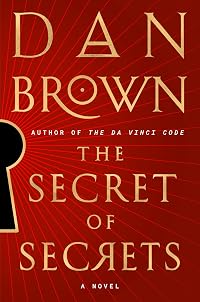
The world’s most celebrated thriller writer and author of The Da Vinci Code returns with his most stunning novel yet—a propulsive, twisty, thought-provoking masterpiece that will entertain readers as only Dan Brown can do.Robert Langdon, esteemed professor of symbology, travels to Prague to attend a groundbreaking lecture by Katherine Solomon—a prominent noetic scientist with whom he has recently begun a relationship. Katherine is on the verge of publishing an explosive book that show more contains startling discoveries about the nature of human consciousness and threatens to disrupt centuries of established belief. But a brutal murder catapults the trip into chaos, and Katherine suddenly disappears along with her manuscript. Langdon finds himself targeted by a powerful organization and hunted by a chilling assailant sprung from Prague’s most ancient mythology. As the plot expands into London and New York, Langdon desperately searches for Katherine . . . and for answers. In a thrilling race through the dual worlds of futuristic science and mystical lore, he uncovers a shocking truth about a secret project that will forever change the way we think about the human mind. show less
Tags
Recommendations







































Member Reviews
Oh, wow, this one was a very serious let-down: At break-neck speed, we're (oftentimes literally) rushing through Prague with no time to reflect. There's no place for reason, intelligent behaviour, believable developments, or anything that would give the reader time to actually think about this uninspired mess.
Worst of all: Langdon teams up with a person who calls herself a "noetic scientist". "Noetic science" is a term you'll find nowhere near any reputable scientific institute, serious researchers, or anything else you might consider even ever-so-slightly scientific. You won't find it on Wikipedia either.
It's basically a "faith-based science", or, in plain words, complete utter bullshit (just like this novel). Brown has his heroine show more even tell us explicitly that her "science" should be exempted from any kind of burden of proof because that’s simply too high a bar... An "experiment" that succeeded once, the results of which have not been reproduced in decades, should be taken at face value instead. That's Trump, MAGA, and Kennedy "science".
Yes, the novel is suspenseful - if you disengage your brain and just follow our pair of professors-cum-action heroes and the mysterious and murderous "Golem" along on their unlikely and unbelievable ride. It's so outlandish a story that Brown obviously felt the need to tell us in a foreword that all locations actually exist. We might not believe anything he writes otherwise.
Oh, and the title? That stroke of genius is explained tediously in the end as well. Even now, my brain hurts when I think of this novel.
One generous star out of five.
Blog | Goodreads | Hardcover | Facebook | Twitter | Mastodon | Instagram | Threads | StoryGraph | LibraryThing | Medium | Matrix | Tumblr
Ceterum censeo Putin esse delendam show less
Worst of all: Langdon teams up with a person who calls herself a "noetic scientist". "Noetic science" is a term you'll find nowhere near any reputable scientific institute, serious researchers, or anything else you might consider even ever-so-slightly scientific. You won't find it on Wikipedia either.
It's basically a "faith-based science", or, in plain words, complete utter bullshit (just like this novel). Brown has his heroine show more even tell us explicitly that her "science" should be exempted from any kind of burden of proof because that’s simply too high a bar... An "experiment" that succeeded once, the results of which have not been reproduced in decades, should be taken at face value instead. That's Trump, MAGA, and Kennedy "science".
Yes, the novel is suspenseful - if you disengage your brain and just follow our pair of professors-cum-action heroes and the mysterious and murderous "Golem" along on their unlikely and unbelievable ride. It's so outlandish a story that Brown obviously felt the need to tell us in a foreword that all locations actually exist. We might not believe anything he writes otherwise.
Oh, and the title? That stroke of genius is explained tediously in the end as well. Even now, my brain hurts when I think of this novel.
One generous star out of five.
Blog | Goodreads | Hardcover | Facebook | Twitter | Mastodon | Instagram | Threads | StoryGraph | LibraryThing | Medium | Matrix | Tumblr
Ceterum censeo Putin esse delendam show less
For fans of brainy thrillers, there’s a lot to like about Dan Brown’s new Robert Langdon novel, The Secret of Secrets. However, Brown ignores the saying that less is more. At nearly 700 pages, including extensive information dumping, some readers might be put off by the details about Prague’s sites and the noetic sciences, as well as by the sheer length of this novel. As usual, Brown picks an intriguing topic, this time exploring the nature of human consciousness, as the foundation for his exciting plot. Though in my view, he overuses cliffhangers and exclamation points to boost suspense and tension. Set mainly in Prague and featuring a diverse cast of interesting characters, including a mysterious clay-faced golem, the story show more itself captured and maintained my interest. I appreciated the clever plot twists and the dark conspiracy that drives the story. If you’re interested in fringe subjects like remote viewing and out-of-body experiences of those near death, and if you’re curious about the possibility of a unified theory of consciousness that might explain such phenomena, this thriller is worth the ample time you’ll need to invest. show less
Book Review: “The Secret of Secrets” by Dan Brown – A Labyrinth of Mind, Mystery, and Manuscripts
At its heart, The Secret of Secrets is a high-stakes thriller that dives deep into questions of consciousness and the hidden capacities of the human mind. Katherine Solomon’s manuscript challenges neuroscience itself, arguing that the brain is not a closed engine of thought but a portal into a shared, universal awareness — a theory as groundbreaking as it is perilous.
This daring premise unfolds against the atmospheric backdrop of Prague, a city steeped in alchemy, mysticism, and Renaissance science. Here, Langdon is swept into a web of rival scientists, shadowy government agents, and a golem-like figure that anchors the story in show more the city’s legendary past while pushing it toward modern conspiracies.
For all its flaws — the narrative detours, the heavy-handed exposition, the uneven romance — Brown’s novel remains a heartfelt tribute to the power of books and the ideas they carry. It harks back to a time when a single written work could ignite public debate, tilt the course of history, and remind us that even in a world of algorithms and fleeting feeds, dangerous and transformative ideas still live and die in books.
Read the full review on my blog: https://alluringcreations.co.za/wp/following-robert-langdon-a-journey-through-da...
4.5 Stars because I'm still thinking about it and consider reading it again over the Christmas :) show less
At its heart, The Secret of Secrets is a high-stakes thriller that dives deep into questions of consciousness and the hidden capacities of the human mind. Katherine Solomon’s manuscript challenges neuroscience itself, arguing that the brain is not a closed engine of thought but a portal into a shared, universal awareness — a theory as groundbreaking as it is perilous.
This daring premise unfolds against the atmospheric backdrop of Prague, a city steeped in alchemy, mysticism, and Renaissance science. Here, Langdon is swept into a web of rival scientists, shadowy government agents, and a golem-like figure that anchors the story in show more the city’s legendary past while pushing it toward modern conspiracies.
For all its flaws — the narrative detours, the heavy-handed exposition, the uneven romance — Brown’s novel remains a heartfelt tribute to the power of books and the ideas they carry. It harks back to a time when a single written work could ignite public debate, tilt the course of history, and remind us that even in a world of algorithms and fleeting feeds, dangerous and transformative ideas still live and die in books.
Read the full review on my blog: https://alluringcreations.co.za/wp/following-robert-langdon-a-journey-through-da...
4.5 Stars because I'm still thinking about it and consider reading it again over the Christmas :) show less
Probably my least favorite in the series, but was still fun to read. It didn't have the fun puzzles that the other books had, nor did it incorporate history, art, and architecture into those puzzles in quite the way the other books did. The book takes place in Prague and there was lots of fun factoids/trivia and action. The theme of this book has to do with our understanding of human consciousness. There was some fun [I'm assuming pseudo-]science that made me think about some things a little differently.
The Secret of Secrets: A Novel-Dan Brown, author; Paul Michael, narrator
Before you begin, suspend disbelief, but let belief re-emerge, whenever necessary. Underlying this story is a government program called Threshold. A group of scientists and agents of the American government, under the aegis of the CIA, answerable to a very few, have been actively engaged in secret experiments for years. They have planted a device inside the brains of uninformed subjects, who happen to be suffering from epilepsy, hoping to control their seizures, and in that way, they hope to learn more about the mind and how to control it. That skill will eventually lead to superiority in the area of mind control, which will one day ensure our national security show more dominance. It is a science that is being studied and is rapidly being developed by many governments. This group does not want Dr. Katherine Solomon’s book on the science of thought to see the light of day. She has written about the idea that the mind can exist outside the body, that it is a separate entity that can act on its own, connect with other minds and even inanimate objects.
Katherine Solomon, is a Noetic Scientist. She has been asked to present a speech in Prague on the science of thought. The woman who asked her is Dr. Brigita Gessner. Katherine needs an escort, so she asks her long-time friend Robert Langdon to attend her lecture. While in Prague, they suddenly discover that after so many years of friendship, they have found romance and love with each other. On the morning after Katherine’s presentation, however, their brief romantic sojourn ends when chaos erupts.
The novel leads the reader in multiple directions, sometimes on confusing wild goose chases with the different characters and sometimes directly into unexpected moments that seem suspiciously like something out of the realm of the supernatural. The heavy-handed ÚZSI, the Foreign Intelligence service for the Czech Republic, the American Embassy staff, the secret government agency and its employees, and a Golem, a creature of Jewish lore, all seem to be involved in the mystery of why Katherine and Robert are accused of heinous crimes. Why has her manuscript been destroyed? What was in the book that seemed threatening or dangerous to anyone? Was it the Czech government or the American government at the bottom of the deceptions? Was it someone else altogether? Someone or some organization was obviously hell-bent on keeping their efforts secret to prevent any effort that might expose information revealing their organization or their goals. Was Robert being framed? Was Katherine secretly involved in some conspiracy? Even her editor was involved when his server was wiped out, her book disappeared from his computer, and then he was brutally kidnapped.
The novel exposes government corruption and secret organizations conducting clandestine experiments on unknowing victims. It illustrates how our memories and stored information guide us in different directions, but it doesn’t tell us where our mind actually resides, and that is the question scientists want answered. There is a woman suffering from “DID” Dissociative Identity Disorder, a clandestine organization with a secret lab, there are corrupt Czech police, scientists involved in the discussion of Neuroscience, the study of the nervous system vs Noetic science, the study of consciousness and even a Golem, involved in the turmoil that follows. Brown leads the reader in multiple directions, sometimes on confusing wild goose chases with the different characters. Katherine and Robert are simply at a loss to explain or understand why her manuscript has been destroyed and their lives are in danger. Soon, even Heide Nagel, the Ambassador at the American Embassy in Prague is accused of treason.
Although there are times when the story simply leaves the realm of the real world and seems to enter the world of fantasy, just today I read about people who receive organ transplants and gain access to the minds of their donors, without realizing it is even happening. Did the donor’s thoughts reside in the organ donated? How does one account for the person who wakes up from a coma speaking a language he has never been taught? Who can explain intuition or ESP? We are simply woefully unaware when it comes to the science of the mind. Is it moral to continue the secret experiments or should they be stopped?
The book is close to 700 pages and could have stood a bit of editing. There are unnecessary explanations and love scenes that seemed extraneous. Why was there a shout out to Starbucks? Still, Brown writes page-turning novels, even when they seem to enter the stratosphere. This is no exception. Are we actually in a mind control race with other countries which we must dominate? Is it possible for different minds to connect with each or for the mind to control matter? Will the virtual world, in the end, be controlled by our minds or the minds of the machine we create?
A major overall theme in this book is the quote near the end. Do you agree or disagree with Henry Kissinger who said, “A country that demands moral perfection in its foreign policy will achieve neither perfection nor security”? show less
Before you begin, suspend disbelief, but let belief re-emerge, whenever necessary. Underlying this story is a government program called Threshold. A group of scientists and agents of the American government, under the aegis of the CIA, answerable to a very few, have been actively engaged in secret experiments for years. They have planted a device inside the brains of uninformed subjects, who happen to be suffering from epilepsy, hoping to control their seizures, and in that way, they hope to learn more about the mind and how to control it. That skill will eventually lead to superiority in the area of mind control, which will one day ensure our national security show more dominance. It is a science that is being studied and is rapidly being developed by many governments. This group does not want Dr. Katherine Solomon’s book on the science of thought to see the light of day. She has written about the idea that the mind can exist outside the body, that it is a separate entity that can act on its own, connect with other minds and even inanimate objects.
Katherine Solomon, is a Noetic Scientist. She has been asked to present a speech in Prague on the science of thought. The woman who asked her is Dr. Brigita Gessner. Katherine needs an escort, so she asks her long-time friend Robert Langdon to attend her lecture. While in Prague, they suddenly discover that after so many years of friendship, they have found romance and love with each other. On the morning after Katherine’s presentation, however, their brief romantic sojourn ends when chaos erupts.
The novel leads the reader in multiple directions, sometimes on confusing wild goose chases with the different characters and sometimes directly into unexpected moments that seem suspiciously like something out of the realm of the supernatural. The heavy-handed ÚZSI, the Foreign Intelligence service for the Czech Republic, the American Embassy staff, the secret government agency and its employees, and a Golem, a creature of Jewish lore, all seem to be involved in the mystery of why Katherine and Robert are accused of heinous crimes. Why has her manuscript been destroyed? What was in the book that seemed threatening or dangerous to anyone? Was it the Czech government or the American government at the bottom of the deceptions? Was it someone else altogether? Someone or some organization was obviously hell-bent on keeping their efforts secret to prevent any effort that might expose information revealing their organization or their goals. Was Robert being framed? Was Katherine secretly involved in some conspiracy? Even her editor was involved when his server was wiped out, her book disappeared from his computer, and then he was brutally kidnapped.
The novel exposes government corruption and secret organizations conducting clandestine experiments on unknowing victims. It illustrates how our memories and stored information guide us in different directions, but it doesn’t tell us where our mind actually resides, and that is the question scientists want answered. There is a woman suffering from “DID” Dissociative Identity Disorder, a clandestine organization with a secret lab, there are corrupt Czech police, scientists involved in the discussion of Neuroscience, the study of the nervous system vs Noetic science, the study of consciousness and even a Golem, involved in the turmoil that follows. Brown leads the reader in multiple directions, sometimes on confusing wild goose chases with the different characters. Katherine and Robert are simply at a loss to explain or understand why her manuscript has been destroyed and their lives are in danger. Soon, even Heide Nagel, the Ambassador at the American Embassy in Prague is accused of treason.
Although there are times when the story simply leaves the realm of the real world and seems to enter the world of fantasy, just today I read about people who receive organ transplants and gain access to the minds of their donors, without realizing it is even happening. Did the donor’s thoughts reside in the organ donated? How does one account for the person who wakes up from a coma speaking a language he has never been taught? Who can explain intuition or ESP? We are simply woefully unaware when it comes to the science of the mind. Is it moral to continue the secret experiments or should they be stopped?
The book is close to 700 pages and could have stood a bit of editing. There are unnecessary explanations and love scenes that seemed extraneous. Why was there a shout out to Starbucks? Still, Brown writes page-turning novels, even when they seem to enter the stratosphere. This is no exception. Are we actually in a mind control race with other countries which we must dominate? Is it possible for different minds to connect with each or for the mind to control matter? Will the virtual world, in the end, be controlled by our minds or the minds of the machine we create?
A major overall theme in this book is the quote near the end. Do you agree or disagree with Henry Kissinger who said, “A country that demands moral perfection in its foreign policy will achieve neither perfection nor security”? show less
I so enjoyed his latest release. Compared to previous books it relied less on codes and more on the plot. The book is very well-written and the twists were surprising.
This thriller seeks to claim that death is not the end. There's evidence from noetic science that suggests there may be something beyond the end of our physical selves-- where our consciousness roams free.
The story, set mainly in Prague, sees Robert Langdon and his romantic partner, Katherine Solomon, visiting to deliver a lecture about her work proving the existence of a global consciousness. Things take a turn when a prominent local scientist is found murdered, Katherine's New York editor is kidnapped, the book she's about to publish vanishes from every server, and Langdon has a strange encounter on a bridge while out jogging that creates chaos and the notice of the police. It seems that the explosive revelations in Katherine's show more upcoming book are ones that the CIA are quite familiar with and need to protect from exposure.
Although I feel this book was overly long, it certainly was interesting. A universal truth is that humans fear death and that forms the basis of many religions promising some sort of life afterwards. Scientists of all kinds have tried to study this topic and that of nonlocal consciousness. Can the mind float free of its physical form and exist outside of the brain?
The action is relentless and jumps back and forth in time and point of view. Sometimes the shifts were quite jarring but it definitely propelled the narrative forward. As usual, Langdon experiences his ah-ha moments with great regularity as his skeptical mind becomes convinces that Katherine's research has huge implications for the future of the human race. The details and descriptions go on and on as is typical in a Dan Brown work and I enjoy that but I know others feel he is too verbose. Although I've read every book in the series, I've enjoyed some of the themes and topics more in others, but this is definitely a departure from codes and symbols to dealing with technology and the human brain. Quite relevant to current concerns about AI and social media addiction.
After all, I liked this for the most part. I was able to listen to the audio book while also following along in the e-book which always provides a more immersive and enjoyable experience for me. The narrator, Paul Michael, did a good job with the different accents and drama, but he really fails in doing voices of the women characters. This book really deserved a full cast production. show less
The story, set mainly in Prague, sees Robert Langdon and his romantic partner, Katherine Solomon, visiting to deliver a lecture about her work proving the existence of a global consciousness. Things take a turn when a prominent local scientist is found murdered, Katherine's New York editor is kidnapped, the book she's about to publish vanishes from every server, and Langdon has a strange encounter on a bridge while out jogging that creates chaos and the notice of the police. It seems that the explosive revelations in Katherine's show more upcoming book are ones that the CIA are quite familiar with and need to protect from exposure.
Although I feel this book was overly long, it certainly was interesting. A universal truth is that humans fear death and that forms the basis of many religions promising some sort of life afterwards. Scientists of all kinds have tried to study this topic and that of nonlocal consciousness. Can the mind float free of its physical form and exist outside of the brain?
The action is relentless and jumps back and forth in time and point of view. Sometimes the shifts were quite jarring but it definitely propelled the narrative forward. As usual, Langdon experiences his ah-ha moments with great regularity as his skeptical mind becomes convinces that Katherine's research has huge implications for the future of the human race. The details and descriptions go on and on as is typical in a Dan Brown work and I enjoy that but I know others feel he is too verbose. Although I've read every book in the series, I've enjoyed some of the themes and topics more in others, but this is definitely a departure from codes and symbols to dealing with technology and the human brain. Quite relevant to current concerns about AI and social media addiction.
After all, I liked this for the most part. I was able to listen to the audio book while also following along in the e-book which always provides a more immersive and enjoyable experience for me. The narrator, Paul Michael, did a good job with the different accents and drama, but he really fails in doing voices of the women characters. This book really deserved a full cast production. show less
Members
- Recently Added By
Lists

LoanStars | Adult List: September 2025
10 works; 1 member

Books Read in 2025
36 works; 1 member

Books Read in 2025
4,091 works; 97 members

Guilty Pleasures
223 works; 86 members

The Worst Bestsellers Podcast
295 works; 5 members

READ 2025
190 works; 1 member

FAB 2025
14 works; 1 member
Author Information

53+ Works 217,878 Members
Dan Brown was born in Exeter, New Hampshire on June 22, 1964. He was a graduate of Amherst College and Phillips Exeter Academy, where he spent time as an English teacher before turning his efforts to writing. In 1996, his interest in code-breaking and covert government agencies led him to write his first novel, Digital Fortress, which quickly show more became a #1 national bestselling eBook. In its first week on sale, The Da Vinci Code debuted at #1 on The New York Times Bestseller list, simultaneously topping bestseller lists at The Wall Street Journal, Publishers Weekly, and San Francisco Chronicle. Later, the book hit #1 on every major bestseller list in the country. The book was made into a motion picture by Columbia Pictures, starring Tom Hanks. Brown's other works include Deception Point; Angels and Demons, which was also adapted into a film, The Lost Symbol, and Inferno, which was recently adapted into a film. Origin is his latest New York Times bestseller. His novels have been translated and published in more than 50 languages around the world. (Bowker Author Biography) show less
Some Editions
Awards and Honors
Awards
Notable Lists
Series

Belongs to Publisher Series
Columna (1517)
Common Knowledge
- Canonical title
- The Secret of Secrets
- Original publication date
- 2025-09-09
- People/Characters
- Robert Langdon; Katherine Solomon
- Important places
- Prague, Czech Republic; New York, New York, USA
- Dedication
- To my editor and best friend, Jason Kaufman, without whom writing these novels would be nearly impossible… and a lot less fun.
- First words
- I must have died, the woman thought.
- Original language
- English
Classifications
Statistics
- Members
- 2,081
- Popularity
- 9,931
- Reviews
- 56
- Rating
- (3.69)
- Languages
- 13 — Catalan, Czech, Dutch, English, Finnish, French, German, Italian, Polish, Portuguese, Spanish, Swedish, Turkish
- Media
- Paper, Audiobook, Ebook
- ISBNs
- 38
- ASINs
- 19