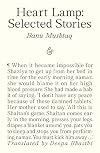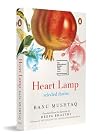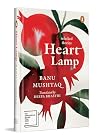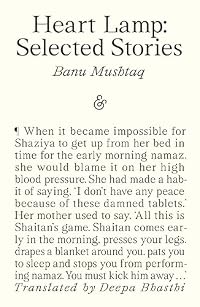
Heart Lamp
by Banu Mushtaq
On This Page
Description
In the twelve stories of Heart Lamp, Banu Mushtaq exquisitely captures the everyday lives of women and girls in Muslim communities in southern India. Published originally in the Kannada language between 1990 and 2023, praised for their dry and gentle humor, these portraits of family and community tensions testify to Mushtaq's years as a journalist and lawyer, in which she tirelessly championed women's rights and protested all forms of caste and religious oppression. Written in a style at show more once witty, vivid, colloquial, moving and excoriating, it's in her characters--the sparky children, the audacious grandmothers, the buffoonish maulvis and thug brothers, the oft-hapless husbands, and the mothers above all, surviving their feelings at great cost--that Mushtaq emerges as an astonishing writer and observer of human nature, building disconcerting emotional heights out of a rich spoken style. Her opus has garnered both censure from conservative quarters as well India's most prestigious literary awards; this is a collection sure to be read for years to come.--Amazon show lessTags
Recommendations



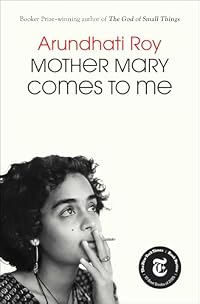
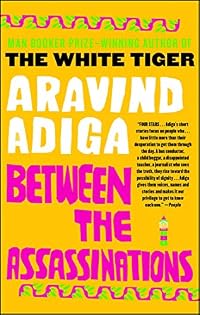
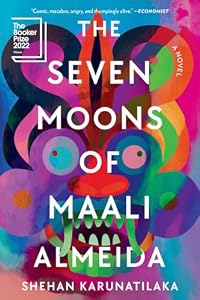


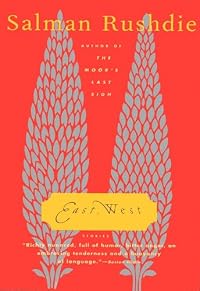











Member Recommendations

wandering_star Different times, similar themes
Member Reviews
Reason read: Booker International 2025, TIOLI #2
This is a wonderfully written and translated work by Indian author Banu Mushtaq and translator Deepa Bhasthi. I read this as a follower of Jesus. The story "reveals the varied realities of contemporary women". The translator states that the author once said to her that she does not see herself writing only about a certain kind of woman belonging to a certain community, that women everywhere face similar, if not exact same problems. Yes, all women to face similar issues but there is much in this that goes beyond. Banu Mushtaq is a writer, activist and Layer in the state of Karnataka, southern India. The translator and the translation of this book won the English PEN's PEN translation award. show more I do think this is a wonderful translation. The book has received a polarized, often crituecal reaction from conservative Islamic quarters in India, while being praised by others for highlighting women's struggles. The book depicts the intense, often brutal patriarchal realities for Muslim women in southern India, leading to both critical acclaim and, for the author, past threats. A fatwa was issued against her. She faced death threats, mental and physical abuse, and a direct knife attack by a man, which was foiled by her husband. Community leaders tried to force her to sign a document that she would never write again which she refused. I highly recommend this book. show less
This is a wonderfully written and translated work by Indian author Banu Mushtaq and translator Deepa Bhasthi. I read this as a follower of Jesus. The story "reveals the varied realities of contemporary women". The translator states that the author once said to her that she does not see herself writing only about a certain kind of woman belonging to a certain community, that women everywhere face similar, if not exact same problems. Yes, all women to face similar issues but there is much in this that goes beyond. Banu Mushtaq is a writer, activist and Layer in the state of Karnataka, southern India. The translator and the translation of this book won the English PEN's PEN translation award. show more I do think this is a wonderful translation. The book has received a polarized, often crituecal reaction from conservative Islamic quarters in India, while being praised by others for highlighting women's struggles. The book depicts the intense, often brutal patriarchal realities for Muslim women in southern India, leading to both critical acclaim and, for the author, past threats. A fatwa was issued against her. She faced death threats, mental and physical abuse, and a direct knife attack by a man, which was foiled by her husband. Community leaders tried to force her to sign a document that she would never write again which she refused. I highly recommend this book. show less
Heart Lamp includes a dozen tales by Banu Mushtaq written over a 30-year period and translated from the Kannada language by Deepa Bhasthi. These are stories focusing primarily on domestic situations that highlight the rigors of family life and the demands and expectations that women encounter in a society dominated by men. Mushtaq’s women routinely face domestic situations that western readers will regard as intolerable, even untenable. But Muslim society provides no recourse or solace for a woman whose husband rejects her or treats her poorly, or even abuses her, instead compelling her to stay quiet and accept her lot, often with threats or punishment. “Heart Lamp,” the title story, is a disturbing case in point. Years earlier, show more Mehrun’s family had removed her from school and forced her to marry Inayat. When she returns to her family in great distress because her husband has found another woman and no longer wants her or their children, her parents blame her for the breakdown of the marriage and turn her away. In despair and seeing no way forward for herself she makes a drastic decision but is saved from a desperate act of self-destruction by the love of her child. In “High-heeled Shoe,” Nayaz Khan is obsessed with his glamorous sister-in-law’s feet when she wears high-heels. “Her shoes had stolen his mind,” the narrator tells us. Nayaz impulsively forms a plot to have his pregnant wife Arifa wear the same type of shoes, taking her into a shoe store and triumphantly looking on as the salesman squeezes her feet into a pair of shoes that are obviously unsuitable. The story ends in surreal fashion with Arifa, confused over her husband’s behaviour, communing with her unborn child and asserting control over the situation and the shoes. The western reader will find much in these pages that is alien and disorienting. Mushtaq’s stories proceed at a uniformly frenzied pace with emotions and actions often described in exaggerated fashion. The text includes many unfamiliar Indian and Muslim words. Translator Deepa Bhasthi explains in an afterword that, instead of completely whitewashing the text to make it palatable for English readers, she decided to retain many native terms to more effectively evoke the culture from which the stories emerge. The result is something of a mixed bag. The stories are not entirely devoid of humour, but there is little variation in tone. And with themes of gender inequality and male irresponsibility and cruelty reiterated from one story to the next, the moral ambiguity that normally imbues fiction with dramatic interest is missing. As a result, the volume can sometimes seem monotonous. Still, Heart Lamp represents an important milestone in feminist literature and in 2025 was awarded the International Booker Prize. show less
I found this book difficult to read. At the end of the book is a note from the translator and that helped explain why I found the translation difficult to read. It’s all about language and how nuances can be difficult to translate. So in some of the stories, I was so confused about who was who. A bunch of familial titles that all start with A and have a double letter following. Chat GpT helped a bit. So the actual reading of the book was not enjoyable but the messages of the stories were eye opening and did a great job of explaining the fate of women in India.
My 9th book from the Internation Booker longlist is a series of short stories on a southern India Muslim community who speak Kannada. The author is a native Kannada speaker, and also activist, lawyer and feminist within her community. These are stories she has apparently written over a couple decades, selected for this translation.
Kannada is a Dravidian language spoken by about 60 million people. There are several Dravidian languages widely spoken in India. And, what I find interesting, is that they are independent of, and pre-date the Indo-European languages in India. That is, they pre-date Hindi. The book includes a terrific afterward by the translator where she discusses how she handled several aspects, including her choice to keep show more many Kannada words in the translation (without italics).
These are sort of domestic stories largely focused on the women. They exist in a limited scope that does not directly challenge cultural norms or beliefs. And does not address other cultures, or economies or clashes related to this. These characters all exist in this Muslim Indian world and accept these realities, including their economic reality, as the natural order. It's within this mindset that her feminism lays its hands, highlighting the challenges, contradictions, unfairness, dependence and other aspects of this society that compromises power position of these women, and what it means to their day-to-day life. The opening story has a contemporary sounding optimistic voice, a young married woman that loves her isolated world away from the crowds, until she is exposed to an unsettling contradiction. A later story is narrated a lawyer whose husband refuses to do anything in regards to managing their children. But most of the other stories are women who are less aware, and less independent in mind or reality.
What I liked was these are all good, carefully and well-constructed stories. They all kept me interested and thinking while reading them, and left some impact. Writing this review, I'm realizing Edith Wharton comes to mind as a comparison in these elements. They also gave me insight into a culture I know nothing about. This was an enjoyable read, gently recommended.
2025
https://www.librarything.com/topic/369129#8856420 show less
Kannada is a Dravidian language spoken by about 60 million people. There are several Dravidian languages widely spoken in India. And, what I find interesting, is that they are independent of, and pre-date the Indo-European languages in India. That is, they pre-date Hindi. The book includes a terrific afterward by the translator where she discusses how she handled several aspects, including her choice to keep show more many Kannada words in the translation (without italics).
These are sort of domestic stories largely focused on the women. They exist in a limited scope that does not directly challenge cultural norms or beliefs. And does not address other cultures, or economies or clashes related to this. These characters all exist in this Muslim Indian world and accept these realities, including their economic reality, as the natural order. It's within this mindset that her feminism lays its hands, highlighting the challenges, contradictions, unfairness, dependence and other aspects of this society that compromises power position of these women, and what it means to their day-to-day life. The opening story has a contemporary sounding optimistic voice, a young married woman that loves her isolated world away from the crowds, until she is exposed to an unsettling contradiction. A later story is narrated a lawyer whose husband refuses to do anything in regards to managing their children. But most of the other stories are women who are less aware, and less independent in mind or reality.
What I liked was these are all good, carefully and well-constructed stories. They all kept me interested and thinking while reading them, and left some impact. Writing this review, I'm realizing Edith Wharton comes to mind as a comparison in these elements. They also gave me insight into a culture I know nothing about. This was an enjoyable read, gently recommended.
2025
https://www.librarything.com/topic/369129#8856420 show less
a compelling collection of short stories centered around women's lives in south india. the translator did a fine job of carrying over the subtleties of karnataka into english, but you do see a distinction between how ideas would be conveyed through text. it's the double-edged nature of reading translated works; you're grateful for the chance to read something you'd normally have to study an entire language for, but you understand that you're not receiving the ideas in the manner they were originally intended to be sent out. as i said, though, the translation does its best to remain faithful to the linguistic patterns of karnataka, and the stories themselves bare the harsh realities of female life in muslim india. the levelheaded show more approach to detailing these experiences reveals to you how deeply embedded male entitlement is in this culture, and how despite their most determined efforts to survive through whatever channels they can seek aid, women just aren't given a fair chance at life. some of these stories seize you and leave you stunned with how sudden and irresolute the endings are, but two stood out to me in particular. the first is a light-hearted, first-person retrospective from a woman describing how her grandmother always had her back when she was a child. the other is the final story, which was also written in first-person, tying together all the gender-based injustices present throughout the collection and questioning god directly for his failure to empathize with the female perspective. although the language may appear a little stilted at first (likely due to the nature of translation), i think this is a book that's necessary to understand what life is like for women from this part of the world. show less
This won the International Booker award this year and while the stories (written in Kannada, between 1990 and 2023), are not the first to be translated from that language into English, but they are the first to be awarded internationally. In general, they highlight an endless series of male assholes and the social structure that puts the women into a whole host of situations that make them the quiet heroes in almost every tale. Religious restrictions, patriarchal restrictions, god only knows how they deal with the adversity of all their restrictions. The stories primarily focus on the domestic sphere and are written (translated) in a direct style that is neither fussy nor overly formal, yet carries emotional impact. The stories don't show more tell you what to think, but it helps you draw your own conclusions—a quiet voice of resistance.
Some additional details about the language. The translation into English has been praised. It is a Dravidian language (distinct from the Indo-European languages) spoken mainly in the Indian state of Karnataka. There is an afterward by the translator, which makes for very interesting reading.
Some additional details about the language. It is a Dravidian language (distinct from the Indo-Europian languages) spoken mainly in the Indian state of Karnataka. show less
Some additional details about the language. The translation into English has been praised. It is a Dravidian language (distinct from the Indo-European languages) spoken mainly in the Indian state of Karnataka. There is an afterward by the translator, which makes for very interesting reading.
Some additional details about the language. It is a Dravidian language (distinct from the Indo-Europian languages) spoken mainly in the Indian state of Karnataka. show less
Heart Lamp: Selected Stories is twelve short stories about Muslim Indian women, and show the variety of experiences in a patriarchal society where the tenets of a religion may not be followed in how people are treated.
Mushtaq writes in Kannada and has written several books, but this is the first to be translated into English and won the 2025 International Booker Prize. Mushtaq showcases the depth and breadth of human experiences, and the many challenges of women in this society. I'm glad I read it, though it was not often the first book I felt like picking up, because I found many of the stories hard to read, poignant and often sad or maddening, with moments of humor and hope.
Mushtaq writes in Kannada and has written several books, but this is the first to be translated into English and won the 2025 International Booker Prize. Mushtaq showcases the depth and breadth of human experiences, and the many challenges of women in this society. I'm glad I read it, though it was not often the first book I felt like picking up, because I found many of the stories hard to read, poignant and often sad or maddening, with moments of humor and hope.
Members
- Recently Added By
Author Information

3 Works 308 Members
Some Editions
Awards and Honors
Awards
Distinctions
Notable Lists
Common Knowledge
- Canonical title
- Heart Lamp
- Original publication date
- 2025
- Original language
- Kannada
Classifications
- Genres
- General Fiction, Fiction and Literature
- DDC/MDS
- 891.00 — Literature & rhetoric Asian Literature East Indo-European and Celtic literatures
- LCC
- PK5461 .M87 — Language and Literature Indo-Iranian languages and literatures Indo-Iranian philology and literature Indo-Aryan literature Modern Indo-Aryan literature
- BISAC
Statistics
- Members
- 307
- Popularity
- 103,841
- Reviews
- 18
- Rating
- (3.63)
- Languages
- English, Sinhalese
- Media
- Paper, Ebook
- ISBNs
- 12
- ASINs
- 1