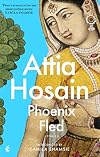
Phoenix Fled
by Attia Hosain
On This Page
Description
'There is so much to love and admire in these stories - their understanding of heartbreak, their attention to affection and love across many divides' KAMILA SHAMSIE 'Listen to me, child. You will be a woman soon and must behave well and with modesty. The Kazi will ask you three times whether you will marry Kalloo Mian. Now don't you be shameless, like these modern girls, and shout gleefully "Yes". Be modest and cry softly and say "Hoon".' A marriage is arranged between a little servant girl show more and a middle-aged cook with an opium habit; an idealistic political worker faces disillusionment; a man returns from years studying in England to a wife he scarcely knows; a conventional bride has her first encounter with her husband's 'emancipated' friends. Telling of the lives of servants and children, of conflict between the old traditions and new ways, and exploring the human repercussions of the Muslim/Hindu divide, these twelve stories present a moving and vivid picture of life in India in the mid-twentieth century. To each episode Attia Hosain brings a superb imaginative understanding and a sense of the poignancy of the smallest of human dramas. Attia Hosain published only two books, but her writing has influenced generations of writers. Discover Sunlight on a Broken Column, Hosain's acclaimed only novel - a coming-of-age story set against the turbulent background of Partition, also published in Virago Modern Classics. show lessTags
Recommendations











Member Recommendations
wandering_star Different times, similar themes
Member Reviews
This book is a collection of short stories set in India just before the Partition of the country into India and Pakistan. The author is Muslim so the stories often have that cultural slant, as opposed to a Hindu or Sikh point of view. These stories are domestic tales about the very poor in the households of the middle class. They are tiny pictures which portray life, not on the grand scale of a world stage, but in a village or behind the door of a house in a modern city. Ancient customs exist with 20th century reality, sometimes peacefully, but more often uncomfortably.
A few stories stood out for me as I read them from a 21st century western background. Two dealt with arranged child marriages. In "The Daughter-in Law", a little girl who show more is too young to live as a wife is sent to live with her mother-in-law. Her family no longer wants the responsibility of keeping her since she is "married." Her husband is in another part of the country, out of work, and ill. So Nasiban, the mother-in-law brings the child into the home where she is a nursemaid. The frightened child hears "ghosts" in the walls of her room and is suspected when items start to go missing among the servants. In "The Street of the Moon", a child too full of spirit for her own good is married off to a drug-addicted old man who needs someone to take care of him. She is too young to really understand the preparations for her wedding and is delighted with her new clothes, pretty jewelry, and makeup. When she runs away from her abusive husband she has only one option in order to survive.
The stories show the position of the working poor in relation to their employers. The wealthy expect service and hold the power, but they provide a safe haven for, not just the servant, but the entire family of the servant. If not for the work, these poor would be dead on the streets. In these households they are housed (even if on a mat under the stairs), fed well, clothed, and given a stipend. They could also be tossed on the street at the whim of the employer for breaking a vase or sticking a baby with a diaper pin.And yet, the employers are not bad people. They have been entitled all their lives and expect a servant to pick up a dropped handkerchief. And the servant is grateful for the job of picking up that handkerchief because it means her children are being fed and not having to beg on the streets.
This is a incisive look at an India of not so long ago. An India of ancient mores and customs trying to cope with (or to avoid) change. show less
A few stories stood out for me as I read them from a 21st century western background. Two dealt with arranged child marriages. In "The Daughter-in Law", a little girl who show more is too young to live as a wife is sent to live with her mother-in-law. Her family no longer wants the responsibility of keeping her since she is "married." Her husband is in another part of the country, out of work, and ill. So Nasiban, the mother-in-law brings the child into the home where she is a nursemaid. The frightened child hears "ghosts" in the walls of her room and is suspected when items start to go missing among the servants. In "The Street of the Moon", a child too full of spirit for her own good is married off to a drug-addicted old man who needs someone to take care of him. She is too young to really understand the preparations for her wedding and is delighted with her new clothes, pretty jewelry, and makeup. When she runs away from her abusive husband she has only one option in order to survive.
The stories show the position of the working poor in relation to their employers. The wealthy expect service and hold the power, but they provide a safe haven for, not just the servant, but the entire family of the servant. If not for the work, these poor would be dead on the streets. In these households they are housed (even if on a mat under the stairs), fed well, clothed, and given a stipend. They could also be tossed on the street at the whim of the employer for breaking a vase or sticking a baby with a diaper pin.And yet, the employers are not bad people. They have been entitled all their lives and expect a servant to pick up a dropped handkerchief. And the servant is grateful for the job of picking up that handkerchief because it means her children are being fed and not having to beg on the streets.
This is a incisive look at an India of not so long ago. An India of ancient mores and customs trying to cope with (or to avoid) change. show less
Read this years ago and recall this collection as being well worth reading, though I liked her novel better... I bought a remaindered copy once, and in a fit of stupidity, let it go along with a few other books.
Ratings
Members
- Recently Added By
Author Information

7+ Works 352 Members
Series
Belongs to Publisher Series
Virago Modern Classics (296)
Common Knowledge
- Canonical title
- Phoenix Fled
- Original publication date
- 1953
- Important places
- India
- First words
- Everyone who lived in the village or the hamlets nearby knew her. (Phoenix Fled)
In India, the past never disappears. (Introduction) - Last words
- (Click to show. Warning: May contain spoilers.)Ramu stared at the silver coin, and then said angrily, "I came to tell you that Moti was not mad," and before the car could be started again he was off, a brown shadow running into the dark shadows by the road. (Ramu)
(Click to show. Warning: May contain spoilers.)Attia Hosain's work is by no means an unreserved paean of praise for the old culture but is certainly full of an inherited, instinctive love for it. (Introduction)
Classifications
Statistics
- Members
- 99
- Popularity
- 324,847
- Reviews
- 2
- Rating
- (3.63)
- Languages
- English
- Media
- Paper
- ISBNs
- 4
- ASINs
- 2