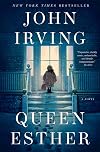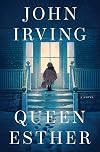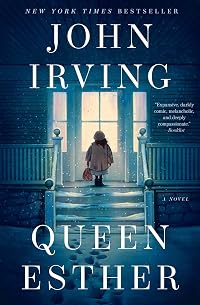
Queen Esther
by John Irving
On This Page
Description
"Esther Nacht is born in Vienna in 1905. Her father dies on board the ship to Portland, Maine; her mother is murdered by anti-Semites in Portland. Dr. Larch knows it won't be easy to find a Jewish family to adopt Esther; in fact, he won't find any family who'll adopt her. When Esther is fourteen, soon to be a ward of the state, Dr. Larch meets the Winslows, a philanthropic New England family with a history of providing foster care for unadopted orphans. The Winslows aren't Jewish, but they show more despise anti-Semitism. Esther's gratitude for the Winslows is unending; even as she retraces her roots back to Vienna, she never stops loving and protecting the Winslows. In the final chapter, set in Jerusalem in 1981, Esther Nacht is seventy-six"-- show lessTags
Recommendations












Member Reviews
Some of my favourite novels have been written by John Irving, but this is not one of them.
Esther Nacht, born in 1905, becomes an orphan after her mother is killed by anti-Semites in Portland, Maine. When she is fourteen, Esther is adopted by Constance and Thomas Winslow, a couple living in New Hampshire. Though they are not Jewish, they despise anti-Semitism and are the only people open to adopting a Jewish child. Esther helps care for Honor, the youngest of four daughters, but becomes very much a part of the family. Despite its title however, the novel focuses on Jimmy Winslow, Esther’s biological child born in 1941 but raised by Honor. It is very much his coming-of-age story. Though it covers 40 years of his life, a large portion of show more the book details Jimmy’s study year in Vienna where he works on writing a novel and makes life-long friends.
One of the themes is that of identity. Jimmy questions his identity from an early age. He believes in his “intrinsic foreignness” because “Jimmy was a nobody’s boy. This much was understood: his mother had adopted him; his father was an unknown. As for the boy’s birth mother . . . she was an orphan.” He’s not considered “a real Winslow” so who is he? His biological mother is Jewish so is he Jewish? He thinks of himself as “just a New Hampshire boy” but travels to Vienna, Esther’s birthplace, in hopes of connecting with her. The last paragraph begins with “At last, James Winslow knew who he was” and outlines what he has realized.
Irving’s novels often center on non-traditional families, with strong but sometimes profane mothers, absent fathers, and unconventional sexual dynamics. This is certainly the case here. Constance and Thomas have four daughters, but also adopt four more. Jimmy has two mothers and he creates a type of family with Claude and Yolanda, his roommates in Vienna. Then there’s Jimmy’s daughter who also has two mothers. There’s an asexual mother and a lesbian one.
Of course it is not just the theme of identity and the unconventional families that signpost an Irving novel. Readers of his books will see many familiar motifs: the New England and Vienna settings, wrestling, the presence of at least one writer, a prominent animal role, sex workers, and quirky characters in absurd circumstances. And there are frequent digressions often found in his books; in this one, the reader is given histories of abortion and circumcision and analyses of Dickens’ novels.
Though engaging in parts, I found some sections too long and drawn out. Jimmy’s year in Vienna (1963-64) goes on and on, with constant reference to Honor’s scheme to keep her son from being drafted and sent to Vietnam. The subplot with the dishwasher and her thugs is also excessive and left me wondering what the point is. Needless repetition is a problem. Is it really necessary to have Thomas say, “’Right you are, Connie’” two dozen times? This wordiness, rambling, and lack of cohesion left me struggling to maintain interest.
Esther, though the title bears her name, remains a secondary character. We see little of her and learn most about her from others. She keeps a distance from her family and she is kept at a distance from the reader. She becomes a larger-than-life, mythical character and I guess that’s the point. However, her perspective would have added to the themes of Jewish identity, anti-Semitism, and the historical Israel/Palestine conflict, “this eternal conflict, this everlasting hatred.”
I was disappointed with this book; it did not resonate with me as Irving’s other novels have. My 3-star rating may seem insulting but is actually generous.
I received an eARC from the publisher via NetGalley.
Note: Please check out my reader's blog (https://schatjesshelves.blogspot.com/) or substack (https://doreenyakabuski.substack.com/) for over 1,200 of my book reviews. show less
Esther Nacht, born in 1905, becomes an orphan after her mother is killed by anti-Semites in Portland, Maine. When she is fourteen, Esther is adopted by Constance and Thomas Winslow, a couple living in New Hampshire. Though they are not Jewish, they despise anti-Semitism and are the only people open to adopting a Jewish child. Esther helps care for Honor, the youngest of four daughters, but becomes very much a part of the family. Despite its title however, the novel focuses on Jimmy Winslow, Esther’s biological child born in 1941 but raised by Honor. It is very much his coming-of-age story. Though it covers 40 years of his life, a large portion of show more the book details Jimmy’s study year in Vienna where he works on writing a novel and makes life-long friends.
One of the themes is that of identity. Jimmy questions his identity from an early age. He believes in his “intrinsic foreignness” because “Jimmy was a nobody’s boy. This much was understood: his mother had adopted him; his father was an unknown. As for the boy’s birth mother . . . she was an orphan.” He’s not considered “a real Winslow” so who is he? His biological mother is Jewish so is he Jewish? He thinks of himself as “just a New Hampshire boy” but travels to Vienna, Esther’s birthplace, in hopes of connecting with her. The last paragraph begins with “At last, James Winslow knew who he was” and outlines what he has realized.
Irving’s novels often center on non-traditional families, with strong but sometimes profane mothers, absent fathers, and unconventional sexual dynamics. This is certainly the case here. Constance and Thomas have four daughters, but also adopt four more. Jimmy has two mothers and he creates a type of family with Claude and Yolanda, his roommates in Vienna. Then there’s Jimmy’s daughter who also has two mothers. There’s an asexual mother and a lesbian one.
Of course it is not just the theme of identity and the unconventional families that signpost an Irving novel. Readers of his books will see many familiar motifs: the New England and Vienna settings, wrestling, the presence of at least one writer, a prominent animal role, sex workers, and quirky characters in absurd circumstances. And there are frequent digressions often found in his books; in this one, the reader is given histories of abortion and circumcision and analyses of Dickens’ novels.
Though engaging in parts, I found some sections too long and drawn out. Jimmy’s year in Vienna (1963-64) goes on and on, with constant reference to Honor’s scheme to keep her son from being drafted and sent to Vietnam. The subplot with the dishwasher and her thugs is also excessive and left me wondering what the point is. Needless repetition is a problem. Is it really necessary to have Thomas say, “’Right you are, Connie’” two dozen times? This wordiness, rambling, and lack of cohesion left me struggling to maintain interest.
Esther, though the title bears her name, remains a secondary character. We see little of her and learn most about her from others. She keeps a distance from her family and she is kept at a distance from the reader. She becomes a larger-than-life, mythical character and I guess that’s the point. However, her perspective would have added to the themes of Jewish identity, anti-Semitism, and the historical Israel/Palestine conflict, “this eternal conflict, this everlasting hatred.”
I was disappointed with this book; it did not resonate with me as Irving’s other novels have. My 3-star rating may seem insulting but is actually generous.
I received an eARC from the publisher via NetGalley.
Note: Please check out my reader's blog (https://schatjesshelves.blogspot.com/) or substack (https://doreenyakabuski.substack.com/) for over 1,200 of my book reviews. show less
John Irving’s stock in trade comprises quirky characters, fatherless children, unconventional relationships, and humans with physical anomalies. He also likes to fit wrestling into a good many of his stories. In [Queen Esther], he adds a hefty portion of Jewish history and modern Zionism. Queen Esther, married to a Persian king, is remembered for saving “her people” by appealing to her husband’s sense of justice and fair play. In the Christian and Hebrew versions of the Old Testament, Esther keeps her Jewish identity a secret until she sees a need to proclaim it. Her whole Biblical story is quite likely a fiction without much historical foundation. It remains a favorite, however, with Christians and Jews, and is the origin story show more for the Jewish Purim holiday. Not to mention the blessing that is hamentaschen.
James “Jimmy” Winslow is the offspring of Esther Nacht, a Jewish orphan taken in by a New England English professor and his librarian wife to serve as a mother’s helper when their fourth daughter is born. When that daughter, Hope, comes of age, she expresses a desire to raise a child, but not to bear one. She proposes surrogacy to Esther, who, despite being a bit old for it, agrees. Esther goes off to Israel, where she finds a suitable man to impregnate her, and lo! Jimmy is born. After a pampered childhood in New Hampshire, knowing his own origin story, but never having met his birth mother or father, Jimmy goes off to Vienna (where his biological mother was born) to attend the Institute for European Studies, where he falls into company with an assortment of oddballs with all manner of obsessions and inventive sexual habits. As young men of his age are wont to do, Jimmy is trying to get a grasp on his identity, which for him is trickier than for some. It’s the mid-1960s; Hope is determined to keep Jimmy out of Vietnam, and her notions about how to accomplish that run from maiming him to finding a woman to bear HIS child, so that he could claim a deferment for fatherhood. Meanwhile, Esther has been making a name for herself, doing mysterious things she will not talk about, fiercely reclaiming her Jewish identity in Eretz Israel. Yet she knows too well the hazards of being a Jew, and most emphatically does not want Jimmy to embrace that heritage.
I’ve enjoyed many of Irving’s excursions into imaginative territory populated by marginal characters. His preoccupation with female breasts and male genitalia has frequently been off-putting, and although I am firm in the belief that everyone should love whomever and however they please as long as all participants are free to say yes or no, I don’t particularly want to read about very much of it. Irving’s Dickensian plot complications sometimes work, and sometimes do not. The first and last thirds of [Queen Esther] contain some of his best writing; the middle is a muddle. And although Jimmy asserts in the end that he finally “knows who he is”, I confess I don’t understand how he got there. I also feel that making Esther the title character of this novel was a misleading choice. Esther plays an essential role, but it's really Jimmy's story.
Usually when I find an Irving novel unsatisfying, I give up on it. Thus with [Son of the Circus], [The Fourth Hand], and [Until I Find You]. This time, because of the promising start, I pushed through. I don’t regret doing that, but overall I don’t consider this novel a success. It certainly does not measure up, for me, to [A Prayer for Owen Meany], [The Cider House Rules], or [Last Night in Twisted River]. show less
James “Jimmy” Winslow is the offspring of Esther Nacht, a Jewish orphan taken in by a New England English professor and his librarian wife to serve as a mother’s helper when their fourth daughter is born. When that daughter, Hope, comes of age, she expresses a desire to raise a child, but not to bear one. She proposes surrogacy to Esther, who, despite being a bit old for it, agrees. Esther goes off to Israel, where she finds a suitable man to impregnate her, and lo! Jimmy is born. After a pampered childhood in New Hampshire, knowing his own origin story, but never having met his birth mother or father, Jimmy goes off to Vienna (where his biological mother was born) to attend the Institute for European Studies, where he falls into company with an assortment of oddballs with all manner of obsessions and inventive sexual habits. As young men of his age are wont to do, Jimmy is trying to get a grasp on his identity, which for him is trickier than for some. It’s the mid-1960s; Hope is determined to keep Jimmy out of Vietnam, and her notions about how to accomplish that run from maiming him to finding a woman to bear HIS child, so that he could claim a deferment for fatherhood. Meanwhile, Esther has been making a name for herself, doing mysterious things she will not talk about, fiercely reclaiming her Jewish identity in Eretz Israel. Yet she knows too well the hazards of being a Jew, and most emphatically does not want Jimmy to embrace that heritage.
I’ve enjoyed many of Irving’s excursions into imaginative territory populated by marginal characters. His preoccupation with female breasts and male genitalia has frequently been off-putting, and although I am firm in the belief that everyone should love whomever and however they please as long as all participants are free to say yes or no, I don’t particularly want to read about very much of it. Irving’s Dickensian plot complications sometimes work, and sometimes do not. The first and last thirds of [Queen Esther] contain some of his best writing; the middle is a muddle. And although Jimmy asserts in the end that he finally “knows who he is”, I confess I don’t understand how he got there. I also feel that making Esther the title character of this novel was a misleading choice. Esther plays an essential role, but it's really Jimmy's story.
Usually when I find an Irving novel unsatisfying, I give up on it. Thus with [Son of the Circus], [The Fourth Hand], and [Until I Find You]. This time, because of the promising start, I pushed through. I don’t regret doing that, but overall I don’t consider this novel a success. It certainly does not measure up, for me, to [A Prayer for Owen Meany], [The Cider House Rules], or [Last Night in Twisted River]. show less
John Irving’s Queen Esther sets out to be a sweeping work of historical fiction, tracing the life of Esther Nacht from her birth in Vienna in 1905 to her final days in Jerusalem in 1981. Born into tragedy—losing her father at sea and her mother to anti-Semitic violence in Portland, Maine—Esther’s path is shaped by displacement, loss, and the search for belonging. When the Winslows, a compassionate but non-Jewish New England family, take her in as a foster child, she gains stability and lifelong ties, even as her journey pulls her back toward her roots.
The premise promises a rich exploration of identity, resilience, and the enduring effects of history—territory well-suited to Irving’s reputation for character-driven show more storytelling. Unfortunately, while the novel holds moments of insight and a handful of memorable quotes, the execution falters. The narrative often meanders, weighed down by excessive historical exposition that adds little to the central plot. The story jumps between timelines and topics without clear cohesion, making it difficult to stay anchored in Esther’s journey.
For a novel named after its protagonist, Queen Esther oddly keeps her at a distance. Readers learn far more about side characters and background events than about Esther herself, whose voice and inner life are frustratingly underdeveloped. Dialogue frequently feels perfunctory, and the emotional beats that should resonate most are instead buried beneath pages of tangential history and thematic lectures.
While the book aims to spotlight important issues—particularly prejudice and the scars of displacement—it often reads more like a historical essay than a compelling narrative. Fans of Irving’s earlier works may find little of the warmth, humor, and vivid characterization that have defined his best novels. A novel with admirable intentions and occasional flashes of Irving’s skill, but bogged down by slow pacing, uneven focus, and characters who never truly come alive. A missed opportunity for a story that could have been both powerful and deeply moving. show less
The premise promises a rich exploration of identity, resilience, and the enduring effects of history—territory well-suited to Irving’s reputation for character-driven show more storytelling. Unfortunately, while the novel holds moments of insight and a handful of memorable quotes, the execution falters. The narrative often meanders, weighed down by excessive historical exposition that adds little to the central plot. The story jumps between timelines and topics without clear cohesion, making it difficult to stay anchored in Esther’s journey.
For a novel named after its protagonist, Queen Esther oddly keeps her at a distance. Readers learn far more about side characters and background events than about Esther herself, whose voice and inner life are frustratingly underdeveloped. Dialogue frequently feels perfunctory, and the emotional beats that should resonate most are instead buried beneath pages of tangential history and thematic lectures.
While the book aims to spotlight important issues—particularly prejudice and the scars of displacement—it often reads more like a historical essay than a compelling narrative. Fans of Irving’s earlier works may find little of the warmth, humor, and vivid characterization that have defined his best novels. A novel with admirable intentions and occasional flashes of Irving’s skill, but bogged down by slow pacing, uneven focus, and characters who never truly come alive. A missed opportunity for a story that could have been both powerful and deeply moving. show less
I haven’t read a John Irving novel for years, and the concept of a novel based on the biblical story of Queen Esther intrigued me. There was a large cast of eccentric characters cast into somewhat absurd relationships and circumstances. Many of the particulars mirrored aspects of Irving’s life and books. At first I thought the book was primarily about Esther, the orphaned Jewish girl who is adopted by the Winslows, an old New England family. Then the focus switched to Jimmy Winslow, whom Esther births but who is raised by the youngest Winslow daughter. Early in the novel there are long sections about nineteenth-century novelists as well as long discourses on Mandatory Palestine and the origins of the IDF. Once the novel focused on show more Jimmy Winslow, now a young man spending a year abroad in Vienna, I found myself wondering where the novel was going. Some of the absurdity seemed overwrought, its purpose not clear. In the latter part of the novel, as Jimmy achieves literary success, the book returns to Israel and the Israeli—Palestinian conflict circa the 1980s. We are left with a reflection on remaining hidden—the biblical Queen Esther hiding her identity and the Esther of the novel advising Jimmy to hide his Jewish identity as a means of self-protection. However, the Esther of the novel has spent a lifetime pursuing her own Jewish idenity. The novel is not without merit, but a more critical edit may have brought it into sharper focus.
Thanks to NetGalley and Simon & Schuster for an advanced copy. show less
Thanks to NetGalley and Simon & Schuster for an advanced copy. show less
John Irving’s literary footprint is indeed large, and his devoted fans certainly would look forward to yet another novel by this master. QUEEN ESTHER has much in common with Irving’s earlier work but is not a true sequel. It highlights an unconventional family with themes of identity and belonging, sexuality and love, and of course writing and wrestling. However, this novel has a new focus on antisemitism, Jewish history and cultural inheritance while moving from a circumscribed New England setting to Vienna, Jerusalem and Amsterdam. This novel has the unfortunate feel of a summation of tropes that have worked well for Irving in the past but dressed up with a newer historical perspective. As such, it comes across as a little show more repetitive and predictable. The sprawling and episodic plot structure, along with a multiplicity of minor characters also give the novel an over-stuffed feel.
The title suggests that Esther is the protagonist. Yet, most of the novel’s focus is on the Winslow family, especially Jimmy’s coming of age as a writer. Despite Esther’s story from the St. Cloud orphanage in Maine to the Winslow family in New Hampshire, she seems to fade into the background to be replaced by her son Jimmy. Much of her activities in Israel and her inner life are obtuse, while that of Jimmy comes alive in Austria.
Irving’s layering of historical background over a more personal drama gives his narrative a sprawling scope. Yet the plot often seems to be bloated and meandering. Despite its shortcomings, his devoted readers will find much to enjoy in QUEEN ESTHER. Irving’s trademark sharp wit is still on display as is his expertise with characterization and dialogue. show less
The title suggests that Esther is the protagonist. Yet, most of the novel’s focus is on the Winslow family, especially Jimmy’s coming of age as a writer. Despite Esther’s story from the St. Cloud orphanage in Maine to the Winslow family in New Hampshire, she seems to fade into the background to be replaced by her son Jimmy. Much of her activities in Israel and her inner life are obtuse, while that of Jimmy comes alive in Austria.
Irving’s layering of historical background over a more personal drama gives his narrative a sprawling scope. Yet the plot often seems to be bloated and meandering. Despite its shortcomings, his devoted readers will find much to enjoy in QUEEN ESTHER. Irving’s trademark sharp wit is still on display as is his expertise with characterization and dialogue. show less
As a John Irving fan, I was pleased with the opportunity to read his latest. This novel has many of the themes and situations found in his earlier novels: New England prep school, orphanage, wrestling, physical size issues, coming of age, parent/child relationships. In addition, the issues of anti-semitism and the Israel/Palestine conflict play a major part. You might think that because of the title Esther, an orphan, would be the main character. In fact it feels like most of our attention is on Jimmy/James, her biological son who has been raised by Honor Winslow. The Winslow family took in young Esther to watch over their youngest child, Honor, and we quickly learn about the family's idiosyncracies. Warning: this novel is very long and show more gets bogged down in several parts, such as the descriptions and preoccupation with circumcision. show less
Queen Esther by John Irving is recommended only for fans of Irving. This time he tells the story of a fourteen-year-old Jewish orphan, Esther Nacht, who comes from the orphanage in St. Cloud’s, Maine (from The Cider House Rules) to live with Thomas and Constance Winslow and care for their youngest daughter, Honor, in New Hampshire. The bulk of the long-winded novel is ultimately the story of Honor's son James (Jimmy).
Irving covers many of the topics that one expects him to cover in a novel. These topics include: New Hampshire, great literature, religion, prep schools, family relationships, identity, sexuality, abortion, politics, cultural changes, etc., and anti-Semitism. Irving previously indicated that The Last Chairlift would be show more his last long novel and he should have held firm to that statement. I'll be honest, I had to force myself to keep reading this novel. The three star rating is to pay homage to Irving's body of work rather than a rating for this individual novel.
Queen Esther is recommended only for long time fans of Irving's work. Thanks to Simon & Schuster for providing me with an advance reader's copy via NetGalley. My review is voluntary and expresses my honest opinion.
http://www.shetreadssoftly.com/2025/10/queen-esther.html show less
Irving covers many of the topics that one expects him to cover in a novel. These topics include: New Hampshire, great literature, religion, prep schools, family relationships, identity, sexuality, abortion, politics, cultural changes, etc., and anti-Semitism. Irving previously indicated that The Last Chairlift would be show more his last long novel and he should have held firm to that statement. I'll be honest, I had to force myself to keep reading this novel. The three star rating is to pay homage to Irving's body of work rather than a rating for this individual novel.
Queen Esther is recommended only for long time fans of Irving's work. Thanks to Simon & Schuster for providing me with an advance reader's copy via NetGalley. My review is voluntary and expresses my honest opinion.
http://www.shetreadssoftly.com/2025/10/queen-esther.html show less
Members
- Recently Added By
Lists

LoanStars | Adult List: November 2025
10 works; 1 member

Globe and Mail | Canadian Fiction: November 15, 2025
10 works; 1 member
Globe and Mail | Canadian Fiction: November 22, 2025
10 works; 1 member
Globe and Mail | Canadian Fiction: November 29, 2025
10 works; 1 member
Globe and Mail | Canadian Fiction: December 6, 2025
10 works; 1 member
Globe and Mail | Canadian Fiction: December 13, 2025
10 works; 1 member
Globe and Mail | Canadian Fiction: December 20, 2025
10 works; 1 member
Globe and Mail | Canadian Fiction: December 27, 2025
10 works; 1 member
Author Information

61+ Works 96,585 Members
John Irving published his first novel at the age of twenty-six. He has received awards from the Rockefeller Foundation, the National Endowment for the Arts, and the Guggenheim Foundation; he has won an O. Henry Award, a National Book Award, and an Academy Award. (Publisher Provided) John Irving was born John Wallace Blunt, Jr. on March 2, 1942 in show more Exeter, New Hampshire. His named was changed to John Winslow Irving when his stepfather adopted him at the age of six. He was a dyslexic child and it took him five years to get through Exeter Academy, which is where his adoptive father taught Russian history. He received a B.A. (cum laude) from the University of New Hampshire in 1965 and an M.F.A. from the Iowa Writers' Workshop, in 1967, where he studied with Kurt Vonnegut Jr. His first novel was Setting Free the Bears (1969) but it wasn't until The World According to Garp was published in 1978, that he became a literary star. The novel spent six months on the bestseller list and won the American Book Award in 1980. It was also made into a movie in 1982 starring Robin Williams and costarring Glenn Close and John Lithgow. In 1981, he received an O. Henry Award for the short story Interior Space. Some of his other novels were also made into movies including The Hotel New Hampshire starring Jodie Foster and Rob Lowe; A Prayer for Owen Meany, which was titled Simon Birch starring Jim Carrey; and The Cider House Rules starring Michael Caine. He won the Oscar for Best Adapted Screenplay for The Cider House Rules in 2000. Irving also wrote two memoirs; one detailing his wrestling adventures entitled The Imaginary Girlfriend, and another concerning his novels made into Hollywood films entitled My Movie Business: A Memoir. (Bowker Author Biography) show less
Some Editions
Awards and Honors
Common Knowledge
- Canonical title
- Queen Esther
- Original title
- Queen Esther
- Original publication date
- 2025-11-04
- People/Characters
- Esther
- Original language*
- Englisch
*Some information comes from Common Knowledge in other languages. Click "Edit" for more information.
Classifications
Statistics
- Members
- 265
- Popularity
- 122,169
- Reviews
- 14
- Rating
- (3.11)
- Languages
- Dutch, English, German
- Media
- Paper, Audiobook, Ebook
- ISBNs
- 15
- ASINs
- 3