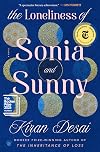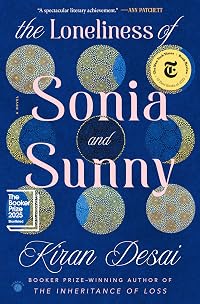
The Loneliness of Sonia and Sunny
by Kiran Desai
On This Page
Description
"When Sonia and Sunny first glimpse each other on an overnight train, they are immediately captivated, yet also embarrassed by the fact that their grandparents had once tried to matchmake them, a clumsy meddling that only served to drive Sonia and Sunny apart. Sonia, an aspiring novelist who recently completed her studies in the snowy mountains of Vermont, has returned to her family in India, fearing she is haunted by a dark spell cast by an artist to whom she had once turned for intimacy show more and inspiration. Sunny, a struggling journalist resettled in New York City, is attempting to flee his imperious mother and the violence of his warring clan. Uncertain of their future, Sonia and Sunny embark on a search for happiness together as they confront the many alienations of our modern world. The Loneliness of Sonia and Sunny is the sweeping tale of two young people navigating the many forces that shape their lives: country, class, race, history, and the complicated bonds that link one generation to the next. A love story, a family saga, and a rich novel of ideas, it is the most ambitious and accomplished work yet by one of our greatest novelists"-- Provided by publisher. show lessTags
Recommendations






























Member Reviews
Real Rating: 4.75* of five
The Publisher Says: The spellbinding story of two young people whose fates will intersect and diverge across continents and years—an epic of love and family, India and America, tradition and modernity by the Booker Prize-winning author of The Inheritance of Loss
Behind every love story are the myriad stories of two families.
In the snowy mountains of Vermont, Sonia is lonely. A college student and aspiring writer homesick for India, she turns to an older artist for inspiration and intimacy, a man who will cast a dark spell on the next many years of her life. In Brooklyn, Sunny is lonely, too. A struggling journalist originally from Delhi, he is both beguiled and perplexed by his American girlfriend and the show more country in which he plans to find his future. As Sonia and Sunny each becomes more and more alienated, they begin to question their understanding of happiness, human connection, and where they belong.
Back in India, Sonia and Sunny's extended families cannot fathom how anyone could be lonely in this great, bustling world. They arrange a meeting between the two—a clumsy meddling that only drives Sonia and Sunny apart before they have a chance to fall in love.
The Loneliness of Sonia and Sunny is the sweeping tale of two young people navigating the many forces that shape their country, class, race, history, and the complicated bonds that link one generation to the next. A love story, a family saga, and a rich novel of ideas, it is the most ambitious and accomplished work yet by one of our greatest novelists.
I RECEIVED A DRC FROM THE PUBLISHER VIA NETGALLEY. THANK YOU.
My Review: If this *immense*, intense, and deeply emotionally charged novel is not on the Booker shortlist tomorrow, I will kick off big time.
Sonia and Sunny and their families are excellent company. Like anyone you spend this much time with, there are moments of irritated shouting, times of sad, misty dripping, and the occasional whoop of glee. (Note to self: reading stories like this at 3am can lead to justifiably angry quarters-sharers. Best not to.)
What I got out of this Dickensian-in-scope tale of love, Love, imperialism, racism, chicanery, skulduggery, and the immutable urge to discover Truths greater than self-actualization, was the conviction that there needs to be a new category of read: a Bildungsroman for adults figuring their {stuff} out; a one-volume roman-fleuve for the increasing number of Indian-authored epic novels that feel even bigger in scope than they are.
Love, love, and desire figure into both of the above subgenres. I think of the old joke describing Stephen Dedalus in Ulysses as "horny Irish medical student goes on a rampage" and I'm still pretty sure that is the whole reason Joyce didn't stop at A Portrait of the Artist as a Young Man...he had so much more to say.
This could have been A Portrait of the Artist as a Young Man-length but Author Desai had a Ulysses-esque lump in her throat. It's a lot, Sunny alone is a novel's worth of weird (mother Babita and her...unexpected...opinions and cheese-related kleptomania), but Sonia and her nasty time with Ilan (older, jealous artist-lover) could've been another entire book fully satisfying the criteria of novelhood. (NB: this is the beginning of the book; persevere, ye who dislike this truthtelling trope. It's not like that all the way through.)
The weight of expectation, of cultural baggage, on aspiring artist Sonia (I'd read her novel!) and journalist Sunny (a byline I'd look for!) as they try to figure out their paths in the buzzing hive of US culture and politics, all stewed up with many people they run into (sometimes literally) along the way: crushing, annihilating, and in the end energizing. Loneliness and fear and baggage motivate these two, where they squash so many. Across the world there are people with the talent and the drive, but not the luck, of Sonia and Sunny, and we will never hear their names.
We have, now, heard their names, in Author Desai's busy, overstuffed novel. I hope in that magical-realist liminal place they are, they know and are happier for it. Seher, Sonia's mother said it best: "Loneliness could mean abiding peace. It could mean understanding your happiness backward, when you happened to exclaim out loud, surprising yourself when there was no apparent reason, I'm happy!"
Shout it, folks, you've been found. show less
The Publisher Says: The spellbinding story of two young people whose fates will intersect and diverge across continents and years—an epic of love and family, India and America, tradition and modernity by the Booker Prize-winning author of The Inheritance of Loss
Behind every love story are the myriad stories of two families.
In the snowy mountains of Vermont, Sonia is lonely. A college student and aspiring writer homesick for India, she turns to an older artist for inspiration and intimacy, a man who will cast a dark spell on the next many years of her life. In Brooklyn, Sunny is lonely, too. A struggling journalist originally from Delhi, he is both beguiled and perplexed by his American girlfriend and the show more country in which he plans to find his future. As Sonia and Sunny each becomes more and more alienated, they begin to question their understanding of happiness, human connection, and where they belong.
Back in India, Sonia and Sunny's extended families cannot fathom how anyone could be lonely in this great, bustling world. They arrange a meeting between the two—a clumsy meddling that only drives Sonia and Sunny apart before they have a chance to fall in love.
The Loneliness of Sonia and Sunny is the sweeping tale of two young people navigating the many forces that shape their country, class, race, history, and the complicated bonds that link one generation to the next. A love story, a family saga, and a rich novel of ideas, it is the most ambitious and accomplished work yet by one of our greatest novelists.
I RECEIVED A DRC FROM THE PUBLISHER VIA NETGALLEY. THANK YOU.
My Review: If this *immense*, intense, and deeply emotionally charged novel is not on the Booker shortlist tomorrow, I will kick off big time.
Sonia and Sunny and their families are excellent company. Like anyone you spend this much time with, there are moments of irritated shouting, times of sad, misty dripping, and the occasional whoop of glee. (Note to self: reading stories like this at 3am can lead to justifiably angry quarters-sharers. Best not to.)
What I got out of this Dickensian-in-scope tale of love, Love, imperialism, racism, chicanery, skulduggery, and the immutable urge to discover Truths greater than self-actualization, was the conviction that there needs to be a new category of read: a Bildungsroman for adults figuring their {stuff} out; a one-volume roman-fleuve for the increasing number of Indian-authored epic novels that feel even bigger in scope than they are.
Love, love, and desire figure into both of the above subgenres. I think of the old joke describing Stephen Dedalus in Ulysses as "horny Irish medical student goes on a rampage" and I'm still pretty sure that is the whole reason Joyce didn't stop at A Portrait of the Artist as a Young Man...he had so much more to say.
This could have been A Portrait of the Artist as a Young Man-length but Author Desai had a Ulysses-esque lump in her throat. It's a lot, Sunny alone is a novel's worth of weird (mother Babita and her...unexpected...opinions and cheese-related kleptomania), but Sonia and her nasty time with Ilan (older, jealous artist-lover) could've been another entire book fully satisfying the criteria of novelhood. (NB: this is the beginning of the book; persevere, ye who dislike this truthtelling trope. It's not like that all the way through.)
The weight of expectation, of cultural baggage, on aspiring artist Sonia (I'd read her novel!) and journalist Sunny (a byline I'd look for!) as they try to figure out their paths in the buzzing hive of US culture and politics, all stewed up with many people they run into (sometimes literally) along the way: crushing, annihilating, and in the end energizing. Loneliness and fear and baggage motivate these two, where they squash so many. Across the world there are people with the talent and the drive, but not the luck, of Sonia and Sunny, and we will never hear their names.
We have, now, heard their names, in Author Desai's busy, overstuffed novel. I hope in that magical-realist liminal place they are, they know and are happier for it. Seher, Sonia's mother said it best: "Loneliness could mean abiding peace. It could mean understanding your happiness backward, when you happened to exclaim out loud, surprising yourself when there was no apparent reason, I'm happy!"
Shout it, folks, you've been found. show less
A delightful family drama that covers decades and continents. Both of the main characters are writers, or at least aspire to be. Those aspirations give Desai an opportunity to offer meta commentary of her own art. She walks us though the immigrant experience, through the use of native art forms from Bollywood to magic realism, and through faith and miracle. Each motif has its own moment to drive the plot, and over the decades the smallness of Sunny and Sonia's world circles back on itself.
As I finish this year and this magnificent novel, I consider the gentle theme of coming to accept what initially seems impossible. The plot centers around Sonia, a college student from Delhi stuck in Vermont during winter break, who meets a much older painter, Ilan, who takes over every aspect of her life as his inspiration and her ruination. After moving to New York for an internship at an art gallery, Sonia is abruptly removed from Ilan's ambit by his wife, and flees back to Allahabad, Uttar Pradesh. There she encounters Sunny, a reporter living in New York and working for the AP, whose mother Babita, despite the continents between them, has Sunny tied unmercifully to her side. When Sonia and Sunny finally meet, after a proposed show more arranged marriage is rejected by both, there's strong chemistry, but Sonia is still emotionally tied to Ilan and Sunny to Babita. As the two make their way, separately and apart, through Goa, Italy, and Mexico, the inevitability of their joining wavers. Many fascinating characters are essential to the rambling story: Sonia's estranged parents; Babita's brothers-in-law, the epitome of corruption that informs so much of daily life in India; Sunny's best friend Satya, who invites Sunny along on his honeymoon to Goa, which proves to be pivotal to the lives of all the characters; and Mina Foy, Sonia's aunt, whose suitor was rejected due to caste differences. The physical territory of each country the author takes us is generously described, perhaps overmuch, but where else can such a splendid competition between India and Mexico described in terms of women and chilis be found? Their discovery of Ilan's paintings of Sonia in a museum in Venice leads to their sudden parting, but Sunny's dangerous quest to retrieve an amulet Sonia gave to Ilan brings on the denouement. The book will not appeal to those who don't enjoy long and meandering reads, but the audio book (21 CDs!) and its splendid narrator, Sneha Mathan, will keep many readers, especially those who love stories set in India, entranced through all 25 hours. One could happily drive cross country, subsumed within this story.
Quote: "The denuded mountains were falling out of themselves." show less
Quote: "The denuded mountains were falling out of themselves." show less
This was India, she thought. You might try to write a slender story, but it inevitably connected to a larger one. “
I was anxious to pick up a book that took two decades to write, especially since the author’s last book won the Booker Prize. I remember both enjoying and admiring The Inheritance of Loss and was not even daunted by the nearly 700 pages. It’s a commitment to take on a longer book but this was worth it. The Loneliness of Sonia and Sunny was a somewhat magical read, the settings, the characters, the intertwining generational lives and loves. It made for one of the more satisfying reads I’ve experienced in the last few years. It became easy to root for an ending to the loneliness of Sonia, who while attending college show more in New England falls for an older, famous artist and Sunny, whose American experience with a white girl from Kansas never feels comfortable. Desai weaves together an interesting initial premise where Sonia‘s grandparents who happened to know Sonny’s grandparents look to initiate a marriage proposal for their granddaughter who shares with them how lonely she is. “Eventually loneliness and snow became the same thing in her mind, lighter than air, made of nothing; only upon tackling the stuff did you realize it had piled too heavy to yield.” The marriage proposal is scoffed at by Sonny’s domineering and fashionable mother, Babita. But the two managed to meet each other coincidentally. I loved delving into the various generational characters and in the conditions of India - the corruption, the suspicions, the class system. America’s thought of as a place to escape to, as a place to be revered yet blamed for many greedy atrocities. Indian parents take pride in sending their children abroad even understanding that they may lose them. In addition, the descriptions of various sections of India, especially Goa, and also of Venice, and Sonny’s adventures in Mexico, provide the color and context to the deep histories of the region. There are so many wonderful descriptions of the characters and the ideas inherent in their upbringing that I found myself highlighting often. Some of the ones I wanted to remember are listed below. Highly recommend this and any of her books
Lines
When the girls menstruated they were banished—even from this marginal existence—to a hut at the bottom of the property, where they ate from clay dishes that were later broken upon the rubbish heap so they would not pollute the world.
She was brimful of sadness for no particular reason, just a poignancy, a melancholy that comes from eating such royal food when your life is so very empty,
when everyone knew a person must always render a sly omission when pressured for a recipe—subtract an ingredient, jiggle a quantity to leave the recipient tormented: Something isn’t right!
It was essential to remain close to those who had caused you harm so that the ghost of guilt might breathe through their dreams, that their guilt might slowly mature to its fullest potential.
But a long marriage had taught husband and wife that sleeping is better than fighting, so they closed their eyes as tightly as their mouths and turned to face away from each other.
One thing seemed certain: If India existed, then America could not, for they were too drastically different not to cancel each other out. Yet despite this fact, they refused to remain apart. India invaded his life all the way from the other side of the world, and then life here became instantly artificial, a taunt. He became an impostor, a spy, a liar, and a ghost.
By the side of the site, on a washing line of rags drying, she saw a withered grayish bra like a snakeskin.
To undo his madness, he needs a daily dose of marijuana, sex, and adulation—am I right?”
She had studied in a liberal arts college renowned for dispensing an education so sophisticated as to be useless save for the cultivation of an eye divorced from need, and this would be in tune with their target audience.
Sunny knew that Babita was skilled at the abandoned-widow face, that she had greater stamina when it came to their altercations, that she had trained him from childhood to instantly assuage her disappointment in him so that he might be reinstated as the beloved.
If you wish to be known, you must conjure the audience that loves you.
Dadaji had been determined nobody would lure his daughter away because she was now required to look after him in his old age.
“I am trying to write a book, in fact,” said Sonia, “but I feel I am circling the story. I see a glimpse here and there, like a fin, a ripple, but I can’t see the whole beast. I can’t put the center in the center. I wonder if I will have to write all my stories to reveal it.” “That’s a long journey?” “Yes. It feels too daunting to even begin.”
Most men, it was a good thing when they were dead; you could resurrect them as Ideal Father or Ideal Husband.
Loveless men may be the driving force of ruthless history.
The fantastical felt right because it was only by fantasy that most people overcame their reality.
If Sonia scattered her being into an ocean of stories, could they, like waves, bring her to another shore?
“Why do we try to solve other problems? There is only one that is necessary to solve.” “Loneliness?” “The other problems would melt away in importance.” show less
I was anxious to pick up a book that took two decades to write, especially since the author’s last book won the Booker Prize. I remember both enjoying and admiring The Inheritance of Loss and was not even daunted by the nearly 700 pages. It’s a commitment to take on a longer book but this was worth it. The Loneliness of Sonia and Sunny was a somewhat magical read, the settings, the characters, the intertwining generational lives and loves. It made for one of the more satisfying reads I’ve experienced in the last few years. It became easy to root for an ending to the loneliness of Sonia, who while attending college show more in New England falls for an older, famous artist and Sunny, whose American experience with a white girl from Kansas never feels comfortable. Desai weaves together an interesting initial premise where Sonia‘s grandparents who happened to know Sonny’s grandparents look to initiate a marriage proposal for their granddaughter who shares with them how lonely she is. “Eventually loneliness and snow became the same thing in her mind, lighter than air, made of nothing; only upon tackling the stuff did you realize it had piled too heavy to yield.” The marriage proposal is scoffed at by Sonny’s domineering and fashionable mother, Babita. But the two managed to meet each other coincidentally. I loved delving into the various generational characters and in the conditions of India - the corruption, the suspicions, the class system. America’s thought of as a place to escape to, as a place to be revered yet blamed for many greedy atrocities. Indian parents take pride in sending their children abroad even understanding that they may lose them. In addition, the descriptions of various sections of India, especially Goa, and also of Venice, and Sonny’s adventures in Mexico, provide the color and context to the deep histories of the region. There are so many wonderful descriptions of the characters and the ideas inherent in their upbringing that I found myself highlighting often. Some of the ones I wanted to remember are listed below. Highly recommend this and any of her books
Lines
When the girls menstruated they were banished—even from this marginal existence—to a hut at the bottom of the property, where they ate from clay dishes that were later broken upon the rubbish heap so they would not pollute the world.
She was brimful of sadness for no particular reason, just a poignancy, a melancholy that comes from eating such royal food when your life is so very empty,
when everyone knew a person must always render a sly omission when pressured for a recipe—subtract an ingredient, jiggle a quantity to leave the recipient tormented: Something isn’t right!
It was essential to remain close to those who had caused you harm so that the ghost of guilt might breathe through their dreams, that their guilt might slowly mature to its fullest potential.
But a long marriage had taught husband and wife that sleeping is better than fighting, so they closed their eyes as tightly as their mouths and turned to face away from each other.
One thing seemed certain: If India existed, then America could not, for they were too drastically different not to cancel each other out. Yet despite this fact, they refused to remain apart. India invaded his life all the way from the other side of the world, and then life here became instantly artificial, a taunt. He became an impostor, a spy, a liar, and a ghost.
By the side of the site, on a washing line of rags drying, she saw a withered grayish bra like a snakeskin.
To undo his madness, he needs a daily dose of marijuana, sex, and adulation—am I right?”
She had studied in a liberal arts college renowned for dispensing an education so sophisticated as to be useless save for the cultivation of an eye divorced from need, and this would be in tune with their target audience.
Sunny knew that Babita was skilled at the abandoned-widow face, that she had greater stamina when it came to their altercations, that she had trained him from childhood to instantly assuage her disappointment in him so that he might be reinstated as the beloved.
If you wish to be known, you must conjure the audience that loves you.
Dadaji had been determined nobody would lure his daughter away because she was now required to look after him in his old age.
“I am trying to write a book, in fact,” said Sonia, “but I feel I am circling the story. I see a glimpse here and there, like a fin, a ripple, but I can’t see the whole beast. I can’t put the center in the center. I wonder if I will have to write all my stories to reveal it.” “That’s a long journey?” “Yes. It feels too daunting to even begin.”
Most men, it was a good thing when they were dead; you could resurrect them as Ideal Father or Ideal Husband.
Loveless men may be the driving force of ruthless history.
The fantastical felt right because it was only by fantasy that most people overcame their reality.
If Sonia scattered her being into an ocean of stories, could they, like waves, bring her to another shore?
“Why do we try to solve other problems? There is only one that is necessary to solve.” “Loneliness?” “The other problems would melt away in importance.” show less
An emotionally rich and beautifully layered novel, this work moves seamlessly between India and the United States, capturing the complexities of the diasporic experience through its two central characters, Sony and Sonja. Despite often being surrounded by others, both characters grapple with profound loneliness, underscoring a powerful sense of emotional isolation in an increasingly globalized world.
The novel skillfully intertwines intimate personal narratives with broader political and historical forces, exploring themes of love, human connection, identity, and migration in the lingering shadow of colonial history. Desai’s storytelling is patient and deliberate, gradually revealing emotional depth rather than relying on a fast-paced show more plot.
The prose is lush with sensory detail—lyrical, reflective, and often tinged with melancholy. This is not just a story to follow, but one to sink into. An immersive and deeply affecting read. show less
The novel skillfully intertwines intimate personal narratives with broader political and historical forces, exploring themes of love, human connection, identity, and migration in the lingering shadow of colonial history. Desai’s storytelling is patient and deliberate, gradually revealing emotional depth rather than relying on a fast-paced show more plot.
The prose is lush with sensory detail—lyrical, reflective, and often tinged with melancholy. This is not just a story to follow, but one to sink into. An immersive and deeply affecting read. show less
This 670-page tome was shortlisted for the 2025 Booker Prize and I kept coming across rave reviews so thought I’d read it. It’s a novel of ideas that demands the reader to engage patiently.
Sonia Shah, an Indian student in Vermont, hopes to become a writer. Lonely, she becomes easy prey for Ilan de Toorjen Foss, an arrogant, totally self-obsessed artist who is a manipulator and abuser. Sonia eventually escapes but leaves behind an amulet, a treasured gift from her grandfather. In Delhi meanwhile, her father tries to arrange a marriage for Sonia with the grandson of a friend.
The intended, Sunny Bhatia, is an aspiring journalist in New York living with a white girlfriend, a fact he hides from his widowed, class-obsessed mother Babita. show more He returns to India for a visit and, by chance, meets Sonia after they’ve each rejected their families’ attempts at an arranged marriage. The rest of the novel focuses on their relationship which is beset with obstacles. Both of them must also figure out their own paths in life before setting out on one together.
As the title clearly indicates, loneliness is a major theme. Both protagonists experience isolation living in the U.S. In fact, both feel that isolation is almost a requirement for success in the West which their families desperately want for them. India places more value on family while the West emphasizes individualism. For instance, Sonia and Sunny list all the tasks that people are expected to do for themselves. Sonia and Sonny are also looking for a home, a place where they feel they belong. They feel displaced from their home country, family and culture, but do not feel accepted in the U.S. either. Of course living with others does not guarantee that loneliness will be lacking; Sonia’s mother, for example, leaves an oppressive marriage and escapes to an isolated cottage.
Sonia and Sunny do not meet until a third into the novel. The first part concentrates on Sunny’s relationship with Ulla and Sonia’s, with the older artist. It is the latter that particularly interested me. Ilan is a predatory narcissist, a totally despicable person who takes possession of Sonia’s life. He suppresses her literary ambitions and leaves her empty and haunted. She must find herself again before she can move on with her life.
I have a dislike of magic realism so the use of it in the novel discomfited me. There’s a vicious dog that makes an appearance several times. A threat, it emphasizes Sonia’s inner turmoil, but I didn’t find it a necessary element. There are also recurring motifs of eyes and mirrors.
I enjoyed the portrait of contemporary Indian society. The reader sees the lingering effects of colonialism, the caste system, colourism, and corruption. I was especially interested in the portrayal of life for a single woman in India: “A single woman was expected to be grateful for any scrap that fell her way.” Divisions because of religion are also shown: “Someone who belonged to a religious minority had to appear meek and patriotic.”
There is also no doubt that the novel is well-written. Here’s a description of Sonia’s reaction to her loneliness: “Because her condition of winter loneliness had grown acute, and she felt compelled to tell her most compelling stories so she would be attractive and they could know each other quickly, profoundly, so she could relieve her solitude.” The pressure Sunny feels to succeed in America is compared to the push of people boarding a plane: “Crowds were trying to squeeze into the doorway past which a few chosen individuals were allowed to catch their flights, the rest of the family left ever farther behind. . . . he was pushed on by the bearing weight of people behind him, feeling their desperation concentrated upon his shoulders, his back. He carried the terror and ambition of thousands for the span of time it took to get through the eye of the needle.”
There are subtle touches of humour which lighten the predominantly serious mood. For instance, the mingling of international students searching for romance is described: “There was a slapstick randomness to these loves conducted in dozens of languages during movie nights or ballroom dancing lessons, or in the cafeteria, where everyone went despite the dullest food in the city in case a potential romance awaited by the steamed vegetable medley.” At one point, Sunny meets two brothers on a train; they’re seed breeders and Sunny wants to interview them, “But to be a journalist you have to win over the people you meet, and were they going to trust a man who did not speak to his mother? This violated the laws of the animal-vegetable-mineral kingdom.”
A novel of ideas, the book explores loneliness, cultural alienation, and the immigrant experience, but it also comments on other subjects as well. Love is examined: “Maybe all you needed was to be loved once. It was too much to ask to be loved all the way through life, and you could return to the memory for sustenance. Being loved all the time might be a curtailment, a redundancy. It was wild and restful to think without attachment.” The resentment of men is analyzed: “She recognized it, it was ubiquitous, it was in the air, it was in every man she’d ever met, that resentment. . . . It was the anger of being countered, refused, surpassed, denied, not adored enough – or simply ignored, because hell hath no fury like a man who is not the center of attention.”
Some of the commentary is light-hearted but some is scathing. There’s a discussion of English colonial mentality that struck me: “it occurred to him that Italy was the Englishman’s first India, their first scorching sun, swarthy skin, their first garlic and hot temper, their first people whom they viewed alternately as children and as savages, charming and suddenly cruel – ultimately baffling. Perhaps Italy had allowed them to attempt India. This would suggest Italian charm had some truth to it, or else the English would have returned to their sunless, un-garlicky island and saved the world the ruinous empire.”
The book is long, perhaps too long, with too many minor characters with detailed backstories. There were certainly times when I wanted a greater narrative focus with fewer digressions and less philosophizing. I recommend the book with a caution: readers must be prepared to invest time, not only because the book is lengthy but because it is dense and so requires concentration.
Note: Please check out my reader's blog (https://schatjesshelves.blogspot.com/). show less
Sonia Shah, an Indian student in Vermont, hopes to become a writer. Lonely, she becomes easy prey for Ilan de Toorjen Foss, an arrogant, totally self-obsessed artist who is a manipulator and abuser. Sonia eventually escapes but leaves behind an amulet, a treasured gift from her grandfather. In Delhi meanwhile, her father tries to arrange a marriage for Sonia with the grandson of a friend.
The intended, Sunny Bhatia, is an aspiring journalist in New York living with a white girlfriend, a fact he hides from his widowed, class-obsessed mother Babita. show more He returns to India for a visit and, by chance, meets Sonia after they’ve each rejected their families’ attempts at an arranged marriage. The rest of the novel focuses on their relationship which is beset with obstacles. Both of them must also figure out their own paths in life before setting out on one together.
As the title clearly indicates, loneliness is a major theme. Both protagonists experience isolation living in the U.S. In fact, both feel that isolation is almost a requirement for success in the West which their families desperately want for them. India places more value on family while the West emphasizes individualism. For instance, Sonia and Sunny list all the tasks that people are expected to do for themselves. Sonia and Sonny are also looking for a home, a place where they feel they belong. They feel displaced from their home country, family and culture, but do not feel accepted in the U.S. either. Of course living with others does not guarantee that loneliness will be lacking; Sonia’s mother, for example, leaves an oppressive marriage and escapes to an isolated cottage.
Sonia and Sunny do not meet until a third into the novel. The first part concentrates on Sunny’s relationship with Ulla and Sonia’s, with the older artist. It is the latter that particularly interested me. Ilan is a predatory narcissist, a totally despicable person who takes possession of Sonia’s life. He suppresses her literary ambitions and leaves her empty and haunted. She must find herself again before she can move on with her life.
I have a dislike of magic realism so the use of it in the novel discomfited me. There’s a vicious dog that makes an appearance several times. A threat, it emphasizes Sonia’s inner turmoil, but I didn’t find it a necessary element. There are also recurring motifs of eyes and mirrors.
I enjoyed the portrait of contemporary Indian society. The reader sees the lingering effects of colonialism, the caste system, colourism, and corruption. I was especially interested in the portrayal of life for a single woman in India: “A single woman was expected to be grateful for any scrap that fell her way.” Divisions because of religion are also shown: “Someone who belonged to a religious minority had to appear meek and patriotic.”
There is also no doubt that the novel is well-written. Here’s a description of Sonia’s reaction to her loneliness: “Because her condition of winter loneliness had grown acute, and she felt compelled to tell her most compelling stories so she would be attractive and they could know each other quickly, profoundly, so she could relieve her solitude.” The pressure Sunny feels to succeed in America is compared to the push of people boarding a plane: “Crowds were trying to squeeze into the doorway past which a few chosen individuals were allowed to catch their flights, the rest of the family left ever farther behind. . . . he was pushed on by the bearing weight of people behind him, feeling their desperation concentrated upon his shoulders, his back. He carried the terror and ambition of thousands for the span of time it took to get through the eye of the needle.”
There are subtle touches of humour which lighten the predominantly serious mood. For instance, the mingling of international students searching for romance is described: “There was a slapstick randomness to these loves conducted in dozens of languages during movie nights or ballroom dancing lessons, or in the cafeteria, where everyone went despite the dullest food in the city in case a potential romance awaited by the steamed vegetable medley.” At one point, Sunny meets two brothers on a train; they’re seed breeders and Sunny wants to interview them, “But to be a journalist you have to win over the people you meet, and were they going to trust a man who did not speak to his mother? This violated the laws of the animal-vegetable-mineral kingdom.”
A novel of ideas, the book explores loneliness, cultural alienation, and the immigrant experience, but it also comments on other subjects as well. Love is examined: “Maybe all you needed was to be loved once. It was too much to ask to be loved all the way through life, and you could return to the memory for sustenance. Being loved all the time might be a curtailment, a redundancy. It was wild and restful to think without attachment.” The resentment of men is analyzed: “She recognized it, it was ubiquitous, it was in the air, it was in every man she’d ever met, that resentment. . . . It was the anger of being countered, refused, surpassed, denied, not adored enough – or simply ignored, because hell hath no fury like a man who is not the center of attention.”
Some of the commentary is light-hearted but some is scathing. There’s a discussion of English colonial mentality that struck me: “it occurred to him that Italy was the Englishman’s first India, their first scorching sun, swarthy skin, their first garlic and hot temper, their first people whom they viewed alternately as children and as savages, charming and suddenly cruel – ultimately baffling. Perhaps Italy had allowed them to attempt India. This would suggest Italian charm had some truth to it, or else the English would have returned to their sunless, un-garlicky island and saved the world the ruinous empire.”
The book is long, perhaps too long, with too many minor characters with detailed backstories. There were certainly times when I wanted a greater narrative focus with fewer digressions and less philosophizing. I recommend the book with a caution: readers must be prepared to invest time, not only because the book is lengthy but because it is dense and so requires concentration.
Note: Please check out my reader's blog (https://schatjesshelves.blogspot.com/). show less
Get ready for a rollicking, maximalist ride through End-of-20th-Century India. Kiran Desai sets her novel at a time when India’s struggle to attain the prosperity achieved in Western countries, runs squarely up against its labyrinth of societal and family morés, corruption, and its quirky, hidebound worldviews. In her handling, these forces exert their never-ending pressure against one true thing: young love. In telling this tale, she has brought out a rare gem of a novel: she dives deeply into her native country, warts and all, and lets her central characters attempt to find solutions. It’s a heroic battle, and the tome stuns us with its comprehensive treatment and its hints of where hope might be might be found, against all show more odds.
This is a tremendous book, a book over-brimming with ambition. Our author juggles so many objects—plot, character, theme—with unerring balance and focus, even as we (I) had to go back, more than once, several pages to figure out how we got where we are. Desai has performed a bravura, spectacular feat with Loneliness. Take up this great, Booker-shortlisted book and be enriched.
India’s ghosts conspire against good intentions and justice—what can young people do? And what can they do against a hex loosed on them by an insane, megalomaniacal sorcerer-artist? Both our protagonists hallucinate and have paranoid episodes under its power. Our eponymous young people also hesitate, misread the forces keeping them apart, and live separately even after having experienced a brief joyful intimacy. Sonia and Sonny careen and ricochet past each other, propelled every which way by family and cultural forces well beyond their control. India at that time suffers paroxysms of sectarian violence, as well. Desai sets up her prospective lovers on opposite sides: Sonny is Hindu, Sonia Muslim. This led me to wonder: is Desai trying to guide this populous, complicated country to a promised land of a peace?
This book overflows with image, ambition, cosmopolitanism, human nature portrayed with pinpoint accuracy, and modern impulse trying to push past traditional restraint. Without doubt, it will hold your interest, both in the general storytelling sense, and in the sense of wanting the favorable outcome. It’s a tribute—its exhaustive treatment of India’s people, culture, and self-defeating inconsistencies reflect that country’s plurality and multilayered humanity. And Desai harnesses it all brilliantly. Take this one up!
https://bassoprofundo1.blogspot.com/2026/02/the-loneliness-of-sonia-and-sonny-by... show less
This is a tremendous book, a book over-brimming with ambition. Our author juggles so many objects—plot, character, theme—with unerring balance and focus, even as we (I) had to go back, more than once, several pages to figure out how we got where we are. Desai has performed a bravura, spectacular feat with Loneliness. Take up this great, Booker-shortlisted book and be enriched.
India’s ghosts conspire against good intentions and justice—what can young people do? And what can they do against a hex loosed on them by an insane, megalomaniacal sorcerer-artist? Both our protagonists hallucinate and have paranoid episodes under its power. Our eponymous young people also hesitate, misread the forces keeping them apart, and live separately even after having experienced a brief joyful intimacy. Sonia and Sonny careen and ricochet past each other, propelled every which way by family and cultural forces well beyond their control. India at that time suffers paroxysms of sectarian violence, as well. Desai sets up her prospective lovers on opposite sides: Sonny is Hindu, Sonia Muslim. This led me to wonder: is Desai trying to guide this populous, complicated country to a promised land of a peace?
This book overflows with image, ambition, cosmopolitanism, human nature portrayed with pinpoint accuracy, and modern impulse trying to push past traditional restraint. Without doubt, it will hold your interest, both in the general storytelling sense, and in the sense of wanting the favorable outcome. It’s a tribute—its exhaustive treatment of India’s people, culture, and self-defeating inconsistencies reflect that country’s plurality and multilayered humanity. And Desai harnesses it all brilliantly. Take this one up!
https://bassoprofundo1.blogspot.com/2026/02/the-loneliness-of-sonia-and-sonny-by... show less
Members
- Recently Added By
Lists

2025 Booker Prize Longlist
13 works; 6 members

Books Read in 2025
4,091 works; 97 members

2026 Tournament of Books Longlist
70 works; 2 members

Books recommended by Barack Obama
295 works; 28 members

Books Read in 2026
1,951 works; 66 members

WBS - Book Club
71 works; 1 member
Author Information

5+ Works 9,332 Members
Some Editions
Awards and Honors
Common Knowledge
- Canonical title
- The Loneliness of Sonia and Sunny
- Original publication date
- 2025-09-23
- Important places
- India; New York, New York, USA
- Original language
- English
Classifications
Statistics
- Members
- 801
- Popularity
- 34,632
- Reviews
- 31
- Rating
- (3.80)
- Languages
- English
- Media
- Paper, Audiobook, Ebook
- ISBNs
- 15
- ASINs
- 6