On This Page
Description
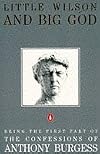
A portrait of the author's first forty years, from his childhood in Manchester to the moment when he began writing seriously after being told he was dying of a brain tumor.Tags
Recommendations






















Member Recommendations
Member Reviews
We are educated by Burgess' tangential style of writing in his memoirs - because he knows so much, we learn by osmosis. His vocabulary can be challenging, but his sense of humor can also be very biting. Other parts are just extremely [laugh out loud] funny! The characters in his life seem to live almost excactly like the characters in his books.
An extraordinary autobiography.
Prior to reading this, the only other book I'd read by Anthony Burgess was "A Clockwork Orange". I was inspired to read this book, having come across a short extract, photocopied and framed on the wall of The Wheatsheaf pub in Rathbone Place, London. Anthony Burgess was once a customer and he was describing the era in the 1940s when both he and Julian Maclaren-Ross were regulars. As a great admirer of Julian Maclaren-Ross, it was a desire to read this particular section (probably only six or seven pages in total) that prompted me to read it. I should add that Burgess was gratifyingly complimentary about the work of Maclaren-Ross and brings that era beautifully to life.
"Little Wilson and Big God" is only show more the first part of a two part biography and covers the 42 years from Burgess’s birth, in 1917, to 1959, when his time as teacher and education officer in Malaya and Brunei came to an end and he decide to devote himself to writing full time (believing he only had a year to live).
Burgess was clearly very bright and something of a polymath. He taught himself languages and wrote classical music in addition to gaining scholarships and doing well at school. Despite this he was also something of a slacker as a young man, drifting through the war, and then into teaching in Malaya and Brunei. He and his wife had an open relationship from the off, and he appears to be very honest about his conduct which was frequently drunken and idiosyncratic. He has a trove of great memories.
I found the whole book engrossing as he vividly recreated the Manchester of his boyhood; life in the army during the war with all its attendant pettiness and absurdities; and his various eccentricities, and onto ever more outrageous behaviour as an observant if unorthodox expat during the fag end of British colonialism.
His writing style is flamboyant and sophisticated, and required a few stops to consult the dictionary, and I felt I was in the hands of a great writer at the top of his game.
I eagerly anticipate the second part "You've Had Your Time".
I have also bought "The Complete Enderby" too. This feels like the start of a beautiful relationship.
5/5 show less
Prior to reading this, the only other book I'd read by Anthony Burgess was "A Clockwork Orange". I was inspired to read this book, having come across a short extract, photocopied and framed on the wall of The Wheatsheaf pub in Rathbone Place, London. Anthony Burgess was once a customer and he was describing the era in the 1940s when both he and Julian Maclaren-Ross were regulars. As a great admirer of Julian Maclaren-Ross, it was a desire to read this particular section (probably only six or seven pages in total) that prompted me to read it. I should add that Burgess was gratifyingly complimentary about the work of Maclaren-Ross and brings that era beautifully to life.
"Little Wilson and Big God" is only show more the first part of a two part biography and covers the 42 years from Burgess’s birth, in 1917, to 1959, when his time as teacher and education officer in Malaya and Brunei came to an end and he decide to devote himself to writing full time (believing he only had a year to live).
Burgess was clearly very bright and something of a polymath. He taught himself languages and wrote classical music in addition to gaining scholarships and doing well at school. Despite this he was also something of a slacker as a young man, drifting through the war, and then into teaching in Malaya and Brunei. He and his wife had an open relationship from the off, and he appears to be very honest about his conduct which was frequently drunken and idiosyncratic. He has a trove of great memories.
I found the whole book engrossing as he vividly recreated the Manchester of his boyhood; life in the army during the war with all its attendant pettiness and absurdities; and his various eccentricities, and onto ever more outrageous behaviour as an observant if unorthodox expat during the fag end of British colonialism.
His writing style is flamboyant and sophisticated, and required a few stops to consult the dictionary, and I felt I was in the hands of a great writer at the top of his game.
I eagerly anticipate the second part "You've Had Your Time".
I have also bought "The Complete Enderby" too. This feels like the start of a beautiful relationship.
5/5 show less
For many years I only knew Anthony Burgess as the author of a very book from which a famous movie with a character who listens to Beethoven String Quartets was made. I have never read that book or watched the movie. But when I saw this book at reduced price at the book store, I bought it and was delighted to read through it very rapidly. I experience no boredom during the reading of his books. Eventually I read the second volume, and Earthly Powers, and a few other books. Next I would like to read the trilogy--can not remember what it is called--the Malay trilogy, or something like that.
Anthony Burgess is the best writer, bar none; and his life was certainly unusual.
Ratings
Members
- Recently Added By
Published Reviews
ThingScore 75
Not many people know this, but on top of writing regularly for every known newspaper and magazine, Anthony Burgess writes regularly for every unknown one, too. Pick up a Hungarian quarterly or a Portuguese tabloid – and there is Burgess, discoursing on goulash or test-driving the new Fiat 500. ‘Wedged as we are between two eternities of idleness, there is no excuse for being idle now.’ show more Even today, at seventy, and still producing book after book, Burgess spends half his time writing music. He additionally claims to do all the housework.
The first volume of the Burgess autobiography is only 450 pages long. Accordingly one would expect it to end when the author is about five. In fact, we follow him to the halfway mark, to early middle age, just as his writing career was getting into its gallop. Between then and now he has produced a further fifty-odd books. He was born Jack Wilson; Anthony Burgess is a nom de plume – probably one of many... Burgess may swank exasperatingly at times, but his book’s only real boast is in its subtitle, with its hi to Rousseau. Even this might be allowed as a necessary elevation in an age when the autobiography, as a form, has become little more than the pension-book of politicians and actors. show less
The first volume of the Burgess autobiography is only 450 pages long. Accordingly one would expect it to end when the author is about five. In fact, we follow him to the halfway mark, to early middle age, just as his writing career was getting into its gallop. Between then and now he has produced a further fifty-odd books. He was born Jack Wilson; Anthony Burgess is a nom de plume – probably one of many... Burgess may swank exasperatingly at times, but his book’s only real boast is in its subtitle, with its hi to Rousseau. Even this might be allowed as a necessary elevation in an age when the autobiography, as a form, has become little more than the pension-book of politicians and actors. show less
added by SnootyBaronet
Burgess has now published Little Wilson and Big God, "Being the First Part of the Autobiography" which, long as it is, takes him only to the age of forty-two in 1959 when he was told that he had an inoperable brain tumor, and a year to live. In order to provide for Lynne, he started turning out books at a prodigious rate, and now, twenty years after her death, he still, undead, goes on. show more Incomparable British medicine ("In point of fact, Dr. Butterfingers, that's my scalpel you're standing on") is responsible for the existence of easily the most interesting English writer of the last half century. Like Meredith, Burgess does the best things best; he also does the worst things pretty well, too...
Fortunately, he has not the gift of boredom. He can make just about anything interesting except on those occasions when he seems to be writing an encoded message to N. Chomsky, in celebration not so much of linguistics as of his own glossolalia, so triumphantly realized in his screenplay for Quest for Fire. show less
Fortunately, he has not the gift of boredom. He can make just about anything interesting except on those occasions when he seems to be writing an encoded message to N. Chomsky, in celebration not so much of linguistics as of his own glossolalia, so triumphantly realized in his screenplay for Quest for Fire. show less
added by SnootyBaronet
Author Information

120+ Works 48,185 Members
Anthony Burgess was born in 1917 in Manchester, England. He studied language at Xaverian College and Manchester University. He had originally applied for a degree in music, but was unable to pass the entrance exams. Burgess considered himself a composer first, one who later turned to literature. Burgess' first novel, A Vision of Battlements show more (1964), was based on his experiences serving in the British Army. He is perhaps best known for his novel A Clockwork Orange, which was later made into a movie by Stanley Kubrick. In addition to publishing several works of fiction, Burgess also published literary criticism and a linguistics primer. Some of his other titles include The Pianoplayers, This Man and Music, Enderby, The Kingdom of the Wicked, and Little Wilson and Big God. Burgess was living in Monaco when he died in 1993. (Bowker Author Biography) show less

Anthony Burgess has a Legacy Library. Legacy libraries are the personal libraries of famous readers, entered by LibraryThing members from the Legacy Libraries group.
Some Editions
Awards and Honors
Awards
Distinctions
Series

Work Relationships
Contains
Common Knowledge
- Original publication date
- 1987
- People/Characters
- Anthony Burgess
- Epigraph
- Time, in fact, is rather vulgarly dramatic; it is the sentimentalist of the dimensions. - Constant Lambert, Music Ho!
- First words
- If you require a sententious opening, here it is. Wedged as we are between two eternities of idleness, there is no excuse for being idle now.
- Last words
- (Click to show. Warning: May contain spoilers.)I sighed and put paper in the typewriter. "I'd better start," I said. And I did.
Classifications
Statistics
- Members
- 401
- Popularity
- 77,579
- Reviews
- 4
- Rating
- (4.17)
- Languages
- 5 — English, French, Portuguese, Spanish, Swedish
- Media
- Paper, Ebook
- ISBNs
- 12
- ASINs
- 10