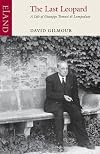
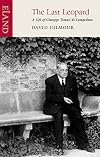
The Last Leopard: A Life of Giuseppe Tomasi di Lampedusa
by David Gilmour
On This Page
Description
In 1957, Giuseppe Tomasi, Prince of Lampedusa, the last member of a great Sicilian family, died childless, impoverished and unknown, leaving behind him the recently completed manuscript of a novel. The following year the novel, The Leopard, was published to great acclaim. For a quarter of a century Italian and foreign scholars were denied access to the reclusive writer's papers until, following a meeting with Lampedusa's adopted son, David Gilmour succeeded in gaining permission to work in show more the writer's last home in Sicily. There, and in the nearby ruin of the Palazzo Lampedusa, he found many letters, diaries, notebooks and photographs which had not seen the light of day since Lampedusa's death. show lessTags
Recommendations































Member Recommendations

Member Reviews
Members
- Recently Added By
Published Reviews
ThingScore 75
Time and again as one reads Gilmour's biography, one recognizes a kind of community of consciousness between Don Fabrizio and his creator, both of whom shared a resigned complicity with the very changes eroding the foundations of their lives--changes so vast that the only protest they could register against them with any dignity was profound disillusionment tempered with stoic detachment.
added by SnootyBaronet
Author Information

13+ Works 1,528 Members
David Gilmour's wonderfully readable exploration or Italian life over the centuries is filled with provocative anecdotes as well as personal observations, and is peopled with the great figures of the Italian past-from Cicero and Virgil to Dante and the Medicis, from Garibaldi and Cavour to the controversial politicians of the twentieth century. show more Gilmour's wise account of the Risorgimento, the pivotal epoch in modern Italian history, debunks the nationalistic myths that surround it, though he paints a sympathetic portrait of Giuseppe Verdi, a beloved hero of the era. Gilmour shows that the glory of Italy has always lain in its regions, with their distinctive art, civic cultures, identities, and cuisines. Italy's inhabitants identified themselves not as Italians but as Tuscans and Venetians, Sicilians and Lombards, Neapolitans and Genoese. The country's strength and culture still come from its regions rather than from its misconceived, mishandled notion of a unified nation. show less
Awards and Honors
Awards
Series
Belongs to Publisher Series
Common Knowledge
- Canonical title*
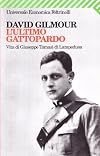
- L' ultimo Gattopardo: vita di Giuseppe Tomasi di Lampedusa
- Original publication date
- 1988
- People/Characters
- Giuseppe Tomasi di Lampedusa
- Dedication
- To Gioacchino and Nicoletta
- Quotations
- Italian opera of the nineteenth century had none of the features Lampedusa increasingly admired in literature. The works of Stendhal, for example, were subtle and implicit, whereas opera was sentimental, painfully explicit an... (show all)d left nothing to the imagination or intelligence of the listener.
- Blurbers
- Massie, Allan; Thompson, Ian; Ray, Cyral; Taylor, Alan; Rosselli, John; Quigly, Isabel (show all 13); Furbank, P N; Pertile, Lino; Forbes, Alastair; Stoyle, Rosemary; Grigg, John; Warner, Marina; Farrell, Joseph
*Some information comes from Common Knowledge in other languages. Click "Edit" for more information.
Classifications
- Genres
- Biography & Memoir, Literature Studies and Criticism, Fiction and Literature
- DDC/MDS
- 853.912 — Literature & rhetoric Italian, Romanian & related literatures Italian fiction 1900- 20th Century 1900-1945
- LCC
- PQ4843 .O53 .Z68 — Language and Literature French, Italian, Spanish and Portuguese literatures Italian literature Individual authors, 1900-1960
- BISAC
Statistics
- Members
- 148
- Popularity
- 220,496
- Reviews
- 1
- Rating
- (4.00)
- Languages
- English, Italian, Polish, Spanish
- Media
- Paper, Ebook
- ISBNs
- 12
- ASINs
- 3